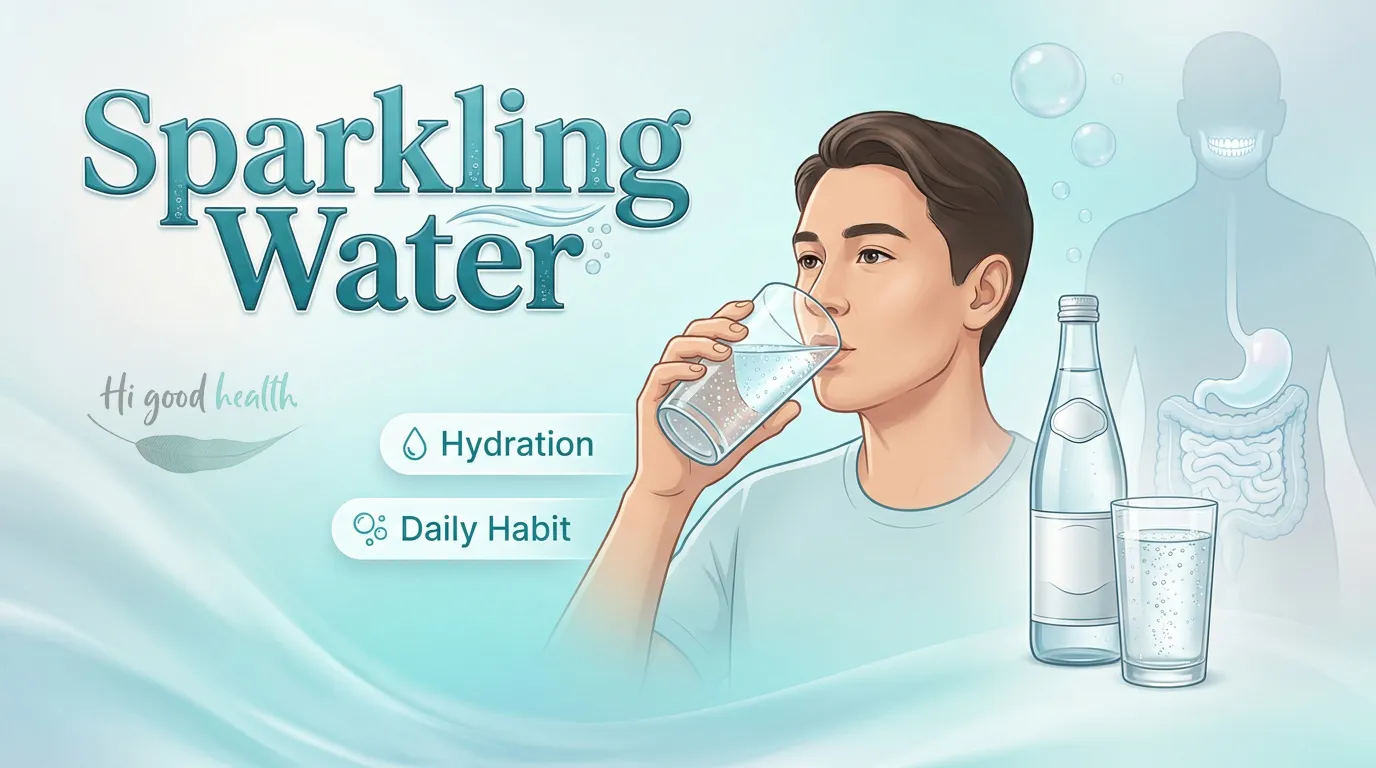
In India the carbonated water question is not really about imported sparkling water. It is about soda.
Club soda has been in Indian homes and restaurants for a century, in nimbu soda, jaljeera, masala soda, and in the glass someone reaches for after a heavy meal because they believe it settles the stomach.
So the question people actually ask here is soda water v sparkling water, and imported sparkling water is a small, expensive city category on top of the club soda everyone already drinks.
Imported sparkling water is a small, expensive city category on top of that. The health questions are the same for both, and the answers are mostly reassuring, with two real cautions and one Indian belief that needs correcting.
At a glance
For a healthy adult, plain fizzy water is fine. It hydrates about as well as still water and counts towards the day’s fluid.
It does not weaken bones and it does not damage healthy kidneys. That fear comes from studies of cola, which contains phosphoric acid. Plain carbonated water does not.
The two real cautions are teeth and sodium. Sipping something acidic all day softens enamel, and Indian club soda often contains added sodium bicarbonate, which matters if you have high blood pressure.
Soda does not cure acidity. The burp it produces feels like relief and is not. For some people, particularly with reflux, it makes things worse.
In India the more important question is whether the water is safe, not whether it is fizzy. A cheap unbranded bottle of soda is a water-quality question first.
Soda water v sparkling water: what each one actually is
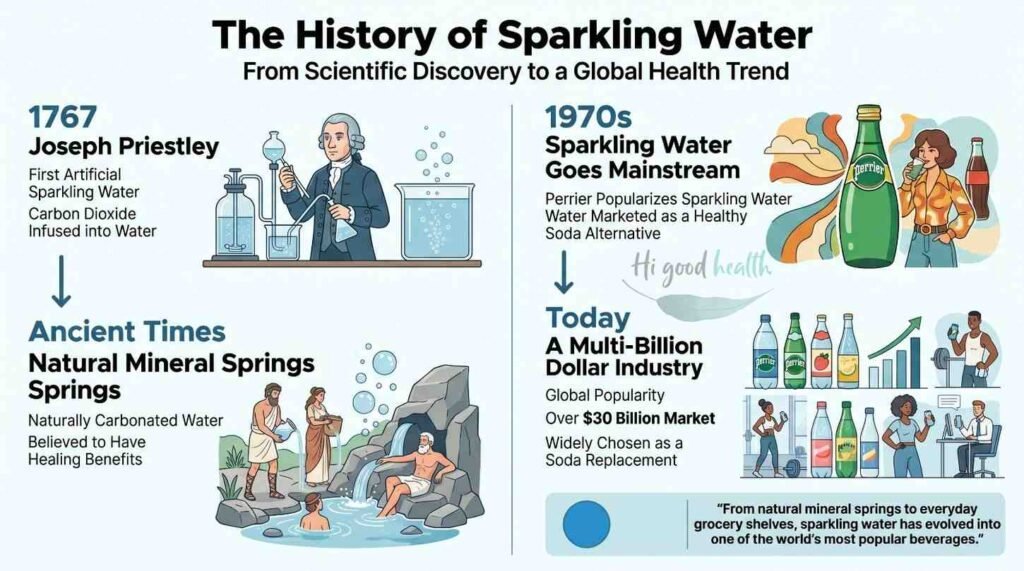
Carbonated water is water with carbon dioxide gas dissolved into it under pressure. The gas forms carbonic acid, which gives the fizz and the slight tang.
The forms you will meet in India:
- Club soda, the everyday Indian one. Carbonated water with added mineral salts, usually including sodium bicarbonate and sometimes sodium citrate. This is what a paan shop or a restaurant means by “soda”.
- Packaged sparkling water, mostly imported, sometimes naturally carbonated from a spring. Expensive relative to everything else on the shelf.
- Naturally carbonated mineral water, carbonated underground and bottled at source. Rare and costly here.
- Home-made, using a countertop carbonation machine and your own filtered water. A small but growing category in Indian cities.
- Soft drinks, which are a different thing entirely. Carbonated water plus sugar, acid, caffeine and flavouring. Nothing on this page defends those.
The important distinction on an Indian shelf is not brand. It is whether there is sugar in it. A bottle of plain soda and a bottle of cola look similar and are not remotely the same drink.
Does it hydrate you?
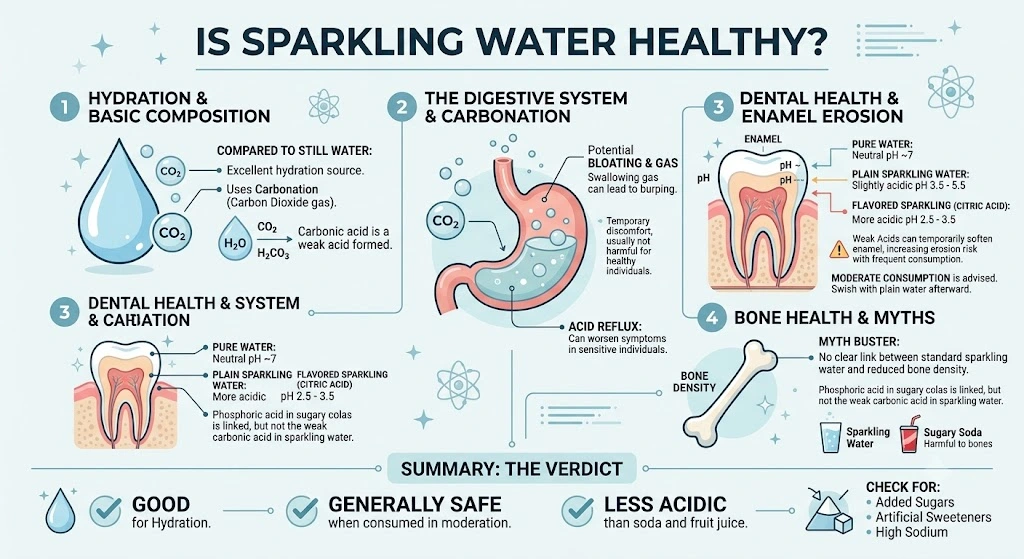
Yes, as well as still water does.
This has been tested properly, and studies comparing carbonated with still water find no meaningful difference in hydration. Fizzy water counts fully towards the day’s fluid.
For a lot of people that is the point. If a glass of nimbu soda is what actually gets drunk on a hot afternoon, and the alternative is a soft drink or nothing, the fizzy water is doing its job.
The Indian belief that needs correcting: soda for acidity
This is worth its own section, because it is one of the most common home remedies in the country.
The reasoning goes: heavy meal, uncomfortable fullness, drink a soda, burp, feel better.
The relief is mechanical, not medical. The carbon dioxide expands in the stomach, you burp, and the pressure drops for a moment. Nothing has been treated.
For some people it is worse than neutral. In reflux, that burp carries stomach acid up with it, and a stomach distended with gas pushes on the valve at the top of it. If you get heartburn, soda after a meal is likely to make it worse rather than better.
There is one narrow exception worth being fair about: carbonated water may help mild constipation and can ease that heavy, undigested feeling in some people. But if you are reaching for soda after most meals, the meal is the problem, and repeated acidity needs a doctor rather than a bottle.
Also, plain soda-bicarb, the household remedy of a spoon of baking soda in water, is a different thing from club soda and is not harmless. It is a large sodium load, it should not be a habit, and it is a genuinely bad idea for anyone with high blood pressure, heart failure or kidney disease.
Teeth: the one real everyday risk
Carbonic acid is mild, far milder than the acid in a cola or a packaged fruit juice. It will not do what a soft drink habit does.
But acid is acid, and the risk is the sipping, not the drinking. A glass with a meal is fine. A bottle nursed across three hours keeps the teeth in an acid bath the whole time, and enamel softens.
This matters more in India than the international version of this article assumes, because dental treatment is paid out of pocket and gum disease and decay are already widespread here.
Practical, and none of it is difficult:
- Drink it, do not sip it all afternoon.
- Plain soda is gentler than flavoured. Anything with citric acid, or with lemon squeezed in, is more acidic.
- Rinse the mouth with plain water afterwards.
- Do not brush immediately after. Softened enamel brushes away. Wait half an hour.
- A straw helps if you drink it often.
Nimbu soda deserves a note. It is a good drink and a better one than a cold drink. The lemon does make it more acidic, and if it is sweetened it is a sugar drink as well. Ask for it without sugar or with less, and rinse afterwards.
Sodium: the caution most people miss
This is where Indian club soda differs from imported sparkling water, and it is the more important of the two cautions.
Club soda is not plain carbonated water. Most Indian brands add mineral salts, and sodium bicarbonate is usually among them. That is what gives club soda its slightly salty, rounded taste as against the sharper taste of plain sparkling water.
For a healthy person drinking one or two, that is not a problem. For someone managing high blood pressure, heart failure or kidney disease, it is worth reading the label, because several glasses a day adds up and it is sodium nobody counts.
Plain sparkling water and home-carbonated water contain no added sodium at all. If salt is a concern, that is the version to choose.
The bigger Indian question: is the water safe?
Whether the water has bubbles in it is a small question next to whether it is clean, and in India that is the one worth asking.
Packaged drinking water and packaged natural mineral water in India are regulated, require a BIS licence and carry an ISI mark. Look for it. Unbranded and loosely-filled bottles of soda are common, particularly at roadside stalls, and there is no useful guarantee behind them.
Two practical things:
- Check the seal and the mark before you drink it. A refilled bottle with a broken seal is a genuine risk here.
- Heat matters. Plastic bottles left standing in the sun, in a car, or on a shop’s front step in an Indian summer leach more from the plastic. Bottled water in India spends a lot of time hot. Buy from a fridge or a shaded stack, not off the pavement.
On microplastics: research consistently finds plastic particles in bottled water, more than in tap water, and more in bottles that have been stored warm.
What that means for health is still being worked out, and nobody should panic about one bottle of soda. It is a fair argument for glass, for filling your own, and for not leaving bottles in the sun.
What it is worth, compared with what else is in the fridge
| Drink | Sugar in a 250 ml glass | Notes |
|---|---|---|
| Plain soda or sparkling water | 0 g | Hydrates like water. Watch sodium in club soda. |
| Nimbu soda, unsweetened | 0 g | Good. More acidic because of the lemon. |
| Nimbu soda, sweetened as usually served | roughly 4-6 teaspoons | It is a sugar drink. Ask for less. |
| Cola or a fizzy soft drink | roughly 6-7 teaspoons | Sugar, phosphoric acid, caffeine. The real problem drink. |
| Packaged fruit juice | roughly 5-6 teaspoons | Often as sugary as a soft drink, with the fibre removed. |
| Sugarcane juice | high | Traditional, refreshing, and still a large dose of sugar. |
| Plain water | 0 g | Still the default, and still the cheapest. |
If you are swapping cold drinks for plain soda, that is a genuinely good change, and one of the easier ones to make in an Indian diet where sweet drinks have become ordinary rather than occasional.
How much carbonated water is too much?
For a healthy adult, there is no strict limit on plain fizzy water. Two or three glasses a day is unremarkable.
If you are getting bloated or burping a lot, cut it back and do not drink it with meals.
If you have reflux, IBS or a bloated stomach, carbonated drinks commonly make it worse. Try two weeks without and see.
If you have high blood pressure or kidney disease, choose plain sparkling water over club soda, or read the sodium on the label.
For children, plain water is the right default and fizzy drinks of any kind are better kept occasional, partly for teeth and partly because the habit is what carries into adulthood.
A reasonable rule: most of the day’s fluid as plain water, and fizzy water as the interesting one.
Cost, honestly
Club soda is cheap in India. Imported sparkling water is not, and costs many times more for something that is chemically almost the same drink minus the added salts.
If you drink fizzy water daily, a home carbonation machine pays for itself over a year, gives you plain carbonation with no added sodium, lets you start from your own filtered water, and removes the bottles. That is the version this article would recommend to a regular drinker.
If you drink it occasionally, plain club soda from a sealed, branded bottle does the job.
Flavouring it without turning it into a soft drink
The whole benefit disappears if sugar goes in. These do not:
- Lemon or sweet lime, squeezed fresh.
- Mint, crushed. Pudina and soda is a proper drink.
- Cucumber and a pinch of black salt.
- Ginger, grated.
- Jaljeera masala, checking that the packet is not mostly sugar.
- Kokum or aam panna concentrate, unsweetened, if you can get it.
- Roasted cumin and a squeeze of lime.
Black salt and jaljeera add sodium, so the blood-pressure caution applies to those too.
Key takeaways
Plain fizzy water is fine for a healthy adult and hydrates as well as still water.
It does not weaken bones or damage healthy kidneys. That belief comes from cola studies, and the culprit there is phosphoric acid, not the bubbles.
Soda does not cure acidity. The burp is mechanical relief, and in reflux it usually makes things worse.
Indian club soda contains added sodium. Read the label if you have high blood pressure, heart failure or kidney disease, and prefer plain sparkling or home-carbonated water.
Sipping all day is what harms teeth, not drinking a glass. Rinse afterwards, and do not brush for half an hour.
Check the ISI mark and the seal, and do not buy bottles that have been standing in the sun.
Sugar is the thing that matters on an Indian drinks shelf, not carbonation. Swapping cold drinks for plain soda is a real improvement.
Frequently asked questions
Soda water v sparkling water: are they the same thing?
Almost, but not quite. Both are carbonated water. Indian club soda usually has added mineral salts including sodium bicarbonate, which plain sparkling water does not. That matters only if you are watching your salt.
Does soda really help with acidity or gas after a heavy meal?
It produces a burp, which feels like relief but treats nothing. If you get reflux it often makes it worse, because the gas pushes stomach contents upward. Repeated acidity needs a doctor, not a bottle.
Is soda bad for the kidneys?
Plain carbonated water is not, and staying well hydrated protects against kidney stones. Sugary cold drinks are a different matter, and anyone with existing kidney disease should watch the sodium in club soda.
Will fizzy water weaken my bones?
No. That belief comes from studies on cola, which contains phosphoric acid. Plain carbonated water has no effect on bone density.
Is nimbu soda healthy?
Unsweetened, yes, and far better than a cold drink. Sweetened as it is usually served, it carries several teaspoons of sugar. Ask for it without sugar, and rinse your mouth afterwards because the lemon makes it acidic.
Can I drink soda every day?
For a healthy adult, plain fizzy water daily is fine. Drink it rather than sipping it through the afternoon, keep most of your fluid as plain water, and check the sodium if you have blood pressure trouble.
Is soda safe in pregnancy?
Plain carbonated water is. Avoid anything with caffeine or artificial sweeteners, and be careful about the sodium and the sugar in flavoured versions.
Is a spoon of soda-bicarb in water the same thing?
No, and it is not harmless. That is a large sodium load and it should not be a daily habit, particularly with high blood pressure, heart failure or kidney disease.
Which is better, bottled soda or a home carbonation machine?
For a regular drinker, the machine. It removes the added sodium, lets you start from your own filtered water, costs less over a year and produces no bottles.
Is soda safe for children?
Plain water is the right default. Occasional fizzy water is not harmful, but the daily habit is worth avoiding, for the teeth and because it usually becomes a soft-drink habit later.
Glossary
Carbonation: dissolving carbon dioxide gas into water under pressure, which produces the bubbles.
Carbonic acid: the weak acid formed when carbon dioxide dissolves in water. It is what makes fizzy water mildly acidic.
Club soda: carbonated water with added mineral salts, usually including sodium bicarbonate. The common Indian form.
Phosphoric acid: an acid used in colas, not in plain carbonated water, and the one linked to bone concerns in soft drink studies.
BIS and the ISI mark: the Bureau of Indian Standards licence and mark that packaged drinking water sold in India is required to carry.
Reflux: stomach contents rising into the food pipe, felt as heartburn. Carbonated drinks commonly worsen it.
Disclaimer
This article is for general education only and does not replace medical advice. Anyone with reflux, kidney disease, heart failure or high blood pressure should ask a doctor about carbonated drinks and sodium rather than relying on general guidance, and repeated acidity or indigestion should be examined rather than self-treated.
References
- Bureau of Indian Standards. Packaged drinking water and packaged natural mineral water specifications.
- Food Safety and Standards Authority of India. Standards for carbonated water and beverages.
- American Journal of Clinical Nutrition. Hydration effectiveness of carbonated versus still water, 2017.
- European Journal of Gastroenterology and Hepatology. Carbonated water, dyspepsia and constipation.
- University of Surrey. Review of carbonated water and bone health.
- Research on microplastic particles in bottled water.