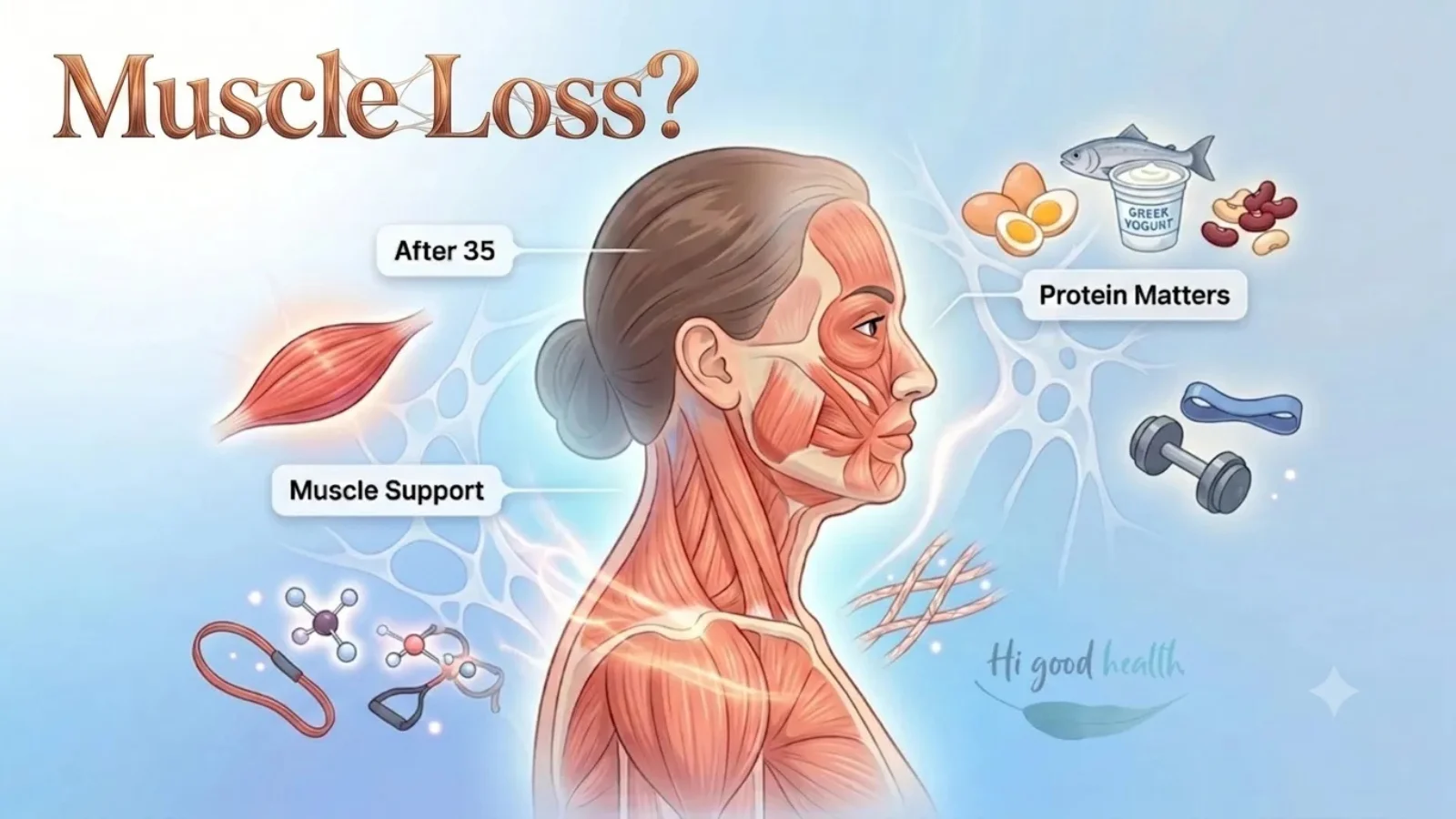
At a Glance: What Actually Causes Sagging, and What Helps
- Three separate things are happening, and they need different answers. Muscle underneath, skin quality on top, and fat and bone redistributing in between. Most advice treats them as one problem, which is why most advice disappoints.
- For the muscle layer, resistance training is the only thing with strong evidence. Two to three sessions a week, plus enough protein. This is what the rest of this article is about.
- For the skin layer, sun exposure is the biggest modifiable factor by a long way — larger than time itself. Daily broad-spectrum sunscreen and a topical retinoid have the strongest evidence of anything you can do at home.
- Collagen supplements: the honest answer is that the evidence does not hold up. A 2025 meta-analysis of 23 trials found benefit in industry-funded studies and none in independent ones. See the section below before you spend money.
- Breastfeeding does not cause breasts to sag. This is one of the most persistent myths there is, and the research is clear. Age, number of pregnancies and smoking do matter.
- Nothing here is about how you should look. Muscle loss after 35 matters for strength, metabolism and independence later. Appearance is the visible edge of it, not the point.
The Silent Decline No One Warns You About
Sagging face? Softer jawline? Early breast droop? These aren’t just inevitable signs of ageing; they’re often influenced by something deeper: muscle loss.
After 35, something subtle but significant begins to happen inside your body. You may start losing muscle mass, even if your weight on the scale stays the same. This phenomenon, known as sarcopenia, is not just a cosmetic concern; it can affect your health, mobility, metabolism, and independence as you age.
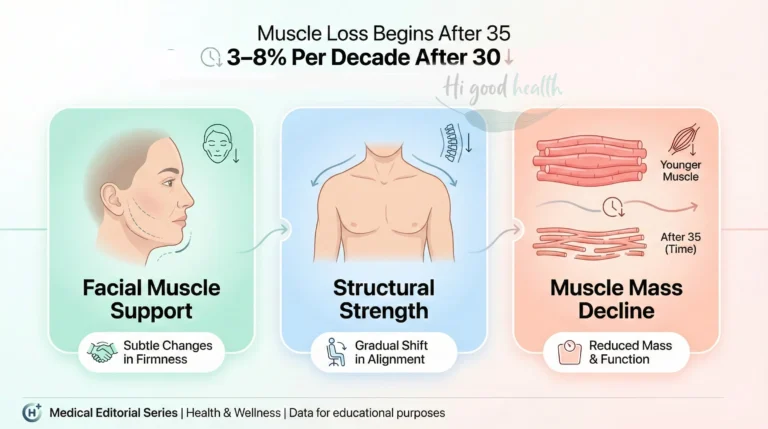
Research indicates that adults can lose approximately 3% to 5% of their muscle mass per decade after age 30, with the rate potentially accelerating after 60. [1] According to a 2025 Indian Consensus on Sarcopenia, approximately 4 in 10 elderly Indians and 3 in 100 younger adults are affected, making this a significant public health concern in India. [India-2025]
However, here’s the encouraging news: muscle loss is not entirely inevitable. With the right lifestyle strategies — especially plant-forward nutrition and consistent movement — you can slow, and in some cases even reverse, aspects of muscle decline.
Let’s break down what’s really causing this change.
1. What Causes Muscle Loss After 35?
The primary factors contributing [Figure 1] to age-related muscle loss include:
- Hormonal Changes: Levels of key muscle-supporting hormones — testosterone, oestrogen, and growth hormone — naturally decline with age. These hormones play a crucial role in muscle repair, strength, and regeneration.
- Reduced Physical Activity: Modern lifestyles often involve prolonged sitting — whether at desks or with screens. Less movement means fewer signals for your body to maintain muscle tissue.
- Protein Deficiency: Muscles need adequate protein to repair and grow. Diets low in quality protein (especially common in restrictive or imbalanced eating patterns) can accelerate muscle breakdown.
- Inflammation & Oxidative Stress: Chronic low-grade inflammation and oxidative stress interfere with your body’s ability to regenerate muscle efficiently, speeding up the decline.
FIGURE 1: Factors causing Age-Related Muscle Loss
Even stress and poor sleep can impact muscle retention by disrupting cortisol and melatonin levels, which regulate recovery.
Research from institutions like Tufts University emphasises that sarcopenia is not just about chronological ageing — lifestyle factors play a significant role in muscle health outcomes. [2]
2. The Critical Window: Why Ages 35 to 45 Matter Most
Your late 30s to mid-40s are more than just a midpoint in life — they’re a biological turning point.
Research suggests this is an important decade to build and preserve muscle to help prevent complications later in life. Studies in medical journals indicate that muscle mass maintained in your 30s and 40s may help sustain metabolic rate, glucose control, and bone health as you enter your 60s and beyond. [3]
Even deep, silent muscles in your lower body play a massive role in maintaining your metabolic age. Explore the role of the soleus muscle in boosting metabolism and leg circulation, for detailed information, read our article.
Limited action during this window may contribute to faster decline later, potentially increasing the risk of:
- Falls and fractures
- Insulin resistance
- Fatigue and reduced mobility
This is not a warning — it’s an opportunity. Even small, consistent actions can make a meaningful difference.
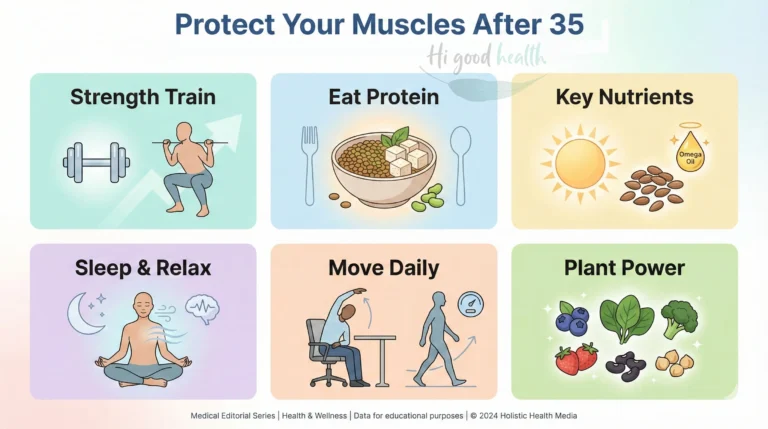
3. Science-Backed Ways to Help Prevent Muscle Loss
A. Resistance Training Is Highly Recommended
Strength training at least 2–3 times per week may help retain and build muscle. Consider focusing on:
- Bodyweight exercises (squats, push-ups, planks)
- Resistance bands
- Dumbbell workouts
Research published in medical and sports science journals suggests that adults over 35 who engage in regular strength training may experience better functional outcomes and reduced risk of decline. [4]
Important: Consult with a healthcare provider or certified fitness professional before starting any new exercise programme, especially if you have existing health conditions.
To rebuild structural integrity, you must supply your body with the correct building blocks. Use our guide for identifying the right protein source to match your unique lifestyle and age, for detailed information, read our article
B. Prioritise High-Quality Protein
Protein is the building block your muscles rely on for repair and growth. Excellent sources include:
- Lentils and chickpeas
- Quinoa and amaranth (rajgir)
- Tofu and tempeh
- Pea and soy protein powders
Health experts often recommend 25–30g of protein per meal to support muscle protein synthesis, though individual needs vary based on age, activity level, and health status. The ICMR-NIN Dietary Guidelines for Indians (2024) also emphasise adequate protein from a combination of plant foods to support muscle health across age groups. According to Harvard Health Publishing, consistent protein intake is particularly important for ageing muscles. [5]
C. Include Muscle-Supportive Nutrients
- Vitamin D: In India, safe sun exposure (early morning sunlight for 15–20 minutes) is the most accessible and effective source. Mushrooms and sesame seeds also provide some Vitamin D. Fortified plant milks are available in urban areas.
- Creatine Monohydrate: A supplement that research shows may support strength when paired with resistance training. Consult a healthcare provider for appropriate dosing
- Omega-3 (from flaxseed or algae): May help reduce inflammation and support muscle quality
Note: Supplement use should be discussed with your healthcare provider to ensure safety and appropriate dosing for your individual needs.
D. Prioritise Sleep & Stress Management
Inadequate sleep may increase cortisol and affect hormone balance — both potentially harmful for muscle maintenance. Aim for 7–8 hours per night and incorporate stress-reducing practices like meditation, yoga, or breathing exercises.
E. Daily Movement Matters
Take stretch breaks, use a standing desk, or try desk workouts. Even 5–10 minutes of daily functional movement may help preserve neuromuscular coordination.
F. Beyond Protein: Why a Plant-Forward Approach Supports Muscle Health
While we’ve emphasised the importance of high-quality protein from sources like lentils, tofu, and pea protein, the benefits of a plant-forward diet for muscle health extend beyond just protein content. Here’s why this approach may be specifically beneficial:
- Rich in Muscle-Supportive Nutrients: Plant-based foods naturally provide essential vitamins and minerals important for muscle function and repair, including Vitamin D (mushrooms, safe sun exposure) and Omega-3s (flaxseed, algae)
- Abundant in Antioxidants: Chronic low-grade inflammation and oxidative stress can interfere with muscle regeneration. Plant foods contain antioxidants like Vitamin C and E, as well as polyphenols (green tea, berries, turmeric), which may help combat these processes
- Optimised for Recovery: Beyond protein, specific plant compounds can support muscle health. Leucine, a key amino acid that signals muscle growth, is found in plant sources like soybeans, tofu, tempeh, peanuts, and lentils. Research also highlights myokines — hormones released by muscles during contractions which may positively impact the brain and immune system; regular strength training, often complemented by a nutrient-rich plant-forward diet, may increase these beneficial molecules. [6]
- Supports Overall Health: A plant-forward diet typically provides ample fibre, supports gut health, and may help with weight management, all contributing to better overall wellness. This holistic approach may create a more favourable internal environment for muscle retention as you age
Curious whether a truly plant-powered lifestyle can support not just muscle health — but overall human vitality? Dive into our thought-provoking blog: “Can Humanity Thrive Without Meat and Fish? The Abundant Promise of a Plant-Powered Future“
4. Appearance Considerations: The Aesthetic Impact of Muscle Loss
Muscle loss doesn’t only affect strength — it may also manifest in visible ways:
- Facial changes: Muscle atrophy in cheeks and jawline can contribute to loss of facial contours
- Breast and gluteal changes: Loss of supporting musculature may contribute to changes in firmness
- Posture alterations: Weak back and core muscles can lead to slouched posture and changes in body shape
While many seek anti-ageing creams or cosmetic procedures, research suggests that resistance training, proper nutrition, and maintaining muscle tone may provide more fundamental, long-lasting support for body structure. A comprehensive approach to wellness includes muscle health.
Skin Tightening at Home: What Actually Works
Everything above is about the muscle layer, and it matters. But muscle is not the only thing holding your face up, and it would be misleading to leave it there. Three things change with age, and they respond to different interventions:
- Muscle underneath — responds to resistance training and protein.
- Skin on top — collagen and elastin decline, and the skin loses its ability to snap back.
- Fat and bone in between — facial fat pads shift downward and the underlying bone gradually resorbs.
Most disappointment with home remedies comes from using a muscle answer on a skin problem, or a skin answer on a fat-pad problem. So here is the skin layer, honestly.
The single biggest factor is the one people ignore: sun
Dermatology draws a line between intrinsic ageing — what time alone does — and photoageing, what ultraviolet light does on top. Reviews are consistent that the environmental contribution is the larger one for visible skin ageing.
Which means the most effective skin-tightening measure available to you is preventive, free-ish, and boring: daily broad-spectrum sun protection. It will not tighten what has already loosened. It is the difference between where you are now and where you would otherwise be in ten years, and in India — high UV index for most of the year, most of the country — it is doing more work than any cream.
The one topical with genuinely strong evidence
Retinoids. Tretinoin is the clinical benchmark, with evidence that it reduces fine and coarse wrinkling, improves texture, and acts on collagen in the skin. Over-the-counter retinol and retinyl esters work by the same mechanism, more gently and more slowly.
Two honest caveats. Results take months, not weeks — this is a six-month commitment before judging it. And retinoids cause irritation and increase sun sensitivity, which is another reason the sunscreen is not optional. Prescription-strength tretinoin is a conversation with a dermatologist, particularly on Indian skin where irritation can leave pigmentation behind.
Second tier, real but smaller: vitamin C and niacinamide have documented benefits. To calibrate expectations — niacinamide has been measured at roughly a third to a fifth as effective as tretinoin for wrinkles and pigmentation. Useful, not equivalent.
What to expect from the rest
- Face exercises and face yoga — plausible for the muscle layer, but the evidence is thin and the effect small. Harmless; do not expect much.
- Firming and lifting creams — mostly moisturisers. Hydrated skin genuinely looks smoother, which is a real short-term effect, but it is not tightening and it reverses when you stop.
- Not smoking — smoking degrades elastin, the protein that lets skin recoil. This one is not marketed as a beauty intervention and does more than most that are.
- Avoiding large, repeated weight swings — rapid loss leaves skin that has been stretched with less to fill it.
Collagen: What It Actually Is, and Whether the Supplements Work
Collagen is the structural protein that makes up roughly a third of the protein in your body. In skin it forms the scaffold that gives firmness; elastin, alongside it, provides the recoil. Production declines steadily from the mid-twenties, and UV exposure accelerates the breakdown. That much is not in dispute, and it is why collagen is the word on every anti-ageing label in India.
Do collagen supplements work? What the 2025 evidence says
This is worth setting out carefully, because it is a large market and the answer is not the one the market gives.
A 2025 systematic review and meta-analysis in the American Journal of Medicine pooled 23 randomised controlled trials covering 1,474 participants. Taken all together, the pooled result looked positive — improvements in hydration, elasticity and wrinkles. That is the figure you will see quoted.
Then the authors split the trials by who paid for them and how well they were run:
- Industry-funded studies: positive effect.
- Independently funded studies: no benefit.
- High-quality studies: no significant effect on hydration, elasticity or wrinkles.
- Low-quality studies: significant improvement in elasticity.
The authors’ conclusion is unusually direct: there is currently no clinical evidence to support the use of collagen supplements to prevent or treat skin ageing.
What that does and does not mean. It does not mean collagen supplements are harmful — they are broken down into ordinary amino acids like any other protein, and they are generally well tolerated. It does not mean protein is unimportant; the rest of this article argues the opposite. It means that when the benefit only appears in trials paid for by sellers and disappears in trials that were not, the honest position is that it has not been shown to work.
If your budget for this is fixed, the evidence points somewhere specific: sunscreen and a retinoid have better support than any oral collagen product, and adequate total protein plus resistance training does more for the muscle layer than any powder does for the skin.
Sagging Breasts at a Young Age: What the Research Actually Blames
The title of this article promises breasts as well as faces, so here is that half properly — and it starts with correcting the single most widespread belief on the subject.
Breastfeeding does not cause sagging
It is believed almost universally, it is repeated by well-meaning relatives, and it influences whether some women choose to breastfeed at all. It is not supported.
The most-cited work here examined 132 women and found no difference in the degree of breast ptosis between those who had breastfed and those who had not. Breastfeeding history did not predict sagging.
This matters beyond appearance. A belief that has no evidence behind it should not be a reason to skip breastfeeding, given what breastfeeding does for an infant.
What did predict it
- Age — the connective tissue supporting the breast loses elasticity over time, as skin does everywhere.
- Number of pregnancies — the breast enlarges and returns with each one, and it is that cycle rather than the feeding which stretches the supporting tissue.
- Smoking — and the mechanism is specific: smoking breaks down elastin, the protein that gives skin its recoil and helps support the breast. This is the one item on the list that is entirely within your control.
Larger breast size and significant weight fluctuation are also commonly identified, for the straightforward mechanical reason that both put more load on the same supporting tissue.
What actually helps — and what does not
Being straightforward about this is more useful than being encouraging. There is no muscle inside the breast itself — it is glandular tissue, fat and connective tissue sitting on top of the pectoral muscles. So chest exercises build the platform underneath and can change how the chest looks overall, but they cannot lift breast tissue itself, and any programme promising that is overselling.
- Worth doing: not smoking, keeping weight reasonably stable, a properly fitted supportive bra during exercise, and chest and back resistance work for posture — which changes how you carry yourself and is usually more visible than anything else on this list.
- Not worth your money: firming creams and lotions marketed for the breast. There is no mechanism by which a topical product reverses stretched connective tissue.
- Worth a doctor, not an article: any new asymmetry, a lump, skin dimpling, or nipple change. Those are not ageing and they are not a cosmetic question.
And the thing worth saying plainly on a health site: breast shape changes with age in almost everyone, and that is not a medical problem. This section exists because people search for the causes and deserve accurate answers — not because there is anything to fix.
Myth vs. Fact: Understanding Ageing and Muscle Loss
It’s easy to attribute certain changes to inevitable ageing, but understanding the role of muscle loss provides a more complete picture:
Myth: Sagging skin and a softer jawline are purely part of getting older.
Fact: While some changes accompany ageing, facial sagging and jawline softness may also be influenced by muscle atrophy in the cheeks and jawline. Similarly, changes in breast and gluteal firmness can be partly attributed to loss of supporting musculature.
Myth: Once you hit 35, muscle loss is completely unavoidable.
Fact: While adults do typically lose 3% to 5% of their muscle mass per decade after 30, and this rate may accelerate after 60, muscle loss is NOT entirely inevitable. With appropriate interventions — including plant-forward nutrition and resistance training — you may be able to slow or partially reverse this trend.
Myth: You just need to “eat less and move more” to stay in shape as you age.
Fact: While general activity is important, research suggests that preventing age-related muscle loss specifically requires resistance training at least 2–3 times per week, along with adequate high-quality protein intake and muscle-supportive nutrients. Cardiovascular exercise alone may not be sufficient to prevent muscle loss.
Myth: Cosmetic creams and procedures are the only way to address facial and body sagging.
Fact: While cosmetic options exist, evidence suggests that resistance training, proper nutrition, and maintaining muscle tone may provide more fundamental, lasting support for body structure. A comprehensive wellness approach addresses internal health, including muscle maintenance.
Related Resource: Want to take your healthy ageing journey a step further? Don’t miss our practical, evidence-based guide: Fall Prevention That Actually Works: Protecting Seniors in 2026
5. Specific Groups: Unique Considerations & Approaches
Men Over 35
- Consideration: Gradual testosterone decline (approximately 1% per year) may affect strength and recovery
- Impact: Potential muscle loss of up to 5% per decade
- Approach: Prioritise resistance training and ensure adequate Vitamin D; consult a healthcare provider about hormone health
Maintaining muscle mass is your greatest biological insurance against traumatic injuries. Review effective fall prevention strategies and home modifications for Indian seniors, for detailed information, read our article.
Women Over 35
- Consideration: Oestrogen changes may affect muscle tone and fat distribution
- Impact: Muscle mass changes may accelerate during and after menopause
- Approach: Combine strength training with adequate protein and weight-bearing activities like yoga
Individuals in Concussion or Injury Recovery
- Consideration: Bed rest or limited mobility can result in rapid muscle loss (3–4% per week in some cases)
- Approach: Work with physiotherapists to incorporate appropriate gentle resistance exercises and maintain nutrition during recovery. Always follow medical guidance
Office Workers
- Consideration: Sedentary habits may reduce lower-body muscle strength
- Approach: Implement micro workouts, use stairs when possible, and consider standing meetings to promote circulation and muscle activation
Perimenopausal & Postpartum Individuals
- Consideration: Hormonal shifts may affect muscle protein synthesis
- Approach: Consider increasing leucine-rich foods (tofu, soy milk) and engage in appropriate strength training and core recovery workouts. Consult healthcare providers for personalised guidance
Older Adults (60+)
- Consideration: Muscle loss may accelerate to 8% or more per decade
- Approach: Focus on balance exercises, resistance bands, and distribute protein intake across meals. Work with healthcare providers to develop safe, appropriate programmes
Related Resource: Want to go beyond the basics and truly understand how nutrition shapes healthy ageing? Dive into our in-depth guide: Senior Nutrition in 2026: Protein, Supplements & Plant-Based Diets
6. Practical Muscle-Supporting Strategies for Office Workers
- Use the stairs: Both ascending and descending stairs provide muscle stimulus. Descending stairs builds eccentric muscle control
- Stand while working: Use a standing desk or elevate your monitor to work standing periodically
- Walking meetings: Suggest standing or walking one-on-one discussions when appropriate
- Brief movement breaks: 5–10 minutes during lunch with stretches or light movement
- Desk stretches: Shoulder rolls, seated calf raises, and spinal twists may improve circulation
- Movement reminders: Set alerts every 45–60 minutes to stand, stretch, or walk briefly
7. Incorporating Leucine and Antioxidants Into Your Diet
Leucine is a key amino acid that plays a role in muscle protein synthesis — essentially giving your body the signal to build and repair muscle. Food sources include:
- Soybeans, tofu, tempeh
- Peanuts, lentils, navy beans
- Fortified protein powders
Research suggests that 2.5–3g of leucine per meal may support muscle health in ageing adults, though individual needs vary. Total daily leucine intake recommendations typically suggest not exceeding 8–10g daily unless under medical supervision. Consult a registered dietitian for personalised recommendations.
Antioxidants may help reduce inflammation and oxidative stress:
- Vitamin C: Bell peppers, oranges, kiwi — and especially amla (Indian gooseberry), one of the richest natural sources of Vitamin C, with up to 700 mg per 100g. Even 1–2 fresh amla a day can easily meet the daily Vitamin C requirement.
- Vitamin E: Sunflower seeds, almonds
- Polyphenols: Green tea, berries, turmeric
Safety Note: Supplement intake should not exceed established upper limits (Vitamin C: 2,000 mg/day for adults; Vitamin E: 1,000 mg/day for adults) without medical supervision.
Not all protein is created equal — and the right choice can make a real difference in how your body builds and maintains muscle. Explore our in-depth guide: Which Protein Is Best for You — Find Your Match, Ideal Timing & Mental Wellness
8. Recent Research Insights (2024–2025)
Leucine and Muscle Ageing (Nutrients, 2024)
Recent research has reinforced that leucine plays a significant role in triggering muscle protein synthesis, particularly in older adults. Studies suggest that ensuring sufficient leucine intake per meal may help address age-related resistance to muscle building when combined with adequate total protein and resistance exercise. [7]
Muscle–Brain–Immune Connection via Myokines (Cell Metabolism, 2025)
Recent findings have expanded our understanding of myokines — signalling molecules released by active muscles and their role in communication between muscle, brain, and immune systems. Regular resistance and endurance exercise has been shown to increase beneficial myokines, which may help explain the connection between muscle health and cognitive and immune function. [8]
Time-Efficient Resistance Training (British Journal of Sports Medicine, 2024)
Emerging evidence suggests that relatively brief, consistent resistance training routines (as little as 10 minutes, 2–3 times per week) may help maintain muscle strength and function in adults. This supports the concept that even modest amounts of regular strength training, when maintained consistently, may offer meaningful long-term health benefits. [9]
India Research Note: A 2025 Indian Consensus on Sarcopenia (published in a peer-reviewed international journal) has established India-specific diagnostic criteria and management protocols. The consensus recommends resistance exercise combined with adequate protein (1–1.2 g/kg body weight), leucine-rich foods, and Vitamin D supplementation as key interventions for Indians with or at risk of sarcopenia. [India-2025]
9. Real-World Examples
Many individuals in their 40s and beyond maintain impressive muscle health through consistent training and nutrition. While individual results vary, public figures who have discussed their wellness approaches include:
- Actors who maintain physiques for demanding roles often emphasise consistency in strength training over extreme intensity
- Professional athletes extending their careers credit structured strength programmes and nutrient-rich diets
The common themes across successful ageing: consistency, resistance training, adequate protein, and comprehensive lifestyle approaches rather than any single “secret.”
Note: Individual results vary significantly based on genetics, starting point, consistency, and overall health status. What works for one person may not be appropriate for another.
Key Takeaways
- Three layers, three answers. Muscle responds to resistance training and protein. Skin responds to sun protection and retinoids. Fat and bone redistribution responds to neither — and that is worth knowing before you spend money.
- Adults lose roughly 3–5% of muscle mass per decade after 30, and resistance training two to three times a week is the only intervention with strong evidence against it. Cardio alone is not enough.
- Sun does more to your skin than time does. Daily broad-spectrum protection is the highest-value thing on this page, and in India it is doing more work than any cream.
- Collagen supplements have not been shown to work. 23 trials, 1,474 people: benefit in industry-funded studies, none in independent ones, none in high-quality ones.
- Breastfeeding does not cause breasts to sag. Age, number of pregnancies and smoking do. Smoking degrades elastin — it is the one factor on that list you control completely.
- There is no muscle inside the breast, so no exercise lifts breast tissue. Chest and back work changes posture, which is usually the more visible difference anyway.
- A new lump, dimpling, or nipple change is not ageing. That is a doctor, not an article.
- The reason to keep muscle is not how you look. It is strength, metabolic health and staying independent later. Appearance is the visible edge of it.
Frequently Asked Questions
Is sagging skin primarily caused by ageing or muscle loss?
Both factors play a role. While skin naturally loses some elasticity with age, muscle atrophy in areas like the cheeks and jaw can contribute to lost structural support, which may appear as sagging. Resistance training and proper nutrition may help maintain muscle tone and provide better structural support.
Can I reverse muscle loss after 35?
While some muscle loss is a natural part of ageing, research suggests that with consistent resistance training, adequate sleep, quality nutrition, and overall healthy lifestyle practices, many adults can slow muscle loss and even rebuild strength well into their 40s, 50s, and beyond. Individual results vary based on starting point, genetics, and consistency.
Is cardiovascular exercise enough to prevent muscle loss?
Research indicates that while cardiovascular exercise provides important health benefits, it may not be sufficient alone to prevent age-related muscle loss. Resistance training at least 2–3 times per week appears to be important for specifically maintaining and building muscle mass.
How much protein should I consume daily?
While needs vary by individual, many nutrition experts suggest aiming for 25–30g of high-quality protein per meal to support muscle protein synthesis. Total daily protein needs depend on your body weight, activity level, age, and health status. A registered dietitian can provide personalised recommendations based on your specific situation.
What are the early signs that I might be losing muscle mass?
Beyond feeling weaker or more fatigued, some people notice changes such as:
Difficulty with tasks that were previously easy (opening jars, carrying groceries)
Changes in body composition despite stable weight
Visible changes in muscle definition
Facial changes or a softer jawline
Changes in posture or body shape
If you notice concerning changes, consult a healthcare provider for proper assessment.
Can I build muscle on a plant-based diet?
Yes. Plant-forward diets can provide adequate protein and essential amino acids when properly planned. Sources like tofu, tempeh, legumes, and pea protein provide the nutrients needed for muscle recovery and growth. The key is ensuring adequate total protein intake and variety in protein sources. A registered dietitian can help create an appropriate plan.
I have a busy schedule. Is it realistic to fit this in?
Research suggests that even relatively brief resistance training sessions (10–15 minutes, 2–3 times per week) may provide benefits when performed consistently. You can also incorporate “micro movements” throughout your day, such as taking stairs, doing desk stretches, or brief bodyweight exercises during breaks. The key is consistency rather than perfection.
Should I take supplements?
Whether supplements are appropriate depends on your individual diet, health status, and needs. Common supplements that research suggests may support muscle health include Vitamin D, creatine monohydrate, and omega-3s, but these should be discussed with your healthcare provider. Many people can meet their needs through diet alone. Never start supplements without professional guidance, as they can interact with medications and health conditions.
Related Resource: Thinking about going vegetarian — or want to do it right for your health and muscle strength? Explore our practical, easy-to-follow guide: “How to Get All Your Essential Nutrients on a Vegetarian Plan” — see Which Protein Is Best for You?
Does breastfeeding cause breasts to sag?
No. This is one of the most widely believed things about the body that research does not support. The most-cited study on the question examined 132 women and found no difference in the degree of breast ptosis between those who had breastfed and those who had not. What did predict sagging was age, the number of pregnancies, and smoking. The pregnancy itself stretches the supporting tissue as the breast enlarges and returns; the feeding does not add to it.
Do collagen supplements actually work for skin?
The evidence does not currently support them. A 2025 systematic review and meta-analysis in the American Journal of Medicine pooled 23 randomised controlled trials covering 1,474 participants. Overall the pooled result looked positive, but when the authors separated the trials, benefit appeared in industry-funded studies and not in independently funded ones, and high-quality studies showed no significant effect on hydration, elasticity or wrinkles. Their conclusion was that there is currently no clinical evidence to support collagen supplements for preventing or treating skin ageing. They are not harmful, and protein in general matters, but the specific claim has not been shown.
What is the most effective skin tightening treatment at home?
Two things, and neither is a device. First, daily broad-spectrum sun protection: dermatology reviews are consistent that ultraviolet exposure contributes more to visible skin ageing than time alone, which makes sunscreen the highest-value thing you can do, particularly in India. Second, a topical retinoid: tretinoin is the clinical benchmark and over-the-counter retinol works by the same mechanism more gently. Expect months rather than weeks, expect irritation at first, and expect sun sensitivity to increase. Firming creams are largely moisturisers, and face exercises have thin evidence and small effects.
Can exercise lift sagging breasts?
Not directly, and it is worth being clear about it. There is no muscle inside the breast — it is glandular tissue, fat and connective tissue sitting on top of the pectoral muscles. Chest exercises build the platform underneath and can change how the chest looks overall, and back and chest work improves posture, which is usually the most visible change of all. But no exercise lifts breast tissue itself, and any programme promising that is overselling.
Glossary
Sarcopenia: Age-related loss of skeletal muscle mass, strength, and function
Resistance Training: Exercise that improves muscle strength and endurance by working against resistance, including weight lifting, bodyweight exercises, and resistance bands
Leucine: An essential amino acid that plays a key role in stimulating muscle protein synthesis
Myokines: Signalling molecules released by muscle cells during contraction that may influence metabolism, immune function, and other body systems
Polyphenols: Natural compounds with antioxidant properties found in plant foods
Muscle Protein Synthesis: The biological process by which the body builds new muscle proteins
Eccentric Exercise: Muscle action where the muscle lengthens under tension (such as lowering a weight or walking downstairs)
References
All reference links valid and accessible on 1 May 2026. Sources on collagen supplements, breast ptosis and topical skin ageing were checked in August 2026.
[1] WebMD. (2024). Sarcopenia With Aging. WebMD Health Information.
[4] American Journal of Preventive Medicine. (Various). Studies on strength training and functional outcomes in ageing adults.
[6] Cell Metabolism. (2025). Myokines and muscle-brain-immune communication. Research Article.
[7] Nutrients. (2024). Leucine threshold and muscle protein synthesis in older adults. Peer-reviewed Journal.
[8] Cell Metabolism. (2025). Muscle-brain-immune connection via myokines. Research Article.
[10] [India-2025] Indian Consensus on Sarcopenia: Epidemiology, Etiology, Diagnosis, and Management. (2025). Peer-reviewed Publication. https://pmc.ncbi.nlm.nih.gov/articles/PMC11955740/ [Establishes India-specific sarcopenia criteria; approximately 4 in 10 elderly Indians affected; recommends resistance exercise + protein + Vitamin D as key interventions]
Note: This blog references current scientific understanding as of 2025–2026. Medical and nutritional science evolves continuously. Always consult current guidelines and healthcare professionals for the most up-to-date recommendations.
Final Thoughts
Muscle loss after 35 is a common experience — but research suggests it doesn’t have to follow an inevitable trajectory. Whether you’re a busy professional, a parent managing multiple responsibilities, or simply someone focused on healthy ageing, now is an excellent time to take proactive steps.
With evidence-based strategies including resistance training, adequate protein intake, muscle-supportive nutrients, quality sleep, and stress management, you may be able to maintain strength, confidence, and vitality well into your later decades while supporting the structural integrity of your face and body.
Remember: Any significant changes to exercise routines, diet, or supplement use should be discussed with qualified healthcare professionals who understand your individual health situation.
Start with small, sustainable changes — your future self may thank you.
Disclaimer
The content provided on higoodhealth.com is for general informational purposes only. While we strive to offer accurate and up-to-date content, much of the information is derived from publicly available sources and personal research. We do not make any warranties about the completeness, reliability, or accuracy of this information.
