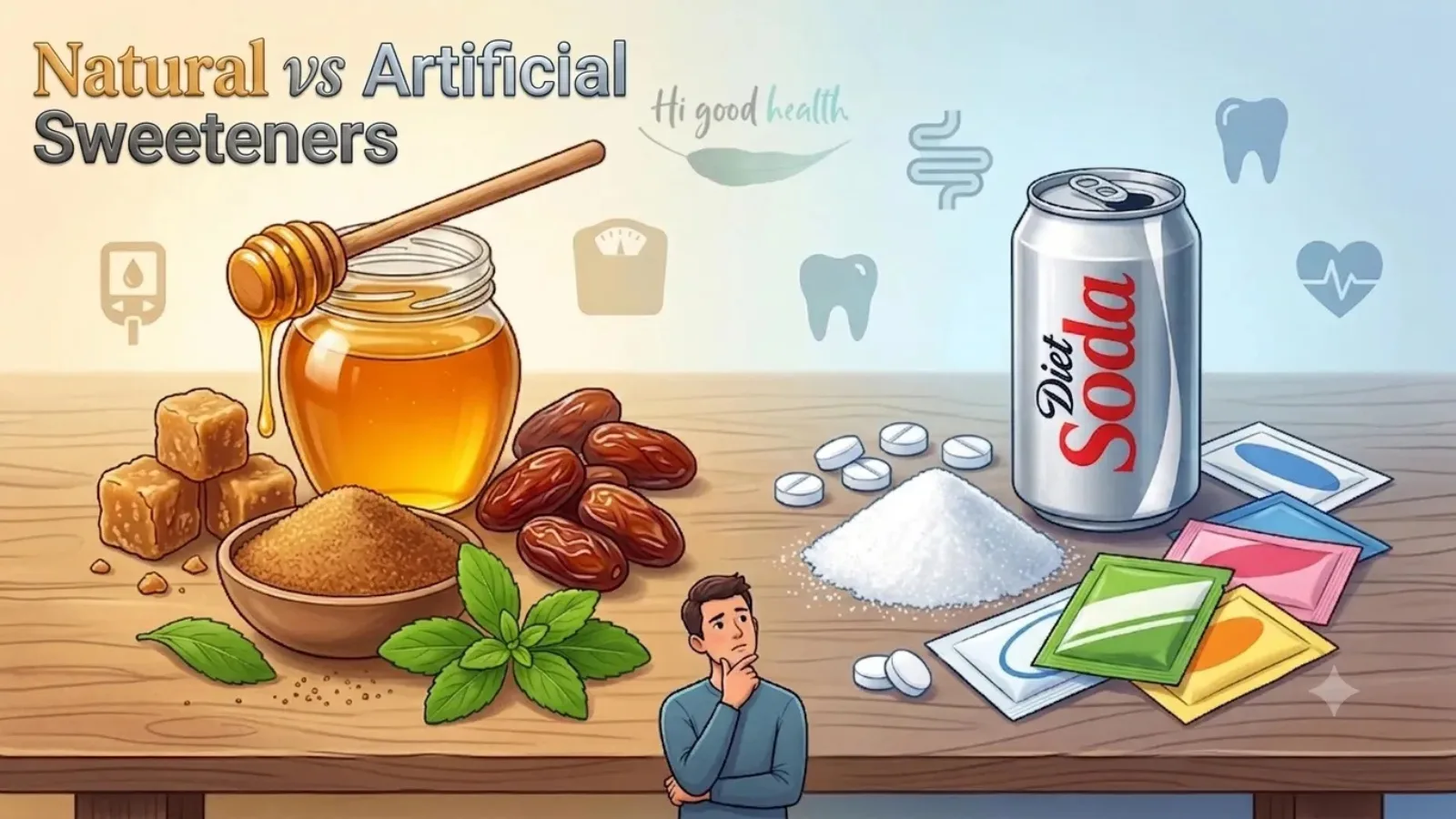
Natural vs Artificial Sweeteners: Why This Choice Matters More Than Ever
If you’ve ever scanned a food label and stumbled across names like aspartame, stevia, sucralose, or monk fruit extract, you’re not alone. The debate over natural sweeteners versus artificial sweeteners has reached every corner, from local kirana stores to modern supermarkets, fitness forums, and everyday kitchens.
At a glance
Natural sweeteners like stevia, monk fruit, and allulose are usually the better everyday choice, because they add sweetness with little to no effect on blood sugar and appear gentler on your gut than artificial sweeteners such as aspartame and sucralose. No sugar substitute is perfect, so the best sugar substitute for you depends on your health goals, how much you use, and how your body responds. For most Indian households, rotating a few natural, zero calorie sweeteners in moderation works better than leaning on any single sweetener. Overall, natural sweeteners are the safer starting point for most people.
But beyond calories and taste, there’s a growing concern about how each sugar substitute, both natural and artificial, affects our gut health, appetite, and blood sugar levels.
Recent studies published in leading medical journals suggest that sweeteners can influence the gut microbiome (the community of bacteria living in your digestive system), possibly altering hunger cues and metabolic responses.
Research published in journals like Nature and Cell has explored the complex interactions between artificial sweeteners and gut bacteria, highlighting potential shifts in metabolic pathways.
While more long-term human studies are ongoing, the emerging evidence points to a more nuanced picture than just “calorie-free equals consequence-free.” With India seeing a sharp rise in diabetes, obesity, and digestive issues (over 100 million people living with diabetes, ICMR-INDIAB 2023 [6]).
Understanding what’s truly behind that sweet taste matters more than ever.
The impact of sweeteners extends beyond the tongue, as the signals from your digestive tract directly influence your neurological state. Explore the biological communication pathways between your digestive system and mental clarity for detailed information, read our article.
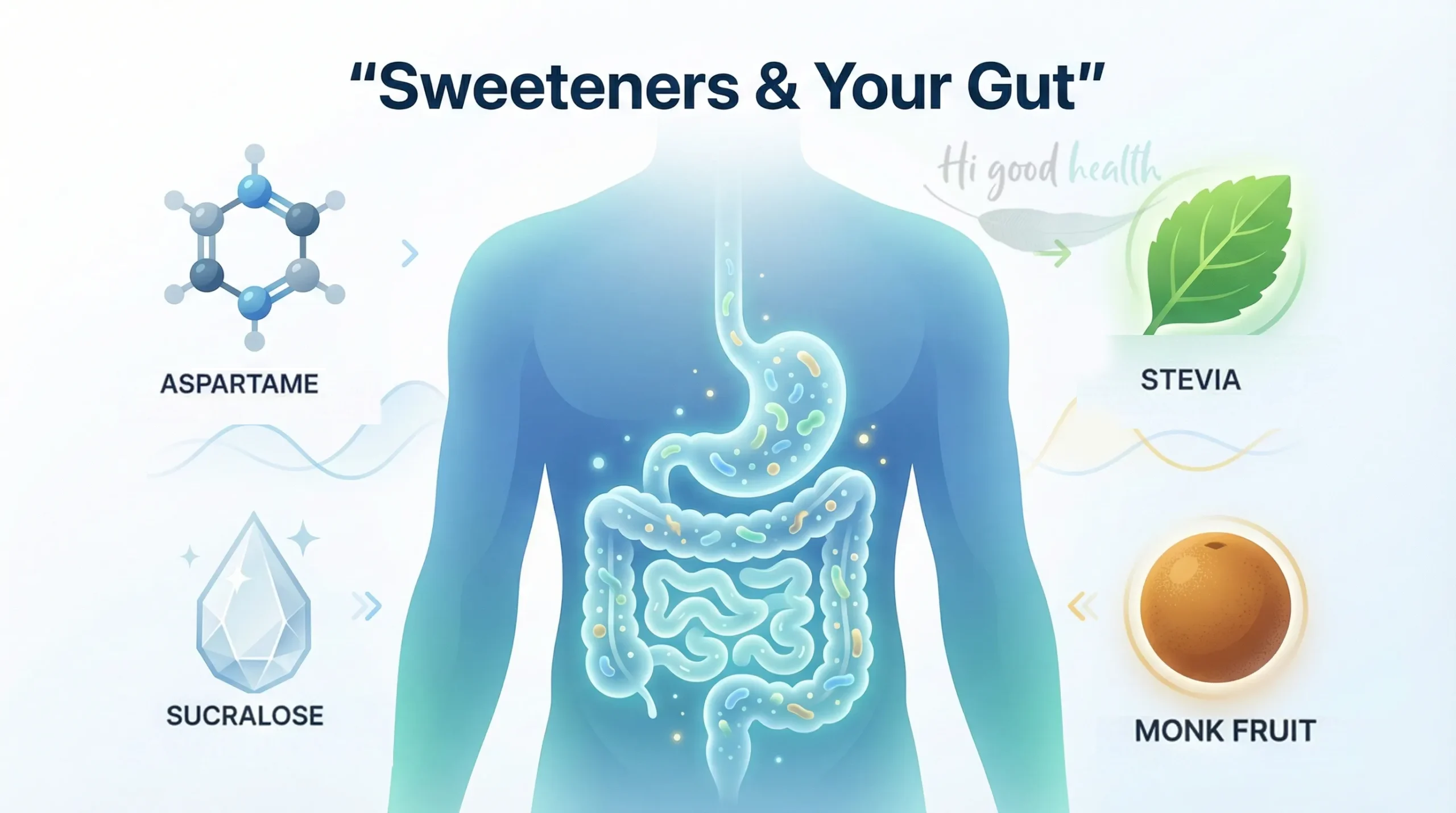
1. A Short History of Sweetness: From Cane Sugar to Lab-Made Sugar Substitutes
Humans have always craved sweetness. In India, natural sugars from honey, fruits, and sugarcane, along with traditional sweeteners like jaggery (gur), have long been part of daily diets.
But as sugar became cheap and abundant in the 19th century, its overuse sparked health problems. That pushed scientists to explore calorie-free alternatives and, eventually, today’s wide range of natural sweeteners and artificial sweeteners.
- Artificial sweeteners like saccharin (discovered in 1879), aspartame (1981), and sucralose (1999) were developed to satisfy cravings without adding calories.
- Natural sweeteners such as stevia, monk fruit, and allulose entered mainstream use in the 2000s as more people sought “cleaner” labels and a plant-based sugar substitute.
But does the word “natural” always mean better for your body? Let’s break it down.
2. Meet the Sweeteners: Natural Sweeteners vs Artificial Sweeteners
The table below compares the two families side by side, so you can see where natural sweeteners and artificial sweeteners differ in source, calories, and sweetness. Choosing between natural sweeteners and artificial sweeteners starts with knowing what each one really is.
| Type | Examples | Source | Calories | Sweetness vs Sugar |
| Natural | Stevia, Monk Fruit, Allulose, Honey, Maple Syrup, Coconut Sugar | Plants (leaves, fruits, sap) | Low to moderate | 100-300× or less |
| Artificial | Aspartame, Sucralose, Acesulfame-K (Ace-K) | Lab-synthesized compounds | 0 | 200-600× |
3. Emerging Natural Sweeteners and Under-Discussed Sugar Substitutes
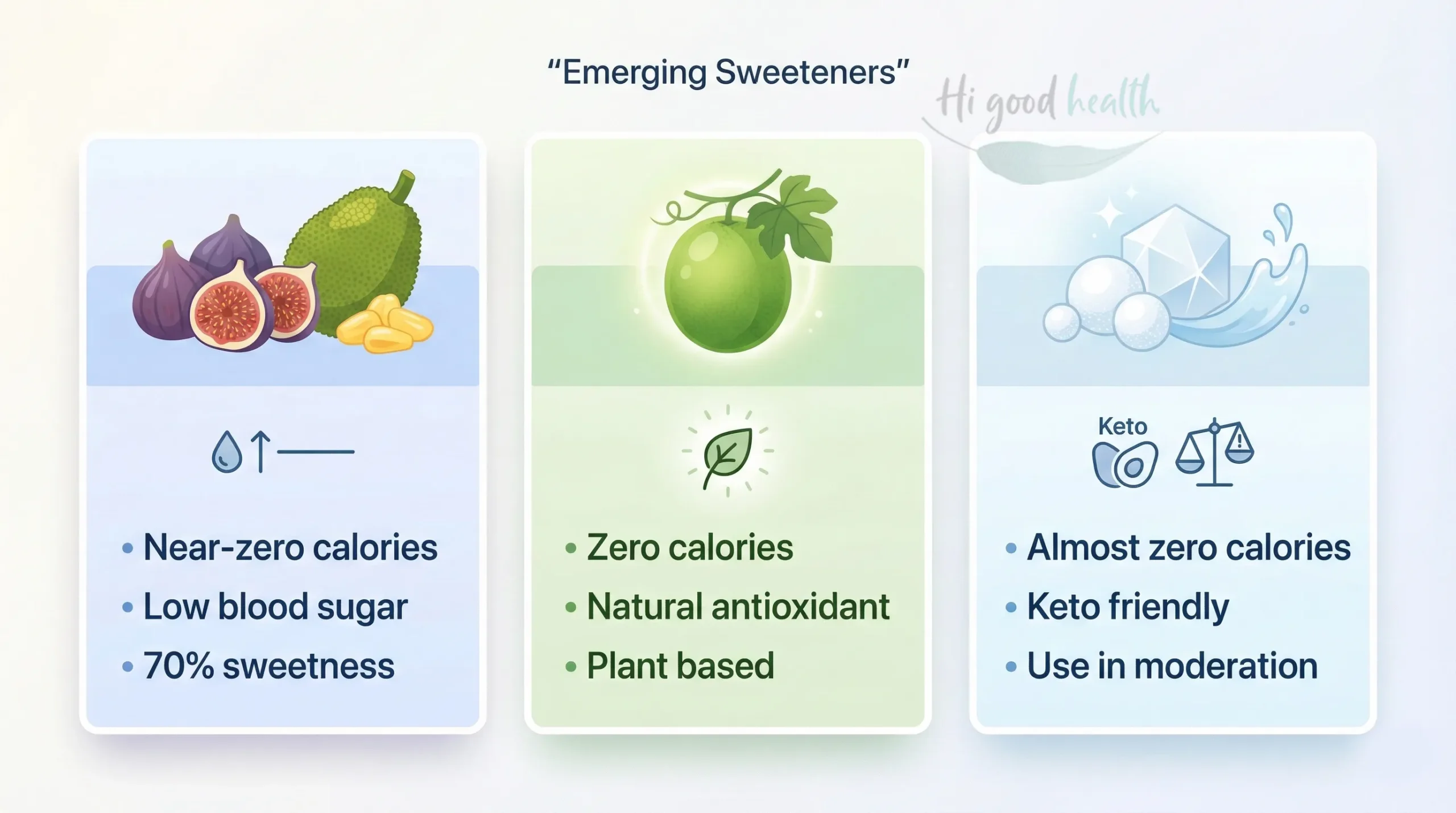
A few newer natural sweeteners are quietly reshaping the sugar substitute aisle. Here is what the science says about three of the most talked-about natural sweeteners.
Allulose: The Metabolic Standout
What is it? A rare sugar found naturally in small amounts in figs, jackfruit, and raisins. It’s about 70% as sweet as regular sugar but has negligible calories and doesn’t raise blood glucose.
The Science: Studies published in Nutrients (2023) and the Journal of Functional Foods confirm that allulose does more than just “not count” as sugar. It actively helps improve insulin sensitivity by enhancing mitochondrial function (the powerhouses of your cells) and reducing inflammation in fatty tissues. Unlike regular sugar, which can trigger inflammation, allulose has been shown to suppress inflammatory markers such as interferon-gamma (IFN-γ). [5]
Best For: People with diabetes, pre-diabetes, or those trying to manage blood sugar without giving up sweetness. It is one of the most promising natural sweeteners for this group.
Monk Fruit Sweetener (Luo Han Guo): Ancient Wisdom, Modern Science
What is it? Monk fruit, also known as Siraitia grosvenorii, is a small, round fruit with a greenish-brown colour that originates from southern China. It gets its name from Buddhist monks who cultivated it centuries ago. Monk fruit extract contains mogrosides, sweet compounds with antioxidant properties. [1]
The Science: Recent research from 2025 systematic reviews shows that monk fruit extract significantly reduces post-prandial glucose response by 10-18% and insulin response by 12-22% compared to regular sugar, without affecting appetite. The Food and Drug Administration (FDA) recognizes it as safe (GRAS status), and it has been used for centuries in traditional Chinese medicine. As a natural, zero calorie sweetener, monk fruit sweetener is now widely sold in India too. [4]
Best For: Anyone looking for one of the most versatile natural sweeteners, with zero calories and potential antioxidant benefits.
Erythritol: The Controversial Sugar Alcohol
What is it? A sugar alcohol derived from corn or fermented fruit. It’s 60-70% as sweet as sugar but has almost no calories. Popular in keto and diabetic products, and a common ingredient in sugar free sweeteners.
The Concern: A 2023 study in Nature Medicine suggested a possible link between high levels of erythritol and cardiovascular events. This finding has sparked significant debate within the scientific community, with some experts calling for further research to understand the dosage and long-term implications, while others emphasize that typical consumption levels are far below those implicated in the study. [2]
Recommendation: If you have heart disease risk factors, use erythritol in moderation and discuss with your healthcare provider. Allulose and Monk Fruit are generally considered safer natural sweeteners.
To know more about dietary choices to protect your kidneys, read our insightful blog
4. Natural Sweeteners: The Full Picture
The table below ranks common natural sweeteners and traditional Indian options by calories, glycemic index, and whether they are gut friendly.
| Sweetener | Calories (per tsp) | Glycemic Index | Gut Friendly | Rich in Nutrients |
| Stevia | 0 | 0 | ✅ Yes | ❌ No |
| Monk Fruit | 0 | 0 | ✅ Yes | ❌ No |
| Allulose | ~0.4 | 0-5 | ✅ Yes | ❌ No |
| Honey (raw) | ~21 | 50-60 | ✅ Yes | ✅ Yes |
| Maple Syrup | ~17 | 54 | ⚠️ Neutral | ✅ Yes |
| Coconut Sugar | ~15 | 35 | ⚠️ Neutral | ✅ Yes |
| Jaggery (Gur) | ~17 | 50-55 | ✅ Yes | ✅ Yes |
| Date Sugar | ~15 | 45-50 | ✅ Yes | ✅ Yes |
| Brown Sugar | ~16 | 64 | ❌ No | ❌ No |
| White Sugar | ~16 | 65 | ❌ No | ❌ No |
Note: Brown and white sugar are both refined forms of cane sugar. Brown sugar is simply white sugar with some molasses added back. White sugar is the most processed and stripped of any nutrients. For healthier options, consider less-refined natural sweeteners like jaggery (gur), khandsari, or date sugar.
5. Sweetening Naturally With Whole Foods
Whole foods are the original natural sweeteners. Long before packaged natural sweeteners existed, Indian kitchens relied on fruit, dates, and honey to satisfy a sweet tooth.
| Food | Sweetness | Glycemic Index | Key Benefits |
| Dates | High | 42-55 | Energy, potassium, antioxidants |
| Strawberries | Medium | 41 | Low GI, vitamin C, fiber |
| Mango | Medium | 50-60 | Vitamin A, gut-friendly enzymes |
| Raisins | High | 64 | Iron, fiber, digestive aid |
| Watermelon | Mild | 72 | Hydrating, lycopene, low-calorie |
6. How Artificial Sweeteners Affect Your Gut Health
This is where the science gets interesting, and sometimes concerning, especially when you compare artificial sweeteners with natural sweeteners.
The Gut Microbiome Connection
Your gut contains trillions of bacteria that play a crucial role in digestion, immunity, and even mood regulation.
Emerging research, especially relevant to changing urban dietary habits in India, shows that artificial sweeteners can significantly alter this delicate balance.
Recent Findings:
- A 2025 Cedars-Sinai study found that people consuming non-sugar sweeteners showed significant differences in both stool and small intestine microbial diversity compared to controls.
- Aspartame consumption specifically was linked to enrichment of a metabolic pathway associated with cylindrospermopsin, a toxin recognized for harmful effects on the liver and nervous system.
- Research published in PMC journals indicates that artificial sweeteners may reduce beneficial bacteria while increasing potentially harmful strains. [3]
What This Means for You: While artificial sweeteners may help reduce calorie intake short-term, they might disrupt the gut bacteria that help regulate metabolism, inflammation, and blood sugar control, potentially working against your health goals in the long run.
This is a key reason many nutritionists in India now steer people toward natural sweeteners.
Natural Sweeteners and Gut Health
Studies on stevia show mixed results; some indicate beneficial or neutral effects on gut bacteria, while others suggest potential disruption, particularly in people with obesity. Indian health authorities, specifically the Food Safety and Standards Authority of India (FSSAI) and other bodies, generally consider stevia and similar natural sweeteners safe in moderation, but recommend varying your natural sweeteners and other sweetener sources rather than relying on one exclusively.
7. Best Sugar Substitutes for People With Diabetes
For people managing diabetes, which affects a large and growing population in India, choosing the right sweeteners takes extra care. Natural sugars and refined sweeteners can raise blood glucose levels, sometimes sharply, so the best sugar substitute here is one with little to no glycemic impact.
In practice, that means leaning on natural sweeteners like stevia, monk fruit, and allulose.
Genetic and metabolic factors make South Asians uniquely sensitive to rapid glucose spikes. Understand why South Asians develop diabetes earlier and the role of new GLP-1 breakthroughs, for detailed information, read our article.
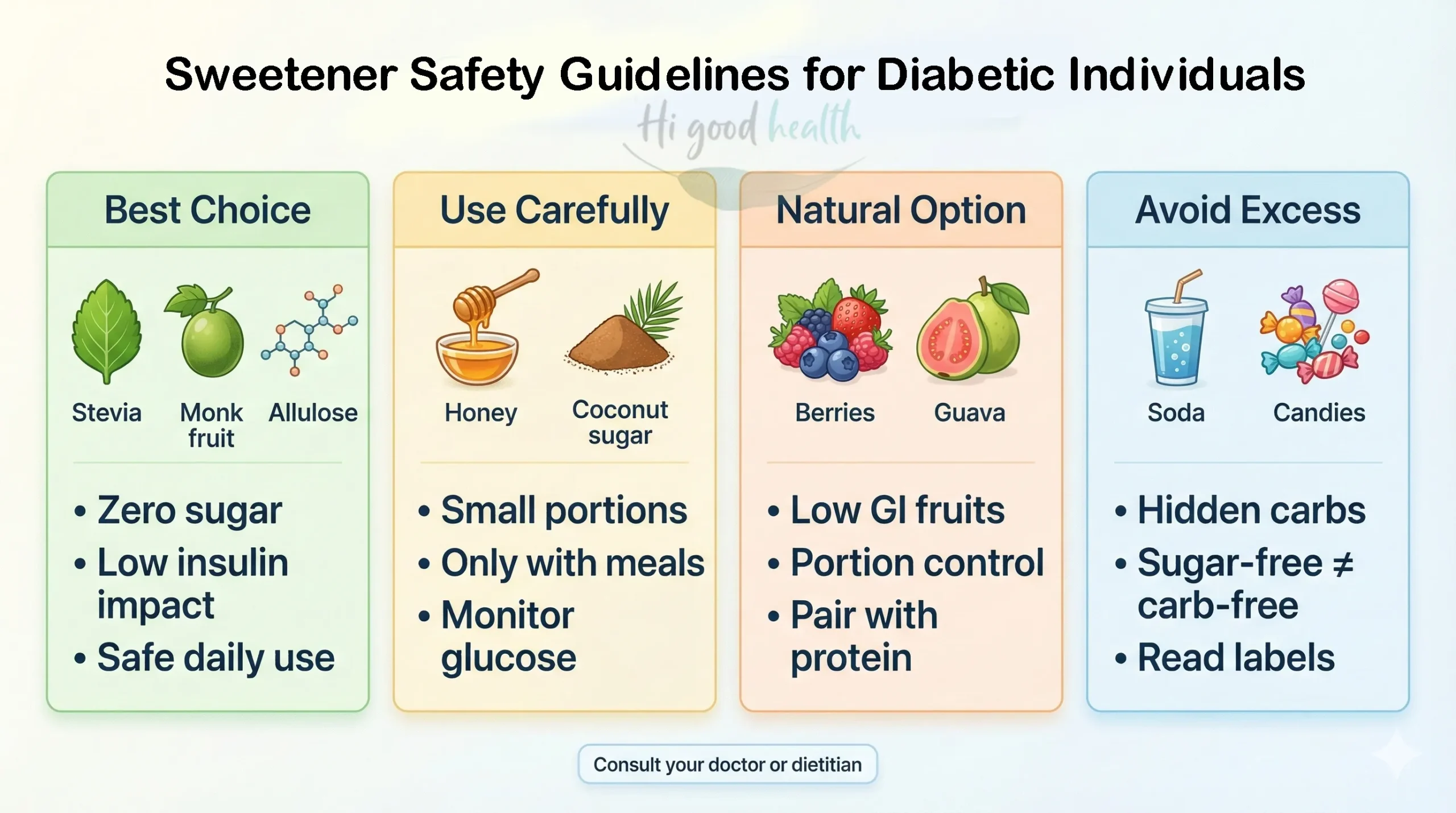
Best Choices for Blood Sugar Control
The natural sweeteners below have the least effect on blood sugar. Zero-Impact Options: – Stevia – permitted by FSSAI, zero glycemic index – Monk Fruit – reduces glucose response by up to 18% – Allulose – actively improves insulin sensitivity
Use Very Sparingly: – Honey (GI: 50-60) – Coconut Sugar (GI: 35) – Jaggery (GI: 50-55)
Avoid: – White sugar, brown sugar, high-fructose corn syrup – Large amounts of dried fruits or fruit juices
| Scenario | Recommended Options | Notes |
| Diabetic (strict control) | Stevia, Monk Fruit, Allulose | Zero GI, very low impact on insulin |
| Diabetic (moderate control) | Honey (very limited), Coconut Sugar | Only with meals, monitor glucose closely |
| Diabetic (borderline) | Fruits with low GI (berries, guava) | Limit portions, combine with protein |
| Pre-diabetic | Stevia, fruits, jaggery (minimal) | Avoid processed sugar, manage portions |
Practical Tips for Diabetics
✅ Favor whole fruits over juices or dried fruits
✅ Monitor post-meal glucose levels when trying new sweeteners
✅ Read labels—“sugar-free” foods may still contain carbs
✅ Combine sweet foods with protein or healthy fats to slow absorption
✅ Always consult with a registered dietitian or physician for personalized advice
8. The Aspartame Debate: What You Need to Know in 2026
Aspartame remains one of the most studied and controversial food additives in the world.
The WHO Classification (July 2023)
The International Agency for Research on Cancer (IARC), part of the World Health Organization, classified aspartame as “possibly carcinogenic to humans” (Group 2B). This classification was based on “limited evidence” regarding liver cancer, signaling a need for more rigorous, long-term research.
Important Context: Group 2B also includes things like aloe vera extract and pickled vegetables, which means there’s some evidence of concern, but it’s not conclusive.
Regulatory Positions
Despite the IARC classification, major regulatory bodies maintain that aspartame is safe within established limits:
- FDA (USA): Acceptable Daily Intake (ADI) of 50 mg/kg body weight/day
- EFSA (Europe): ADI of 40 mg/kg body weight
- FSSAI (India): Follows similar safety standards
What This Means: For an average 60–70 kg adult, the ADI would be about 19-21 cans of diet soda per day, far more than most people consume.
Medical Expert Guidance
Leading institutions like Harvard Health have adopted a more cautious stance:
- Metabolic Effects: Artificial sweeteners may confuse your body’s metabolic response, potentially affecting appetite and the gut microbiome
- Vulnerable Populations: Children and pregnant women should limit intake, as high maternal consumption may be linked to metabolic issues in offspring
Bottom Line: While regulatory agencies consider aspartame safe at current consumption levels, the scientific community continues to debate long-term effects. If you’re concerned, natural sweeteners like stevia, monk fruit, or allulose offer zero-calorie options without the controversy.
9. Sugar Cravings? Here’s How to Curb Them Naturally
Eat more protein & healthy fats – Stabilizes blood sugar and keeps you fuller longer
Stay hydrated – Dehydration can mimic sugar cravings
Sleep 7-8 hours daily – Sleep loss disrupts hunger hormones like ghrelin and leptin
Choose naturally sweet foods – Try fruit, a small piece of jaggery, or dates after meals, or a touch of natural sweeteners like stevia.
Use spices – Cinnamon, nutmeg, and vanilla add sweetness without sugar
Eat regularly – Skipping meals can trigger intense sugar cravings
To learn more about enzymes and probiotics for gut repair, read our in-depth blog
10. How to Switch to Natural Sweeteners in Your Recipes
Switching to natural sweeteners in everyday recipes is easier than most people expect. Here is how to swap them in without ruining texture or taste.
Baking:
– Use 1/3 the amount of stevia or monk fruit compared to sugar – Add allulose in a 1:1 ratio for a sugar-like texture in baking
Drinks:
– Mix lemon, mint, and a pinch of stevia – Blend soaked raisins or dates for natural sweetness in smoothies
Desserts:
– Use jaggery (gur) in traditional Indian sweets like kheer, ladoo, or chikki for added minerals
Snacks:
– Blend dry fruits for homemade energy bites – Top curd with fresh berries instead of sugar
If you prefer a more visual version, check out our YouTube video here:
Jaggery vs White Sugar: India’s Traditional Natural Sweetener
In India, jaggery (gur) is the classic “healthier” alternative to white sugar. Because it is less refined, jaggery keeps small amounts of minerals such as iron and potassium that refined sugar loses, along with traces of antioxidants.
It is important to be realistic, though: jaggery is still sugar. It carries roughly the same calories as white sugar and raises blood glucose in much the same way, so it is not a free pass for people managing diabetes or weight. Treat jaggery as a more wholesome swap in small quantities — a spoonful in place of refined sugar — rather than a health food to use freely.
Key Takeaways
- Natural sweeteners such as stevia sweetener, monk fruit sweetener, and allulose have a near-zero glycemic index, so they suit blood sugar control.
- Artificial sweeteners like aspartame and sucralose may alter the gut microbiome and hunger cues, so it is wise to limit long-term use.
- Sugar alcohols such as erythritol are low-calorie sugar free sweeteners but can cause bloating and carry debated heart-health questions.
- Among traditional Indian options, jaggery and honey are less refined than white sugar but still raise blood sugar, so use them sparingly.
- FSSAI and ICMR favour moderation and variety over relying on any single zero calorie sweetener.
- The best sugar substitute depends on your goals; pair sweet foods with protein or fibre to slow glucose spikes.
Frequently Asked Questions
1. What is the healthiest natural sugar substitute?
Allulose, monk fruit, and stevia are generally considered the best options. They’re plant-based or naturally occurring, have zero calories, and have minimal impact on blood sugar levels.
2. Are artificial sweeteners like aspartame safe?
While FDA-approved, the WHO recently classified aspartame as “possibly carcinogenic.” Artificial sweeteners may also alter gut bacteria and metabolic pathways, so limiting long-term intake is recommended for better health.
3. Can sweeteners cause bloating or digestive issues?
Yes. Sugar alcohols like erythritol can cause digestive issues in high doses. Artificial sweeteners may also disrupt the gut microbiome, potentially affecting digestion and metabolism.
Persistent bloating after using substitutes may indicate a need for digestive support. Consult our guide on choosing the right digestive allies between prebiotics, probiotics, and enzymes, for detailed information, read our article.
4. Which sweeteners are best for diabetics?
Stevia, monk fruit, and allulose are top choices because they have a glycemic index of zero and don’t spike insulin. Diabetics should avoid refined sugars and use honey or coconut sugar very sparingly.
5. Is erythritol safe for heart health?
A 2023 study suggested a possible link between high erythritol levels and cardiovascular events. If you have heart disease risk factors, use it in moderation and consult your healthcare provider.
6. Is honey actually better for you than white sugar?
Honey, commonly used in Indian households, is slightly better because raw versions contain trace nutrients and antioxidants. However, it still has a high glycemic index (50-60), meaning it raises blood sugar similarly to table sugar.
7. Why do I still crave sugar when using diet sweeteners?
Sweeteners might alter hunger cues and the gut microbiome. Your brain may not register satisfaction the same way it does with real sugar, leading to continued cravings or compensatory eating.
8. What is the best zero calorie sweetener for weight loss?
For weight management, monk fruit, stevia, and allulose are the best zero calorie sweeteners because they add sweetness without meaningful calories or blood sugar spikes. They work best alongside whole foods and portion control, since no sugar substitute burns fat on its own.
9. Is monk fruit sweetener better than stevia sweetener?
Both are natural, zero-calorie options with a glycemic index near zero. Monk fruit sweetener has a cleaner, less bitter aftertaste for many people, while stevia sweetener is cheaper and more widely available in India. Trying both and rotating them is a reasonable approach.
10. Are sugar alcohols and sucralose safe for daily use?
In normal amounts, sucralose and sugar alcohols like erythritol and xylitol are considered safe by FSSAI and other regulators. That said, sugar alcohols can cause gas or bloating in larger doses, and artificial sweeteners such as aspartame and sucralose are best kept to moderate, occasional use.
Glossary
Glycemic Index (GI): A measure of how quickly a food raises blood sugar (0-100 scale).
Gut Microbiome: The community of trillions of bacteria living in your digestive system that affects immunity, digestion, and metabolism.
Stevia: A zero-calorie natural sweetener derived from the leaves of a South American plant.
Jaggery: Unrefined cane sugar with molasses; a nutrient-rich alternative to white sugar.
Allulose: A rare sugar with negligible calories that doesn’t spike blood glucose and may improve insulin sensitivity.
Aspartame/Sucralose: Common artificial sweeteners often used in diet sodas and sugar-free products.
Erythritol: A sugar alcohol with low calories; may cause digestive issues in high doses.
Monk Fruit: A natural, zero-calorie sweetener extracted from a fruit native to Southeast Asia.
ADI (Acceptable Daily Intake): The amount of a food additive that can be consumed daily over a lifetime without health risk, as determined by regulatory agencies.
The Bottom Line
When it comes to sweeteners, there’s no one-size-fits-all answer. The “best” choice depends on your health goals, metabolic condition, and how your body responds. For most people, natural sweeteners used in moderation are a sensible default.
Summary by Health Goal:
For blood sugar control: Allulose, monk fruit, and stevia are your safest bets
For overall health: Minimize all sweeteners, and prefer natural sweeteners when you do indulge
For gut health: Limit artificial sweeteners; they may disrupt beneficial bacteria
For diabetes: Choose zero-glycemic options and monitor your response
For heart health: Use erythritol cautiously; consider alternatives
Remember, the sweetest choice is often the one you make consciously, in moderation, and with awareness of how it affects your unique body.
Always consult with a healthcare professional before making significant dietary changes, especially if you have diabetes, metabolic disorders, or other health conditions.
Disclaimer
This educational content is designed to help you make informed decisions about natural sweeteners and their alternatives. We’ve reviewed current research from peer-reviewed medical journals and guidance from leading health authorities, including FSSAI, ICMR, the WHO, the FDA, Mayo Clinic, Cleveland Clinic, and Harvard Health. All links to scientific sources are provided for readers who wish to explore the research in greater detail.
All reference links valid and accessible on 27 March 2026
- Wazir M, Verma H, Singh J, Singh P, Passey S. The Battle of Natural Sweeteners: A Comprehensive Guide to Monk Fruit and Stevia. Nutr Food Sci 2025; 13(1).
- Witkowski, M., Nemet, I., Alamri, H. et al. The artificial sweetener erythritol and cardiovascular event risk. Nat Med 29, 710–718 (2023). https://doi.org/10.1038/s41591-023-02223-9
- Hetta, H. F., Sirag, N., Elfadil, H., Salama, A., Aljadrawi, S. F., Alfaifi, A. J., Alwabisi, A. N., AbuAlhasan, B. M., Alanazi, L. S., Aljohani, Y. A., Ramadan, Y. N., Abd Ellah, N. H., & Algammal, A. M. (2025). Artificial Sweeteners: A Double-Edged Sword for Gut Microbiome. Diseases (Basel, Switzerland), 13(4), 115. https://doi.org/10.3390/diseases13040115
- Kaim, U., & Labus, K. (2025). Monk Fruit Extract and Sustainable Health: A PRISMA-Guided Systematic Review of Randomized Controlled Trials. Nutrients, 17(9), 1433. https://doi.org/10.3390/nu17091433
- Bae, H. R., Shin, S. K., Han, Y., Yoo, J. H., Kim, S., Young, H. A., & Kwon, E. Y. (2023). D-Allulose Ameliorates Dysregulated Macrophage Function and Mitochondrial NADH Homeostasis, Mitigating Obesity-Induced Insulin Resistance. Nutrients, 15(19), 4218. https://doi.org/10.3390/nu15194218
- Metabolic non-communicable disease health report of India: the ICMR-INDIAB national cross-sectional study – Full text: https://www.thelancet.com/journals/landia/article/PIIS2213-8587(23)00119-5/fulltext
