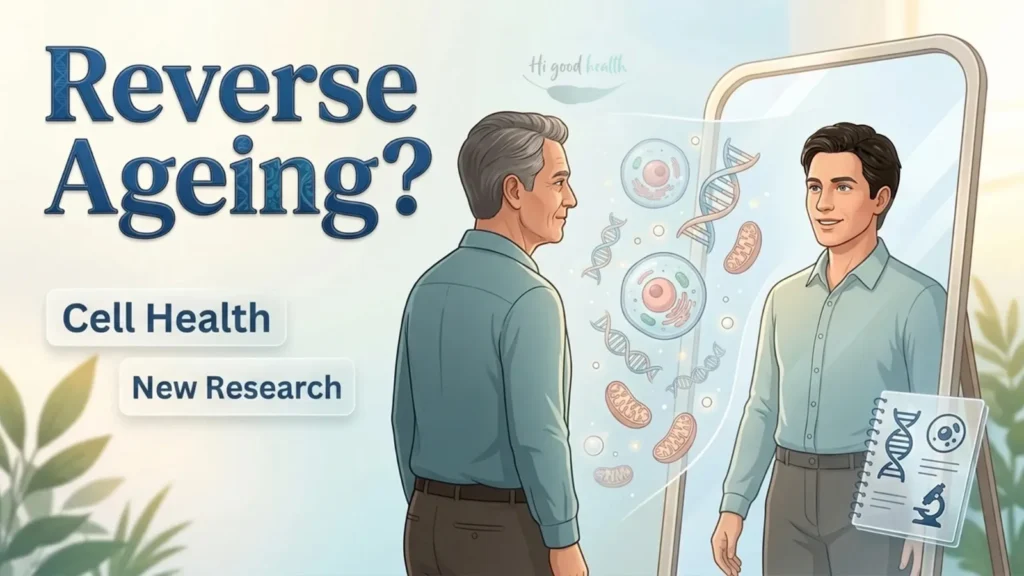
About this series. Reverse Aging is a ten-part series on what aging science can do today, what it cannot do yet, and what longer, healthier lives would mean for work, money and family. This is Part 1: the science itself — what aging is, and how much of it can be reversed.
“What if the first person who will live to 120 has already been born?”
Not long ago, that question belonged to science fiction.
Today, it is being discussed in laboratories at Harvard, Stanford, MIT, and some of the world’s best-funded biotechnology companies. Billionaires are investing billions of dollars into longevity research. Nobel Prize-winning discoveries are changing the way scientists think about aging.
At a Glance
- Aging is not one process but a set of measurable biological changes.
- Twelve hallmarks of aging are covered, and they interact rather than act alone.
- Lifespan and healthspan are different targets and the article keeps them apart.
- Cellular reprogramming has reversed some aging markers in animals.
- The billion-dollar industry around this is moving faster than the evidence.
- What you can actually do today is separated from what is still speculative.
Drugs originally developed for diabetes are now being investigated for their ability to slow biological aging. Artificial intelligence is helping researchers search for molecules that may delay age-related diseases.
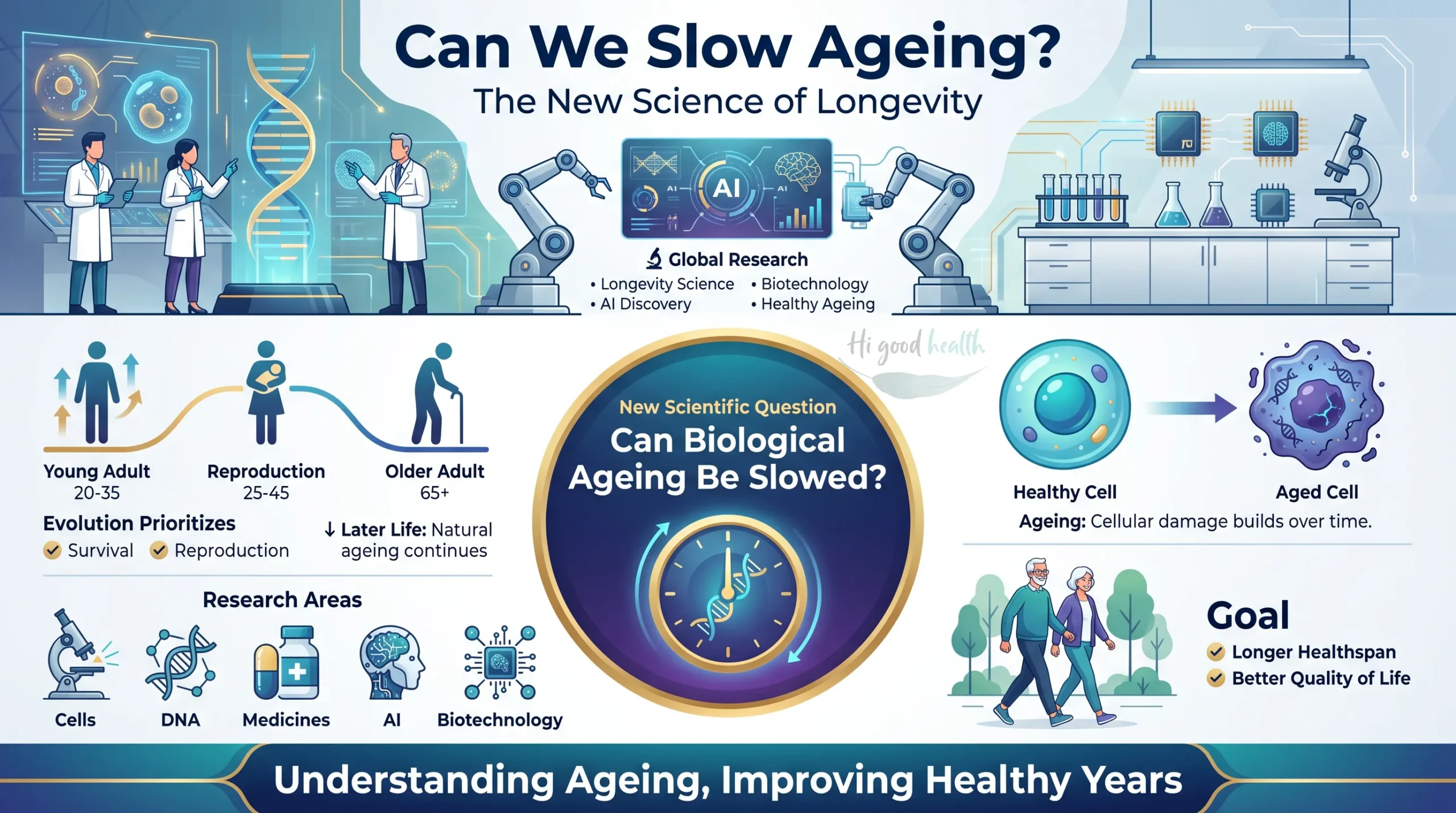
If aging is so harmful, why didn’t evolution prevent it?
The answer lies in how natural selection operates. Evolution strongly favors traits that enhance survival and reproduction during the early stages of life, when individuals are most likely to pass on their genes.
Once reproduction has occurred, the force of natural selection gradually weakens, allowing cellular damage and age-related decline to accumulate over time. In this sense, aging may not be an evolutionary failure, but rather a consequence of evolution’s priorities.
Does that mean humans are about to stop aging?
Not quite.
But something remarkable has happened over the last two decades. Scientists have gradually stopped viewing aging as an unavoidable part of life and started asking a very different question:
What if aging itself could be treated? Is aging a disease?
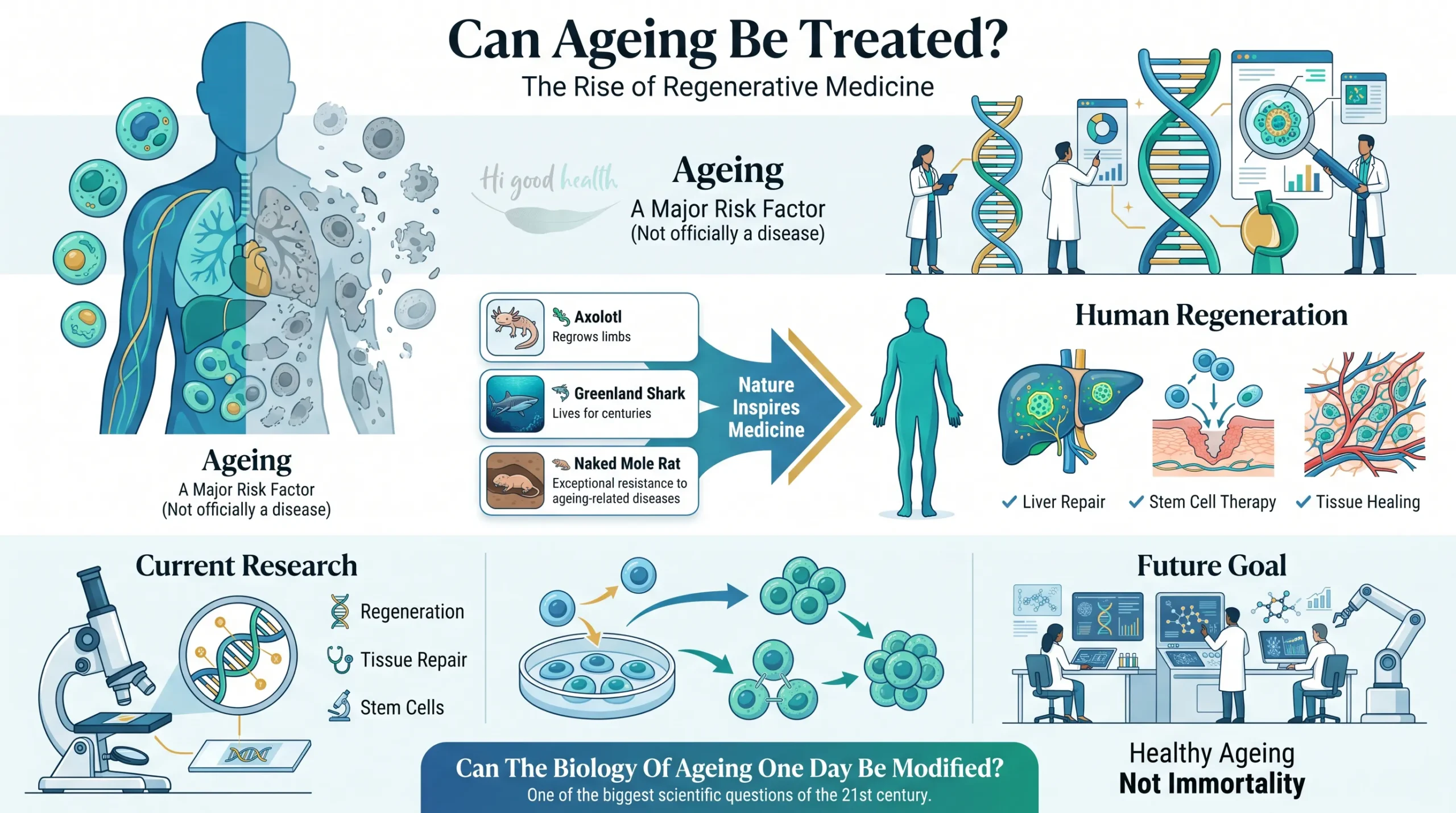
For centuries, aging was viewed as an inevitable part of life rather than a target for medicine. Today, that perspective is beginning to change. A growing number of researchers argue that by addressing the biological processes that drive aging, it may be possible to delay or reduce the onset of multiple age-related diseases at once.
While aging is not officially classified as a disease, it is increasingly recognized as the single greatest risk factor for many of the conditions that limit health and longevity.
A growing number of researchers now view aging as the common biological driver behind many chronic diseases rather than a disease in its own right.
It sounds radical, yet nature has been demonstrating extraordinary examples of regeneration for millions of years.
The axolotl, a small Mexican salamander, can regrow an entire limb, parts of its heart, spinal cord, and even sections of its brain.
Greenland sharks can live for nearly 400 years, making them the longest living vertebrates ever discovered. Naked mole rats, despite being rodents, rarely develop cancer and seem unusually resistant to many of the biological changes associated with aging.
Humans don’t possess these remarkable abilities, but we aren’t starting from zero either. Humans may not possess the extraordinary regenerative abilities of salamanders, hydra, or certain species of fish, but we are far from biologically helpless.
The human liver, for example, has a remarkable capacity to regenerate after injury or surgical removal, restoring much of its lost tissue under the right conditions. This natural regenerative potential suggests that the foundations for tissue repair already exist within our biology, offering valuable clues for future rejuvenation therapies.
Stem cell therapies are already being used in selected medical settings to repair damaged blood-forming tissues, and researchers continue to investigate regenerative approaches for injuries, degenerative diseases, and tissue repair. While these treatments are not anti-aging therapies, they demonstrate that repairing damaged cells is no longer just a theoretical concept.
The bigger question now is whether those same principles could one day be applied to aging itself.
That possibility is driving one of the most exciting scientific races of the 21st century.
Aging: More Than Just Counting Birthdays
Ask someone their age and they’ll probably answer with a number.
Thirty-two.
Fifty-eight.
Seventy-four.
That’s your chronological age, It’s simply just counts your birthdays, but your biological age shows how old your body actually feels.
Think of two 60-year-olds.
One regularly hikes, has healthy blood pressure, sharp memory, and no chronic illness.
The other struggles with diabetes, heart disease, poor mobility, and constant fatigue.
On paper, they’re exactly of same age.
Biologically, they are not.
Scientists now distinguish between chronological age and biological age, a measure of how old your cells, tissues, and organs actually behave. In other words, your birth certificate may say you’re 50, but your biology could resemble that of someone ten years younger or older.
This simple idea has transformed aging research.
Instead of treating aging as an inevitable countdown, researchers now see it as a collection of biological processes that can be measured, understood, and perhaps influenced.
That doesn’t mean aging has been “solved.”
It means it has become a scientific problem rather than an untouchable fact of life.
What Actually Happens Inside the Body as We Age?
Most people imagine aging as wrinkles, grey hair, or aching joints.
Those are the visible signs.
The real story begins much deeper, inside trillions of cells working around the clock to keep you alive.
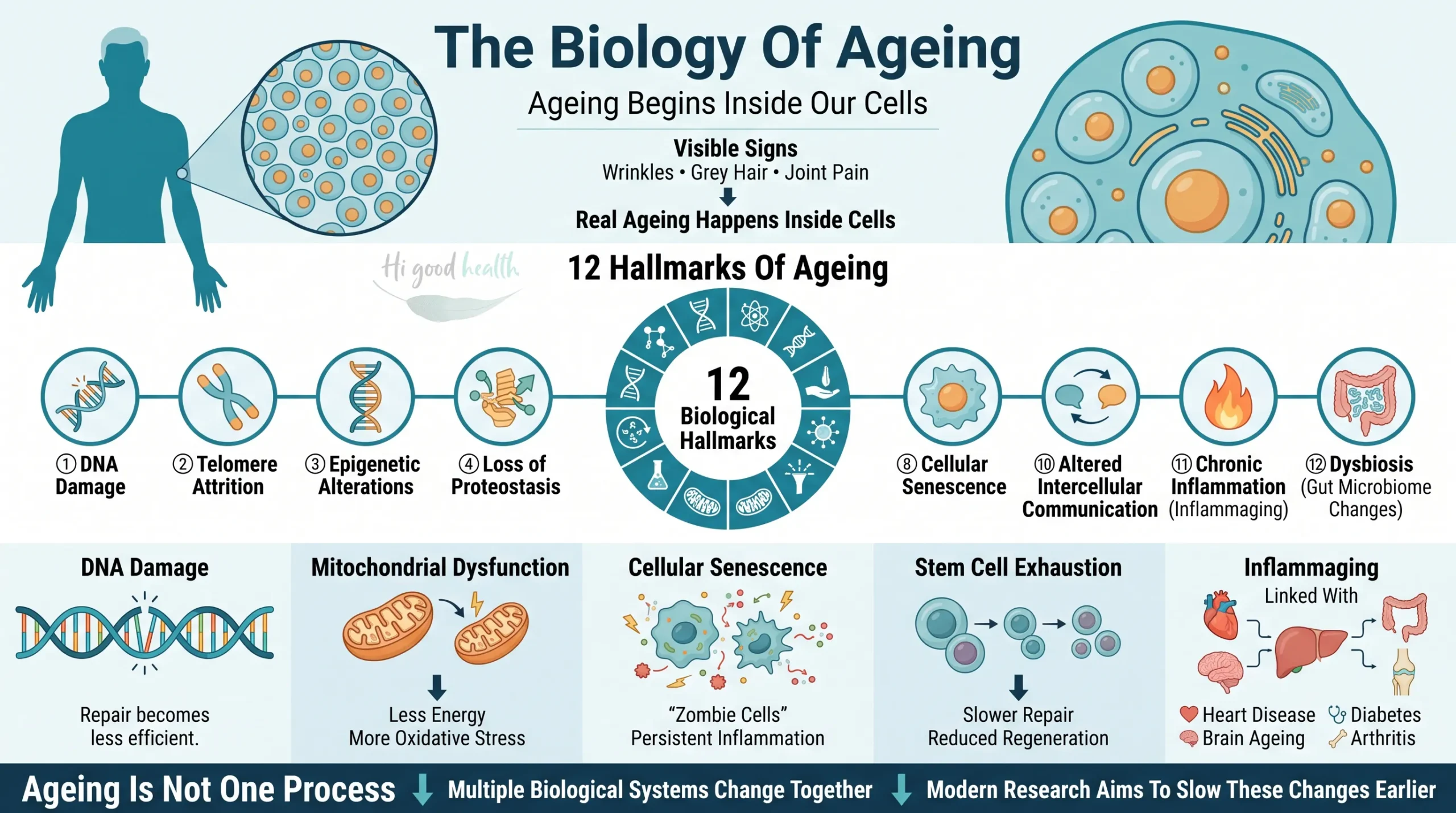
Biological hallmarks of aging – 12 hallmarks
Researchers often describe this process through the hallmarks of aging, a collection of interconnected biological changes that drive aging across multiple organs.
When we’re young, our bodies are remarkably efficient at repairing damage. Cells divide, DNA is repaired, proteins are recycled, and worn-out components are replaced.
Over time, however, this repair system becomes less efficient.
Small mistakes begin to accumulate.
Individually, they’re insignificant.
Together, they gradually change how our bodies function.
One of the earliest is DNA damage. Every day, our DNA is exposed to sunlight, pollution, infections, and even normal metabolism. Fortunately, our cells are equipped with sophisticated repair systems. But like a mechanic trying to keep an aging car on the road, these repair mechanisms become less effective over time, allowing errors to accumulate.
Then there are mitochondria, the tiny structures often called the cell’s powerhouse. They generate the energy every organ relies on. As mitochondria become less efficient with age, energy production declines while harmful by-products known as reactive oxygen species begin to increase.
Another major contributor is cellular senescence.
These are often nicknamed “zombie cells.”
Instead of dying when they’ve reached the end of their useful life, they linger. Worse still, they release inflammatory chemicals that can damage neighboring healthy cells.
Scientists believe the gradual accumulation of these senescent cells contributes to many age-related diseases.
Aging also affects our stem cells, the body’s natural repair crew.
When we’re younger, stem cells quickly replace damaged tissue. As we age, their numbers and activity decline, making it harder for organs to recover from injury.
Finally, there is inflammaging, a term researchers use to describe the chronic, low-grade inflammation that quietly develops over the years.
Unlike the inflammation that helps fight an infection, inflammaging is subtle and persistent. It’s increasingly linked to heart disease, diabetes, Alzheimer’s disease, arthritis, and many other conditions that become more common with age.
These processes don’t occur one at a time.
They interact, reinforce one another, and gradually increase the body’s vulnerability to disease.
For decades, doctors focused on treating the diseases that appeared at the end of this chain.
Today’s researchers are asking whether it might be possible to intervene much earlier.
Can Old Cells Become Young Again?
If there is one discovery that completely changed the conversation around aging, it came from an unexpected place.
In 2006, Japanese scientist Shinya Yamanaka discovered that introducing just four specific genes Oct4, Sox2, Klf4, and c-Myc into adult cells could reset them to a stem-cell-like state.
It was a discovery so significant that it earned him the Nobel Prize in Physiology or Medicine just six years later.
These genes, now known as the Yamanaka factors, essentially showed that cellular aging was not as irreversible as scientists once believed.
But there was a problem.
Completely reprogramming a mature cell erases its identity.
A skin cell no longer behaves like skin.
A liver cell no longer behaves like liver.
That creates a serious risk of uncontrolled growth and even cancer.
So researchers asked a smarter question:
What if we only reset part of the aging process?
Instead of taking cells all the way back to the beginning, scientists began experimenting with partial cellular reprogramming, nudging old cells toward a younger biological state while allowing them to retain their original function.
Think of it like restoring an old painting.
You remove years of dirt and damage.
You don’t erase the artwork itself.
That idea has become one of the most exciting frontiers in longevity science.
The Animal Experiments That Changed Everything
The strongest evidence for age reversal has not yet come from humans.
It has come from animals.
In recent years, researchers have shown that partial cellular reprogramming can reverse some biological signs of aging in mice. In one widely discussed study, older mice regained aspects of vision that had been lost with age. Other experiments have reported improvements in muscle function, metabolism, tissue repair, and overall health.
The two landmark studies behind this work are Ocampo and colleagues, published in Cell in 2016, which showed that partial reprogramming reversed signs of aging in mice, and Lu and colleagues, published in Nature in 2020, which restored vision that aged mice had lost.
Together they established partial cellular reprogramming as a promising approach for rejuvenation. Perhaps even more striking, several interventions targeting aging pathways have extended lifespan in laboratory animals, not by making them immortal, but by helping them remain healthier for longer.
These findings have transformed the field of longevity research.
But they also come with an important warning.
A mouse is not a human.
Mice live for only a few years, have very different immune systems, and can respond to treatments in ways humans do not. Many therapies that look revolutionary in animals ultimately fail during human testing because our biology is far more complex.
That is why scientists remain both excited and cautious.
The evidence is compelling.
The promise is real.
But the leap from laboratory success to safe, effective human therapies remains one of the biggest challenges in modern medicine.
Have Scientists Already Started Reversing Aging in Humans?
This is where the headlines often race ahead of the evidence.
If you’ve seen articles claiming that scientists have “reversed aging” or “discovered the fountain of youth,” it’s worth taking a closer look. The reality is both more exciting and more nuanced.
Scientists have not yet proven that aging can be reversed in humans.
What they have done is show that certain biological markers associated with aging can change under specific conditions.
One of the most important tools in this field is the epigenetic clock. Tests examine chemical tags on DNA also known as DNA methylation to estimate a person’s biological age. In some small clinical studies involving diet, exercise, stress management, and selected interventions, researchers have reported modest improvements in biological age measurements.
But here’s the important distinction:
A younger biological age on a laboratory test does not automatically mean a person will live longer or avoid age-related diseases. Those are questions that only large, long-term clinical trials can answer.
Researchers are encouraged by these early findings, but they are careful not to overstate them.
Another milestone arrived recently when researchers reported one of the first experimental human treatments aimed at making cells biologically younger. While the study represents an important scientific step, it is still an early-stage investigation designed primarily to evaluate safety, not to prove that age reversal has been achieved.
In science, promising does not mean proven.
And that distinction matters.
The Billion-Dollar Race Against Aging
If aging were simply another scientific curiosity, the world’s largest technology investors would not be paying much attention.
Instead, longevity science has become one of the fastest-growing areas of biomedical research.
Companies such as Altos Labs, Calico (backed by Google), and Retro Biosciences are investing billions of dollars to understand why we age and whether that process can be slowed. At the same time, academic laboratories around the world continue to investigate stem cells, cellular reprogramming, senolytic drugs, artificial intelligence, and gene-editing technologies.
Interestingly, there is no single roadmap.
Some researchers believe removing senescent “zombie cells” will have the greatest impact.
Others focus on repairing mitochondria, restoring stem cell function, reprogramming cells, or developing medicines that target multiple aging pathways simultaneously.
Rather than competing over one miracle solution, scientists are exploring many different routes toward the same destination: healthier aging.
That diversity of approaches is actually encouraging.
It suggests that aging is being treated as a serious scientific challenge, not a marketing trend.
Why Age Reversal Is Still So Difficult
If researchers have already made old cells behave more like younger ones, why aren’t these treatments available in hospitals?
Because biology rarely offers simple solutions.
Aging isn’t caused by a single faulty gene or one damaged organ.
It’s the result of dozens of interconnected biological processes unfolding over decades.
Changing one pathway may improve another or unintentionally create new problems.
One of the biggest concerns is cancer.
Cells are normally programmed to stop dividing when they become damaged. If scientists push cells to become younger without careful control, they could also encourage uncontrolled cell growth.
Then there’s the challenge of time.
Most chronic diseases take decades to develop.
To prove that an anti-aging therapy genuinely works, researchers may need to follow people for many years, perhaps even decades.
That makes longevity research slower than many other areas of medicine.
Finally, there are ethical and regulatory questions.
Should aging itself be classified as a disease?
Who should receive future longevity treatments?
How do we ensure that breakthrough therapies, if they arrive, don’t become available only to those who can afford them?
These are scientific questions, but they are also social ones.
What Could the Next 10–20 Years Look Like?
No one can predict exactly how longevity science will evolve.
But researchers have a reasonable idea of where the field is heading.
Rather than a single “anti-aging cure,” the first generation of therapies is likely to focus on slowing biological aging and reducing the risk of age-related diseases.
We may see medicines that remove senescent cells, improve mitochondrial function, or preserve stem cell activity. Artificial intelligence is already accelerating drug discovery, while advances in genomics and biomarker testing may allow treatments to become increasingly personalized.
It’s also likely that no single therapy will do everything.
Just as cardiovascular health depends on blood pressure, cholesterol, exercise, and nutrition, healthy aging will probably require a combination of approaches rather than one miracle pill.
The future may arrive gradually, not all at once.
What Can You Do Today?
The most important message from longevity science is also the simplest.
You don’t have to wait for future breakthroughs to influence how you age.
Many of the strongest evidence-based interventions are already available.
Regular physical activity remains one of the most powerful ways to preserve muscle, brain health, and metabolic function.
High-quality sleep supports cellular repair.
A balanced diet rich in whole foods helps reduce chronic inflammation.
Managing stress and maintaining meaningful social relationships are increasingly recognized as important contributors to healthy aging.
If you’re interested in understanding your own aging trajectory, consider discussing routine health screening with your healthcare provider. Tracking blood pressure, blood sugar, cholesterol, body composition, grip strength, and other validated health markers can provide a useful baseline. Emerging biological age tests may offer additional insights, although their role in routine healthcare is still evolving.
The science of longevity is exciting.
But your daily habits remain the strongest anti-aging tools currently supported by evidence.
The Reverse Aging Series
Ten articles on what longer, healthier lives would actually change.
- How Close Are We to Reversing Aging in Humans? — the biology of aging, and what has actually been reversed (you are here)
- Will We Really Live to 100+ and Stay Young While Doing It? — lifespan, healthspan and what the evidence supports
- If Aging Slows Down, Will Retirement Even Exist? — work, pensions and the hundred-year life
- Will Longer Lives Take Away Jobs from the Younger Generation?
- If Parents Stay Healthy Till 90, Will Children Feel Less Responsibility?
- Will We Have Two or Three Careers in One Lifetime?
- Can Science Really Make 80 the New 40?
- Who Will Benefit — Everyone, or Only the Wealthy?
- The Longevity Economy
- The Future of Being Human
Key Takeaways
- Aging is increasingly studied as a biological process rather than unavoidable destiny.
- Scientists have reversed certain aging-related changes in cells and laboratory animals, but no treatment reverses aging in humans.
- Partial cellular reprogramming is promising in animals and unproven in people.
- Several approaches, from cellular reprogramming to senolytics, are being explored at the same time.
- Sleep, movement, diet and social connection remain the only proven levers, and the strongest evidence-based tools available today.
- Be skeptical of anything sold as an anti-aging therapy now. The next decade may decide whether slowing biological aging becomes one of medicine’s great achievements.
Frequently Asked Questions
1. Can aging really be reversed?
Not yet in humans. Scientists have reversed certain aging-related changes in cells and animal models, but safe and effective human age reversal has not been demonstrated.
2. What is biological age?
Biological age reflects how well your cells and organs are functioning. It may be younger or older than your chronological age.
3. What is chronological age?
Chronological age refers simply to the number of years a person has lived since birth.
4. What are Yamanaka factors?
They are four genes discovered by Nobel Prize-winning scientist Shinya Yamanaka that can reprogram mature cells into a more youthful state under laboratory conditions.
5. What are senolytics?
Senolytics are a class of experimental drugs designed to selectively eliminate senescent cells—often referred to as “zombie cells.”
6. Will there be an anti-aging treatment in the future?
Researchers are optimistic that therapies capable of slowing biological aging may emerge over the coming decades, but no approved treatment currently exists for aging itself.
If science succeeds in slowing aging, the next question isn’t whether we’ll live longer.
It’s whether those extra decades will be healthy, productive, and worth looking forward to.
References
- López-Otín C, et al. The Hallmarks of Aging. Cell. 2023.
- Yamanaka S. Nobel Prize Lecture: Induced Pluripotent Stem Cells. 2012.
- Sinclair DA. Lifespan: Why We Age—and Why We Don’t Have To. 2019.
- Barzilai N. Age Later. 2020.
- National Institute on Aging. Biology of Aging Program. National Institutes of Health.
- World Health Organization. Decade of Healthy Aging (2021–2030).
- Lu Y, et al. Reprogramming to Recover Vision. Nature. 2020.
- Ocampo A, et al. In Vivo Amelioration of Age-Associated Hallmarks by Partial Reprogramming. Cell. 2016.
- Horvath S. DNA Methylation Age of Human Tissues and Cell Types. Genome Biology. 2013.
- López-Otín C, Blasco MA, Partridge L, et al. Cell. 2023.
Disclaimer
This content is for educational purposes only and is not a substitute for professional medical advice. Always consult a licensed healthcare provider before making decisions related to anti-aging therapies, supplements, or lifestyle changes.
