About this series. Reverse Aging is a ten-part series on what aging science can do today, what it cannot do yet, and what longer, healthier lives would mean for work, money and family. This is Part 2: how long we might actually live, and whether the extra years would be healthy ones.
“Living to 100 used to be extraordinary. Today, the bigger question isn’t whether we’ll reach that milestone—it’s what kind of life we’ll be living when we get there.”
At a Glance
- Slowing, delaying and reversing ageing are three different claims — the article separates them.
- Humans already live far longer than a century ago, mostly for unglamorous reasons.
- Lifespan and healthspan diverge, and the gap is where quality of life is lost.
- Blue Zones offer lessons, though the data behind them is contested.
- Biological age can now be measured beyond the calendar.
- Gene editing and caloric restriction are assessed honestly, including what has not transferred to humans.
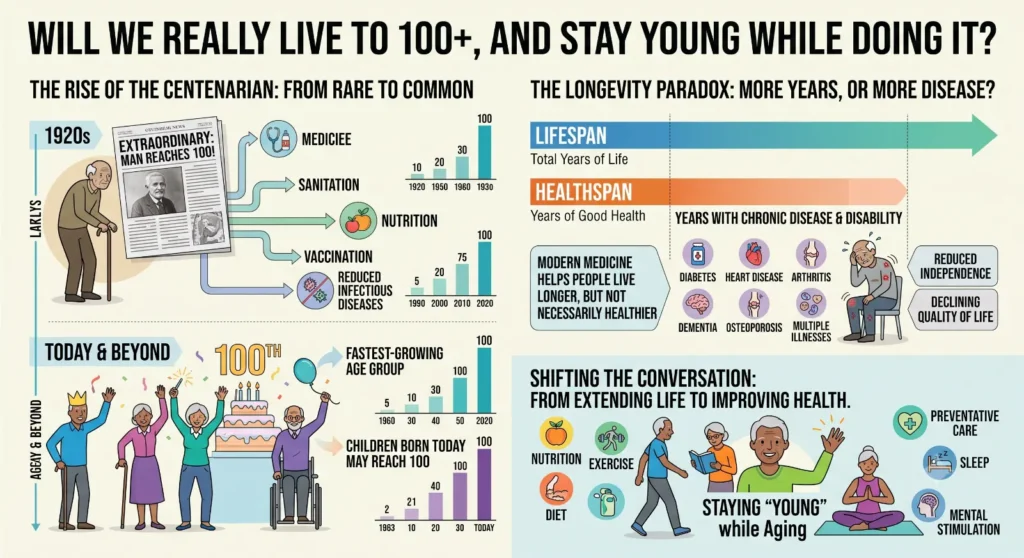
A century ago, reaching the age of 100 was so uncommon that centenarians often made newspaper headlines. Today, they are the fastest-growing age group in many parts of the world.
Advances in medicine, improved sanitation, better nutrition, widespread vaccination, and declining deaths from infectious diseases have steadily increased life expectancy across the globe. For many children born today, celebrating a 100th birthday is no longer an impossible dream.
Yet longevity presents an important paradox.
Modern medicine has become remarkably successful at helping people live longer, but not necessarily healthier. Millions spend their later years managing diabetes, heart disease, arthritis, dementia, osteoporosis, or multiple chronic illnesses simultaneously. Instead of enjoying additional decades, many experience them with reduced independence and declining quality of life.
This has fundamentally changed the conversation around aging.
Slowing, Delaying, or Reversing Aging: What’s the Difference?
These terms are often used interchangeably, but they describe different scientific goals.
Slowing aging means reducing the rate at which biological damage accumulates, allowing people to remain healthier for longer.
Delaying aging refers to postponing the onset of age-related diseases and frailty, even if the underlying aging process continues.
Reversing aging means restoring some features of older cells or tissues to a more youthful state. In laboratory studies, this has been observed using approaches such as partial cellular reprogramming, where certain biological markers of aging improve. However, this does not mean turning an older person back into a younger one or reversing aging throughout the entire body.
At present, genuine age reversal has been demonstrated mainly in cells and animal models. Whether it can be achieved safely and effectively in humans remains one of the biggest unanswered questions in longevity research.
Now scientists are no longer asking only, “How can we extend lifespan?” They are asking a far more meaningful question:
“Can we extend healthspan—the number of years we remain physically active, mentally sharp, and free from major disease?”
That distinction may determine whether longer life becomes one of humanity’s greatest achievements or one of its greatest healthcare challenges.
In Part 1 of this series, we explored how researchers are beginning to understand aging as a biological process that may eventually be modified. This article moves beyond the laboratory and into everyday life.
If science succeeds in slowing biological aging, what might live to 100 actually look like? And perhaps more importantly, what can we already do today to improve our chances of getting there in good health?
Why Humans Are Already Living Longer Than Ever Before
The remarkable increase in human lifespan did not happen because scientists discovered a secret anti-aging therapy. Instead, it resulted from hundreds of incremental improvements in public health and medical care over the past century.
In the early 1900s, infectious diseases such as tuberculosis, pneumonia, cholera, and influenza claimed millions of lives long before people developed age-related illnesses. The introduction of antibiotics, vaccines, clean drinking water, improved maternal care, safer childbirth, and better nutrition dramatically reduced premature deaths.
As healthcare systems evolved, survival from heart attacks, strokes, and many cancers also improved. Early diagnosis, advanced surgical techniques, targeted therapies, and preventive medicine have enabled millions to live years or even decades, longer than previous generations.
According to the World Health Organization, global life expectancy has increased by more than 25 years since 1950. While progress slowed temporarily during the COVID-19 pandemic in several countries, the long-term trajectory remains upward.
However, increasing life expectancy has revealed an unexpected challenge.
Living longer does not automatically mean aging well.
Many individuals now spend the final 10–20 years of life coping with chronic disease, frailty, reduced mobility, or cognitive decline. As a result, longevity research has shifted its focus from simply adding years to adding healthy years.
Lifespan vs. Healthspan: Why the Difference Matters
These two terms are often used interchangeably, but they describe very different concepts.
Lifespan refers to the total number of years a person lives while healthspan refers to the years spent in good physical, cognitive, and emotional health, free from significant disability or chronic illness.
Imagine two individuals who both live to the age of 95.
One remains physically active, travels, gardens, enjoys social activities, and lives independently until the final years of life.
The other develops diabetes in their 60s, heart disease in their 70s, severe arthritis in their 80s, and dementia before their 90th birthday.
Although their lifespans are identical, their healthspans are dramatically different.
This distinction has become the central goal of modern longevity science.
Rather than pursuing immortality, researchers aim to compress morbidity, a concept describing the shortening of the period of illness and disability toward the very end of life. In an ideal scenario, people would remain healthy for most of their lives before experiencing a relatively brief decline near death.
This vision represents a profound shift in medicine. Instead of treating diseases after they appear, future healthcare may increasingly focus on preserving biological function decades before symptoms develop.
The Rise of the Centenarian
Centenarians, people aged 100 years or older are no longer rare exceptions.
Countries including Japan, Italy, France, Spain, and the United States have witnessed a steady increase in the number of individuals reaching triple-digit birthdays. Improvements in healthcare, education, nutrition, and socioeconomic conditions have all contributed to this trend.
Interestingly, researchers studying centenarians have discovered that many of them delay the onset of chronic diseases until much later in life. Some avoid major illnesses almost entirely until their nineties, suggesting that healthy aging may involve postponing disease rather than eliminating it altogether.
Genetics certainly plays a role. Variations in genes involved in cholesterol metabolism, inflammation, DNA repair, and cellular stress responses appear more frequently among exceptionally long-lived individuals.
However, genetics explains only part of the story.
Large population studies suggest that lifestyle and environmental factors account for a much greater proportion of healthy aging than inherited genes alone. Even people without “longevity genes” can substantially influence how they age through everyday behaviors.
This is encouraging because while we cannot change the DNA we inherit, we can modify many of the factors that influence how those genes are expressed throughout life.
What Can We Learn from the Blue Zones?
Few concepts have captured the public imagination quite like the Blue Zones, regions where unusually high numbers of people reportedly live into their nineties and beyond.
These areas include Okinawa (Japan), Sardinia (Italy), Ikaria (Greece), Nicoya (Costa Rica), and the Seventh-day Adventist community in Loma Linda, California.
Although each region has unique cultural traditions, researchers initially identified several shared characteristics:
- Predominantly plant-rich diets
- Regular physical movement built into daily life
- Strong family relationships
- Close-knit communities
- Low smoking rates
- A sense of purpose
- Effective stress-management practices
These observations inspired countless books, documentaries, and wellness programmes promoting the “Blue Zone lifestyle.”
However, science has become more nuanced in recent years.
Some researchers have questioned the reliability of historical birth records in certain regions, suggesting that demographic inaccuracies may have contributed to reports of exceptionally high numbers of centenarians. Others argue that migration, socioeconomic factors, and healthcare differences complicate direct comparisons between populations.
Despite these debates, one important message remains remarkably consistent.
Whether or not every Blue Zone claim withstands scientific scrutiny, the lifestyle habits associated with these communities, regular physical activity, nutritious diets, meaningful social relationships, and lifelong engagement with work and purpose are independently supported by decades of medical research.
In other words, even if the geography is debated, the biology is increasingly well established.
Can Lifestyle Really Slow Biological Age?
If there is one finding that has emerged consistently from longevity research, it is this:
Daily habits influence biological aging far more than many people realise.
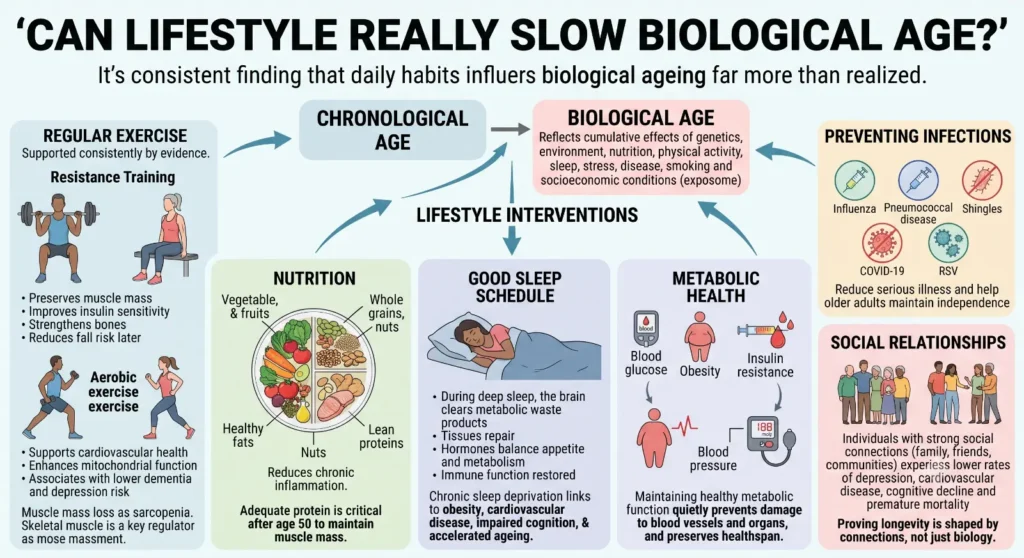
Unlike chronological age, biological age reflects the cumulative effects of genetics, environment, nutrition, physical activity, sleep, stress, and disease on the body’s cells and tissues, smoking, stress, and socioeconomic conditions.
Scientists call the combined impact of these lifelong environmental influences the exposome, which, together with our genes, helps explain why some people remain healthier for longer while others can develop age-related diseases much earlier despite sharing same birthday.
Among all lifestyle interventions, regular exercise remains the most consistently supported by scientific evidence. Resistance training preserves muscle mass, improves insulin sensitivity, strengthens bones, and reduces the risk of falls later in life.
Maintaining muscle is about far more than strength. Age-related loss of muscle mass and function, known as sarcopenia. Researchers increasingly recognise skeletal muscle as a key regulator of healthy aging.
Aerobic exercise supports cardiovascular health, enhances mitochondrial function, and has been associated with a lower risk of dementia and depression.
Nutrition is equally important. Diets rich in vegetables, fruits, legumes, whole grains, nuts, healthy fats, and lean sources of protein provide essential nutrients while helping reduce chronic inflammation. Adequate protein intake becomes particularly important after the age of 50, when maintaining muscle mass becomes increasingly difficult.
Sleep, often overlooked, is another pillar of healthy aging. During deep sleep, the brain clears metabolic waste products, tissues undergo repair, hormones regulating appetite and metabolism are balanced, and immune function is restored. Chronic sleep deprivation has been associated with obesity, cardiovascular disease, impaired cognition, and accelerated biological aging.
Equally significant is metabolic health. Elevated blood sugar, obesity, insulin resistance, and high blood pressure quietly damage blood vessels and organs for years before symptoms appear. Maintaining healthy metabolic function may therefore be one of the most effective ways to preserve healthspan.
Preventing infections is another often-overlooked component of healthy aging. Vaccination against influenza, pneumococcal disease, shingles, COVID-19, and, where recommended, RSV can reduce serious illness and help older adults maintain independence.
Perhaps surprisingly, social relationships also influence longevity. Numerous long-term studies have shown that individuals with strong social connections tend to experience lower rates of depression, cardiovascular disease, cognitive decline, and premature mortality. Longevity is not determined solely by biology, it is also shaped by how connected we remain to family, friends, and our communities.
Fig: Can Lifestyle Really Slow Biological age- highlights Regular exercise, Nutrition, Good sleep schedule, Metabolic health, preventing infections and Social relationship.
Can Eating Less Help You Live Longer?
Few areas of longevity research have generated as much interest, and as much debate as calorie restriction. The concept is surprisingly simple: reducing calorie intake without causing malnutrition may slow some of the biological processes associated with aging.
The idea first gained attention nearly a century ago when researchers observed that laboratory rodents consuming fewer calories lived significantly longer than those fed unrestricted diets.
Since then, similar benefits have been reported in organisms ranging from yeast and worms to fruit flies and non-human primates. Animals on calorie-restricted diets often show delayed onset of age-related diseases, improved metabolic health, reduced inflammation, and better maintenance of cellular repair mechanisms.
But does the same principle apply to humans?
The answer is more complicated. Unlike laboratory animals, people live for decades, making lifespan studies extraordinarily difficult. However, shorter clinical trials have shown that carefully supervised calorie restriction can improve several biomarkers associated with healthy aging, including insulin sensitivity, blood pressure, cholesterol levels, and inflammatory markers.
These improvements suggest that eating moderately may help create a healthier internal environment, even if its effect on lifespan remains uncertain.
In recent years, intermittent fasting and time-restricted eating have emerged as more practical alternatives to continuous calorie restriction. Rather than reducing food intake every day, these approaches limit when food is consumed, for example, eating within an 8- to 10-hour window or fasting on selected days of the week.
Scientists believe these eating patterns may activate cellular maintenance processes such as autophagy, often described as the body’s internal recycling system. During autophagy, damaged proteins and worn-out cellular components are broken down and removed, allowing healthier structures to replace them.
This process has been linked to improved cellular function in experimental studies, although its long-term benefits in humans are still being investigated.
That said, fasting is not a universal solution. It may not be suitable for children, pregnant women, individuals with eating disorders, or people taking medications for diabetes or other chronic conditions. Extreme calorie restriction can also lead to muscle loss, nutritional deficiencies, weakened immunity, and hormonal disturbances if not properly managed.
The message from current research is clear: moderation appears beneficial, but longevity is unlikely to depend on one dietary strategy alone.
Measuring Age Beyond the Calendar
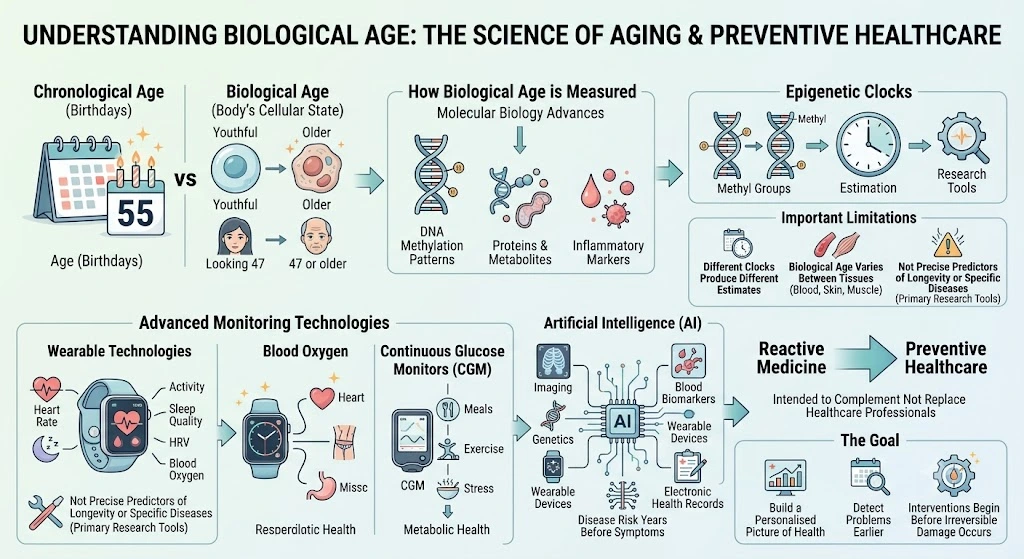
Imagine visiting your doctor and being told that although you are 55 years old, your body resembles that of a healthy 47-year-old.
Or perhaps the opposite.
This is the promise of biological age testing.
Unlike chronological age, which simply counts the number of birthdays you have celebrated, biological age attempts to estimate how quickly your body is aging at the cellular level. Advances in molecular biology have made it possible to measure changes in DNA methylation, proteins, metabolites, inflammatory markers, and other biological signals that correlate with aging.
Among the most widely studied tools are epigenetic clocks, which analyse chemical modifications to DNA known as methylation patterns. These patterns change predictably with age and can provide an estimate of biological aging. Although still evolving, epigenetic clocks have become valuable research tools for assessing whether lifestyle changes or experimental therapies influence aging-related processes but they also have important limitations.
Different clocks can produce different estimates for the same individual, and biological age may vary between tissues such as blood, skin, or muscle.
These tests are primarily research tools and should not yet be viewed as precise predictors of how long someone will live or whether they will develop specific diseases. As the science advances, researchers expect these measurements to become more accurate and clinically useful.
Beyond laboratory testing, wearable technologies are bringing longevity science into everyday life. Smartwatches and fitness trackers can continuously monitor heart rate, physical activity, sleep quality, heart rate variability, and even blood oxygen levels. Continuous glucose monitors, once used primarily by people with diabetes are now helping researchers and health-conscious individuals understand how meals, exercise, and stress influence metabolic health.
Artificial intelligence is taking this one step further. By integrating data from imaging, blood biomarkers, genetics, wearable devices, and electronic health records, AI systems are beginning to predict disease risk years before symptoms appear.
While these technologies are still developing, they represent a shift from reactive medicine toward preventive healthcare. They are intended to complement not replace the judgement of healthcare professionals
The goal is not to obsess over every number, but to build a personalised picture of health that allows problems to be detected earlier and interventions to begin before irreversible damage occurs.
Will Gene Editing Help Us Reach 100?
If lifestyle represents the foundation of healthy aging, genetic technologies may eventually provide the next frontier.
One of the most revolutionary developments in modern biology is CRISPR-Cas9, a gene-editing technology that allows scientists to modify specific sections of DNA with remarkable precision. Since its introduction, CRISPR has transformed biomedical research and has already led to approved treatments for certain inherited blood disorders.
A prime example of a CRISPR-Cas9 therapy is Casgevy (exagamglogene autotemcel). Developed by Vertex Pharmaceuticals and CRISPR Therapeutics, it is an FDA-approved treatment for patients with inherited blood disorders like Sickle Cell Disease (SCD) and Transfusion-Dependent Beta Thalassemia (TDT).
Could similar technology be used to slow aging?
Researchers are exploring genes associated with exceptional longevity, including FOXO3, which plays a role in stress resistance and cellular maintenance, and APOE, which influences the risk of Alzheimer’s disease. Other studies are investigating genes involved in DNA repair, inflammation, mitochondrial function, and cellular senescence.
In theory, modifying these pathways could reduce vulnerability to age-related diseases and improve healthy lifespan.
However, translating these ideas into clinical reality is far from straightforward.
Aging is not controlled by a single “aging gene.” Instead, it arises from thousands of interacting biological pathways influenced by genetics, lifestyle, and environmental exposures throughout life. Altering one pathway may produce unintended consequences elsewhere in the body.
Ethical questions further complicate the discussion. Should gene editing be used only to treat disease, or could it one day be used to enhance normal aging? Who would have access to these expensive therapies? And how should society regulate technologies capable of permanently altering human biology?
These questions remain largely unanswered. For now, gene editing offers enormous scientific potential, but it is not yet a practical strategy for extending healthy human lifespan.
A Reality Check: There Is Still No Magic Formula
The rapid growth of the longevity industry has created enormous public interest and, inevitably, a flood of exaggerated claims.
Every year brings headlines announcing a “breakthrough” supplement, miracle diet, or revolutionary therapy promising to reverse aging. Social media influencers promote expensive regimens involving dozens of daily supplements, specialised testing, and unproven treatments available only through private clinics.
One of the most widely discussed public figures in the longevity movement is entrepreneur Bryan Johnson, whose “Don’t Die” project has attracted global attention. Through extensive health monitoring, strict dietary protocols, exercise, sleep optimisation, and experimental interventions, Johnson aims to slow biological aging and openly shares his health data.
While his journey has generated enormous public interest, it should be viewed as a personal experiment rather than established medical evidence. His work has nevertheless helped bring longevity science into mainstream public discussion.
Another influential voice in the field is Professor David Sinclair of Harvard Medical School, whose research has focused on the biology of aging, particularly the roles of sirtuins, NAD⁺ metabolism, and epigenetic changes.
His work has helped popularise the idea that aging may one day become a treatable biological process. However, many of the interventions currently under investigation remain experimental, and further clinical evidence is required before they can be routinely recommended.
The reality is much less dramatic.
No supplement has been conclusively shown to make humans live significantly longer. Compounds such as NMN, nicotinamide riboside (NR), resveratrol, spermidine, metformin, rapamycin, and senolytics continue to be actively studied, but evidence for routine use in healthy individuals remains limited.
Some show encouraging results in laboratory models or early clinical studies, yet none can currently be recommended as a proven anti-aging therapy for the general population.
This does not mean the research lacks value. On the contrary, many of these interventions may eventually become important components of future longevity medicine. But science progresses through careful clinical trials, not viral headlines.
The strongest evidence available today still supports relatively simple habits: regular exercise, nutritious eating, adequate sleep, maintaining a healthy weight, avoiding smoking, moderating alcohol consumption, managing stress, and staying socially connected.
These interventions may not seem as exciting as futuristic technologies, but collectively they have a greater impact on healthy aging than any experimental pill currently available.
What Would a World of Healthy Centenarians Look Like?
Suppose that over the next few decades, advances in medicine allow large numbers of people to remain healthy well into their nineties and beyond.
The consequences would extend far beyond healthcare.
Education might no longer end in early adulthood. Instead, people could return to universities multiple times throughout life as careers evolve. Retirement might shift from a fixed age to a gradual transition, with many individuals choosing part-time work, consulting, or entrepreneurship well into later life.
Families could become truly multigenerational, with four or even five generations living simultaneously. Grandparents might actively participate in raising great-grandchildren, while older adults continue contributing to society through volunteering, mentoring, or professional work.
Healthcare systems would also need to adapt. Instead of focusing primarily on treating advanced disease, greater emphasis would be placed on early detection, prevention, and preserving physical and cognitive function across the lifespan.
Yet longer life also raises difficult questions. How will pension systems remain sustainable? Will access to future longevity therapies be equitable, or will they widen existing health inequalities? How will societies balance increasing life expectancy with environmental and economic challenges?
These are not distant philosophical questions. They are policy discussions already beginning around the world.
What You Can Do Today
Although many future longevity therapies remain experimental, there is much you can do right now to improve your chances of aging well.
- Engage in regular resistance and aerobic exercise to preserve muscle, cardiovascular fitness, and metabolic health.
- Consume sufficient high-quality protein while following a predominantly whole-food dietary pattern rich in fruits, vegetables, legumes, and healthy fats.
- Prioritise seven to nine hours of restorative sleep each night.
- Maintain a healthy body weight and monitor blood pressure, cholesterol, blood glucose, and other key health indicators.
- Stay mentally active through lifelong learning, reading, problem-solving, and meaningful work.
- Invest in strong relationships and maintain regular social interaction, as emotional wellbeing is closely linked to healthy aging.
- Discuss preventive health screening with your healthcare provider and address modifiable risk factors early rather than waiting for disease to develop.
Longevity is not built through one extraordinary decision. It is shaped by thousands of ordinary choices repeated over many years. Reaching 100 may become increasingly common during this century, but the true measure of success will not be how many birthdays we celebrate.
It will be how many of those years are lived with good health, independence, purpose, and the ability to enjoy life.
Abbreviation list:
- APOE: Apolipoprotein E
- CRISPR: Clustered Regularly Interspaced Short Palindromic Repeats
- DNA: Deoxyribonucleic acid
- FDA: Food and Drug Administration
- FOXO3: Forkhead Box O3
- NAD: Nicotinamide Adenine Dinucleotide
- NMN: Nicotinamide Mononucleotide
- NR: Nicotinamide Riboside
- SCD: Sickle Cell Disease
- TDT: Transfusion-Dependent Beta Thalassemia
- RSV: Respiratory Syncytial Virus
The Reverse Aging Series
Ten articles on what longer, healthier lives would actually change.
- How Close Are We to Reversing Aging in Humans? — the biology of aging, and what has actually been reversed
- Will We Really Live to 100+ and Stay Young While Doing It? — lifespan, healthspan and what the evidence supports (you are here)
- If Aging Slows Down, Will Retirement Even Exist? — work, pensions and the hundred-year life
- Will Longer Lives Take Away Jobs from the Younger Generation?
- If Parents Stay Healthy Till 90, Will Children Feel Less Responsibility?
- Will We Have Two or Three Careers in One Lifetime?
- Can Science Really Make 80 the New 40?
- Who Will Benefit — Everyone, or Only the Wealthy?
- The Longevity Economy
- The Future of Being Human
Key Takeaways
- There is still no magic formula, and the article says so plainly.
- Biological age tests are useful for trends, not for single readings.
- Eating less extends life in several species; the human evidence is weaker.
- What you do daily still outperforms anything currently for sale.
- This article is for information only and does not replace medical advice.
Frequently Asked Questions
1. What is the difference between lifespan and healthspan?
Lifespan refers to the total number of years a person lives, whereas healthspan describes the years spent in good physical, mental, and functional health without major chronic disease or disability.
2. Can people really stay active at 100?
Some centenarians remain remarkably independent and physically active, particularly those who maintain healthy lifestyles and avoid major chronic illnesses. However, aging experiences vary widely between individuals.
3. Are Blue Zones scientifically proven?
Blue Zones have provided valuable insights into healthy lifestyles, but some demographic data have been questioned. Nevertheless, many lifestyle habits associated with these communities are strongly supported by independent scientific research.
4. Do longevity supplements actually work?
Several supplements are being investigated, but none has been conclusively proven to extend healthy lifespan in humans. Lifestyle interventions currently have far stronger evidence than most commercially available longevity supplements.
References
- World Health Organization. Decade of Healthy Aging: 2021–2030. Geneva: World Health Organization; 2021.
- Carlos López-Otín, Maria A. Blasco, Linda Partridge, Serrano M, Kroemer G. The Hallmarks of Aging. Cell. 2013;153(6):1194–1217.
- López-Otín C, Blasco MA, Partridge L, Serrano M, Kroemer G. Hallmarks of Aging: An Expanding Universe. Cell. 2023;186(2):243–278.
- Campisi J, Kapahi P, Lithgow GJ, Melov S, Newman JC, Verdin E. From discoveries in aging research to therapeutics for healthy aging. Nature. 2019;571:183–192.
- Dan Buettner, Skemp S. Blue Zones: Lessons From the World’s Longest Lived. American Journal of Lifestyle Medicine. 2016;10(5):318–321.
- Kreouzi M, Theodorakis N, Constantinou C. Lessons Learned From Blue Zones, Lifestyle Medicine Pillars and Beyond: An Update on the Contributions of Behavior and Genetics to Wellbeing and Longevity. American Journal of Lifestyle Medicine. 2024.
- Davinelli S, Medoro A, Hu FB, Scapagnini G. Dietary Polyphenols as Geroprotective Compounds: From Blue Zones to Hallmarks of Aging. Aging Research Reviews. 2025;108:102733.
- Aliberti SM, Capunzo M. The Power of Environment: A Comprehensive Review of the Exposome’s Role in Healthy Aging, Longevity, and Preventive Medicine—Lessons from Blue Zones and Cilento. Nutrients. 2025;17(4):722.
- National Institute on Aging. Biology of Aging Program. Bethesda (MD): National Institute on Aging.
- American College of Sports Medicine. ACSM Position Stand: Exercise and Physical Activity for Older Adults. Medicine & Science in Sports & Exercise. 2019.
