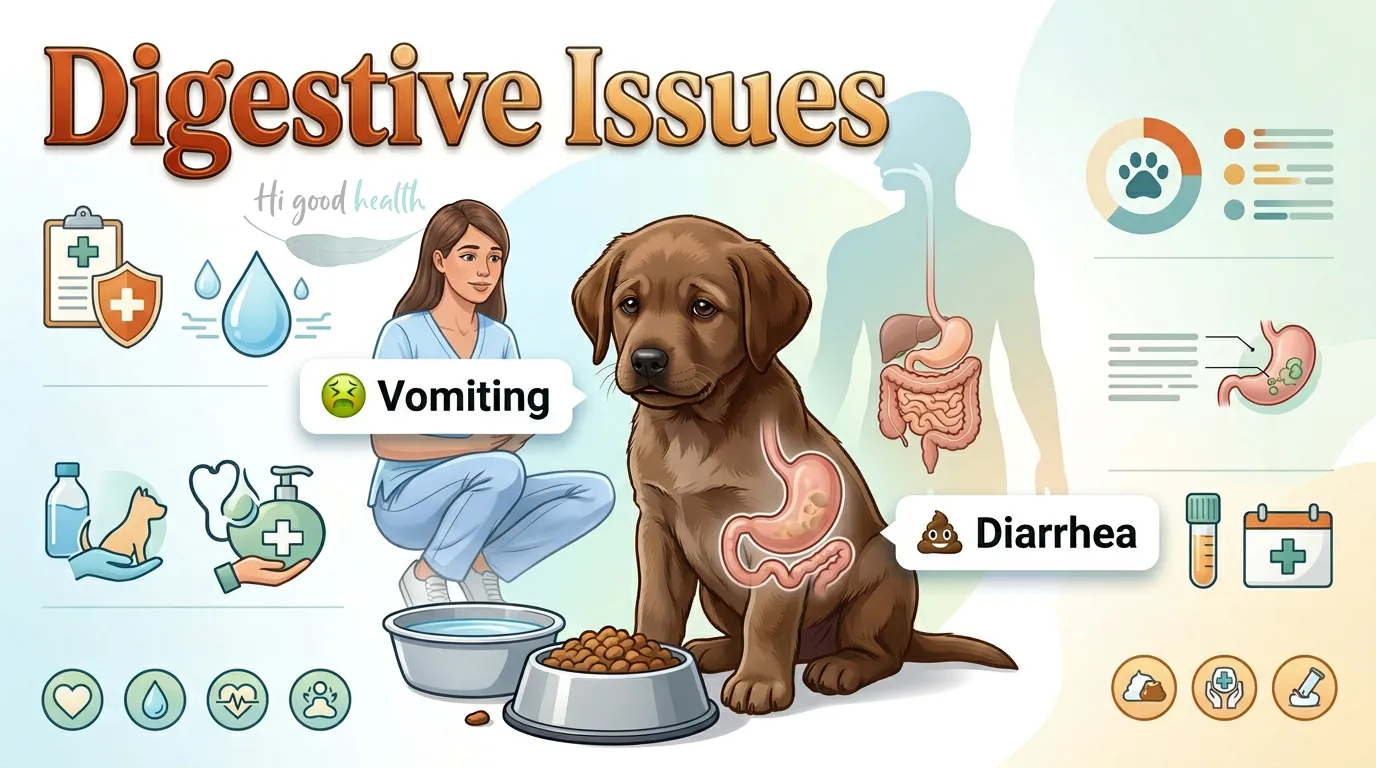
It’s 2 a.m. Your eight-week-old Labrador puppy has just vomited for the third time. The diarrhea started an hour ago. He looks at you—confused, tired—and your heart starts racing. Should you rush to the emergency vet right now, or can this wait until morning?
At a glance
Puppy vomiting and diarrhea become an emergency when the puppy is under 12 weeks old, has blood in the vomit or stool, is limp or collapsing, has pale or sticky gums, keeps throwing up water, or has more than three episodes in an hour. Any one of these means go to the vet now. If your puppy is over 12 weeks, fully vaccinated, still bright and drinking, and has had only one or two mild episodes, you can usually watch at home for 12 to 24 hours with small sips of water and a short rest from food.
Thousands of American pet parents face this exact dilemma. The answer is not always simple, because puppies are not just smaller versions of adult dogs. Their bodies respond very differently. What looks like a “simple upset tummy” in a grown dog can turn into a life-threatening crisis in a puppy within hours.
This guide gives you a clear, vet-backed way to tell a minor stomach upset apart from a real emergency, plus exactly what to do in each case. A puppy vomiting and diarrhea together is one of the most common reasons for an urgent vet visit, and knowing the warning signs could save your puppy’s life.
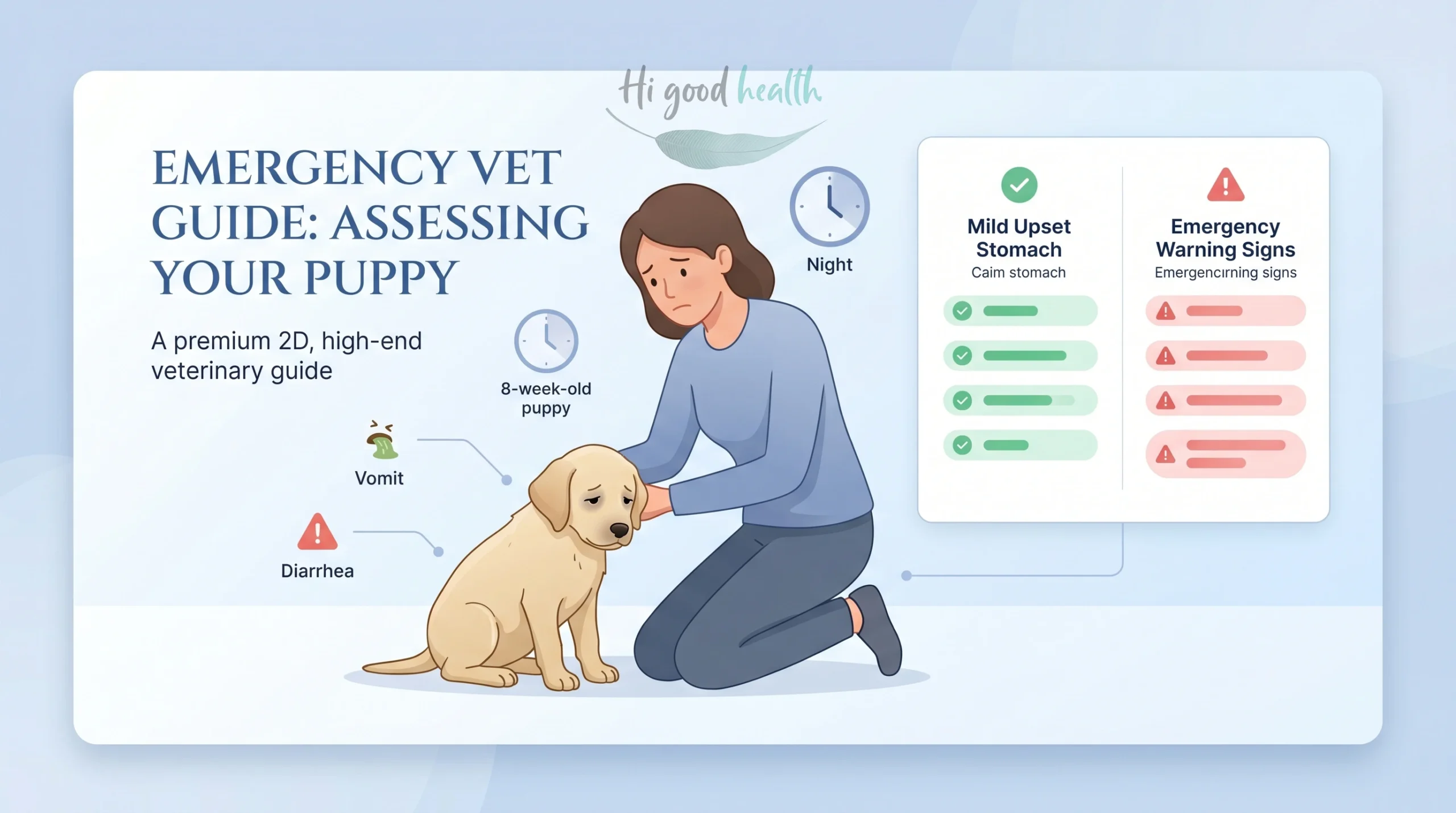
Why Puppies Are More Vulnerable Than Adult Dogs
Understanding why puppies are at higher risk is the first step to protecting them. Three biological factors make puppy vomiting and diarrhea far more dangerous for a puppy than for a grown dog:
1. Immature Immune System: A puppy’s immune system is still developing and does not fully mature until around 16 to 20 weeks of age. Until then, puppies rely heavily on antibodies from their mother’s milk (called maternally derived antibodies, or MDA). Once these fade, usually between 6 and 16 weeks, there is a “window of vulnerability” when the puppy is most open to infections like parvovirus. That is exactly why the puppy vaccination schedule uses several doses spaced weeks apart.
2. Tiny Fluid Reserves: Puppies have far less body mass and lower fluid reserves than adult dogs. A puppy weighing just 2 to 3 kg can become severely dehydrated after only a few episodes of vomiting and diarrhea. According to veterinary emergency guidelines, even a 5 to 10 percent loss of body fluids can push a young puppy into hypovolaemic shock.
3. Hypoglycemia Risk: Small and toy breed puppies (such as Chihuahuas, Pomeranians, and Yorkshire Terriers, all very popular in the US) can suffer a dangerous drop in blood sugar when they stop eating. Hypoglycemia can cause seizures, collapse, and even death if it is not treated quickly.
Common Causes of Puppy Vomiting and Diarrhea: From “Oops” to “Urgent”
Not every bout of vomiting or diarrhea means a trip to the emergency clinic. Knowing the causes of puppy vomiting and diarrhea helps you make a calmer, better decision:
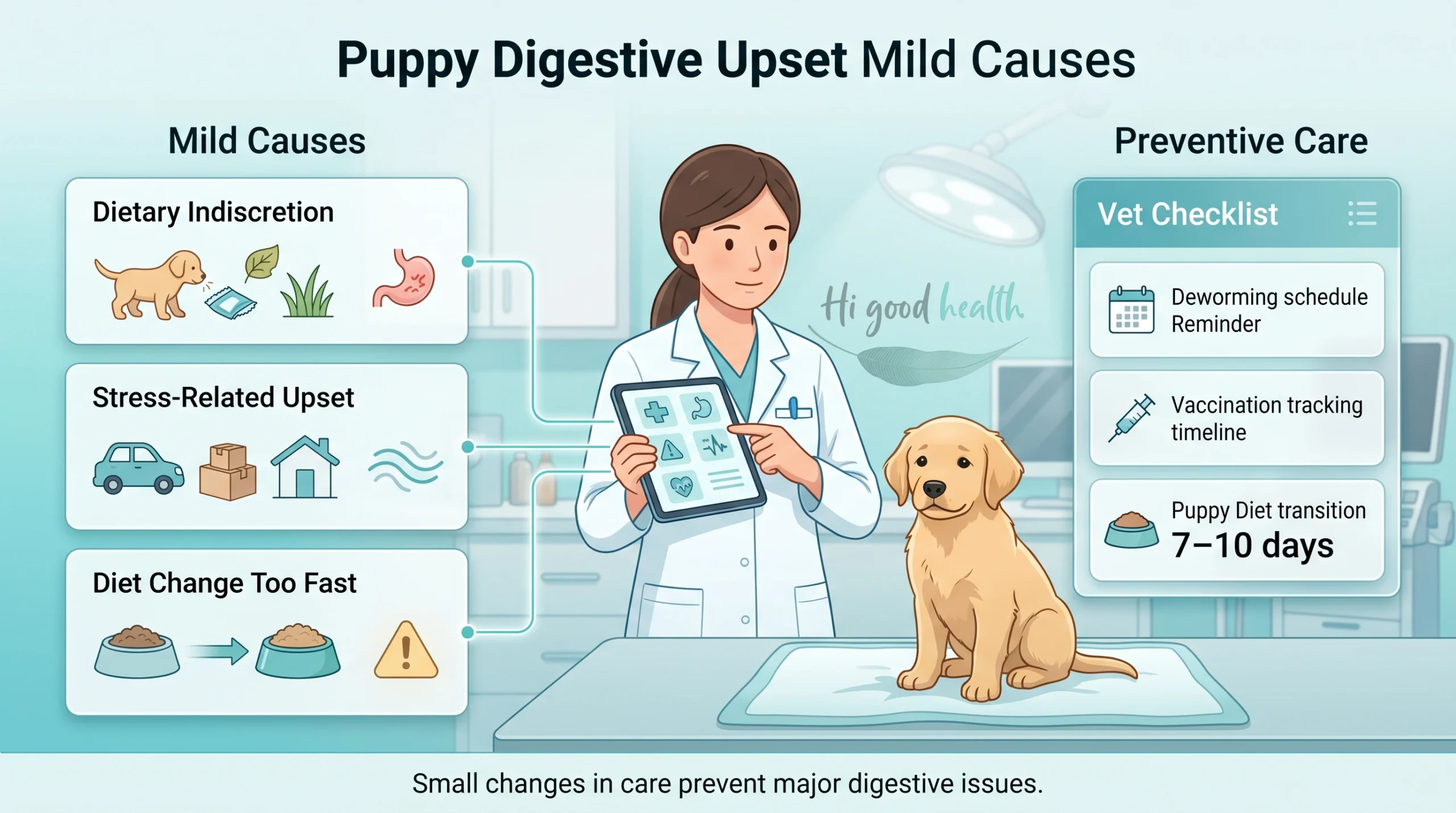
Mild and Usually Manageable
Dietary Indiscretion: The number one cause. Puppies are natural explorers who taste everything: leaves, garbage, shoes, plastic wrappers, mulch, even feces in parks and yards. This usually causes a short episode of vomiting or loose stools that clears up on its own.
Stress-Related Digestive Upset: Big life changes such as moving to a new home, the first car ride, or meeting a new family member or pet can trigger short-lived GI distress. This is very common in the US, where most puppies join a new family between 6 and 8 weeks and face a brand-new environment right away.
Dietary Transition: Switching food brands or types too fast (a very common mistake) overwhelms the puppy’s developing gut microbiome. Any diet change should happen gradually over 7 to 10 days.
Preventive Care Matters:
Always talk to your veterinarian about:
- Deworming and vaccination schedules suited to your puppy’s age and risk
- Diet selection and changes, making sure the food is made for growing puppies
Sudden diet changes or missed preventive care can turn a mild issue into a more serious one.
Moderate: Needs Veterinary Attention Soon
Intestinal Parasites: Roundworms, hookworms, Giardia, and Coccidia are common because of outdoor exposure and contact with other animals. Non-dewormed puppies tend to have much higher rates of GI illness, so sticking to your veterinarian’s deworming schedule matters.
Teething: Puppies between 3 and 6 months old may get mild digestive upset while teething, as they chew on objects and swallow debris. It is usually mild, but keep watching.
Severe: Potential Emergency
Canine Parvovirus (CPV): This is the single biggest fear for puppy owners, and for good reason. Cornell’s Baker Institute describes parvovirus as a highly contagious viral disease that commonly causes sudden gastrointestinal illness in puppies [4]. It most often strikes pups between six and 20 weeks old, though older dogs are sometimes affected too. A rare form seen in very young (neonatal) puppies is myocarditis, an inflammation of the heart muscle. The American Veterinary Medical Association also lists parvovirus among the most serious infectious threats to unvaccinated dogs [5].
Foreign Body Obstruction: Puppies that swallow socks, rubber toys, stones, or bones can develop intestinal blockages that need emergency surgery. Signs include ongoing vomiting, an inability to keep water down, and a painful, bloated belly.
Acute Haemorrhagic Diarrhea Syndrome (AHDS): Once known as Haemorrhagic Gastroenteritis (HGE), this condition causes sudden, dramatic bloody diarrhea (often described as looking like “raspberry jam”) and can lead to shock within hours. The Merck Veterinary Manual notes that prompt IV fluid therapy is the main treatment, and most dogs recover quickly with hospitalization [3].
The “Acting Normal” Trap: Why Playful Doesn’t Mean Safe
One of the most deceptive situations is when a puppy has a messy episode of diarrhea or vomiting and then bounces right back, chasing a ball, wagging its tail, begging for food. You might think, “He seems fine, maybe it was nothing.” A puppy vomiting and diarrhea but acting normal is one of the trickiest calls a pet parent faces.
This can fool you. Puppies are masters of “The Rally.” High adrenaline and natural pack instincts drive them to hide illness. A puppy can seem lively and playful all morning, then crash hard by afternoon as dehydration and electrolyte loss catch up.
Dr. Karen Becker, a well-known integrative veterinarian, has often stressed that puppies can go “from seemingly fine to critical in just a few hours,” especially with parvovirus. That is why watching over a 12 to 24-hour window matters, even when the first signs look mild.
When It’s Safe to “Wait and See” (The Green Zone)
If your puppy has had one or two bouts of diarrhea or a single vomit, you can usually watch at home for 12 to 24 hours IF all of the following are true:
- High Energy: Active, alert, and behaving normally.
- Good Appetite & Hydration: Interested in food and drinking normally.
- Normal Gums: Pink and moist (not pale, white, gray, or sticky).
- No Blood: No blood in stool or vomit.
- Age: Over 12 weeks and fully vaccinated on schedule.
In these cases, the upset is often just a minor diet change, mild stress, or eating something slightly disagreeable.
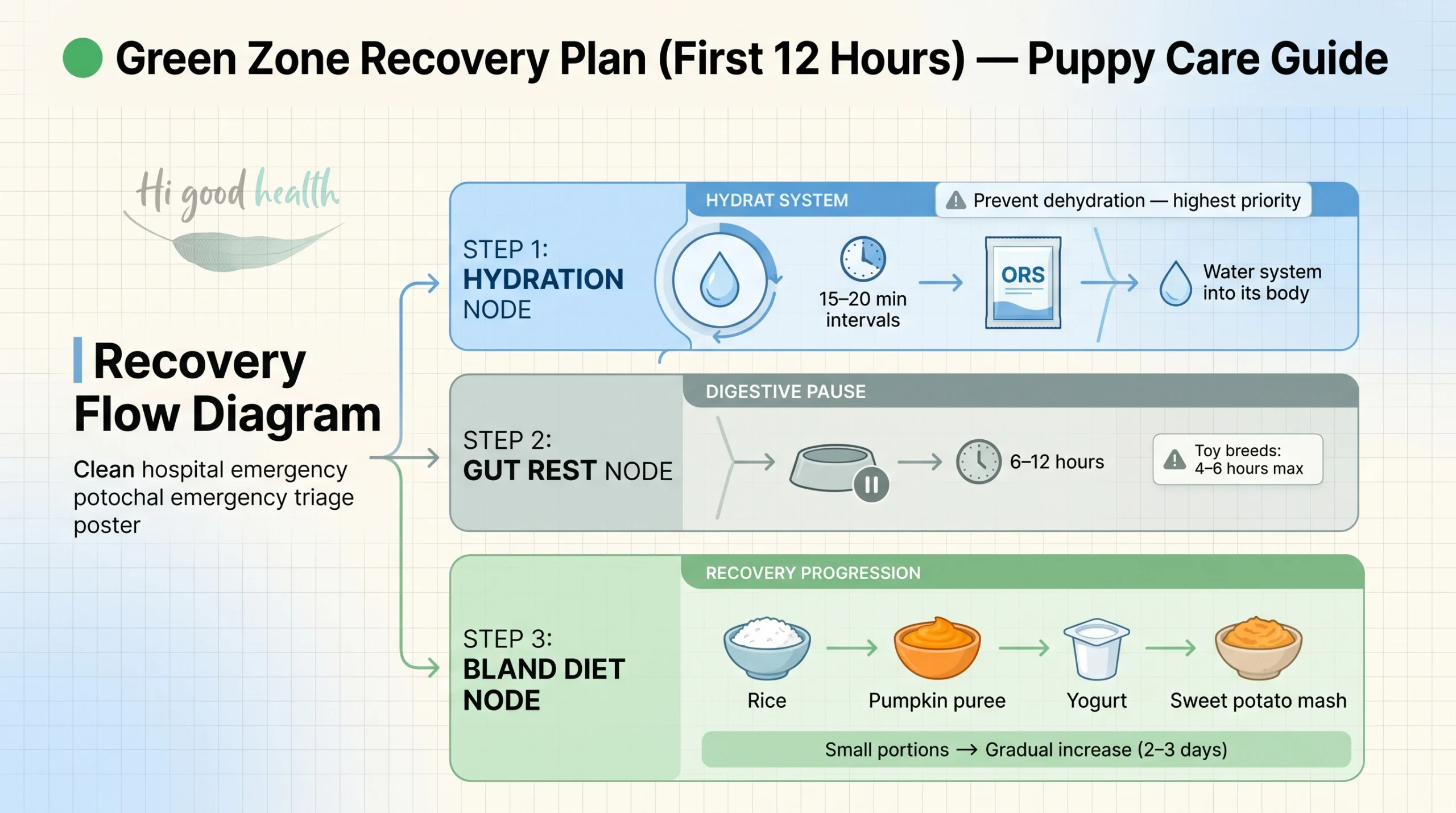
Immediate At-Home Care (The First 12 Hours)
If your puppy is in the “Green Zone,” your goal for the first 12 hours of puppy vomiting and diarrhea care is to rest the digestive system and prevent dehydration.
Step 1: Hydration First
Dehydration is the most immediate risk in puppy GI emergencies, not the infection itself. Offer small, frequent sips of water every 15 to 20 minutes. You can add a little unflavored Pedialyte or oral rehydration solution (ORS), easily found at any pharmacy or grocery store, to the water. Skip sugary drinks and flavored electrolyte solutions.
Step 2: A Short Gut Rest
Withhold food (not water) for 6 to 12 hours to let the inflamed intestinal lining settle. Important exception: Never fast very small or toy breed puppies (Pomeranians, Chihuahuas, toy Poodles) for more than 4 to 6 hours, since they are prone to dangerous drops in blood sugar (hypoglycaemia).
Step 3: The Bland Diet for Puppy Diarrhea
Once the fasting period is over and there has been no vomiting for at least 4 to 6 hours, reintroduce food slowly with a simple bland diet for puppy diarrhea that is easy to digest:
- Plain boiled white rice (well-cooked and slightly mushy)
- Plain canned pumpkin (100% pure, not pie filling) — great for firming up stools
- Plain, unsweetened probiotic yogurt — a natural source of probiotics
- Plain boiled and mashed sweet potato — gentle on the stomach
Start with very small portions, just 1 to 2 tablespoons every 2 to 3 hours, and slowly increase over 2 to 3 days before switching back to regular food.
Always check with your veterinarian before introducing any new food, as some puppies have sensitivities or allergies.
At HiGoodHealth, we believe wholesome dietary care is often the safest and most effective first step. Our platform shares clean, credible health information in plain language to help American families, including their furry family members, live healthier lives. Explore more on HiGoodHealth.com
The “Red Alert” Symptoms: When to Rush to the Vet Immediately
If your puppy shows ANY of the following, do not wait. Go to the nearest veterinary emergency clinic right away:
- Lethargy or Collapse: Not just sleepy, but unresponsive, unable to stand, or refusing to move.
- Dehydration (Skin Tent Test): Gently pinch the skin between your puppy’s shoulder blades. In a healthy pup it snaps back instantly. If it stays “tented” or slides back slowly, your puppy is dangerously dehydrated and likely needs IV fluids.
- Tacky or Pale Gums: Feel your puppy’s gums. They should be slippery and wet. If they feel dry or sticky, or look pale white or gray instead of pink, that signals serious circulatory trouble.
- Blood in Stool or Vomit: Any blood, whether bright red, dark red, or black (tarry), is always an emergency. Puppy bloody diarrhea and dark, tarry stools point to bleeding in the GI tract.
- Frequent Episodes: More than 3 bouts of vomiting or diarrhea within a single hour.
- Abdominal Bloating: A distended, hard, painful abdomen could mean bloat (GDV), a foreign body, or severe infection.
- Age Below 12 Weeks: Vomiting and diarrhea in a puppy under 12 weeks old is almost always an emergency, no matter how the puppy looks. Their reserves are simply too small.
- Rectal Prolapse (Worm Overload):
A red, tube-like tissue sticking out from the anus, often seen with severe worm infestations from straining. This is an emergency and needs immediate veterinary care.
What to Prepare for the Vet Visit
If home care is not working or your puppy gets worse, act fast. To help your veterinarian make a quick diagnosis, have these ready:
- Stool Sample: Collect a fresh stool sample in a clean plastic bag or container. This is the fastest way for the vet to run a Parvo snap test and check for parasites.
- Timeline: Note when symptoms started, how many episodes of vomiting and diarrhea, the color and consistency, and any possible triggers (new food, exposure to other dogs, eating something unusual).
- Evidence: If you think your puppy ate a specific plant, household chemical (bleach, cleaners, rat poison), toy, or cloth, bring the packaging or a photo.
- Vaccination Records: Your puppy’s vaccination card from the breeder or vet clinic, so the doctor can gauge protection against diseases like Parvo and Distemper.
- Medication History: List any recent treatments, preventives, or supplements given.
What the Latest Science Says
Veterinary research keeps turning up useful insights about puppy vomiting and diarrhea emergencies:
Parvovirus Strain Shift (2024): A study published in Archives of Virology (Reddy et al., 2024) analysed whole-genome sequences of canine parvovirus from samples collected across India in 2023. The researchers found that a novel CPV-2c strain has almost completely replaced the previously dominant CPV-2a variant. This shift raises questions about how well current vaccines, most based on older strains, still protect. Ask your veterinarian about the most up-to-date vaccine protocols.
The VetCompass UK Study (2025): A large study published in PLOS ONE (O’Neill et al., 2025) analysed over 2.25 million dogs and found that about 1 in 12 dogs is diagnosed with acute diarrhea each year, with dogs under 3 years at much higher risk [1]. The study confirms that acute diarrhea is one of the most common reasons for veterinary visits worldwide.
AHDS and Clostridium perfringens: Research published in Veterinary Clinics of North America (Unterer & Busch, 2021) confirmed that Acute Haemorrhagic Diarrhea Syndrome is likely linked to toxins made by Clostridium perfringens bacteria, especially netF toxins, rather than active bacterial invasion [2]. This finding moved treatment away from routine antibiotics and toward aggressive fluid therapy and supportive care.
Prevention: The Best Emergency Is the One That Never Happens
The good news? Most puppy digestive emergencies are preventable:
- Vaccinate on Schedule: Follow the DHPP protocol your veterinarian recommends. Do not skip or delay boosters. Ask your vet about the most current vaccine strains.
- Deworm Regularly: Stick to your vet’s deworming schedule. In warmer US climates, parasitic reinfection is very common.
- Puppy-Proof Your Home: Remove small objects, secure trash cans, keep toilet lids down, and store household chemicals (bleach, floor cleaners, rat poison) out of reach.
- Gradual Food Transitions: Any diet change should happen over 7 to 10 days, slowly mixing new food with the old.
- Limit Exposure: Until your puppy is fully vaccinated, avoid dog parks, areas used by unvaccinated dogs, and contact with dogs of unknown vaccination status. This matters because unvaccinated dogs can carry parvovirus.
- Probiotics: Ask your vet about probiotic supplements. Growing evidence supports their role in keeping a puppy’s gut microbiome healthy.
Early Intervention Is the Best Medicine
- If your puppy is lethargic, dehydrated, bleeding, or under 12 weeks old with GI symptoms, go to the vet NOW. Do not wait for morning. Do not Google more. Go.
- It is always better to be sent home with a “false alarm” than to wait too long and face the worst.
Key Takeaways
- Puppy vomiting and diarrhea is an emergency if the pup is under 12 weeks old, has blood in vomit or stool, collapses, has pale or sticky gums, or has more than three episodes in an hour.
- Dehydration, not the infection itself, is the fastest-moving danger. Small, frequent sips of water or unflavored ORS help until you reach the vet.
- A puppy that acts normal after an episode is not automatically safe. Watch closely for 12 to 24 hours before you relax.
- For mild cases in a vaccinated pup over 12 weeks, a short gut rest plus a bland diet for puppy diarrhea (rice, pumpkin, sweet potato) usually settles things.
- Vaccinating on schedule, deworming, and puppy-proofing prevent most digestive emergencies before they start.
Share this article with every new puppy parent you know. Save it on your phone. Because when the emergency strikes at 2 a.m., you won’t have time to search.
About HiGoodHealth: We help American families access clean, credible, evidence-based health information, for themselves and their loved ones, including their pets. We bust myths, encourage healthy living, and bring the best practices from around the world to your doorstep in plain language anyone can understand. Explore our other articles on pet health, nutrition, digestive wellness, and more at HiGoodHealth.com. We’d love to hear your feedback and suggestions for new topics!
Disclaimer: This article is for educational and informational purposes only and is not a substitute for professional veterinary advice, diagnosis, or treatment. Always consult a qualified veterinarian for any health concerns about your pet. The author, publisher, and HiGoodHealth.com assume no responsibility for actions taken based on this information. If your puppy is showing signs of illness, please contact your veterinarian immediately.
Frequently Asked Questions (FAQs)
Q: My puppy has diarrhea but is still playing. Should I worry?
Answer: Not immediately, but do not ignore it. Watch closely for 12 to 24 hours. If the diarrhea lasts beyond 24 hours, gets worse, contains blood, or the puppy’s energy starts dipping, call your vet without delay. Remember the “Rally” effect: playful now does not guarantee safe later.
Q: Can I give my puppy Pedialyte or ORS (Oral Rehydration Salts)?
Answer: Yes. Unflavored Pedialyte or ORS mixed in clean water is safe and helpful for mild dehydration. Offer small sips often rather than large amounts at once. Do not use flavored sports drinks.
Q: How do I know if my puppy has Parvo?
Answer: Classic signs include sudden severe, foul-smelling, often bloody diarrhea, repeated vomiting, extreme lethargy, loss of appetite, and rapid dehydration. A Parvo snap test at your vet’s clinic can confirm it within minutes.
Q: Is parvovirus treatable?
Answer: Yes, but early treatment is key. With aggressive IV fluid therapy, anti-nausea medication, and supportive care in a veterinary hospital, survival rates can reach 85 to 90 percent. Without treatment, or with delay, mortality can be as high as 90 percent.
Q: What should I feed my puppy after vomiting and diarrhea?
Answer: After a short fast (6 to 12 hours, less for tiny breeds), start a bland diet for puppy diarrhea: plain boiled rice, plain canned pumpkin, unsweetened probiotic yogurt, and boiled mashed sweet potato. Reintroduce regular food gradually over 2 to 3 days.
Q: How much does Parvo treatment cost in the US?
Answer: Costs vary with severity and location, typically $500 to $3,000 or more for hospitalization with IV fluids, medications, and monitoring over 3 to 7 days. Prevention through vaccination (about $20 to $50 per dose) is far more affordable. Many US pet insurers cover Parvo treatment. See our pet insurance article for more detail.
Q: Can adult dogs also get Parvo?
Answer: Yes, though it is far less common. Unvaccinated or immunocompromised adult dogs can catch parvovirus. Keeping vaccinations current throughout your dog’s life is important.
Q: Puppy vomiting when to worry: how long is too long?
Answer: One or two mild episodes in a bright, drinking puppy over 12 weeks can be watched at home for 12 to 24 hours. Worry and call the vet if vomiting is repeated (more than three times in an hour), lasts beyond 24 hours, contains blood, or comes with lethargy, a bloated belly, or an inability to keep water down.
Q: My 3 month old puppy has vomiting and diarrhea. Is it an emergency?
Answer: A 3 month old (about 12 week) puppy is right at the edge of the high-risk window. If the pup is under 12 weeks, not fully vaccinated, showing blood, pale gums, weakness, or repeated episodes, treat it as an emergency and go to the vet now. A vaccinated, lively pup with one mild episode can be watched briefly, but re-check within a few hours.
Q: Are there safe home remedies for puppy vomiting and diarrhea?
Answer: For mild cases only, safe home steps are small frequent sips of water or unflavored ORS, a short 6 to 12 hour gut rest (never longer than 4 to 6 hours for toy breeds), and a bland diet of rice, pumpkin, and sweet potato once vomiting stops. Never give human anti-diarrhea or pain medicines, and skip home care entirely if there is blood, collapse, or the pup is under 12 weeks.
Glossary
CPV (Canine Parvovirus): A highly contagious virus causing severe gastroenteritis in dogs, especially puppies.
AHDS: Acute Haemorrhagic Diarrhea Syndrome, a condition causing sudden bloody diarrhea and rapid dehydration.
GDV (Gastric Dilatation-Volvulus): Also known as bloat; a life-threatening condition where the stomach fills with gas and twists on itself.
PCV (Packed Cell Volume): A blood test measuring the percentage of red blood cells; used to diagnose dehydration and AHDS.
MDA (Maternally Derived Antibodies): Protective antibodies passed from mother to puppy through colostrum (first milk).
ORS: Oral Rehydration Salts/Solution, used to replace lost fluids and electrolytes.
GI: Gastrointestinal, relating to the stomach and intestines.
DHPP: A combination vaccine protecting against Distemper, Hepatitis, Parvovirus, and Parainfluenza.
Hypoglycaemia: Dangerously low blood sugar levels.
References
- O’Neill D.G. et al. (2025). “Epidemiology and clinical management of acute diarrhoea in dogs under primary veterinary care in the UK.” PLOS ONE, 20(6). Read Study
- Unterer S. & Busch K. (2021). “Acute hemorrhagic diarrhea syndrome in dogs.” Vet Clin North Am Small Anim Pract, 51(1):79-92. Read Study
- Merck Veterinary Manual: Acute Hemorrhagic Diarrhea Syndrome in Dogs. Read Article
- Cornell Baker Institute for Animal Health: Canine Parvovirus. Read Article
- American Veterinary Medical Association: Canine Parvovirus. Read Article
All reference links valid and accessible on 1 June 2026.
If you would like to read a summarized version of this article, read on: Puppy Vomiting and Diarrhea: When Is It an Emergency? — 2-Minute Read
