Most couples think about wedding plans, not health screening. But a premarital check-up can uncover silent issues that affect fertility, pregnancy, and a future baby’s health before these issues become harder to manage.
At a glance
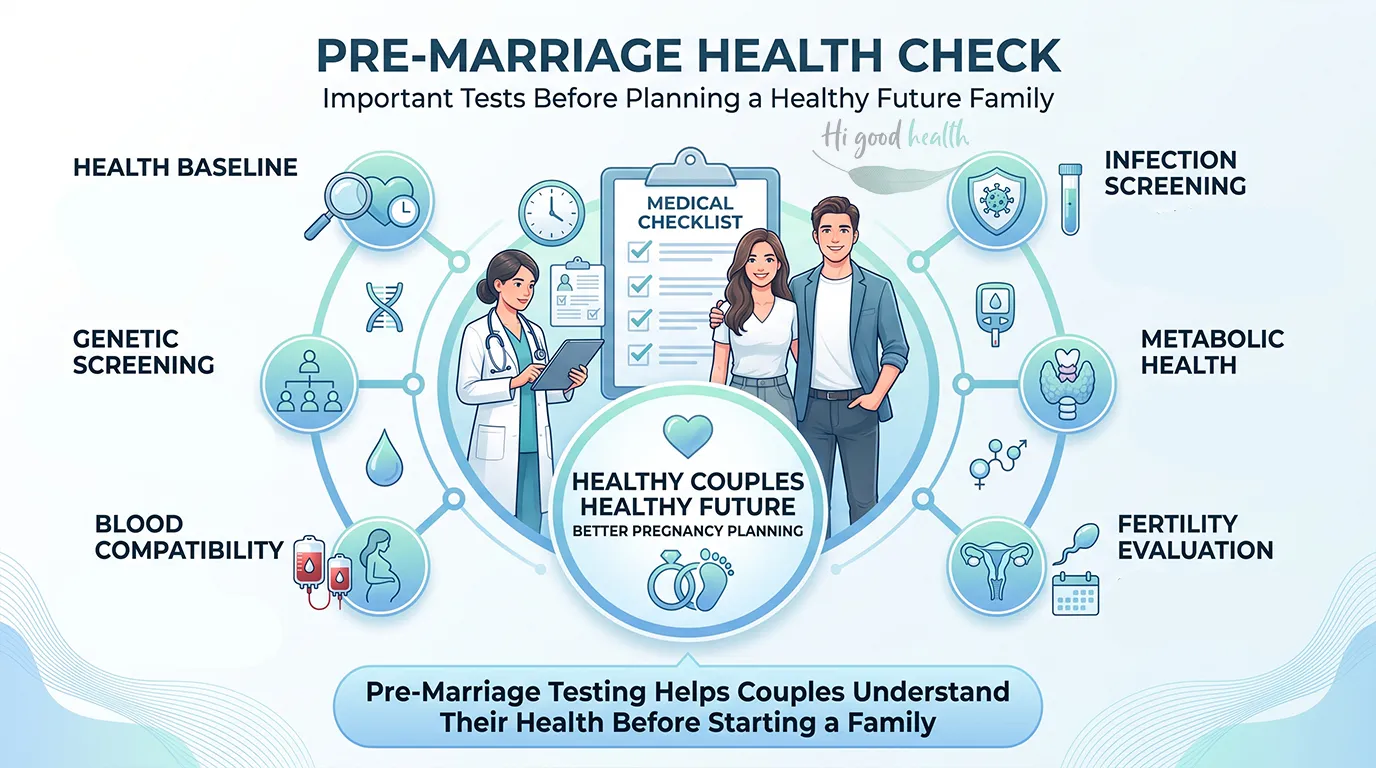
A pre marriage medical test helps couples learn their health baseline before pregnancy is planned. The most useful tests often include carrier screening, blood group and Rh factor, infection screening, thyroid testing, diabetes screening, and fertility checks when there are concerns about conception.
Who this is for
Couples planning marriage or long-term commitment, people thinking about starting a family, and anyone who wants a clear reproductive health baseline before pregnancy begins.
Why a premarital check-up matter
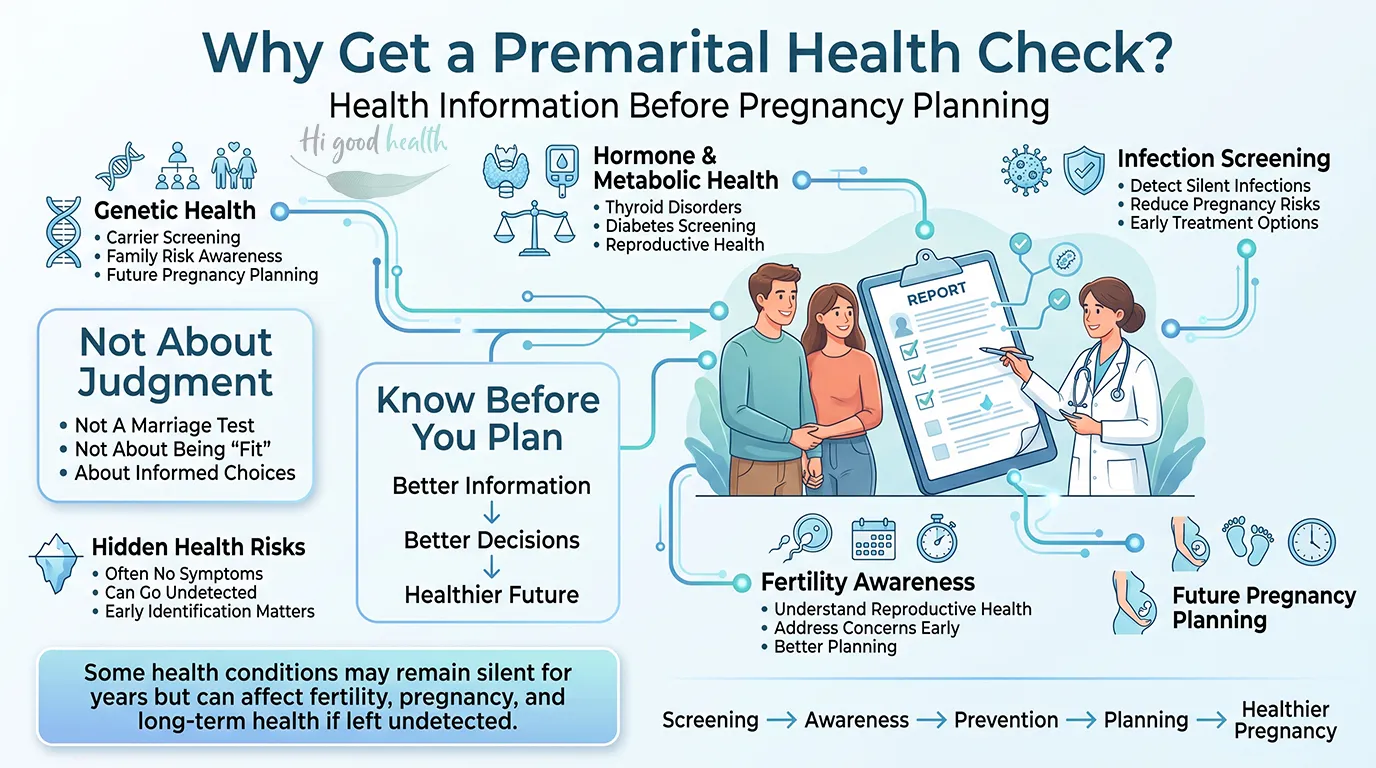
A premarital health check-up is not about judging whether someone is “fit” for marriage. It is about giving both partners information that can change decisions, reduce risk, and make planning more intentional. According to the CDC and ACOG, preconception care helps identify medical, genetic, and infection-related risks before pregnancy begins.
Claim: Silent health issues can affect fertility and pregnancy outcomes.
Evidence: Carrier conditions, untreated thyroid disease, diabetes, and infections may not cause obvious symptoms at first.
Source: CDC preconception guidance, ACMG carrier screening recommendations, and ACOG preconception care guidance.
1. Genetic carrier screening
Carrier screening is a blood or saliva test that shows whether a person carries a gene variant for a recessive disorder without having symptoms. If both partners carry the same condition, each pregnancy has a 25% chance of being affected.
The American College of Medical Genetics and Genomics recommends offering carrier screening to all people considering pregnancy, regardless of ethnicity or family history. This makes it one of the most important components of a premarital screening panel.
Common Disorders Included in Carrier Screening
Many laboratories provide expanded carrier screening panels encompassing dozens or even hundreds of inherited conditions. Commonly screened disorders typically include:
- Spinal Muscular Atrophy (SMA): A severe neuromuscular disorder characterized by progressive muscle weakness and movement difficulties [1].
- Cystic Fibrosis: A condition primarily affecting the lungs and digestive system [1].
- Sickle Cell Disease: An inherited blood disorder with higher prevalence in populations from parts of Africa, the Middle East, and India [1].
- Beta-Thalassemia: A significant inherited blood disorder, though prevalence rates can vary considerably across different regions and communities.
If both partners are carriers of beta-thalassemia, each pregnancy carries a 25% risk of resulting in a child with beta-thalassemia major, a severe form of the disease necessitating lifelong blood transfusions and specialized medical care.
2. Blood group and Rh factor
Blood group testing is simple, but it matters. Rh factor is a protein on red blood cells. If an Rh-negative mother carries an Rh-positive baby, her body may develop antibodies that affect later pregnancies.
According to ACOG, this problem is largely preventable when Rh status is known in advance and managed properly during pregnancy. This is why blood typing is an essential part of a premarital check-up.
3. Infection screening
Several infections can be present without symptoms and still affect pregnancy or fertility. A pre wedding medical test often includes HIV, hepatitis B, hepatitis C, syphilis, and sometimes chlamydia or gonorrhea depending on risk.
Claim: Early infection screening can protect both partners and a future baby.
Evidence: Many infections are treatable, and treatment before conception reduces the chance of complications.
Source: CDC and ACOG preconception and STI screening guidance.
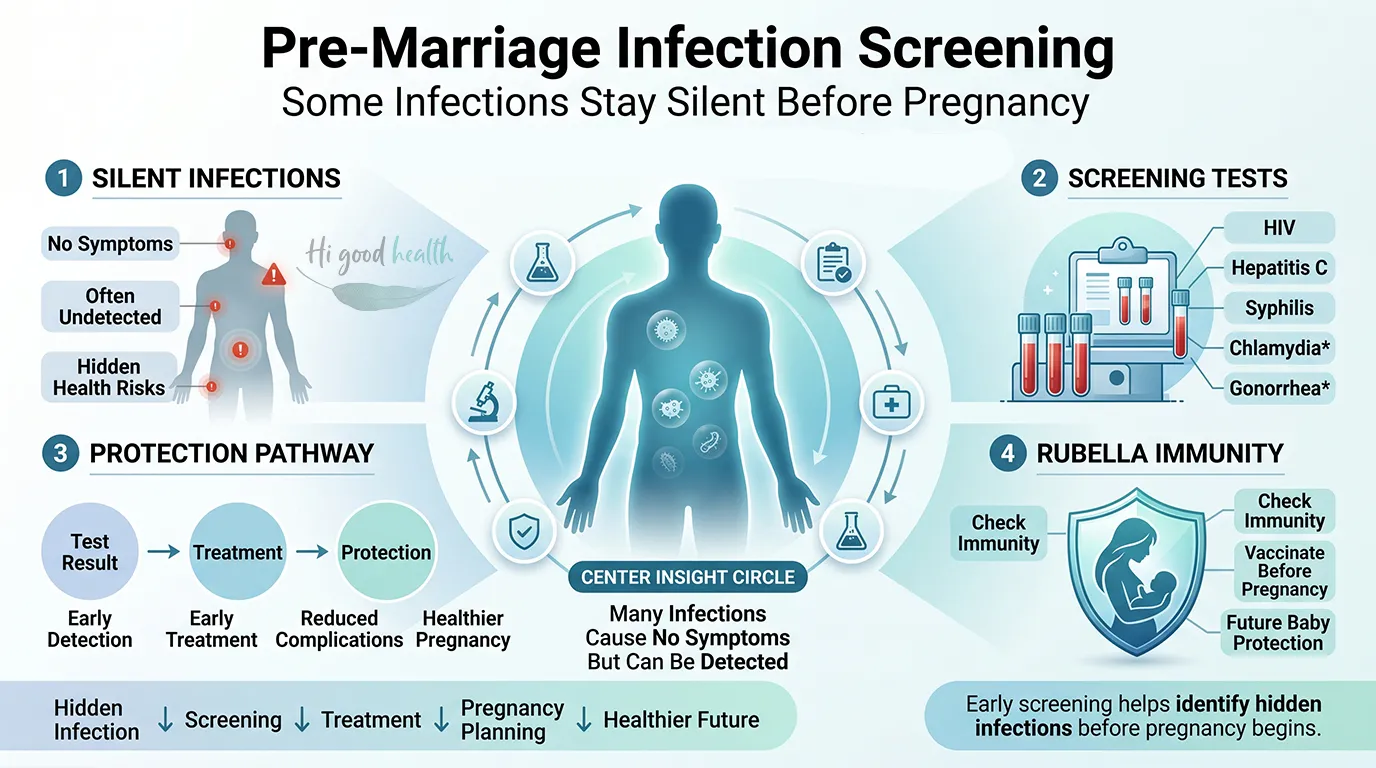
Rubella immunity is also important. If someone is not immune, vaccination should happen before pregnancy because live vaccines cannot be given once pregnancy has started.
4. Vaccination review
Preconception is the ideal time to review vaccine status because some vaccines are best given before pregnancy. A premarital screening package should include confirmation of immunity to rubella and varicella and review whether hepatitis B and flu vaccination are up to date. Some vaccines, such as Tdap, are routinely recommended during each pregnancy rather than before conception.
If needed, vaccines should be given early enough to allow the immune system to respond before conception. This step is especially useful because it helps prevent avoidable infections during pregnancy.
5. Thyroid and diabetes screening
Thyroid hormone affects ovulation, cycle regularity, miscarriage risk, and fetal development. TSH is the main screening test used to look for thyroid dysfunction. A thyroid screening test is recommended when indicated, particularly in individuals with symptoms, known risk factors, or reproductive concerns.
Diabetes screening matters too. Undiagnosed or poorly controlled diabetes can raise the risk of miscarriage and birth defects. Screening recommendations are for those who have family history of diabetes, obesity, previous gestational diabetes, or symptoms. A fasting glucose test or HbA1c can help detect conditions early to improve control before conception.
6. Fertility testing when needed
Not every couple needs a full fertility workup before marriage but these tests are most useful in the presence of fertility concerns, irregular menstrual cycles, previous ovarian surgery, chemotherapy exposure, endometriosis, or delayed conception.
An ovarian reserve test helps estimate how many eggs remain, while an AMH test for fertility gives one part of that picture.
For male fertility, semen analysis test results can show sperm count, movement, and shape. This is especially useful if there is a history of delayed conception, prior illness, or reproductive risk factors.
These tests are not definitive predictors of fertility. They are tools for planning, not final answers.
During a male fertility evaluation, a clinician may also ask about conditions that can affect sperm production, such as varicocele (enlarged veins in the scrotum), a history of undescended testes, mumps orchitis (mumps infection affecting the testicles after puberty), or the use of testosterone therapy or anabolic steroids, all of which can reduce sperm production or fertility.
7. Genetic health screening and counseling
Some couples also want broader genetic health screening before pregnancy, especially if there is a family history of inherited disease or a known condition in either partner. Genetic counseling before marriage can help explain what the results mean and which tests are the most useful.
Carrier screening is not diagnostic. It is a way to find out whether a hidden risk exists before conception, when more choices are still available.
8. Nutritional and lifestyle review
A premarital screening package is often more useful when it also looks at folic acid, iron, vitamin B12, vitamin D, weight, alcohol use, smoking, sleep, and exercise. Certain medications, including steroids, should only be used under medical supervision, and it is best to consult a doctor before stopping them. Your doctor may suggest alternative treatments.
Folic acid is especially important because it lowers the risk of neural tube defects when started before pregnancy.
Claim: Good preconception nutrition supports a healthier pregnancy.
Evidence: Folic acid, iron, B12, iodine, and vitamin D all matter for reproductive health.
Source: CDC, WHO, and ACOG guidance on preconception care.
Mental health matters too. Depression, anxiety, and chronic stress can affect well-being, sleep, treatment adherence, and the ability to effectively plan for pregnancy. People taking psychiatric medications should not stop them suddenly; medication changes should always be discussed with a qualified clinician.
Key Takeaways
- A premarital checkup is most useful when it is designed around fertility, infection risk, and genetic screening.
- Blood group, Rh factor, thyroid, diabetes, and carrier screening are among the most practical first tests.
- Fertility tests such as ovarian reserve test, AMH test for fertility, and semen analysis test are most helpful when there are symptoms or delays.
- A good pre marriage medical test [focuses on early planning], not waiting for problems.
- Vaccines, nutrition, and mental health deserve attention too, because they all affect pregnancy readiness.
Frequently asked Questions
1. What tests should be done before marriage?
The most common pre marriage medical test choices are blood group and Rh factor, infection screening, thyroid testing, diabetes testing, carrier screening, and a vaccine review. Some couples also add fertility checks if they want a more complete reproductive baseline.
2. Should we do a fertility test before marriage?
A fertility test before marriage is not required for everyone. It is more useful when there is a known health issue, irregular cycles, a family history of genetic disease, or concern about future conception.
3. Is pre marriage medical test cost the same everywhere?
No. Pre marriage medical test cost depends on the city, the number of tests, and whether a clinic offers a bundled package. It is best to compare what is included rather than looking only at the package price.
4. Is semen analysis test only for men with infertility?
No. A semen analysis test can also be useful before marriage or before pregnancy planning when a couple wants a fertility baseline or has risk factors that could affect sperm health.
5. How do I choose a premarital health check up?
Choose a premarital health check up based on age, personal health history, family history, and pregnancy plans. A clinician can help decide whether a basic panel or a broader reproductive workup makes more sense.
A simple checklist for couples
- Confirm blood group and Rh factor.
- Review vaccines and infection screening.
- Check thyroid and diabetes status if there are symptoms or risk factors.
- Ask about carrier screening if pregnancy is being planned.
- Add fertility testing only when it is likely to answer a real question.
- Discuss genetic counseling if there is a family history of inherited disease.
Depending on individual history and risk factors, clinicians may also recommend:
- Complete blood count (anemia)
- Iron studies if indicated
- Vitamin B12 in vegetarians or vegans
- Rubella and varicella antibody testing if vaccination history is uncertain
- Pap smear according to age-based cervical cancer screening guidelines
- STI screening tailored to individual risk rather than universally.
Glossary
- Carrier screening: A test that checks whether someone carries a recessive genetic condition without having symptoms.
- Rh factor: A protein on red blood cells that matters in pregnancy when partners have different Rh status.
- AMH: Anti-Müllerian hormone, a marker used as one part of ovarian reserve testing.
- Ovarian reserve: An estimate of how many eggs remain in the ovaries.
- Semen analysis: A lab test that measures sperm count, movement, and shape.
- Beta-thalassemia: An inherited blood disorder that can be detected through carrier screening.
- Genetic counseling: A conversation with a trained specialist who explains test results and reproductive options.
Sources
- ACMG — Gregg AR et al. Screening for Autosomal Recessive and X-linked Conditions. Genetics in Medicine, 2021.
- ACOG — Committee Opinion No. 690: Carrier Screening in the Age of Genomic Medicine.
- CDC — Preconception Health and Health Care.
- CDC — Folic Acid Recommendations.
- ACOG — Prevention of Rh D Alloimmunization. Practice Bulletin No. 181.
- ATA — Guidelines for the Diagnosis and Management of Thyroid Disease During Pregnancy and Postpartum.
- ADA — Standards of Care in Diabetes 2026.
- WHO — Preconception Care guidance.
Disclaimer: This article is for general health education only and does not replace medical advice. Please speak with a qualified OB-GYN, genetic counselor, or licensed healthcare provider before making any medical decisions.
