
Updated: 25 September 2026
Why spending $50 billion on supplements isn’t solving America’s hidden hunger crisis — and what actually works
At a glance
Are multivitamins worth it? For most people the honest answer is that they are a low-cost insurance policy, not a fix. A standard tablet cannot physically hold a meaningful dose of calcium or magnesium, it omits the ultra-trace minerals entirely, and the synthetic forms it does contain are absorbed less efficiently than the same minerals in food.
Food is better than a pill for some minerals and no better for others — supplemental calcium is absorbed about as well as calcium from dairy, and synthetic folic acid is absorbed better than food folate. The real advantage of food is the whole package it arrives in, not a fixed multiplier.
That matters because deficiency is common and its early signs are vague, which is really why people ask are multivitamins worth it in the first place.
Vitamin D deficiency symptoms alone affect a large share of American adults, and low zinc, magnesium, B vitamins, iron and iodine each produce their own pattern of fatigue, poor immunity, cramps or brain fog that is easy to blame on a busy life.
So the practical answer to are multivitamins worth it is this: eat the minerals rather than swallow them, and test rather than guess. Deficiency symptoms overlap heavily with thyroid problems, anemia and depression, so confirm with a blood test and a doctor before starting any supplement — some minerals are genuinely harmful in excess.
Over-supplementation is now measurable too. The share of Americans with blood vitamin D above the high-intake threshold rose from under 1% to just over 8%, and is highest among supplement users [1]. Too much is now as real a problem as too little.
The $30 Pill That’s Lying to You
You take your multivitamin every morning. The label promises “complete nutrition” with 100% of your daily values.
For a deeper look at where these labels fall short, check our detailed blog (When Vitamins Go Wrong: The Most Commonly Misdosed Nutrients and How to Stay Safe)
Yet by 3 PM, you’re exhausted. Brain fog rolls in. You catch every cold. Your hair feels thin, nails chip easily.
Those symptoms have many causes and a mineral shortfall is only one of them. Keep reading for what to do about that, but do not settle on minerals as the answer before a doctor has ruled out the commoner explanations.
Here’s the key issue:
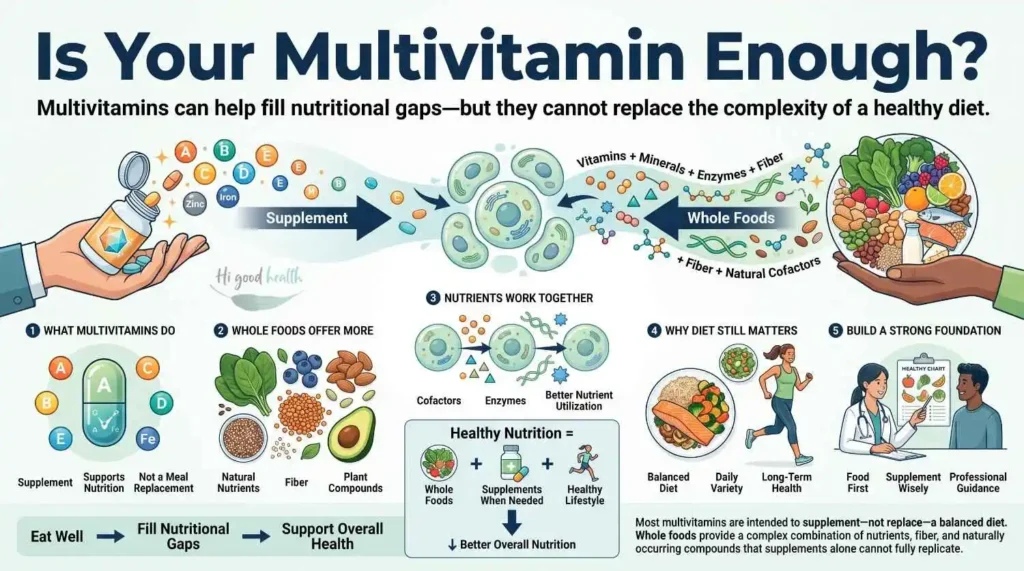
Multivitamins are designed to supplement, not replace, a balanced diet—and they do not cover all nutritional needs.
The US Preventive Services Task Force reviewed multivitamins for preventing heart disease and cancer in healthy adults, and concluded the evidence is insufficient either way [2].
It recommends against beta-carotene and vitamin E supplements outright [2]. A multivitamin is a hedge against a poor diet, not a disease-prevention tool.
Our ancestors didn’t need a cabinet full of bottles because their food did the heavy lifting. By the time a whole food is boxed, bagged, or preserved, many of its natural mineral co-factors are stripped away.
The American Mineral Crisis No One’s Talking About
Americans spend over $50 billion annually on supplements. In fact, fewer than 10% of Americans were deficient for each of the indicators CDC measured, which CDC itself described as good news.
The figures below come from CDC’s Second National Report on Biochemical Indicators, published in 2012 using survey data from 2003 to 2006 — they are the most recent race-stratified numbers available, and they are twenty years old [3].
- Vitamin B6, Vitamin D, and iron are the most common deficiencies.
- Vitamin D: Deficiency rates vary significantly by race, affecting 31% of non-Hispanic blacks and 12% of Mexican Americans, compared to only 3% of non-Hispanic whites. See the note immediately below — these numbers must not be read at face value.
- Iodine: Women aged 20 to 39 years show the lowest iodine levels
- Iron: Higher rates are observed in specific groups, including 16% of non-Hispanic black women and 11% of Mexican-American children aged 1 to 5. More recent data show iron deficiency among US women of reproductive age has risen to about 18% — that trend is current and worth more than the 2006 snapshot [1].
Why the vitamin D gap by race is not what it looks like
A 31% figure against a 3% figure implies a large health disparity. The bone data do not support that reading, and a responsible article has to say so.
Black Americans do have lower blood levels of total vitamin D. They also have higher bone mineral density and fewer fractures than white Americans — the opposite of what a real vitamin D deficiency produces. Researchers call this the vitamin D paradox, and it is well documented [4].
Part of the explanation is that the deficiency threshold is a single blood cut-off calibrated largely on lighter-skinned populations. Melanin does reduce vitamin D production in the skin, but by less than is usually claimed: a review of experimental studies found only seven of twelve showed a reduction, and concluded the sun exposure needed for darker skin remains uncertain [5].
How Our Ancestors Got 4X More Minerals Without Pills
The modelled estimates put ancestral mineral intake at roughly 1.5 to 5 times modern levels — and the researcher who produced them added that these were “by no means megadoses” [6].
1. Mineral-Rich Water
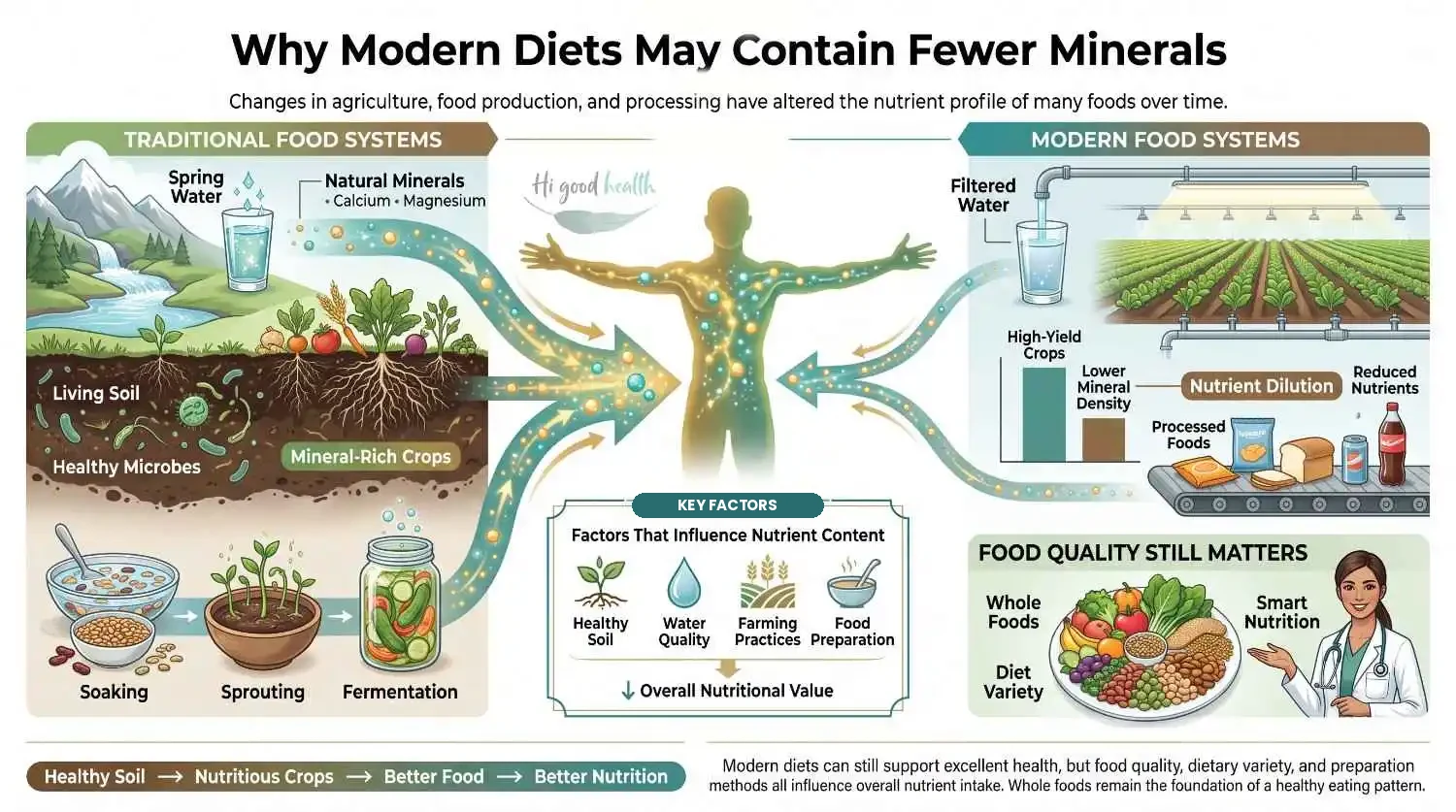
They drank from springs and wells naturally containing calcium, magnesium, potassium, lithium, and boron. Every glass was a mineral supplement. Today? We filter it all out.
2. Breeding for yield, not soil depletion
The soil-depletion figure has no primary source, and the evidence points the other way: at one long-running English research farm, 160 years of archived soils showed mineral content stable or rising while grain mineral content fell. Soil is not the explanation.
What the research does show is a modest real decline in some crops. Comparing USDA data for 43 garden crops between 1950 and 1999 found reliable falls in six nutrients — protein was down 6%, not 30% — with seven others unchanged. The authors attributed it to changed cultivars and a yield-versus-nutrient trade-off [7].
Even that is contested, because analytical methods changed over the period. The honest statement is that mineral and protein concentration has declined modestly in some crops since 1950, driven mainly by breeding for yield, and that specific per-food percentages should not be quoted.
3. Traditional Food Preparation
Native Americans soaked, fermented, and sprouted grains and legumes. These methods reduce phytates (mineral blockers), which improves how well those minerals are absorbed. Modern convenience foods skip every step.
4. Nutrient Dilution
Emerging 2025 agricultural research suggests that breeding for high-yield crops and increased atmospheric CO2 causes plants to grow faster but accumulate fewer minerals per gram of tissue, a phenomenon known as “The Great Dilution”. Zinc showed the most significant drop, with protein and iron also decreasing across most species.
Field experiments across seven sites found that at elevated CO2, wheat lost 9.3% of its zinc, 5.1% of its iron and 6.3% of its protein [8].
Projected forward, that puts an estimated 175 million more people at risk of zinc deficiency by 2050 [9].
Understanding the Mineral Spectrum
Want to ensure your supplements match your dietary preferences? Click here: Which Vitamins Are Commonly Non-Vegetarian?
Your body operates on a three-tier mineral system:
Tier 1: Macro-Minerals (Calcium, magnesium, potassium)
Required by the body in amounts greater than 100 mg per day.
In multivitamins but in token amounts—pills can’t fit adequate doses.
Tier 2: Trace Minerals (Iron, zinc, selenium)
These are needed in much smaller amounts, typically less than 100 mg per day.
Sometimes included, but synthetic forms absorb poorly.
Tier 3: Ultra-trace elements — boron, silicon, lithium and others, present in food in microgram amounts. They have no RDA because the evidence has not been strong enough to set one.
For several of them, no biological role in humans has been established at all. They are of research interest. They are not nutrients you can be told you are short of.
Unlike processed foods that are stripped of nutrients, a varied diet of whole foods provides a natural spectrum of trace elements packaged with the cofactors needed for superior absorption.
The “Forgotten Five” Backed by Latest Science
Boron
- What it does: Bone health, hormone balance, brain function. It is recognized as a supportive nutrient for bone and joint comfort, though it works best as part of a whole-food mineral complex rather than a high-dose isolate.
There is no recommended intake for boron. The National Institutes of Health state that boron is not classified as an essential nutrient for humans, and that no RDA, AI or EAR could be set [10].
Typical American intake is about 1 mg a day and the safe upper limit is 20 mg [10]. Raisins, almonds, legumes and leafy greens are good sources if you want more — but you are not short of it.
Older research found that about 3.25 mg a day was associated with better performance on some cognitive tests than 0.25 mg a day, and NIH describes the evidence as limited. It is a hypothesis, not an established benefit [10].
Silicon
- What it does: Collagen formation, bone strength, healthy skin/hair/nails
There is no recognised silicon deficiency in humans, so there are no deficiency signs to list. NIH’s position is that a biological role for silicon in humans has not yet been identified.
Lithium (trace amounts, not psychiatric doses)
- What it does: Mood regulation, neuroprotection, cognitive health
What can honestly be said: several ecological studies find lower suicide rates in areas with more lithium in the water, the pooled estimates vary widely between studies, and the one analysis that looked at individuals rather than areas found no association. It is an interesting signal, not an established effect [11].
As psychiatrist Dr. Anna Fels has argued, by aggressively filtering our water supply, we may be inadvertently removing trace elements—like lithium—that play a vital role in stabilizing mood and reducing impulsivity across entire populations.
Her own article carried several caveats — including a negative English study and the point that therapeutic doses are far higher than natural ones — and those caveats travel with the quotation here too.
Are Multivitamins Worth It? Why a Pill Can’t Replace Real Food
Three fundamental problems:
1. Size Constraints: Adequate calcium (1,000mg) + magnesium (400mg) requires a golf ball-sized pill. Most multivitamins contain 10-20% of RDA.
2. The ultra-trace elements are absent — though as the section above explains, it is not established that you need them. This is a real gap in the tablet; whether it is a gap in your health is unproven.
3. Absorption depends on the nutrient, not on food versus pill. There is no general multiplier, and for two well-studied nutrients the claim that food always wins is simply wrong.
Synthetic folic acid is absorbed better than food folate. The National Academies put calcium absorption at about 30% from dairy, with common supplement salts showing similar absorbability. Iron salts are absorbed better than the non-haem iron in plants.
The genuine advantages of food are real but different: the whole package of co-occurring nutrients and fibre, and a far lower risk of overshooting. They should not be expressed as a percentage.
The Filtered Water Disaster: How Americans Strip Minerals Daily
Reverse Osmosis and distillation remove 95-99% of minerals—including beneficial calcium, magnesium, potassium. This creates acidic, demineralized water (TDS below 50 ppm).
The WHO Warning
What the chapter actually concludes is narrower: demineralised water that has not been remineralised is not ideal drinking water and may not supply some beneficial nutrients. It frames the risk for people whose dietary mineral intake is already marginal, or for regions where desalinated water is the sole supply [12].
- Ionic Bioavailability – minerals in water are often easier for the body to absorb than those bound to complex fibers in food.
- Increases urinary loss of calcium, magnesium, potassium
The honest answer for a reader on a normal mixed diet: reverse osmosis water is not a health risk. Drinking water is a minor contributor to calcium and magnesium intake, and removing it does not create a deficiency. Get your minerals from food rather than from your tap.
Better Solutions:
- Selective filtration: Carbon filters that remove contaminants but preserve minerals
Plant-Based Foods Delivering 15+ Minerals: Your Action Plan
Sea Vegetables (Most Complete Mineral Source)
Ocean water contains all 92 minerals. Seaweeds concentrate them—up to 36% mineral content. Dulse flakes, spirulina and nori are the practical options.
Dulse and other seaweeds are very high in iodine, and daily use can push intake past the safe upper limit. Anyone with a thyroid condition should speak to their doctor before adding them at all.
- Dulse flakes: Iron, potassium, iodine, 60+ trace minerals—Use as salt replacement. Start with ½ tsp daily. Occasional rather than daily use is the safer default.
- Spirulina: 57% protein, all amino acids, B vitamins, iron—½-1 tsp in smoothies
- Nori sheets: High protein, iron—Snacks, salads, sushi. Nori is often listed as a B12 source; the form in most seaweed is not reliably usable by humans, so vegans should not count on it.
Where: Maine Coast Sea Vegetables, Whole Foods, Trader Joe’s, Costco
Strategic Mineral Mix (Under $1/Day)
- 10 almonds (0.91mg boron + 76mg magnesium)
- 2 Brazil nuts (139% RDA selenium). Two is the right number and is also close to the ceiling — do not eat a handful. Selenium is genuinely toxic in excess.
- 1 tbsp pumpkin seeds (2.2mg zinc + 156mg magnesium)
- 1 tbsp ground flax (boron + omega-3)
Critical: Soak nuts/seeds 4-8 hours to reduce phytates, improves bioavailability. Sprouting and fermenting reduce phytate considerably more than soaking does.
Legumes (Most Cost-Effective: $1-3/lb)
- Red kidney beans: 2.48mg boron/cup (highest plant source)
- Lentils: 1.47mg boron/cup + 37% RDA iron
- Chickpeas: 1.05mg boron/cup + 84% RDA manganese
Key: Soak dried legumes 12-24 hours before cooking.
Mineral-Dense Produce
- Avocados: 2.15mg boron/cup + more potassium than bananas
- Dark leafy greens: Kale (94mg calcium/cup), spinach (157mg magnesium/cup). Note that spinach’s calcium and iron are poorly absorbed because of its oxalate content — kale is the better choice for both.
- Prunes: Excellent boron, proven bone benefits—Eat 3-4 daily
- Mushrooms: selenium, copper, B vitamins
Absorption tip: pair plant iron with a vitamin C source. The 300% figure comes from single-meal studies and does not hold across a whole day’s diet — when vitamin C intake was varied across complete diets, iron absorption did not differ significantly [13].
Pooled estimates put the real-world gain at about six percentage points of absorption. Still worth doing; not a tripling.
Upgrade Your Salt
- Redmond Real Salt (at Walmart/Target)
- Celtic Sea Salt
- Himalayan Pink Salt
- While unrefined sea salts provide a spectrum of trace elements, they often lack the iodine found in fortified table salt. To ensure thyroid health, consider using unrefined salt for flavor alongside iodized salt or iodine-rich foods like dulse and seafood.
Mineral Deficiency Symptoms: How to Detect Yours
Method 1: Self-Observation
Common symptoms:
- Chronic fatigue → Magnesium, iron, B vitamins
- Brain fog → Iron, zinc, B12, lithium
- Frequent infections → Zinc, selenium, vitamin D
- Muscle cramps → Magnesium, potassium, calcium
- Hair loss, brittle nails → Iron, zinc, silicon
- Joint pain → Calcium, magnesium, boron, silicon
- Mood swings, anxiety → Magnesium, lithium, B vitamins
Note: The symptoms listed are clinically associated with these deficiencies, but they are “non-specific,” meaning they can be caused by hundreds of different conditions.
Method 2: Scientific Testing
The laboratories’ own reference ranges varied so widely that nearly every mineral was reported as high by one lab and low by another — from the same head of hair. They issued conflicting supplement advice [14].
Blood Testing
- Current snapshot
- Blood tests are excellent for Iron (Ferritin), Vitamin D, and B12, but they are notoriously poor for Magnesium, as only 1% of the body’s magnesium is actually in the blood.
- Often covered by insurance
For a healthy person the practical approach is to compare what you eat against the recommended intake, rather than buying a test.
Your 2-Week Mineral Makeover
Week 1: Foundation
Days 1-2: Add 1 tbsp dulse flakes daily
Days 3-4: Create mineral nut mix; eat mid-morning
Days 5-7: Add 1 cup cooked legumes (soak overnight first)
Week 2: Expansion
Days 8-10: Add dark leafy greens + ½ avocado daily
Days 11-14: Eat 3-4 prunes; try nori snacks
Bonus Actions
- Water upgrade: Remineralize filtered water or switch to mineral water
- If you have symptoms that persist, see a doctor and ask which blood tests are appropriate — rather than ordering a panel yourself.
- Start soaking: Soak nuts/seeds/grains overnight
The 30-Day Diversity Challenge
Eat 30 different plant foods in 30 days. Research shows people who eat 30+ plants weekly have more diverse gut bacteria.
Sample Mineral-Rich Day
Breakfast: Green smoothie with spirulina (½ tsp) + ground flax (1 tbsp) + banana + almond butter + spinach + chia seeds (1 tbsp)
Lunch: Lentil soup (1 cup) + kale salad with avocado (½), pumpkin seeds (1 tbsp), dulse flakes (½ tbsp), olive oil, lemon
Dinner: Chickpea curry with mushrooms + sautéed Swiss chard + brown rice + roasted vegetables
Snacks: Mineral nut mix | 3-4 prunes | Nori snacks
Water: 8 glasses; add mineral water or a squeeze of citrus if you like
This delivers 40+ minerals, ~1,700 calories, 60g protein, 40g fiber.
Latest Scientific Breakthroughs
Boron & Cognition: The research by Penland et al shows that approximately 3.25 mg/day of boron improved cognitive performance in older adults compared to 0.25 mg/day. NIH characterises this evidence as limited rather than established.
Silicon & Alzheimer’s: A research by PAQUID cohort found that an increase of 10 mg/day in dietary silicon was associated with an 11% reduced risk of dementia.
Three qualifications: this was silica in drinking water rather than dietary silicon, it was a single observational cohort of 1,925 older people in France, and the result was borderline. The study’s main purpose was investigating aluminium, with which silica is entangled.
Lithium and suicide. A meta-analysis did produce a pooled figure equivalent to 58%. But thirteen of its fourteen studies compared whole populations rather than individuals, they disagreed with one another to an extreme degree, and the authors stated they had not adjusted for confounders [11].
The estimate for the general population was 37%, the female estimate was not statistically significant, and an individual-level study found no association. This cannot be stated as a reduction caused by lithium.
Minerals & Microbiome: Multiple 2024 studies show that trace minerals (zinc, selenium, copper, manganese) are essential for immune function, enzyme activity, and maintaining gut microbiota homeostasis.
Take Action Now
Your $30 multivitamin is a backup plan, not a replacement for real nutrition. You can reclaim the mineral advantage your ancestors had naturally—through whole plant foods, mineral-rich water, unrefined salt, and smart preparation methods.
Start today:
- Add dulse flakes to one meal
- Create your mineral nut mix
- Switch to unrefined sea salt
- If symptoms persist, see a doctor about which blood tests are appropriate for you
Deficiency Symptoms by Nutrient: What to Look For
The section above tells you how to test. This one tells you what to notice in the first place, nutrient by nutrient. If you are asking are multivitamins worth it, this is the list the question really turns on.
None of these signs is specific on its own — that is exactly the problem with mineral deficiency symptoms, and why testing beats guessing.
Vitamin D Deficiency Symptoms
This is the most common deficiency in the United States and the one most often missed. Vitamin D deficiency symptoms are quiet and cumulative: persistent fatigue, low mood that worsens through winter, aching bones or a deep ache in the lower back, muscle weakness that shows up as difficulty rising from a chair, frequent infections, and slow wound healing.
Risk is higher with darker skin, limited sun exposure, obesity, age over 65, and living at northern latitudes. Because vitamin D governs calcium absorption, a shortfall quietly undermines the mineral intake you are otherwise getting right. A simple 25-hydroxyvitamin D blood test settles it.
Worth knowing in the other direction too: blood levels above the high-intake threshold have risen from under 1% of the population to about 8%, and the rate is highest among supplement users [1]. More is not better.
Zinc Deficiency Symptoms
Zinc deficiency symptoms are easier to spot than most: cuts and mouth ulcers that heal slowly, colds that arrive every few weeks, a dulled sense of taste or smell, thinning hair, and rough or acne-prone skin. Vegetarians, older adults and people with inflammatory bowel disease are the groups most likely to be short.
B Vitamin Deficiency Symptoms
B vitamin deficiency symptoms cluster around nerves and energy. Low B12 causes tingling or numbness in hands and feet, memory complaints, and a form of anemia that standard blood counts can miss early. Low B1 (thiamine) produces fatigue, irritability and, in serious cases, nerve damage — a particular risk with heavy alcohol use.
Anyone taking metformin long term, following a strict vegan diet, or over 60 with reduced stomach acid should have B12 checked rather than assumed.
Magnesium Deficiency and Heart Palpitations
Magnesium deficiency shows up as night-time muscle cramps, a twitching eyelid, restless sleep, constipation and — the one that frightens people into a doctor’s office — heart palpitations. It is also the hardest to confirm, because a standard blood test measures the roughly 1% of body magnesium that circulates rather than the bulk stored in bone and muscle [15].
Heavy coffee or alcohol intake, and long-term use of acid-reducing medicines, all raise the risk. Palpitations always warrant a medical opinion rather than a supplement bought on a hunch.
Potassium Deficiency Signs
Potassium deficiency signs include muscle weakness and cramping, constipation, fatigue and, when severe, an irregular heartbeat. It most often follows fluid loss — prolonged vomiting or diarrhea — or diuretic use. If you have kidney disease, potassium is a mineral to adjust only under medical supervision, because too much is as dangerous as too little.
Iron and Iodine
Iron deficiency produces fatigue disproportionate to activity, breathlessness on stairs, pale skin, brittle nails and sometimes a craving to chew ice. In anyone past middle age it is a reason to investigate rather than simply supplement, because slow blood loss is a common cause.
Iron deficiency in American women of reproductive age has risen from about 12% two decades ago to roughly 18% today, so this is one shortfall that is genuinely getting worse [1].
Iodine shortfall is quieter still — fatigue, cold intolerance, weight gain and neck swelling — and matters most in pregnancy, where it affects fetal brain development. Iodized salt remains the simplest safeguard.
One caution runs through all of these, and it is the reason the question are multivitamins worth it has no single answer. Mineral deficiency symptoms overlap almost completely with thyroid disease, depression, sleep debt and chronic fatigue.
That overlap is the reason a blood test is worth more than a symptom checklist, and the reason self-prescribing is a poor idea — selenium, iron and zinc are all genuinely harmful in excess.
Key Takeaways
- Are multivitamins worth it? As insurance, sometimes. As a substitute for mineral-rich food, no — a tablet cannot hold an adequate dose of the major minerals and omits the ultra-trace ones entirely.
- As disease prevention, no. The US Preventive Services Task Force found the evidence insufficient for multivitamins preventing heart disease or cancer, and recommends against beta-carotene and vitamin E [2].
- Vitamin D deficiency symptoms are the most common and the most easily mistaken for ordinary tiredness: fatigue, winter low mood, bone ache, muscle weakness and frequent infections.
- Zinc deficiency symptoms are more distinctive — slow healing, repeated colds, dulled taste or smell, thinning hair.
- Magnesium is the hardest to measure, because blood holds only about 1% of the body’s supply. There is no good routine alternative test either, so compare your diet against the recommended intake rather than buying a panel [15].
- Food is a better source than a pill for reasons other than absorption — the co-occurring nutrients, the fibre, and a much lower risk of overshooting. Absorption itself depends on the nutrient: folic acid is absorbed better than food folate, and supplemental calcium about as well as dairy calcium.
- Hair mineral analysis is not a reliable test. Split samples from one person returned results differing more than tenfold between laboratories, with conflicting supplement advice [14].
- Mineral deficiency symptoms overlap with thyroid disease, depression and plain sleep debt. Test, do not guess — a symptom list is not a diagnosis.
- Never self-prescribe minerals on the strength of a symptom list. Selenium, iron and zinc are all harmful in excess.
Frequently Asked Questions
What minerals are missing from standard multivitamins?
Most multivitamins lack ultra-trace elements like boron, silicon and lithium, because no daily requirement has been established for them. That is partly because the evidence has not been strong enough to set one — a missing element is not the same as a deficiency.
Is reverse osmosis (RO) water bad for my health?
For someone eating a varied diet, no. Drinking water is a minor contributor to calcium and magnesium, and filtering it does not create a deficiency. The concern in the literature applies to people whose dietary intake is already marginal, or to regions relying entirely on desalinated water.
How can I add minerals back to my drinking water?
If you want more minerals from water, hard tap water or a natural mineral water will do it. There is no good evidence you need to buy mineral drops, and the more reliable route is food.
What are the common signs of mineral deficiency?
Symptoms vary but often include chronic fatigue, brain fog, brittle nails, muscle cramps and frequent infections. Every one of them has many other causes, which is why they cannot be used to diagnose yourself.
Why do I need to soak nuts and seeds?
Raw nuts and seeds contain phytates, which bind minerals and reduce absorption. Soaking reduces them. Sprouting and fermenting reduce phytate considerably more than soaking does, if you want the bigger effect.
Is sea salt actually healthier than table salt?
Unrefined salts retain trace minerals but lack iodine fortification. Use unrefined salt for flavour while making sure iodine comes from somewhere — iodised salt, seafood or dairy. The quantities of trace minerals in salt are tiny either way.
How do I test for mineral deficiencies?
Through your doctor, with blood tests chosen for your symptoms. Ferritin for iron, 25-hydroxyvitamin D for vitamin D, B12 with methylmalonic acid if nerve symptoms are present. Hair mineral analysis is not a reliable way to assess nutritional status: split samples from one person have returned results differing more than tenfold between laboratories.
Are sea vegetables safe for everyone?
Seaweeds like dulse are nutrient-dense but high in iodine. Start with small amounts and treat them as occasional rather than daily. If you have a thyroid disorder, speak to your doctor before adding them at all.
How long does it take to fix a deficiency?
It depends on the nutrient and how short you were. Iron stores take months to rebuild; vitamin D responds in weeks; bone density changes over a year or more. A confirmed deficiency treated properly has a timeline your doctor can give you.
Why can’t I just take a better supplement?
You often can, if you have a confirmed deficiency — that is exactly what supplements are for. What a supplement cannot do is substitute for a poor diet across the board, or fix a problem you have not established you have.
Are multivitamins worth it?
As a low-cost insurance policy against an imperfect diet, often yes. As a substitute for mineral-rich food, no. As protection against heart disease or cancer, the evidence does not support it.
What are the most common vitamin D deficiency symptoms?
Persistent fatigue, low mood that worsens in winter, aching bones or lower back, muscle weakness such as difficulty rising from a chair, frequent infections and slow wound healing. A 25-hydroxyvitamin D blood test confirms it.
Can I diagnose a mineral deficiency from symptoms alone?
No. Mineral deficiency symptoms overlap almost entirely with thyroid disease, depression, anemia and ordinary sleep debt. A blood test is worth more than any symptom checklist, and self-prescribing is risky because selenium, iron and zinc are all harmful in excess. Take symptoms to a doctor rather than to a supplement aisle.
Glossary
Bioavailability: Proportion of a nutrient absorbed and utilized after consumption. Food-based minerals typically have higher bioavailability than synthetic supplements.
CMP (Comprehensive Metabolic Panel): Standard blood test measuring glucose, electrolytes (sodium, potassium, calcium, chloride), kidney/liver function.
Fulvic Acid: Compound from microorganisms breaking down plants over millennia. Contains 70+ trace minerals in highly bioavailable form.
HTMA (Hair Tissue Mineral Analysis): Non-invasive test analyzing hair mineral content. Laboratories’ reference ranges vary widely and split samples have returned conflicting results between labs — see the testing section above.
Macro-minerals: Minerals needed in larger amounts (>100mg daily): calcium, magnesium, potassium, sodium, phosphorus, chloride.
NHANES: National Health and Nutrition Examination Survey—ongoing CDC research assessing American health and nutrition.
Phytates (Phytic Acid): Compounds in grains, nuts, seeds, legumes that bind minerals and reduce absorption. Reduced through soaking, sprouting, fermentation.
RDA (Recommended Daily Allowance): Daily nutrient intake level established by FDA to meet needs of 97-98% of healthy individuals. Set to prevent deficiency diseases, not optimize health.
TDS (Total Dissolved Solids): Measurement of dissolved minerals in water (parts per million/ppm). Optimal drinking water: 150-300 ppm.
Trace Minerals: Minerals needed in small amounts (<100mg daily): iron, zinc, copper, manganese, iodine, selenium, chromium, molybdenum.
Ultra-trace Minerals: Minerals present in food in microgram amounts without established RDAs: boron, silicon, lithium, nickel and others. For several, no biological role in humans has been established at all — they are of research interest, not proven nutrients.
Medical Disclaimer
This information is for educational purposes only and not intended as medical advice. Do not use to diagnose, treat, cure, or prevent any disease.
Please note:
- Consult qualified healthcare providers before diet/supplement changes, especially with existing conditions or medications
- Individual nutritional needs vary
- Some supplements/foods interact with medications
- Nutritional science continues to evolve
- Product recommendations are informational, not endorsements
- Discontinue and consult providers if adverse symptoms occur
Specific warnings:
- Don’t exceed selenium (Brazil nuts), iodine (sea vegetables) without professional guidance
- Pregnant/breastfeeding: consult providers before changes
- Thyroid disorders: consult endocrinologist before sea vegetables
- Blood thinners: discuss vitamin K foods with physician
This doesn’t create doctor-patient relationship. For personalized advice, consult licensed professionals.
Scientific References
- Current Developments in Nutrition. Trends in micronutrient status in the United States, NHANES 1999–August 2023. Reports vitamin D deficiency ~5–6%, iron deficiency in women of reproductive age rising to ~18%, and excess vitamin D rising from <1% to 8.06%.
- US Preventive Services Task Force (2022). Vitamin, Mineral, and Multivitamin Supplementation to Prevent Cardiovascular Disease and Cancer: Recommendation Statement. JAMA, 21 June 2022. Multivitamins Grade I; beta-carotene and vitamin E Grade D.
- Centers for Disease Control and Prevention. Second National Report on Biochemical Indicators of Diet and Nutrition in the U.S. Population, 2012 (NHANES 2003–2006).
- Powe C. E. et al. and subsequent replication work on the vitamin D paradox in Black Americans; see also the American Journal of Clinical Nutrition review of 25-hydroxyvitamin D and osteoporosis in African Americans.
- Systematic review of experimental UV irradiation studies and skin pigmentation. Photochemical & Photobiological Sciences, 2015. doi:10.1039/c5pp00168d
- Eaton S. B., Konner M. (1985). Paleolithic nutrition: a consideration of its nature and current implications. New England Journal of Medicine, 312, 283–289.
- Davis D. R., Epp M. D., Riordan H. D. (2004). Changes in USDA food composition data for 43 garden crops, 1950 to 1999. Journal of the American College of Nutrition, 23(6), 669–682.
- Myers S. S. et al. (2014). Increasing CO2 threatens human nutrition. Nature, 510(7503), 139–142. doi:10.1038/nature13179
- Smith M. R., Myers S. S. (2018). Impact of anthropogenic CO2 emissions on global human nutrition. Nature Climate Change, 8, 834–839.
- National Institutes of Health, Office of Dietary Supplements. Boron — Fact Sheet for Health Professionals.
- Barjasteh-Askari F. et al. (2020). Relationship between suicide mortality and lithium in drinking water: a systematic review and meta-analysis. Journal of Affective Disorders. Pooled OR 0.42; I² = 85.5%; unadjusted for confounders.
- Kozisek F. (2005). Health risks from drinking demineralised water. Chapter 12 in WHO, Nutrients in Drinking Water, pp. 148–163.
- Cook J. D., Reddy M. B. (2001). Effect of ascorbic acid intake on nonheme-iron absorption from a complete diet. American Journal of Clinical Nutrition, 73(1), 93–98.
- Seidel S., Kreutzer R., Smith D., McNeel S., Gilliss D. (2001). Assessment of commercial laboratories performing hair mineral analysis. JAMA, 285(1), 67–72. doi:10.1001/jama.285.1.67
- National Institutes of Health, Office of Dietary Supplements. Magnesium — Fact Sheet for Health Professionals.
NIH – Dietary Supplement Fact Sheet
