
Grains form the cornerstone of diets across the globe providing essential carbohydrates, fiber, and a range of vital nutrients. Staples like rice and wheat have played a central role in human diets for thousands of years and remain major sources of daily energy intake for a large portion of the global population.
However, as awareness about nutrition, metabolic health, and dietary patterns has grown, many people are beginning to question whether commonly consumed grains always represent the healthiest option. Factors such as refining processes, individual health conditions (for example gluten intolerance or diabetes), and overall dietary balance can influence how different grains affect health outcomes [12]
This article examines widely consumed grains such as wheat and rice, explores their nutritional benefits and limitations, and introduces alternative grains like teff, an ancient whole grain gaining attention for its nutrient density and potential health benefits[12]
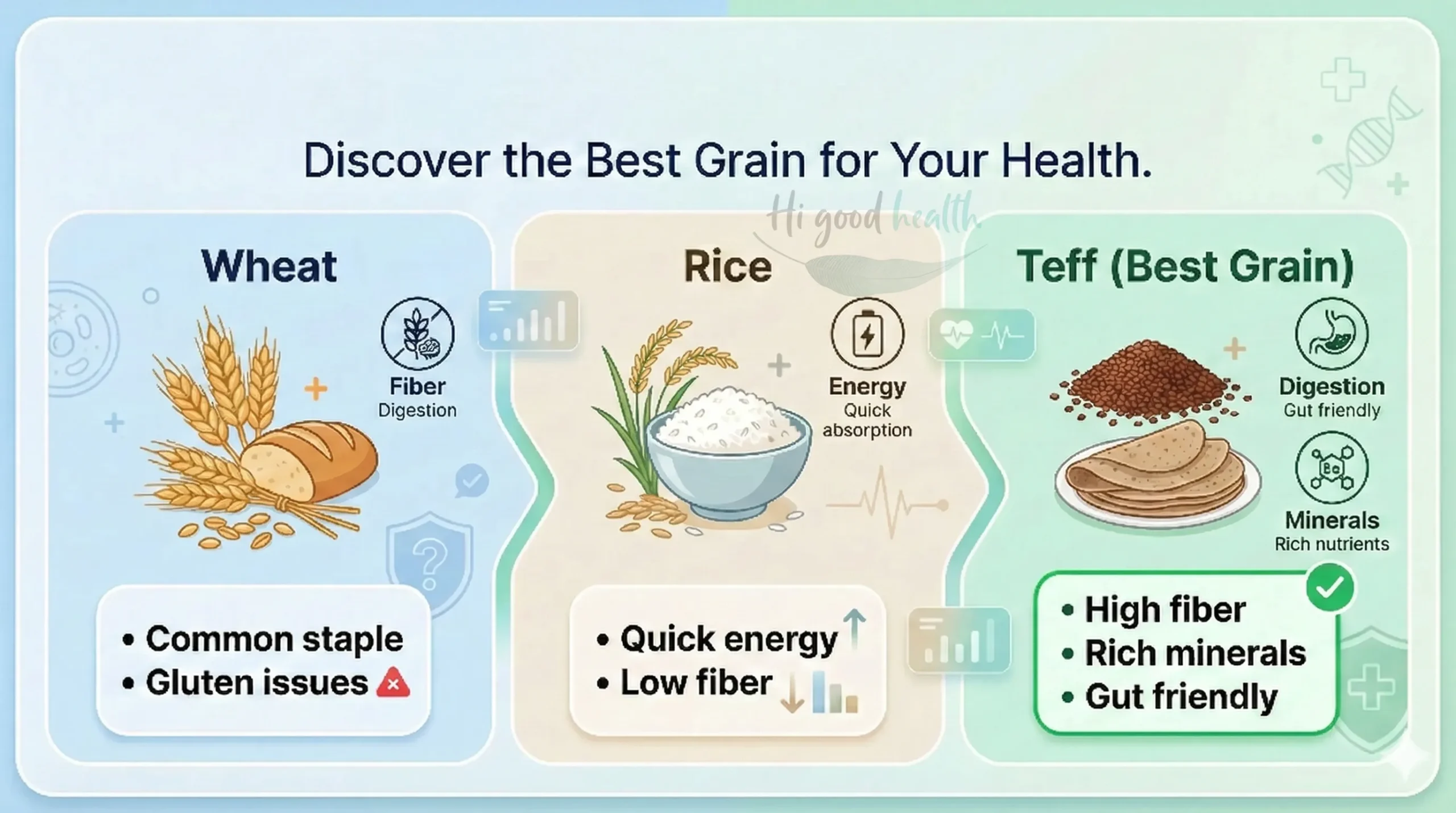
The Enduring Legacy of Grains: A Global Staple
Grains have been a fundamental part of the human diet for thousands of years, evolving from wild harvests to cultivated crops that supported the development of agriculture and settled societies. Their widespread use stems from their long shelf life, caloric density, and versatility in cooking.
Today, grains are consumed in countless forms globally: as flours for bread, pasta, and baked goods; as whole kernels in pilafs, salads, and porridges; and as ingredients in fermented products and beverages. From the injera of Ethiopia made from teff to the rice paddies of Asia and the wheat fields of North America, these healthy grains represent diverse cultural heritages and dietary patterns. According to the Whole Grains Council, whole grains should constitute a significant portion of a balanced diet, with recommendations suggesting at least three servings daily as a part of healthy balanced diet. [1]
According to the Indian Council of Medical Research-National Institute of Nutrition dietary guidance, whole grains should constitute a significant portion of a balanced diet, with an emphasis on cereals in their minimally processed forms
Whole Grain Consumption In India
Over the years there have been significant changes in food basket in India partly because of
improvement in economic status of people. Even now the bulk consumption is grains but
the kind of grains that are primarily consumed and the form in which they are consumed
are different.
India is the 4th largest producer of coarse grains in the world but its production is around
only 4% of the total quantity of grains produced in the world.
Typical Indian diets have a high proportion of carbohydrates (60-80%) as compared to fats and proteins. The primary source of carbohydrates is cereals followed by pulses, starchy root vegetables and simple sugars.
The available databases like National Nutrition Monitoring Bureau (NNMB) and National
Family Health Survey (NFHS) do not segregate the grain consumption into whole grain and
processed. India is one of the top countries with high intake of refined grains consumption. Dietary guidelines for Indians (NIN, 2011) recommends the use of a combination of whole grains, grams and greens.
Are Grains Making Us Healthier or Contributing to Health Issues?
Grains are an important source of carbohydrates and energy, but their effects on health can vary depending on the type of grain consumed and how it is processed. Refined grains, such as white flour and many processed grain products common in many modern diets, have been stripped of their bran and germ, losing much of their fiber, B vitamins, and minerals in the process.[2]
As a result, refined grains may have a higher glycemic index, meaning they can raise blood glucose levels more rapidly than whole grains. Research from Harvard T.H. Chan School of Public Health indicates that refined grain consumption is associated with increased risk of type 2 diabetes and cardiovascular disease compared to whole grain consumption.[2]
Some individuals may also experience digestive discomfort, bloating, or gas from excessive consumption, particularly of refined wheat. The gluten a protein found in wheat, barley can be a significant concern for those with celiac disease or non-celiac gluten sensitivity, leading to a range of adverse health effects.[3]
Warning signs to watch for:
Some people may notice symptoms after eating certain grains, including:
- Frequent bloating or digestive discomfort after grain-containing meals
- Fatigue or sluggishness after high-refined carbohydrate foods
- Skin irritation or rashes in some cases
- Unexplained digestive symptoms
If you experience these symptoms, it might be worth examining your grain intake and consulting with a healthcare professional or registered dietitian to understand your individual grain tolerance.
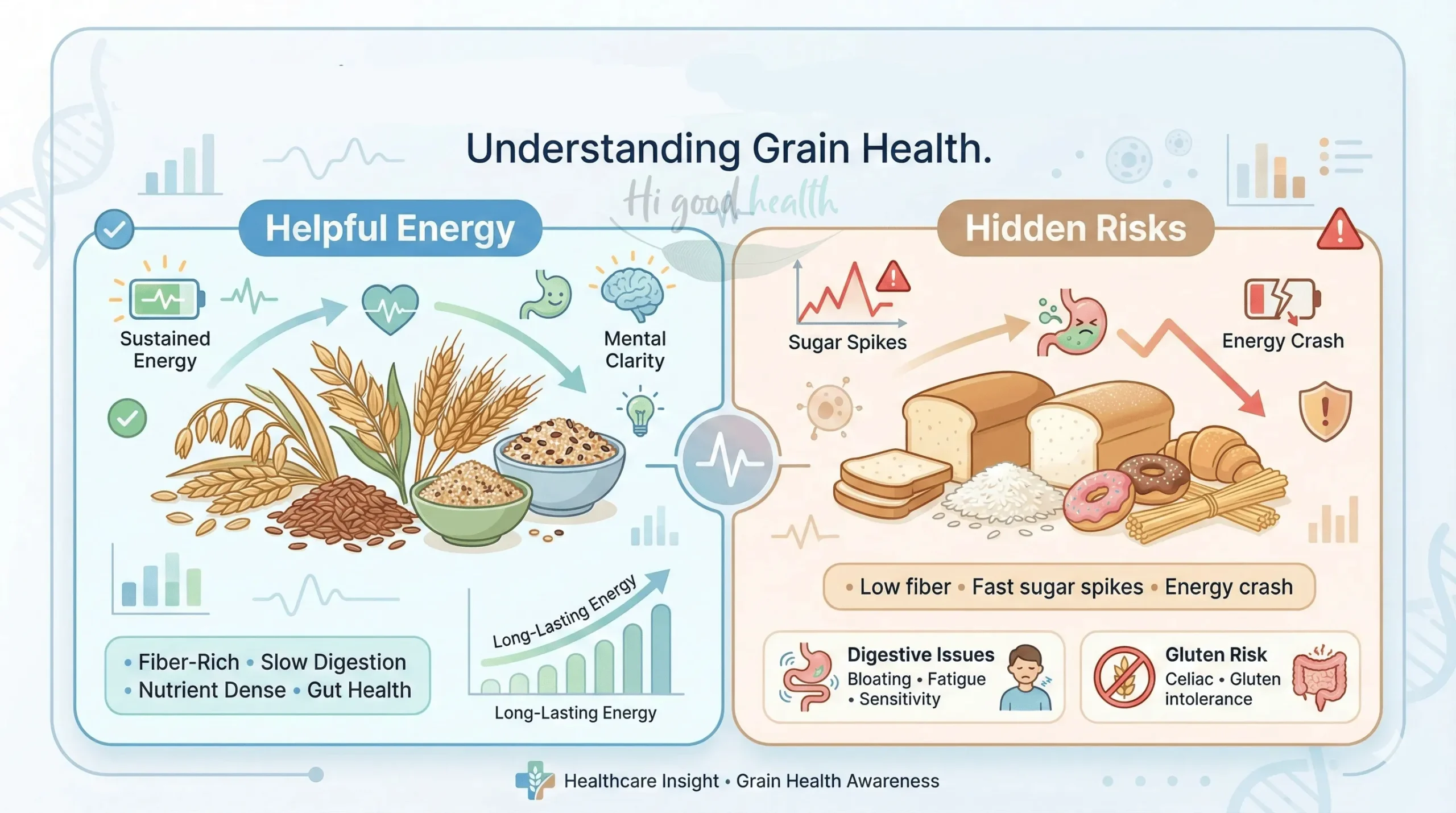
Wheat & Rice in the India : A Closer Look at Common Grains
In India, wheat and rice are among the most commonly consumed grains, forming a major part of daily carbohydrate intake. However, the nutritional impact of these grains depends largely on whether they are consumed in whole or refined forms.
Wheat: Whole vs. Refined
While whole wheat is a good source of fiber… choose healthier options, look for atta labeled as whole wheat or 100 whole grain where applicable, and prefer minimally processed grains – this helps ensure the entire grain kernel is intact.
Indian dietary guidelines encourage regular inclusion of whole grains, millets, and other minimally processed cereals to support heart health, blood sugar control, and overall well-being.
To choose healthier options, look for “100% whole wheat” or “100% whole grain” on food labels – this ensures the entire grain kernel is intact.[1]
Nutrition organizations such as The Whole Grains Council recommends consuming at least three servings (48 grams) of whole grains daily to reduce the risk of heart disease, type 2 diabetes, and certain cancers.[1]
Rice: Brown vs. White
White rice has a glycemic index of 73… Indian food safety guidance similarly supports varying grain consumption and preparing rice using cooking methods that reduce arsenic exposure, such as rinsing thoroughly and cooking in excess water when appropriate
Rice is naturally gluten-free, making it a safe option for individuals with celiac disease or gluten sensitivity.[3] Brown rice, a whole grain, offers significantly more fiber (3.5g per cup cooked) and micronutrients like manganese (providing 88% of the daily value), selenium, and magnesium compared to white rice.[2]
In contrast white rice is often enriched with iron and B vitamins after processing, its lower fiber content (less than 1g per cup) means it can cause quicker blood sugar spikes than brown rice – white rice has a glycemic index of 73 (high), while brown rice has a GI of 68 (medium).[4]
Important safety note: A notable concern with rice is its potential to absorb arsenic from the soil. The FDA recommends varying grain consumption and preparing rice using cooking methods that reduce arsenic content, such as rinsing thoroughly and cooking in a 6:1 water-to-rice ratio.[5] When consumed as part of a balanced diet with varied grains, rice remains a safe and nutritious option.
Expanding Your Grain Horizons: Beyond Wheat & Rice
If you’re looking to diversify your grain intake or need gluten-free options, several ancient grains offer impressive nutritional profiles that may surpass traditional options.
Teff: The Tiny Ethiopian Powerhouse
Teff is an ancient, tiny grain (approximately 1mm in diameter) originating from Ethiopia, often compared to poppy seeds in size. All varieties of teff are whole grain by nature – because it’s so small, it cannot be processed to remove the bran and germ, making every serving a complete whole grain serving.[6] It possesses a mild, nutty flavor and is naturally gluten-free, making it an excellent choice for individuals with celiac disease or gluten intolerance.[3]
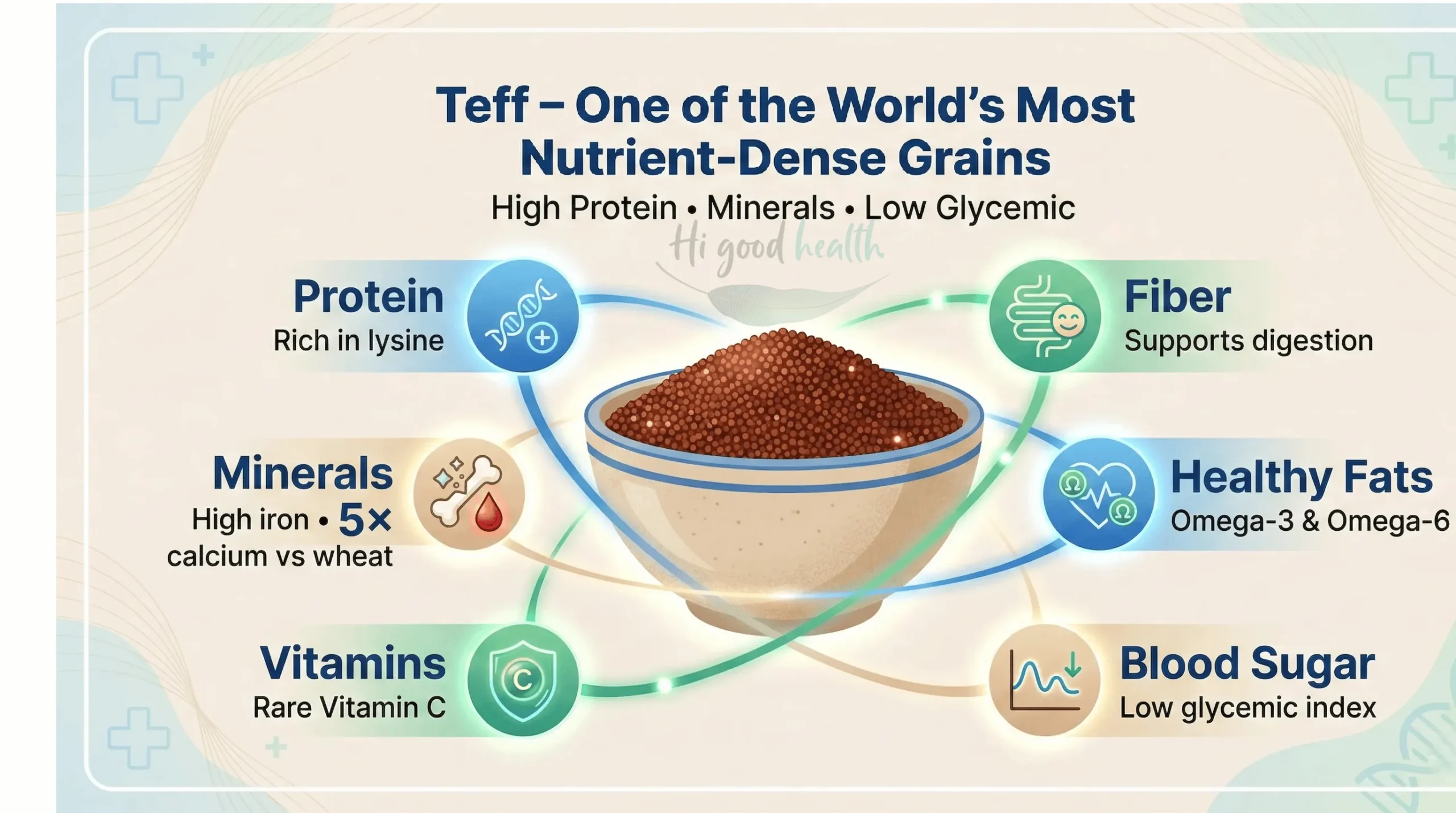
Teff’s Exceptional Nutritional Profile and Health Benefits
Teff is often highlighted for its nutrient density compared with many commonly consumed grains. While its nutritional composition can vary depending on variety and preparation, research shows that teff provides a range of important nutrients that may support overall health.
Protein Content
Teff provides approximately 10g of protein per cup cooked, with an exceptional amino acid profile.[6] It’s particularly high in lysine, an essential amino acid often deficient in other grains. This makes teff a more complete protein source compared to wheat or rice.[6]
Mineral Powerhouse
What truly sets teff apart is its exceptional mineral content:[6][7] – Iron: Teff contains approximately 7.6mg of iron per 100g of dry grain – much higher than wheat (3.6mg) or rice (0.8mg) – Calcium: Teff provides approximately 180mg of calcium per 100g – roughly five times more than wheat (34mg per 100g) – Also rich in magnesium, manganese, copper, potassium, and phosphorus
Fiber and Fatty Acids
Teff is high in both soluble and insoluble fiber (approximately 8g per cup cooked), which supports digestive health and helps maintain stable blood sugar levels.[6] It also contains essential omega-3 and omega-6 fatty acids in beneficial ratios.[7]
Resistant Starch
Teff contains significant amounts of resistant starch, a type of carbohydrate that acts like fiber in the digestive system, supporting gut health and contributing to its low glycemic properties.[7]
Teff and Blood Sugar Management: What Research Shows
Several studies suggest that teff-based foods may have moderate glycemic responses compared with some refined grain products.
A peer-reviewed study published in the Journal of Diabetes Research (2019) found that teff injera (Ethiopian flatbread made from fermented teff) had a significantly lower glycemic index and glycemic load compared to corn injera and was comparable to whole wheat bread.[8] The researchers concluded that “Teff Injera should be considered globally in the dietary modification programs for diabetes.”[8]
Dietary guidelines from the Indian Council of Medical Research also emphasize choosing whole grains with lower glycemic impact for better metabolic health. [15]
Another study by Yilmaz (2017) disclosed that foods made with teff resulted in lower post-meal blood glucose levels compared to other grains, confirming its role in diabetic diets.[9] Teff’s glycemic index ranges from 57-74 depending on preparation method, with traditional fermented injera showing the lowest values.[8]
Why teff helps with blood sugar: – High fiber content slows carbohydrate digestion and absorption – Resistant starch content improves insulin sensitivity – Complex carbohydrate structure prevents rapid glucose spikes – Lower glycemic index compared to refined grains
Indian Council of Medical Research (ICMR) & National Institute of Nutrition (NIN)
Dietary Guidelines for Indians (2020) Recommends whole grains and low glycaemic index foods for prevention and management of diabetes.
Note: While teff shows promise for blood sugar management, individual responses vary. Always consult with your healthcare provider or registered dietitian before making dietary changes for diabetes management.
How to Incorporate Teff and Other Alternative Grains
Integrating new grains into your diet can be a delicious and rewarding experience.
Teff Preparation Methods
Teff is a versatile grain that can be used in both traditional and modern recipes
- Porridge or polenta: Cook whole teff grains in a 3:1 water-to-teff ratio for 15-20 minutes
- Baking: Teff flour can be used for pancakes, waffles, bread, cookies, cakes, and muffins (may require a binder like xanthan gum for structure in gluten-free recipes – use 1/4 tsp per cup of flour)
- Traditional injera: Ferment teff flour with water for 2-3 days, then cook on a hot griddle
- Grain bowls: Add whole cooked teff to salads, pilafs, veggie burgers, stuffed peppers, or side dishes
- Breakfast cereal: Use cooked teff as a hot cereal alternative to oatmeal with nuts, fruits or yogurt.
Other Ancient Grain Alternatives
In addition to teff, several other grains and pseudograins offer diverse nutritional benefits
- Quinoa: Complete protein with all 9 essential amino acids (8g protein per cup cooked)
- Buckwheat: Rich in antioxidants called rutin and quercetin; gluten-free despite the name
- Amaranth: High in lysine and iron; tiny grain similar to teff
- Millet: Highly digestible with alkalizing properties; excellent for sensitive stomachs
- Sorghum: Antioxidant-rich, gluten-free grain popular in Africa and India
Each offers unique nutritional benefits and culinary applications that can enhance your grain nutrition plan.
For a deeper understanding of how sweeteners impact blood sugar control, gut health, and hunger signals, check out our comprehensive guide:
Natural vs. Artificial Sweeteners: What’s Best for Gut Health, Appetite, and Blood Sugar?
Where to Find Alternative Grains in the India
Alternative grains such as teff are becoming increasingly available in India as consumer interest in whole and gluten-free grains grows.
Food Stores Nature’s Basket, Foodhall, local organic stores, and premium health food outlets typically stock ancient grains. Online Retailers Amazon India, BigBasket, Flipkart Grocery, brand websites, and specialty organic sellers offer convenient online ordering with nationwide shipping.
Purchasing Tips
When buying alternative grains: 1. Look for “100% whole grain” or minimally processed on labels to ensure maximum nutritional benefits 2. Check for organic certification if pesticide exposure is a concern 3. Buy from reputable suppliers to ensure freshness and quality 4. Store in airtight containers in cool, dry places (whole grains can last 6-12 months; flours 3-6 months in the refrigerator)
The Future of Grains: Scientific Discoveries for Healthier Consumption
Ongoing research continues to improve our understanding of how grains affect human health and how their nutritional value can be optimized.
Current Research Directions
Biofortification: Researchers are developing grain varieties with enhanced nutritional profiles, including higher iron, zinc, and vitamin content.[2]
Gut Microbiome Research: Ongoing studies reveal the crucial role of fiber from whole grains in fostering a healthy gut environment. The fermentation of grain fiber by gut bacteria produces short-chain fatty acids that support digestive health, immune function, and even mental well-being.[2]
Processing Innovations: Advances in food processing are exploring ways to retain more nutrients in refined grains through techniques like parboiling and germination, though whole grains remain the superior choice.[2]
Genetic Research: Scientists are working to develop grain varieties with reduced allergenicity, improved drought resistance, and enhanced nutritional content to address global food security challenges.[2]
Personalized Nutrition: Emerging research suggests individual responses to grains vary based on genetics, gut microbiome composition, and metabolic factors, paving the way for more personalized dietary recommendations.[2]
Comprehensive Grain Comparisons
Table 1: Nutritional Profile Comparison of Common Grains
| Grain Type (Form) | Protein (g) per cup cooked | Fiber (g) per cup cooked | Gluten-Free | Key Micronutrients | Glycemic Index (GI)* |
| Wheat (Whole) | 11-14 | 10-15 | No | B vitamins, iron, magnesium, zinc | 69-74 (Medium-High) |
| Rice (Brown) | 5 | 3.5 | Yes | Manganese (88% DV), selenium, magnesium | 68 (Medium) |
| Rice (White) | 4 | <1 | Yes | Often enriched with iron and B vitamins | 73 (High) |
| Teff | 10 | 8 | Yes | Iron (37% DV), calcium (180mg), magnesium, copper | 57-74 (Low-Medium) |
| Oats (Whole) | 6 | 4 | Yes** | Beta-glucan (soluble fiber), manganese, phosphorus | 55 (Low-Medium) |
| Barley (Hulled) | 6 | 6 | No | Beta-glucan fiber, B vitamins, iron, magnesium | 28 (Low) |
| Quinoa | 8 | 5-6 | Yes | All 9 essential amino acids, iron, magnesium, phosphorus | 53 (Low) |
| Millet | 6-12 | 2-12 | Yes | Phosphorus, magnesium, calcium, B vitamins | 71 (Medium) |
*Glycemic Index classifications: Low <55, Medium 56-69, High ≥70 [4]
**Oats are naturally gluten-free but often contaminated during processing; look for certified gluten-free oats if you have celiac disease [3]
Sources: USDA FoodData Central, Harvard T.H. Chan School of Public Health, International GI Database [2][4]
Table 2: Environmental & Usage Comparison of Selected Grains
| Grain Type | Water Requirement | Drought Resistance | Common Forms Consumed | Environmental Impact Notes |
| Wheat | Medium-High | Moderate | Flour for bread, pasta, baked goods; whole grains | Widespread monoculture cultivation can deplete soil; pesticide intensive |
| Rice | High | Low | Cooked grain, flour, noodles | Paddy cultivation produces significant methane emissions; arsenic absorption concern |
| Teff | Minimal | High | Flour for injera, porridge, polenta, baking | Ecologically resilient; excellent for sustainable agriculture in dry regions |
| Oats | Moderate | Moderate | Oatmeal, granola, baked goods, cereals | Good cover crop that improves soil health and nitrogen fixation |
| Barley | Moderate | High | Soups, stews, salads, malt for beverages | Often used in crop rotation to enhance soil health |
| Rye | Low | Very High | Dense breads, crispbreads, whiskey | Grows well in poor soils; excellent erosion control |
| Quinoa | Low-Medium | High | Cooked grain, salads, breakfast bowls, flour | Resilient crop; increased demand has created socio-economic challenges in origin regions |
| Millet | Low | Very High | Porridge, cooked grain, flatbreads | Excellent for food security in arid regions; climate-resilient |
Sources: Water Footprint Network, FAO Agricultural Statistics [11]
Making Informed Grain Choices for Optimal Health
Choosing the most suitable grain for your diet depends on individual health conditions, nutritional needs, and personal preferences. Rather than focusing on a single “best grain,” nutrition experts generally recommend including a variety of whole grains to obtain a broader spectrum of nutrients.
Grain Selection Guide
Different grains may offer advantages depending on specific dietary needs:
For gluten sensitivity or celiac disease: Teff, rice, quinoa, millet, certified gluten-free oats [3]
For diabetes or blood sugar management: Teff, barley, quinoa, oats (all with low to medium GI) [8][10]
For high protein needs: Teff, quinoa (complete proteins), amaranth
For calcium requirements: Teff (180mg per 100g), amaranth [6][7]
For iron needs: Teff (37% DV per 100g), quinoa, amaranth [6]
For general health: Variety is key – rotate between whole wheat, brown rice, teff, quinoa, and other whole grains [1][2]
For environmental sustainability: Teff, millet, barley, rye (drought-resistant, low water requirements) [11]
The key principle:
For most people, the healthiest approach is to:
- Prioritize whole, minimally processed grains
- Include a variety of grains rather than relying on one type
- Consider individual tolerance and health conditions when making dietary choices
Do’s and Don’ts for Healthy Grain Consumption
Do’s ✓
- Prioritize Whole Grains: Opt for 100% whole wheat, brown rice, teff, quinoa, and other whole grains to maximize fiber and nutrient intake [1][2]
- Read Labels Carefully: Look for “whole grain” or “100% whole grain” as the first ingredient; be wary of terms like “multigrain” or “wheat flour” which may indicate refined grains [1]
- Vary Your Grains: Incorporate a diverse range of grains into your diet to ensure a broader spectrum of nutrients and reduce potential contaminant exposure [2]
- Practice Proper Preparation: Rinse rice thoroughly and cook in excess water to reduce arsenic; soak whole grains to improve digestibility and nutrient absorption [5]
- Listen to Your Body: Pay attention to how different grains make you feel. If you experience discomfort, consider exploring grain alternatives [2]
- Consult a Professional: If you suspect gluten sensitivity, diabetes, or other dietary issues, seek personalized advice from a healthcare provider or registered dietitian [3][10]
Don’ts ✗
- Don’t Rely Heavily on Refined Grains: Limit consumption of white bread, white rice, sugary cereals, and processed pastries that offer minimal nutritional value and can spike blood sugar [2][4]
- Don’t Ignore Gluten Sensitivity: If you have celiac disease or gluten intolerance, strictly avoid gluten-containing grains (wheat, barley, rye, and contaminated oats) [3]
- Don’t Overlook Cooking Methods: For grains like rice, proper preparation (rinsing, cooking in excess water, and draining) can significantly reduce contaminants like arsenic [5]
- Don’t Assume All “Gluten-Free” Products Are Healthy: Many gluten-free processed foods contain refined flours and added sugars; whole grain alternatives are superior [2][3]
- Don’t Make Drastic Changes Without Guidance: If you have diabetes or other medical conditions, consult with your healthcare team before significantly changing your grain consumption patterns [10]
- Learn how digestive enzymes and probiotics can help improve digestion and gut balance in our detailed article: “Enzymes vs. Probiotics – Choosing Your Allies for Optimal Gut Health.”
If you prefer a more visual version, check out our YouTube video here:
Frequently Asked Questions
It depends on your individual health needs and the form consumed. Whole wheat provides more fiber (6g per slice vs. 3.5g per cup of brown rice) and protein (11-14g per cup cooked vs. 5g for brown rice), while brown rice is naturally gluten-free and rich in manganese.[1][2]
Both refined versions (white bread and white rice) have significantly reduced nutritional value. To maximize health benefits, always choose 100% whole grain varieties over refined white options.[1][2]
Teff is an excellent choice for diabetes management due to its low to medium glycemic index (57-74, with fermented injera showing values as low as 57) and high fiber content.[8] Research published in the Journal of Diabetes Research found that teff injera resulted in significantly lower blood sugar responses compared to other grains.[8] Dietary guidelines from the Indian Council of Medical Research also emphasize choosing whole grains with lower glycemic impact for better metabolic health. [15]
Other beneficial low-GI whole grains include barley (GI: 28), quinoa (GI: 53), and oats (GI: 55).[4] However, individual responses vary – consult with your healthcare provider or diabetes educator for personalized recommendations.[10]
Rice can absorb inorganic arsenic from soil and water, which accumulates primarily in the outer bran layers.[5] While this is a legitimate concern, rice remains safe when consumed as part of a balanced, varied diet.
The FDA recommends:[5] – Rinse rice thoroughly before cooking (removes 10-15% of arsenic) – Cook rice using a 6:1 water-to-rice ratio like pasta, then drain excess water (removes up to 60% of arsenic) –
FSSAI and ICMR guidance recommend – Rinse rice thoroughly… Choose rice from regions with lower arsenic levels white basmati from India generally has lower levels
Vary grain consumption rather than relying exclusively on rice – Choose rice from regions with lower arsenic levels (white basmati from California, India, or Pakistan generally has lower levels)
Yes, teff is completely naturally gluten-free and safe for those with celiac disease or gluten sensitivity.[3][6] Teff flour works excellently for pancakes, waffles, and traditional Ethiopian injera.
For gluten-free baking where structure is needed (breads, muffins, cakes), you may need to add a binder like xanthan gum (1/4 teaspoon per cup of flour) or combine teff flour with other gluten-free flours for optimal texture.[6] Teff’s nutty flavor adds depth to baked goods.
Whole grains contain all three parts of the grain kernel:[1] – Bran: Outer fiber-rich layer with B vitamins, minerals, and antioxidants – Germ: Nutrient-dense core with healthy fats, B vitamins, vitamin E, and minerals – Endosperm: Starchy middle layer with carbohydrates and protein
Refined grains have the bran and germ removed during processing, leaving only the endosperm.[1] This strips away approximately 25% of protein and 17 key nutrients.[1] The result: refined grains cause sharper blood sugar spikes, provide less satiety, and offer minimal nutritional value compared to whole grains.[2][4]
While “superfood” isn’t a scientific term, teff earns this designation due to its exceptional nutrient density:[6][7] – Five times the calcium of wheat (180mg vs 34mg per 100g) – Double the iron of wheat and significantly more than rice – Complete protein profile with all essential amino acids, particularly high in lysine – High fiber content (8g per cup cooked) supporting digestive and cardiovascular health – Resistant starch that acts as a prebiotic, feeding beneficial gut bacteria – Essential fatty acids (omega-3 and omega-6) in beneficial ratios – Naturally whole grain – cannot be refined due to tiny size
Teff is versatile and easy to prepare:[6]
Basic teff porridge: Combine 1 cup teff with 3 cups water or milk. Bring to boil, reduce heat, and simmer for 15-20 minutes until creamy. Season with cinnamon, honey, or fruit.
Teff flour baking: Substitute 25-50% of wheat flour in recipes (start with 25% to test texture). For 100% gluten-free baking, add 1/4 tsp xanthan gum per cup of teff flour.
Traditional injera: Mix teff flour with water to pancake batter consistency. Let ferment at room temperature for 2-3 days. Cook on non-stick griddle or injera pan.
Grain bowls: Add cooked teff to salads, grain bowls, soups, or use as a base like rice.
Teff polenta: Cook like traditional cornmeal polenta for a nutrient-dense side dish.
Teff and other ancient grains are widely available: Food Stores Nature’s Basket, Foodhall, local organic stores, and premium health food outlets typically stock ancient grains. Online Retailers Amazon India, BigBasket, Flipkart Grocery, brand websites, and specialty organic sellers offer convenient online ordering with nationwide shipping.
Always look for “100% whole grain” on labels to ensure maximum nutritional value. Store in airtight containers in cool, dry places for optimal freshness.
All reference links valid and accessible on 27 March 2026
[1] Whole Grains Council. “Whole Grains 101.” https://wholegrainscouncil.org/
[2] Harvard T.H. Chan School of Public Health. “The Nutrition Source – Whole Grains.” https://www.hsph.harvard.edu/nutritionsource/
[3] Celiac Disease Foundation. “What is Celiac Disease?” https://celiac.org/
[4] Glycemic Index Foundation. “International GI Database.” https://www.gisymbol.com/
[5] U.S. Food & Drug Administration. “Arsenic in Rice and Rice Products Risk Assessment.” https://www.fda.gov/food/risk-and-safety-assessments-food/arsenic-rice-and-rice-products-risk-assessment
[6] Whole Grains Council. “Teff – March Grain of the Month.” https://wholegrainscouncil.org/
[7] National Institutes of Health. “Teff Grain Nutritional Analysis.” Advanced Health nutritional data https://pmc.ncbi.nlm.nih.gov/articles/PMC11545792/
[8] Journal of Diabetes Research. (2019). “Glycemic Index and Load of Selected Ethiopian Foods: An Experimental Study.” https://onlinelibrary.wiley.com/doi/10.1155/2019/8564879
[9] PMC – PubMed Central. (2025). “Nutritional Characteristics, Health-Related Properties, and Food Applications of Teff.” https://pmc.ncbi.nlm.nih.gov/articles/PMC12524473/
[10] American Diabetes Association. “Diabetes Food Hub – Whole Grains.” https://diabetes.org/food-nutrition/food-and-blood-sugar/diabetes-superstar-foods
[11] Food and Agriculture Organization of the United Nations (FAO). “Crop Water Requirements and Sustainability.” https://www.fao.org/
[12] National Kidney Foundation. Potassium and Your CKD Diet.
[13] International Life Sciences Institute-India WHOLE GRAINS FOR HEALTH India & South Asian Region
[14] Nutrition in Clinical Care Incorporation of whole, ancient grains into a modern Asian
Indian diet to reduce the burden of chronic disease Anjali A Dixit, Kristen MJ Azar, Christopher D Gardner, and Latha P Palaniappan.
[15] Indian Council of Medical Research (ICMR) – Dietary guidelines encourage consumption of whole grains and low-glycemic foods for diabetes management
[16] National Institute of Nutrition. Dietary Guidelines for Indians. https://www.nin.res.in/
[17] Food Safety and Standards Authority of India. Food safety guidelines on contaminants. https://www.fssai.gov.in/
[18] Indian Council of Medical Research. Dietary Guidelines for Indians – A Manual. https://www.nin.res.in/
Medical Disclaimer
This article is for educational and informational purposes only and does not constitute medical advice. The content is not intended to be a substitute for professional medical advice, diagnosis, or treatment. Always seek the advice of your physician, registered dietitian, or other qualified health provider with any questions you may have regarding a medical condition or dietary changes. Never disregard professional medical advice or delay in seeking it because of something you have read in this article. The information provided is based on current research and guidelines available at the time of publication.
If you have diabetes, celiac disease, food allergies, or any medical condition, consult with a healthcare professional before making significant dietary changes.

