Updated: 25 September 2026
The Protein Puzzle—Why It Still Matters in 2026
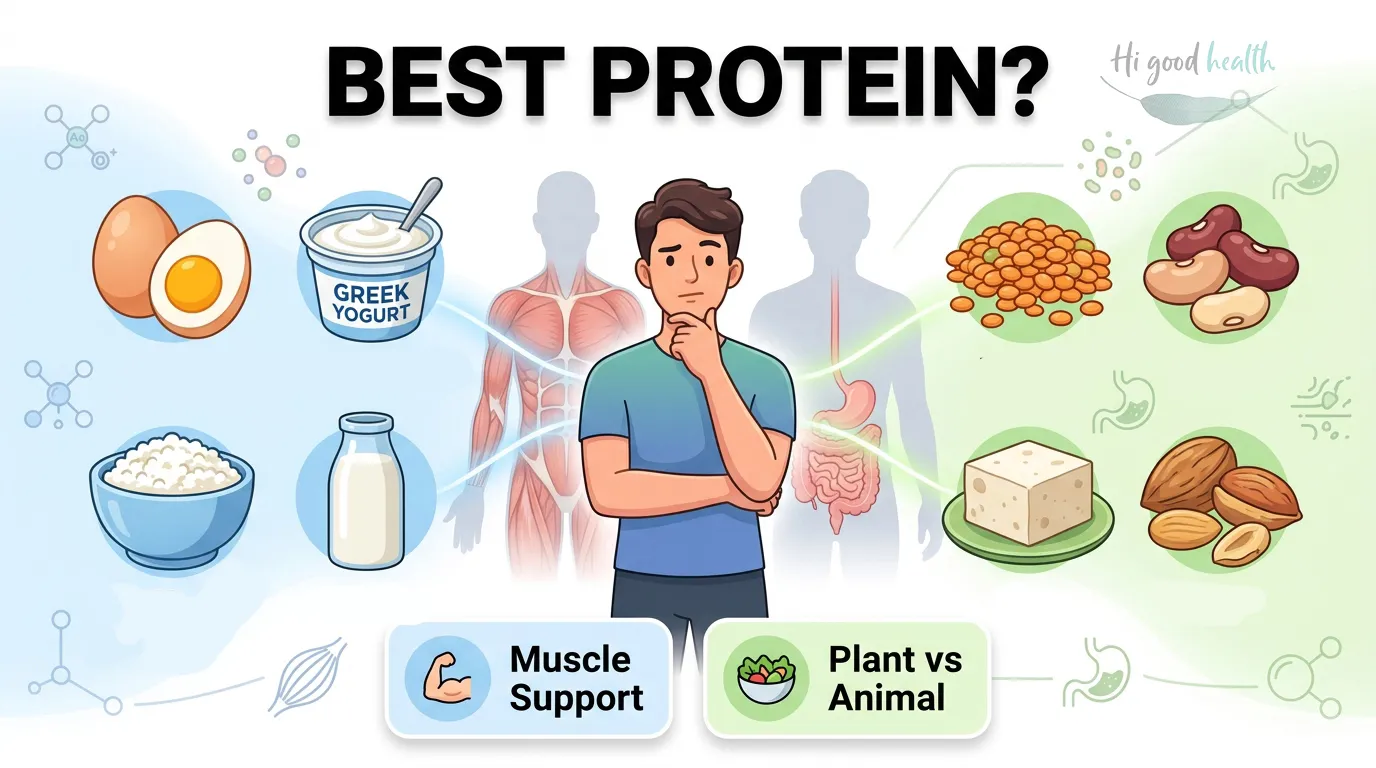
From protein shakes and bars to high-protein pancakes and snacks, protein is everywhere in 2026. Yet, one question still lingers for many people: Am I taking the right kind of protein? When exactly should I consume it? And do I even need that much?
At a glance
The best protein for you depends on your goal, diet, and how well you digest it – there is no single winner. Whey suits fast post-workout recovery, casein supports overnight repair, and pea, soy, or rice blends work well for plant-based eaters. What matters most is hitting your total daily protein target from a complete, well-digested source.
How much protein per day is right for you comes down to four numbers, not one. 0.8 g per kg of body weight is the official minimum. Around 1.0–1.2 g/kg suits most healthy adults who want more than that.
1.4–2.0 g/kg is the range for people doing resistance training. Adults of 65 and over need 1.0–1.2 g/kg, and more when ill.
If you have kidney or liver disease, none of those numbers apply to you — your target is set by your doctor and is usually lower, not higher.
The truth is, protein is not a one-size-fits-all solution. Your ideal type, quantity, and timing depend on your lifestyle, age, health goals, and even your mental well-being.
This confusion isn’t just among gym-goers but also among seniors, vegetarians, pregnant women, weight-loss seekers, and wellness-conscious individuals.
This guide clears the fog with clarity and science, so you can figure out the best protein for you, understand the best time to consume it, and stop falling for persistent myths that have little scientific backing.
How much protein per day do you actually need?
The baseline is 0.8 grams of protein for every kilogram you weigh. Harvard’s Nutrition Source puts it plainly: “The National Academy of Medicine recommends that adults get a minimum of 0.8 grams of protein for every kilogram of body weight per day” [Harvard Nutrition Source]. In pounds that works out at roughly 0.36 grams per pound — about 60 grams a day for a 165-pound adult [2].
Read the word “minimum” carefully. That figure is the amount needed to stop most healthy adults becoming deficient. It is a floor, not a target, and it is not the number someone training hard, recovering from illness, or well into their sixties should be aiming at.
It is worth knowing exactly what that floor is built from. The 0.8 g/kg figure is a Recommended Dietary Allowance set by the Institute of Medicine, now the National Academy of Medicine, and it was calculated to cover the needs of 97.5% of healthy adults [3]. Its job is to prevent deficiency. It was never designed to describe an optimum.
That distinction is the source of most of the confusion about how much protein per day anyone needs. There is no official body that sets a higher number for healthy, non-athletic adults.
What exists instead is expert argument that the RDA is too low to be a target. The most cited version of it notes that no study has ever compared the RDA against a higher intake and found the RDA superior [4].
So when you see 1.0–1.2 g/kg recommended for general health, treat it as a reasonable extrapolation rather than an official figure. It sits comfortably inside the official range for protein of 10–35% of daily calories [3].
How many grams of protein per day, by body weight
| Your weight | Minimum (0.8 g/kg) | General health (1.0–1.2 g/kg) | Resistance training (1.4–2.0 g/kg) |
|---|---|---|---|
| 50 kg (110 lb) | 40 g | 50–60 g | 70–100 g |
| 60 kg (132 lb) | 48 g | 60–72 g | 84–120 g |
| 70 kg (154 lb) | 56 g | 70–84 g | 98–140 g |
| 80 kg (176 lb) | 64 g | 80–96 g | 112–160 g |
| 90 kg (198 lb) | 72 g | 90–108 g | 126–180 g |
| 100 kg (220 lb) | 80 g | 100–120 g | 140–200 g |
Find your weight, then decide which column applies to you. Most people sitting at a desk are in the first column. If you lift weights, run seriously, are recovering from surgery, or are over sixty, the second column is the more realistic one.
Work out your own number in one step: take your weight in kilograms and multiply by the figure in your column. If you prefer pounds, divide your weight in pounds by 2.2 first.
A 70 kg office worker who trains twice a week is realistically looking at 70–84 g a day — about three meals, each with a palm-sized portion of a protein food.
How much protein to build muscle
More than the baseline, but less than the supplement industry implies. The International Society of Sports Nutrition puts the range for building and maintaining muscle at 1.4–2.0 g per kg per day, and says that is “sufficient for most exercising individuals” [5]. That is the number to work from.
You will also see 1.6 g/kg quoted as the point where extra protein stops helping. It comes from a meta-analysis of 49 studies, and it is worth knowing how imprecise it is: the breakpoint was 1.62 g/kg, but the confidence interval ran from 1.03 to 2.20 [6]. Treat it as “somewhere around 1.6”, not as a threshold.
The same analysis found the benefit of extra protein shrank with age and was larger in people who already trained [6].
When you eat it matters as much as how much. Harvard Health advises “spreading protein consumption throughout the day, with good protein sources at each meal” [2]. A day with almost no protein at breakfast and a large amount at dinner is a common pattern and a poor one — the body cannot bank it.
The sports-nutrition version of that advice is specific: 0.25 g per kg, or 20–40 g, per meal, every three to four hours [5].
Protein alone does not build muscle either. Without the training stimulus, extra grams are simply extra calories.
Can you eat too much protein?
Yes, and the honest answer is that the ceiling is less well established than the floor. Harvard Health notes that “some studies have shown that too much protein is associated with an increased risk of chronic diseases and mortality” [2]. Association is not proof of cause, and much depends on which protein — the research on processed red meat is not the research on lentils.
⚠️ The kidney question deserves a direct answer. In healthy kidneys, a high-protein diet has not been shown to cause damage. The strongest evidence is a meta-analysis of 28 trials in 1,358 adults without kidney disease, which found that the change in filtration rate did not differ between higher- and lower-protein diets [7].
A one-year crossover study in resistance-trained men eating up to 3.3 g/kg found no harm to kidney or liver markers [8].
Read that one with its limits in view: 14 young trained men, self-reported intake, and blood markers rather than measured filtration. It says nothing about older adults, or about people with diabetes or high blood pressure.
But the Harvard Nutrition Source is explicit that “individuals diagnosed with certain diseases (such as kidney and liver disease) need to monitor their protein intake according to their physician’s guidelines” [Harvard Nutrition Source]. If you have kidney or liver disease, the numbers in this article do not apply to you — your target is the one your doctor sets, and it is often lower, not higher.
The guideline figures, so you know what your doctor is working from: for adults with chronic kidney disease at stages 3 to 5, the international KDIGO guideline suggests 0.8 g per kg per day, and says specifically to avoid going above 1.3 g/kg in anyone whose kidney disease is at risk of progressing [9].
Two qualifications from the same guideline are worth knowing. Protein is not restricted in children with kidney disease, because growth matters more. And in older adults who are frail or losing muscle, the guideline says to consider higher protein and calorie targets rather than lower ones [9].
Protein requirements by age, and why older adults need more
The baseline of 0.8 g/kg is written for the average healthy adult, and it is the age group either side of that average where it fits worst.
- Adults under 60. The baseline is usually adequate if you are not training seriously. Most people in this group already meet it without trying.
- Adults 65 and over. Two expert groups reached the same figure independently: 1.0–1.2 g per kg per day for healthy older adults, at least 1.2 g/kg for those who exercise, and 1.2–1.5 g/kg during illness [10][11]. Muscle is lost steadily with age, and the same amount of protein produces less muscle response than it did at thirty, so the requirement rises exactly when appetite tends to fall.
- Anyone recovering from illness, surgery or a fracture. Needs rise during recovery. This is worth raising with a doctor rather than guessing.
- One exception, and it matters. Older people with severe kidney impairment who are not on dialysis may need protein restricted rather than increased. That is a decision for a kidney specialist [10][11].
The practical version for an older reader: get some protein into breakfast. It is the meal where it is most often missing and the easiest one to fix.
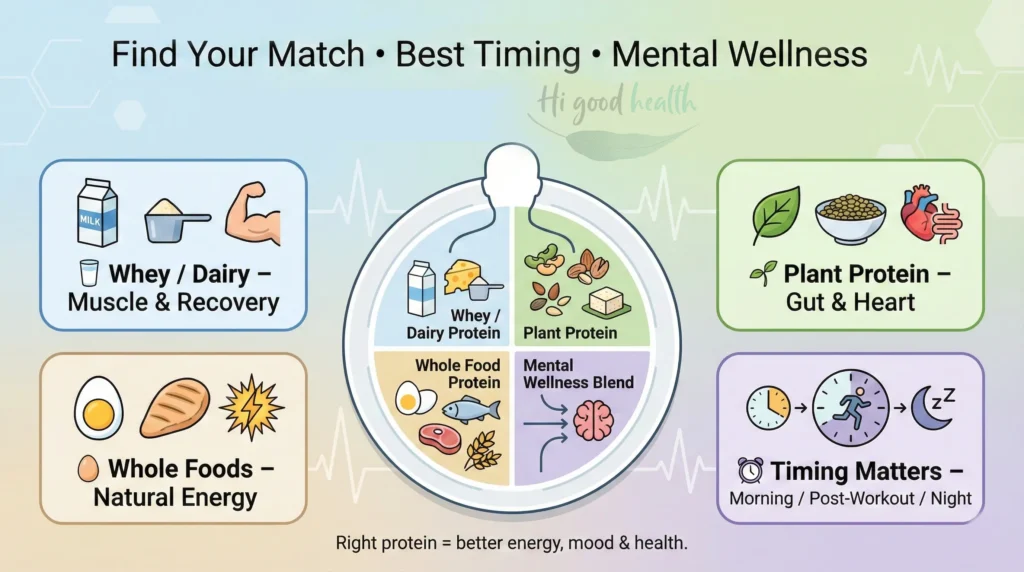
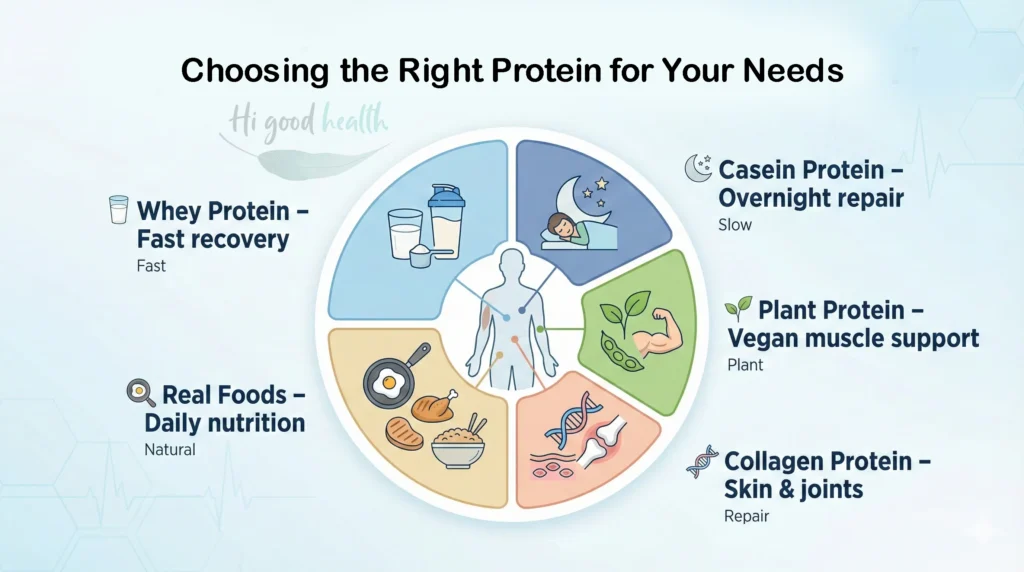
Types of Protein and Their Best Match (Whey, Casein, Plant-Based, and More)
Not all proteins are created equal. Each type differs in how quickly it’s absorbed, its amino acid profile, and how it supports your body. Choosing the right one depends on your goals, lifestyle, and dietary preferences.
Here’s a breakdown with their sources:
- Whey Protein (from milk)
Whey is a fast-digesting protein, rich in branched-chain amino acids (BCAAs)—especially leucine, which plays a key role in muscle protein synthesis. (Muscle protein synthesis is the process your body uses to repair and build new muscle tissue after exercise.) Because it is rapidly absorbed, it’s particularly effective for recovery after exercise.
Best for:
- Post-workout recovery
- Muscle building
- Busy individuals needing quick nutrition
Ideal timing:
Consume 20–30 g within 2 hours after training to support muscle repair and growth.
Important note:
While post-workout timing helps, your total daily protein intake—spread across 3–5 meals—is far more important for long-term muscle growth.
- Casein Protein (from milk)
Casein is a slow-digesting protein that releases amino acids gradually over several hours. This steady release helps maintain a positive protein balance, especially during long periods without food—like sleep.
Best for:
- Overnight recovery
- Preventing muscle breakdown
- Long gaps between meals
Ideal timing:
Consuming 20–40 g about 30 minutes before bedtime can increase overnight amino acid availability and support whole-body protein synthesis [5].
Why it matters:
During sleep, your body goes into a fasting state. Casein helps provide a continuous supply of nutrients, supporting recovery and adaptation—especially after resistance training.
One honest caveat. The overnight benefit of pre-sleep casein is measured as an acute effect on muscle protein synthesis and metabolic rate [5].
Whether it adds anything beyond getting the same protein earlier in the day, at a matched daily total, is not well established. Treat it as a convenient way to spread your intake rather than a trick.
Also, having protein close to bedtime can cause gut disturbances like bloating in some people, since it requires more time to digest completely — this varies from person to person.
- Pea, Rice, and Soy Protein (from plants)
Plant-based proteins such as pea, rice, and soy can support muscle growth and strength gains that are comparable to whey protein when total protein intake is matched and resistance training is part of the routine.
The evidence here has strengthened. A 2024 blinded crossover study compared 32 g of whey against 32 g of a pea, rice and canola blend after leg exercise. Whey produced about 44% more amino acid availability in the blood — yet muscle protein synthesis rose by the same amount in both groups [12].
A 2025 trial followed 44 untrained men through 12 weeks of supervised resistance training on 45 g a day of either plant or animal protein. Both groups gained lean mass and lower-body strength, with no meaningful difference between them [13].
Age appears to be the real modifier rather than the source itself. A meta-analysis found only a negligible advantage for animal protein overall, rated low-certainty, and that advantage was concentrated in older adults — younger people responded the same way to either [14].
Best for:
- Vegetarians and vegans
- Those with dairy intolerance
- Sustainable, long-term nutrition
If using plant proteins, aim for slightly higher intake or choose blends to ensure optimal amino acid balance.
- Collagen Protein (from animal connective tissue like bovine or marine sources)
Contains glycine and proline which are important for skin, joints, and connective tissues.
What does the research suggest?
- Some clinical studies indicate collagen may help improve joint comfort and skin elasticity
- A 24-week study showed potential reduction in joint pain in active adults
- However, more recent trials (including on knee osteoarthritis) show mixed results
Important limitation:
Collagen is not a complete protein, meaning it lacks all essential amino acids needed for muscle building.
How to use it:
Pair collagen with other complete proteins (like whey, soy, eggs, or legumes) to meet overall protein needs.
Note: Collagen research is ongoing. While some studies show potential benefits for joint and skin health, effects are modest and individual responses vary. Consult a healthcare provider before using collagen for specific health concerns.
- Real Food Proteins
Examples: eggs, Greek yogurt, lentils, quinoa, tofu, chickpeas. Many like lentils and quinoa contain both protein and carbs—ideal post-workout. - Amino Acids & Protein Status
This is where routine checkups often leave a gap.
- Why Test Amino Acids?
Research comparing plant-based and animal proteins reveals that essential amino acid contents vary significantly among plant proteins, with leucine ranging from 5.1% in hemp to 13.5% in corn, compared to 7.6% in human muscle protein.
- The Amino Acid Profile Test measures all nine essential amino acids:
- Histidine
- Isoleucine
- Leucine (the muscle-building trigger)
- Lysine
- Methionine
- Phenylalanine
- Threonine
- Tryptophan
- Valine
Why This Matters for Plant-Based Eaters:
The “incomplete protein” idea is misleading, but it needs stating carefully. Nearly all plant foods contain all nine essential amino acids. What differs is the amount of the one in shortest supply — lysine in cereals, methionine in legumes.
Eating a varied diet across the day covers the gap, and the amino acids do not have to arrive in the same meal.
A 2024 study published in Current Developments in Nutrition found that plant-based protein supplemented with leucine to match levels in whey protein stimulated muscle protein synthesis equally to whey in young adults.
When plant protein is topped up with leucine to match whey, it triggers muscle building just as strongly in young adults. [3]
Pro Tip: Don’t chase fads. Your body’s needs determine your best protein match.
Curious about the future of plant-based nutrition? Explore our blog: “Can Humanity Thrive Without Meat and Fish? The Abundant Promise of a Plant-Powered Future.”
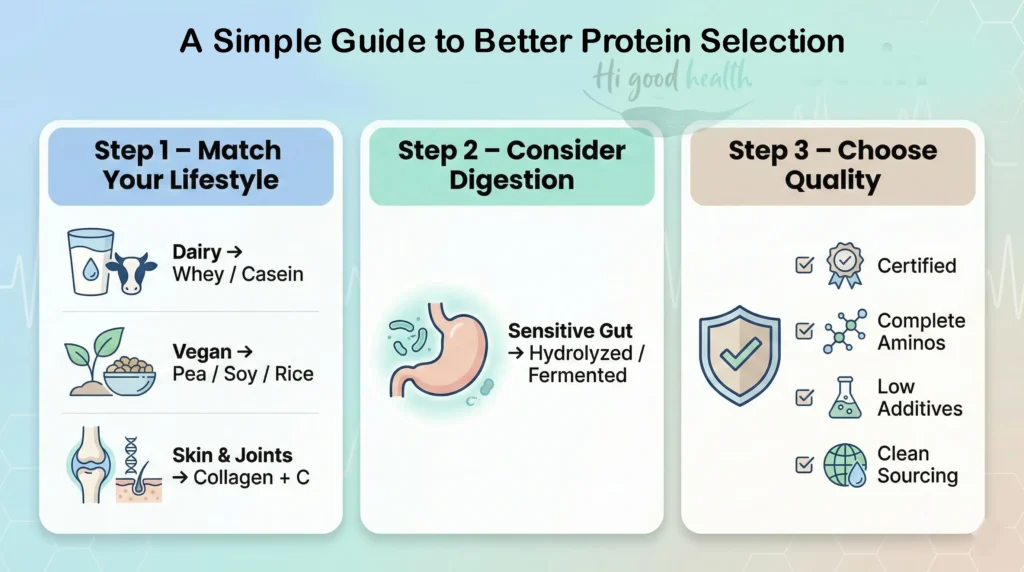
How to Choose the Best Protein for You: Type and Quality
Step 1: Match the best protein for you to your lifestyle
- Dairy-friendly?
Go for whey or casein protein for high-quality, complete amino acid support. - Vegan or lactose-intolerant?
Choose soy, pea, or rice protein blends to ensure a balanced amino acid profile. - Looking for skin or joint benefits?
Add collagen, ideally paired with vitamin C to support collagen synthesis.
Step 2: Sensitive gut or bloating issues?
- Hydrolyzed proteins (pre-digested for easier absorption)
- Fermented plant proteins (gentler on digestion)
Step 3: Focus on Quality, Not just Quantity
- Look for NSF, Informed Sport, or Clean Label Project testing.
- Opt for products with a complete amino acid profile.
- Avoid excessive sweeteners, gums, or flavoring.
- Prefer organic, non-GMO, transparent sourcing.
To narrow down the best protein for you, ask yourself:
- Do you digest dairy easily? If yes, whey or casein is fine. If no, choose plant-based or egg protein.
- Are you trying to lose weight? Go for protein with low carbs/fats and high satiety like whey isolate or pea.
- Are you vegetarian/vegan? Look for blends with B12, iron, and leucine-rich sources like soy and mung.
- Are you 50+? You may need more leucine to prevent muscle loss. Focus on high-leucine proteins like whey.
Wondering why changes in your appearance may not just be due to aging? Read our blog: “Sagging Face or Breasts After 35 – It Might Be Muscle Loss, Not Aging.”
- Are you pregnant or lactating? Protein needs rise in pregnancy. The official figure is 1.1 g per kg of body weight per day, set by the Institute of Medicine [3].
Newer work using a more sensitive method suggests the real requirement climbs through pregnancy — roughly 1.2 g/kg early and 1.5 g/kg in the last weeks [3]. Get your own figure from your midwife or doctor rather than from a table.
Struggling to get enough protein on a vegetarian diet? Read our blog: “Nutrition & Diet: A Beginner’s Guide to Vegetarianism.”
Harvard Health notes that protein needs increase during pregnancy to support fetal growth and maternal tissue changes. [2]
Studies show that older adults who supplement with whey protein report improved energy levels and reduced muscle soreness. Research on pre-sleep casein (PubMed, 2020) found that casein consumed before bed may help reduce morning joint stiffness in adults over 60 by supporting overnight muscle repair and maintaining amino acid availability.
Protein Needs by Gender
Men typically need more protein in total grams, because they are on average heavier and carry more lean mass. Per kilogram of body weight the target is the same for both sexes — the per-kg figure already accounts for body size, so it cannot be raised again for the same reason.
The research supports this. When protein requirements were measured directly in endurance-trained athletes using the same protocol, the figures came out at 1.81 g/kg for men and 1.89 g/kg for women — no meaningful difference [15].
The official 56 g for men and 46 g for women exists only because those are different reference body weights. Both are 0.8 g/kg [3].
Diagnostic Tools or Checklist
There’s no single test to determine the “best” protein, but you can:
- Track digestion (bloating, gas)
- Monitor energy and satiety
- Use food sensitivity panels if symptoms persist
- Log symptoms after different protein types to find patterns
A nutritionist may recommend amino acid blood panels, especially in athletes or recovering patients.
Tip: The best protein for you isn’t always the most expensive one. It’s consistent, well-digested, and complete.
Sample Protein-Rich Diet Chart for Different Lifestyles
Each row shows roughly how many grams of protein the day delivers, so you can check it against the target you worked out earlier.
| Profile | Breakfast | Lunch | Snack | Dinner | Protein for the day |
| Training regularly | Oats with milk + whey shake | Quinoa bowl with grilled chicken or tofu | Peanut butter on whole-grain toast | Salmon, sweet potato and greens | about 130–160 g |
| Desk job | Greek yogurt with berries | Turkey or hummus wrap + side salad | Roasted chickpeas or almonds | Bean chili with brown rice | about 90–110 g |
| Adult 65 and over | Scrambled eggs + whole-grain toast | Tuna or chicken salad sandwich | Cottage cheese with fruit | Baked fish, mashed beans, soft vegetables | about 75–95 g |
| Pregnancy | Fortified soy milk, toast and an egg | Black bean and brown rice bowl | Smoothie with flax or chia | Tofu or chicken stir-fry with spinach | about 80–100 g |
| Vegetarian | Eggs on whole-grain toast | Lentil soup, cheese, wholegrain roll | Hummus with vegetables | Black bean burrito bowl | about 85–105 g |
| Vegan | Almond butter on toast + fortified soy milk | Chickpea and quinoa salad | Soy milk smoothie | Tofu stir-fry with edamame and rice | about 85–105 g |
| School-age child | Milk with egg or peanut butter toast | Turkey or cheese wrap + fruit | Banana with peanut butter | Pasta with meat or lentil sauce | about 35–50 g |
Two practical notes. A palm-sized portion of meat, fish or tofu is roughly 20–30 g of protein, and so is a cup of Greek yogurt, three eggs, or a cup and a half of beans. Getting protein into breakfast is the single change that moves most people’s daily total.
Vegans should make sure B12 and omega-3 come from fortified foods or a supplement — those are the two the diet does not supply on its own.
These are illustrative examples. Actual portion sizes, calorie targets, and macronutrient ratios should be personalized based on individual assessment by a qualified nutrition professional.
Does Protein Affect Mental Health and Wellness?
Protein supplies the raw material your brain uses to make its signalling chemicals. Beyond that, the honest position is that the evidence is thin.
- Neurotransmitter production: Amino acids from protein build neurotransmitters like serotonin, dopamine, and norepinephrine, which regulate mood, sleep, focus, and appetite. This part is basic biochemistry and is not in doubt.
- Tryptophan pathway: Tryptophan, found in dairy, eggs, legumes, soy, and poultry, is a precursor to serotonin production and plays a key role in mood regulation.
- What the mood research actually shows. A large cross-sectional analysis of US adults found that people eating more protein reported fewer depressive symptoms [16]. That design cannot show that low protein causes low mood, and the reverse is very plausible — depression reduces appetite and dietary quality. The authors themselves said protein intake “might” reduce risk.
- Cognition in older adults. Observational studies link higher protein intake to better performance on some cognitive tests in older people. These are associations in populations, not demonstrated effects, and people who eat more protein differ in many other ways.
Your gut may be shaping your mood more than you think—discover how in our blog: “How Is Your Gut Talking to Your Brain?“
Want to prevent muscle loss as you age? Discover science-backed strategies in our blog: “Senior Nutrition 2025 – Prevent Muscle Loss with the Latest Science.”
Wondering why changes in your appearance may not just be due to aging? Read our blog: “Sagging Face or Breasts After 35 – It Might Be Muscle Loss, Not Aging.“
Protein Myths and Facts: What Is Really Best for You
Myth 1: High protein intake damages kidneys.
Fact: No proof in healthy individuals. A meta-analysis of 28 controlled trials found no difference in kidney function change between higher- and lower-protein diets in adults without kidney disease [7]. The picture inverts if kidney disease is already present — see the section above.
Myth 2: Vegetarian diets lack complete protein.
Fact: Combining legumes and grains gives all essential amino acids, and they do not need to be eaten in the same meal.
Myth 3: More protein always equals more muscle.
Fact: You need resistance training and recovery too, and the benefit of extra protein flattens out somewhere around 1.6 g/kg [6].
Myth 4: The anabolic window means you must drink a shake within 30 minutes.
Fact: a meta-analysis controlling for total intake found no significant effect of protein timing on strength or size — total daily protein was the strongest predictor [17]. The muscle-building effect of a workout lasts at least 24 hours [5].
Inspiring Examples of Strong Vegetarians & Vegans
While individual nutritional needs vary, these athletes demonstrate that well-planned plant-based diets can support elite performance:
- Patrik Baboumian — strongman, vegetarian from 2005 and vegan from 2011, Germany’s Strongest Man in 2011 and holder of yoke-walk records set in 2013 and 2015. Now retired.
- Kendrick Farris — US Olympic weightlifter, vegan since late 2014, who competed at the Rio Olympics in 2016 and set a US record total that year — after the diet change, which is the relevant detail.
That is a finding of equivalence, not superiority, and it is still a useful one: you can perform just as well on a predominantly plant-based diet, provided the protein target is met [18].
Both dietary patterns can support optimal performance; the choice depends on personal values, digestive tolerance, and nutritional planning. Athletes on plant-based diets may benefit from creatine supplementation and ensuring adequate B12, iron, and zinc intake.
The Ideal Timing: Pre/Post Workout, Bedtime, or Morning
- Total daily intake (most important): 1.4–2.0 g/kg for people doing resistance training [5]. This is the same number as the rest of the article now uses.
- Distribution: 20-40g protein across 3-5 meals
- Around Training: Within 1-2 hours pre- or post-workout
- Before Bed: 30-40g slow-digesting protein (casein) for overnight recovery
If you only change one thing, change the total rather than the timing. The timing research is consistent that total daily protein does the work [17].
Diagnostic Checklist: What Protein Is Best for You?
Run through this quick checklist to zero in on the best protein for you:
- Do I tolerate dairy? → Try whey or casein.
- Am I plant-based? → Use pea, soy, or blended powders.
- Do I bloat with powders? → Try isolates or fermented protein.
- Want joint/skin benefits? → Consider collagen.
- Do I exercise often? → Prioritize complete proteins with leucine.
- Do I have kidney or liver disease? → Stop here and ask your doctor for your number.
Optional Tests:
- Amino acid profile blood test
- Food sensitivity tests
- Dietitian-guided elimination plans
The Latest Scientific Studies Explained Simply
- Nutrients (2021): Higher protein = better muscle mass & strength, especially in 50+ adults.
Struggling to get all essential proteins on a vegetarian diet? Discover how in our blog: “How to Get All Your Essential Nutrients on a Vegetarian Plan.”
- Frontiers in Psychology (2023): Tryptophan intake linked to better sleep & lower anxiety.
- AJCN (2020): Plant + animal protein = better long-term metabolic health.
- ISSN position stand (2017): 1.4–2.0 g/kg for building and maintaining muscle, in doses of 20–40 g every three to four hours [5].
- Morton and colleagues (2018): pooled 49 studies and found the benefit of extra protein levelling off at about 1.6 g/kg, with wide uncertainty either side [6].
- Protein Timing Meta-Analysis: reviewed studies and found no significant difference from timing once total intake was accounted for; distribution across meals is what helps [17].
- Plant blend versus whey (2024): equal muscle protein synthesis after exercise despite whey producing higher blood amino acid levels [12].
- Kidney safety (2018): 28 trials, 1,358 adults, no difference in kidney function change between higher and lower protein [7].
- Collagen for Joint Health: supplementing with hydrolyzed collagen improved joint comfort in active adults in as little as 8 weeks (Current Medical Research).
Quick Reference Chart: Protein Types vs. Goals
| Protein Type | Best For | Digestion | Complete? | Source |
| Whey | Muscle recovery | Fast | Yes | Milk |
| Casein | Overnight repair | Slow | Yes | Milk |
| Soy | Vegan strength | Medium | Yes | Soybeans |
| Pea/Rice | Dairy-free option | Medium | Yes (blended) | Peas, rice |
| Collagen | Skin/joint/gut | Slow | No | Bone, fish |
| Lentils/Quinoa | Real food protein | Medium | Yes (quinoa) | Plants |
Disclaimer
Protein needs can vary based on medical conditions; consult a healthcare professional if unsure.
If you have chronic kidney disease, liver disease, or are pregnant, the figures in this article are not your figures. Ask the clinician looking after you.
Key Takeaways
- There is no single best protein – the right protein for you is the complete, well-digested source that fits your goal, diet, and daily target.
- Total daily intake matters more than timing: aim for about 1.4–2.0 g per kg of body weight if you do resistance training, spread across 3–5 meals.
- How much protein per day, in four numbers: 0.8 g/kg is the official minimum, 1.0–1.2 g/kg suits most healthy adults, 1.4–2.0 g/kg covers resistance training, and 1.0–1.2 g/kg is the figure for adults 65 and over.
- Whey is fast-digesting for recovery; casein is slow-release for overnight repair; pea, soy, and rice blends let plant-based eaters match those results.
- Vegetarians and vegans can build muscle by combining legumes and grains or choosing leucine-rich blends – meat is not required.
- Per kilogram of body weight, men and women need the same amount. Men need more in total grams only because they are usually heavier.
- Protein also feeds mood and focus by supplying amino acids for serotonin and dopamine, but the evidence that eating more protein improves mood is observational and weak.
- High protein does not harm healthy kidneys. If you already have kidney disease the advice reverses: 0.8 g/kg, and avoid going above 1.3 g/kg [9].
- Adults over 50, pregnant women, and people with a sensitive gut have specific needs – choose quality, third-party-tested products and consult a professional when unsure.
FAQs
Below are the questions readers ask most about finding the best protein for you, answered simply.
If you prefer a more visual version, check out our YouTube video here:
1. How much protein per day do I actually need?
Multiply your weight in kilograms by 0.8 for the official minimum, by 1.0–1.2 if you want a sensible general-health target, or by 1.4–2.0 if you do resistance training. A 70 kg adult who trains is looking at roughly 98–140 g a day. If you have kidney disease, ask your doctor instead.
2. Can protein shakes help me lose weight?
Yes. Protein increases satiety, which helps manage hunger and reduce cravings. For weight loss, choose protein sources with low carbohydrates and fats, such as whey isolate or pea protein.
3. Is a high-protein diet safe for my kidneys?
There is no proof that high protein intake damages kidneys in healthy individuals, and a meta-analysis of 28 trials supports that [7]. If you already have chronic kidney disease the answer changes completely: the guideline target is 0.8 g/kg per day and intakes above 1.3 g/kg are specifically to be avoided [9].
4. What happens if I eat too much protein?
In a healthy person, very little beyond spare calories and, for some, digestive discomfort. The ceiling is less well defined than the floor. The concerns in the research attach mostly to processed red meat rather than to protein itself.
5. When is the best time to consume protein?
Total daily protein intake matters most, but strategic timing can support specific goals – such as consuming 20-30g protein within 1-2 hours post-workout supports recovery, while casein before bed supports overnight repair. A protein-rich breakfast reduces cravings.
6. Can I build muscle on a vegetarian or vegan diet?
Absolutely. You don’t need meat to be strong; combining legumes and grains provides all essential amino acids. Plant sources like soy and pea protein are proven to build muscle effectively, and a 2024 trial found a plant blend matched whey for muscle protein synthesis after exercise [12].
7. Why does protein powder sometimes cause bloating?
Bloating may result from dairy sensitivity or additives. If you have a sensitive gut, try whey isolate (less lactose), hydrolyzed proteins, or fermented plant proteins, which are easier to digest.
8. Does protein really affect my mood and mental health?
Protein supplies the amino acids your body uses to make serotonin and dopamine, which is not in dispute. Whether eating more protein improves mood is much less certain — the human evidence is observational and cannot separate cause from effect [16].
9. Do I need more protein as I get older?
10. How much protein do women need during pregnancy?
The official figure is 1.1 g per kg per day, about 71 g [3]. Newer research suggests the real need rises through pregnancy and may reach 1.5 g/kg near term. Focus on complete proteins that are also rich in iron, calcium, and DHA, and get your own target from your midwife or doctor.
11. Do men need more protein than women?
Not per kilogram. The per-kg target is the same for both. Men usually need more in total grams because they weigh more and carry more lean mass — which is exactly what the per-kg figure already accounts for [15].
12. Is plant protein or whey better for me?
Neither is automatically better. When total protein is matched and you do resistance training, plant blends build muscle and strength comparable to whey [12][13]. Whey digests faster and is naturally high in leucine. Age may matter more than source: older adults appear to respond slightly better to animal protein, while younger people respond the same to either [14].
13. What is the best protein for you if you just want general health?
If you are not training hard, the best protein for you is whatever complete source you enjoy and digest well – eggs, Greek yogurt, dairy, soy, or a simple whey or pea powder. Aim for roughly 1.0 to 1.2 g per kg of body weight spread over the day, and lean toward whole foods first.
14. Which protein powder is best for you: whey, pea, or a blend?
Choose whey if you tolerate dairy and want fast, high-leucine recovery. Choose a pea, soy, or rice blend if you are plant-based or lactose-intolerant. A blend is a safe default because it rounds out the amino acid profile. The best protein powder for you is third-party tested, complete, and easy on your gut.
15. Are protein bars actually good for you?
A protein bar can be a convenient snack, but many are closer to candy. The best ones list a complete protein first, keep added sugar low, skip long lists of sugar alcohols and gums, and deliver at least 10 to 20 g of protein. Treat bars as a backup for busy days, not a replacement for real meals.
Glossary
- Whey/Casein – Dairy-based proteins with different digestion speeds
- Pea/Soy/Rice Protein – Plant-based options; often blended for completeness
- Collagen – Supports joints, gut, and skin; not complete
- BCAAs – Branched-chain amino acids: leucine, isoleucine, valine
- Tryptophan – Amino acid for serotonin; impacts mood
- Complete Protein – Contains all 9 essential amino acids
- Limiting amino acid – the essential amino acid in shortest supply in a given food. Lysine in cereals, methionine in legumes. This is what “incomplete protein” actually means.
- Hydrolyzed Protein – Pre-digested for faster absorption
- RDA – Recommended Dietary Allowance. The intake that covers the needs of 97.5% of healthy people. A floor for adequacy, not a target for health.
- Third-party testing – Ensures purity, label accuracy, and safety standards
References
- [1] The Nutrition Source. Protein. Harvard T.H. Chan School of Public Health.
- [2] How much protein do you need every day? Harvard Health Publishing.
- [3] Institute of Medicine. Dietary Reference Intakes for Energy, Carbohydrate, Fiber, Fat, Fatty Acids, Cholesterol, Protein, and Amino Acids. National Academies Press, 2005.
- [4] Wolfe R. R., Cifelli A. M., Kostas G., Kim I.-Y. Optimizing protein intake in adults: interpretation and application of the RDA compared with the AMDR. Advances in Nutrition, 2017.
- [5] Jäger R., Kerksick C. M., Campbell B. I., et al. International Society of Sports Nutrition position stand: protein and exercise. Journal of the International Society of Sports Nutrition, 2017.
- [6] Morton R. W., Murphy K. T., McKellar S. R., et al. A systematic review, meta-analysis and meta-regression of the effect of protein supplementation on resistance training-induced gains in muscle mass and strength. British Journal of Sports Medicine, 2018.
- [7] Devries M. C., Sithamparapillai A., Brimble K. S., et al. Changes in kidney function do not differ between healthy adults consuming higher- compared with lower- or normal-protein diets: a systematic review and meta-analysis. Journal of Nutrition, 2018.
- [8] Antonio J., Ellerbroek A., Silver T., et al. A high protein diet has no harmful effects: a one-year crossover study in resistance-trained males. Journal of Nutrition and Metabolism, 2016.
- [9] KDIGO 2024 Clinical Practice Guideline for the Evaluation and Management of Chronic Kidney Disease. Kidney International, 2024.
- [10] Bauer J., Biolo G., Cederholm T., et al. Evidence-based recommendations for optimal dietary protein intake in older people: a position paper from the PROT-AGE Study Group. JAMDA, 2013.
- [11] Deutz N. E. P., Bauer J. M., Barazzoni R., et al. Protein intake and exercise for optimal muscle function with aging: recommendations from the ESPEN Expert Group. Clinical Nutrition, 2014.
- [12] van der Heijden I., Monteyne A. J., West S., et al. Plant protein blend ingestion stimulates post-exercise myofibrillar protein synthesis rates equivalently to whey in resistance-trained adults. Medicine & Science in Sports & Exercise, 2024.
- [13] Santini M. H., Leitão A. E., Mazzolani B., et al. Plant- versus animal-based protein supplementation and resistance training adaptations. Journal of the International Society of Sports Nutrition, 2025.
- [14] Mendes B. R., Correia J. M., Santos I. R., Schoenfeld B. J., Swinton P. A., Mendonça G. V. Effects of plant- versus animal-based proteins on muscle protein synthesis: a systematic review with meta-analysis. Journal of the Academy of Nutrition and Dietetics, 2026.
- [15] Williamson E., Moore D. R., Fung H. J. W., et al. Protein requirements are increased in endurance-trained athletes but similar between females and males during postexercise recovery. Medicine & Science in Sports & Exercise, 2023.
- [16] Li Y., Zhang C., Li S., Zhang D. Association between dietary protein intake and the risk of depressive symptoms in adults. British Journal of Nutrition, 2020.
- [17] Schoenfeld B. J., Aragon A. A., Krieger J. W. The effect of protein timing on muscle strength and hypertrophy: a meta-analysis. Journal of the International Society of Sports Nutrition, 2013.
- [18] Roberts A. K., Busque V., Robinson J. L., Landry M. J., Gardner C. D. SWAP-MEAT Athlete: investigating the impact of three different diets on recreational athletic performance — a randomized crossover trial. Nutrition Journal, 2022.
Final Thoughts
Protein isn’t just a gym nutrient—it’s a vital building block for both physical and emotional well-being. Finding the best protein for you comes down to your goal, your digestion, and your daily total, not the latest trend. From muscle and metabolism to memory and mood, protein touches almost every part of how we feel, think, and age.
Don’t rely on trends. Understand your body, choose quality sources, and eat with intention. It’s time we stopped asking “how much protein?” and started asking: “what’s the right protein—for me?”
And start with the number rather than the product. Work out how much protein per day you actually need from your own body weight, then decide what to eat to reach it. Almost everyone gets this the wrong way round.
Staying physically active helps your muscle absorb and use protein more effectively than inactive muscle does – so pairing daily protein with regular movement extends its benefits beyond muscle alone, supporting immunity, recovery, and the absorption of other nutrients.
