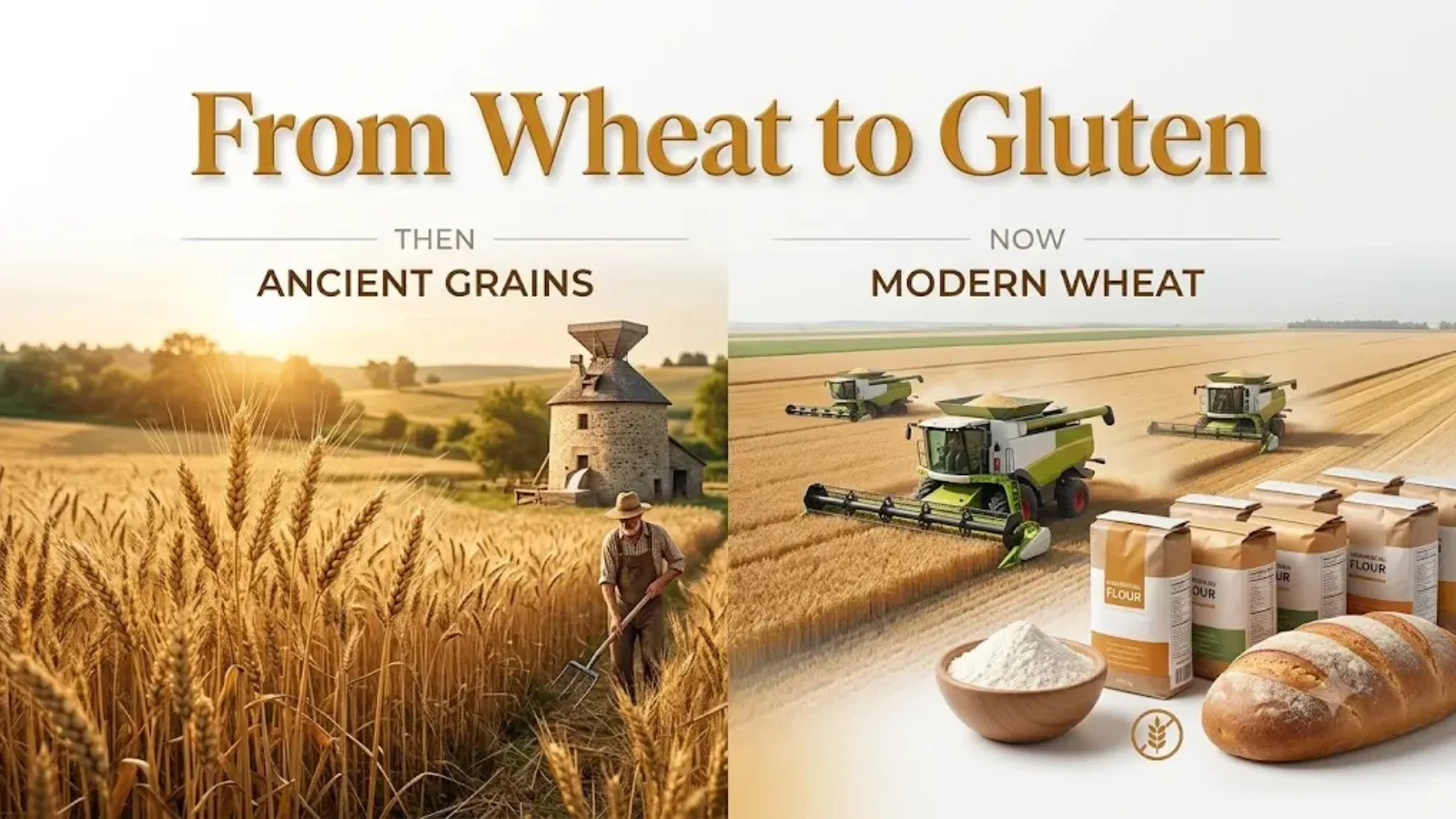
Wheat has been at the heart of American meals for generations, from the bread aisle at the grocery store to the pasta on your dinner table.
At a glance
Ancient wheat and modern wheat are not the same grain. Ancient types of wheat like emmer (sold as farro) and einkorn are less processed and tend to carry more fiber and certain minerals, and many people find them easier to digest. Modern bread wheat was bred mainly for yield and baking, and its refined forms sit higher on the glycemic index. Ancient grain flour still contains gluten, so it is not safe for anyone with celiac disease. For most people, choosing whole-grain wheat over refined products matters more than the exact type of wheat grains you pick.
But modern farming and food processing have quietly changed the wheat we eat, and growing numbers of Americans are paying the price in digestive discomfort, inflammation, and gluten-related conditions.
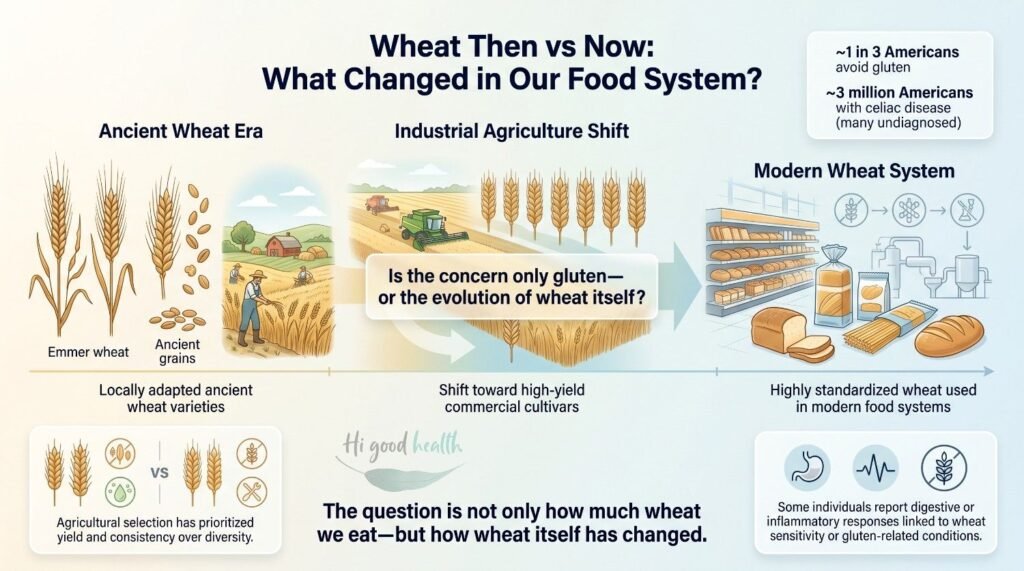
Today, about one in three Americans actively tries to avoid gluten, and an estimated 3 million people in the US live with celiac disease, most of them undiagnosed. [1][2] The bigger question is not just about gluten. It is about what happened to wheat itself.
A century ago, Americans ate many locally adapted types of wheat. Today, a small number of commercial cultivars dominate production.
This article takes a close look at how wheat changed over time, from ancient emmer wheat, one of the very first cultivated grains, to the modern varieties that fill our supermarket shelves. We cover the nutritional differences, the health effects, and why some Americans are heading back to ancient grain flour and heirloom grains.
The Original Wheat: Emmer Wheat
Emmer wheat (Triticum dicoccum) is one of the earliest cultivated types of wheat, dating back more than 10,000 years.
It was a staple crop of ancient civilizations including Egypt and Mesopotamia. Today it is commonly sold in the US under the Italian name farro, found on restaurant menus and in the bulk bins at Whole Foods, Trader Joe’s, and specialty grain mills like Bluebird Grain Farms and Barton Springs Mill. [3][4]
Unlike the stripped-down bread wheat most of us grew up on, emmer is a hulled grain that keeps its bran and germ through minimal processing, which is a big part of why it is nutritionally richer. [5]
Nutritional Profile of Emmer Wheat
Emmer wheat has a strong nutritional profile:
- Protein content: about 13.6 to 15.8 percent, providing essential amino acids. [5]
- Fiber: emmer wheat contains around 10.7 to 14.83 g of dietary fiber per 100 g, though values vary with the processing method and variety tested. [5]
- Micronutrients: rich in magnesium, zinc, iron, and phosphorus, which support immune function, bone health, and energy metabolism. [5][6]
- Antioxidants: contains higher levels of antioxidants like lutein and polyphenols, which support eye health and may reduce inflammation. [6][7]
These traits make emmer wheat a wholesome option, especially when it is minimally processed, and particularly next to the refined white flour that dominates the American food supply. [7]
The Shift: From Ancient Grain to Modern Wheat
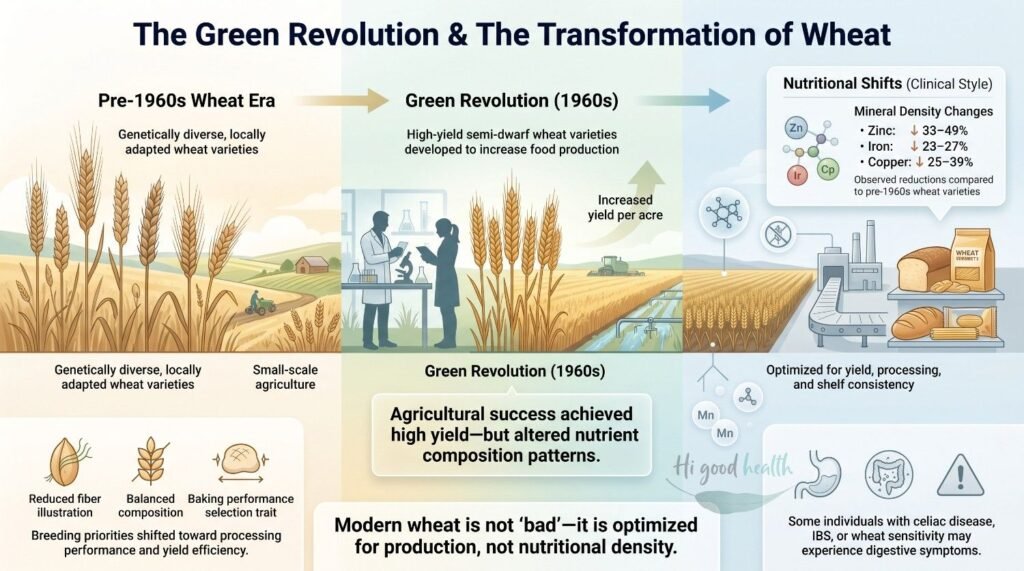
The transformation of wheat began during the Green Revolution in the 1960s. To feed a fast-growing global population, plant scientists developed high-yielding, short-stalked “semi-dwarf” wheat varieties that could produce far more grain per acre. [8]
The result was a huge success by agricultural standards, and a nutritional trade-off we are still reckoning with today. This is a big part of why the different types of wheat on our shelves now look so unlike the grains our great-grandparents ate. [8]
Consequences of Modernization
The focus on yield and processing performance changed the nutritional character of wheat in a few important ways:
- Reduced mineral density: modern wheat has been shown to contain lower levels of zinc (33 to 49 percent reduction), iron (23 to 27 percent reduction), and copper (25 to 39 percent reduction) than pre-1960s varieties, even as soil mineral concentrations stayed largely stable. [9]
- Higher gluten content: modern wheat breeding has mainly selected for better baking and dough characteristics. While differences in gluten composition, like a higher gliadin-to-glutenin ratio, exist among wheat varieties, current evidence does not consistently show that modern wheat contains more total gluten than older varieties. [5]
- Digestive issues: some people react to gluten or FODMAP carbohydrates in modern wheat, particularly those with celiac disease, wheat allergy, IBS, or non-celiac wheat sensitivity. [5]
- Reduced fiber density: many modern refined wheat products contain less fiber than whole ancient grain forms, which can affect gut health and fullness. [6][7]
The Modern Wheat You Eat Every Day
Today’s bread wheat, Triticum aestivum, dominates American grocery shelves, and hard red winter wheat is one of its most widely grown classes.
It is in your sandwich bread, your pasta, your pizza crust, your cereal, and your baked goods. While it offers clear advantages for food manufacturers in yield and baking, the nutritional picture tells a different story.
Nutritional Profile of Modern Wheat
- Protein content: about 15.9 to 18.4 percent, but with a higher share of hard-to-digest gluten proteins. [5]
- Fiber: lower effective fiber in most refined forms. Whole grain modern wheat does better, though ancient grain varieties in whole form can offer comparable or higher fiber depending on the study. [6]
- Micronutrients: several studies report declines in certain minerals in high-yield wheat varieties, sometimes called the “dilution effect.” The size of these differences varies a lot across cultivars and growing conditions. [9]
- Glycemic index: refined modern wheat products sit high on the glycemic index. Modern white bread has a GI of about 94.61, compared with emmer-enriched bread at around 89.23 and whole emmer ranging from 45 to 55. [10]
Your body still needs the minerals that older types of wheat once delivered. The problem is that most American diets, built around refined bread and packaged grain foods, are not delivering them anymore. [9]
To learn more, read our detailed blog: 60+ Essential Minerals That Protected Our Ancestors, but Are Missing from Your Multivitamin.
Health Implications: Conditions Linked to Modern Wheat
Most health concerns tied to wheat come from refined grain products and highly processed foods rather than modern wheat itself. Whole-grain wheat, whether modern or ancient, is linked with favorable health outcomes in many studies.
1. Celiac Disease
Celiac disease affects about 1 in 141 Americans, with most cases undiagnosed. [1][2] In people with celiac disease, gluten peptides trigger an autoimmune response that damages the small intestine lining and impairs nutrient absorption.
- Autoimmune disorder that needs lifelong management
- Causes diarrhea, weight loss, fatigue, and nutrient deficiencies
- Triggered by gluten in genetically predisposed people
- Incidence has been rising at an average of 7.5 percent per year in recent decades [2]
2. Non-Celiac Gluten Sensitivity (NCGS)
Even without a celiac diagnosis, an estimated 18 million Americans have symptoms after eating gluten, including bloating, brain fog, fatigue, and joint pain. [11] This is called non-celiac gluten sensitivity and may be more common with the high-gluten profile of modern wheat. It is still an area of active research. Some evidence suggests that, in certain people, symptoms blamed on gluten may instead come from fructans or other parts of wheat.
- No intestinal damage like celiac disease
- Symptoms can resemble IBS, headaches, and fatigue
- Symptoms often improve on a reduced-gluten or ancient-grain diet
- Some ancient wheat varieties like emmer and einkorn show lower celiac reactivity and fewer immunogenic epitopes than modern bread wheat [12]
3. Type 2 Diabetes and Insulin Resistance
Frequent intake of refined wheat products, such as white sandwich bread, bagels, crackers, and ultra-processed baked goods, can contribute to blood sugar spikes and poor glycemic control. Whole grain wheat, by contrast, is linked with better cardiometabolic outcomes in many large population studies. [13]
- Promotes rapid blood sugar spikes
- Encourages abdominal fat storage over time
- May raise the risk of metabolic syndrome
- Harvard research shows people eating 4 servings of whole grains daily had a 22 percent lower risk of death from any cause than those eating little whole grain [13]
4. Irritable Bowel Syndrome (IBS)
Modern wheat contains FODMAPs, fermentable carbohydrates, and high-gluten proteins that can trigger bloating, gas, and abdominal pain in people with IBS.
- Can worsen symptoms in sensitive digestive systems
- Associated with low-fiber intake in refined wheat diets
- Some people report better tolerance with ancient wheat varieties like emmer, though individual responses vary [12]
5. Obesity
Frequent intake of refined modern wheat products, such as white bread, pasta, pastries, muffins, and pizza, adds calories without much fullness, which can lead to overeating and weight gain over time. [14]
- High in refined carbohydrates, low in fiber
- Creates frequent hunger cycles and calorie overconsumption
- Associated with more systemic inflammation and fat storage
6. Intestinal Permeability
Some ongoing studies suggest gluten proteins may affect gut barrier function in susceptible people, although this remains a debated area in mainstream medicine.
- May be linked with chronic systemic inflammation
- May worsen autoimmune conditions in susceptible people
- Supported by emerging research but not yet fully accepted in conventional clinical guidelines [15]
What Traditional Wheat Practices Got Right That Industrial Processing Missed
Long before industrial roller milling and speed breeding, people processed grain in ways that kept its nutritional value and improved its digestibility. Many of these practices are still used by artisan bakers and ancestral eating advocates across the US today.
- Stone grinding keeps the wheat germ and bran, holding on to fiber, vitamins, and minerals, unlike modern roller milling, which strips these layers away to produce white flour.
- Overnight soaking or long fermentation, as in traditional sourdough, reduces antinutrients like phytic acid and makes wheat proteins easier to digest. Sourdough is having a major revival in the US for exactly this reason.
- Slow cooking and minimal processing preserve more heat-sensitive nutrients than rapid industrial production.
- Mixed cropping and organic, rain-fed growing conditions historically produced wheat with stronger root systems and better mineral absorption from the soil.
- Modern speed breeding compresses growing cycles to 3 to 4 months compared with traditional single annual harvests, which some researchers believe limits genetic stability and nutrient density. [9]
- Some studies have looked at possible effects of glyphosate, widely used in US pre-harvest wheat drying, on gut microbes, though more human research is needed.
- Pairing wheat with legumes such as beans, lentils, and chickpeas creates a more complete protein profile and helps balance the glycemic response of a grain-based meal.
- Seasonal grain rotation, wheat in winter and corn or lighter grains in summer, lines up with how the digestive system handles different starches across seasons, a principle now supported by emerging research in chrono-nutrition.
Modern grains feed hundreds of millions. But are they feeding us as well as they once did? Read our detailed blog: Are You Sure Wheat & Rice Are Good for Your Health, What’s the Best Grain in the World?
Why Consider Switching Back to Emmer Wheat?
Emmer wheat is already gaining momentum in American food culture. You will find it sold as farro in restaurants, on menus at fine dining and fast-casual chains, at specialty millers like Bluebird Grain Farms (Washington State), Barton Springs Mill (Texas), Granite Mill Farms, and Camas Country Mill (Oregon), and increasingly online through Amazon and direct-to-consumer grain brands. [3][4]
Bringing emmer back into your diet may offer several evidence-supported benefits:
1. Improved Digestive Health
Higher fiber content supports digestion, regular bowel movements, and a healthy gut microbiome. Farro, the US name for emmer, is well established as a high-fiber whole grain in American dietitian and clinical nutrition circles. [16][17]
2. Better Blood Sugar Control
A lower glycemic response helps keep blood sugar steadier, reducing the risk of insulin resistance and type 2 diabetes. Medical News Today and Healthline both rate farro as a low-glycemic grain choice. [10][16]
3. Enhanced Nutrient Intake
Richer in zinc, phosphorus, potassium, and niacin than many modern whole wheat products, emmer supports immune function, energy metabolism, and cardiovascular health. [5][6]
4. Reduced Inflammation
Antioxidants like lutein and polyphenols in emmer wheat have anti-inflammatory properties that may help reduce chronic inflammation tied to modern diets. [7][18]
Nutritional Comparison: Emmer Wheat vs. Modern Whole Wheat Flour (per 100 g)
Nutrient | Emmer Wheat (Triticum dicoccum) | Modern Whole Wheat Flour (Triticum aestivum) |
|---|---|---|
Calories | 340 kcal | 339 kcal |
Protein | 14.5 g | 13.2 g |
Total Carbohydrates | 70.0 g | 72.0 g |
Dietary Fiber | 14.83 g | 10.7 g |
Fat | 2.4 g | 2.5 g |
Glycemic Index (GI) | 45 | 71 |
Iron | 4.0 mg | 3.6 mg |
Magnesium | 128 mg | 137 mg |
Zinc | 4.8 mg | 2.6 mg |
Phosphorus | 387 mg | 357 mg |
Potassium | 407 mg | 363 mg |
Calcium | 35 mg | 34 mg |
Vitamin B1 (Thiamine) | 0.42 mg | 0.5 mg |
Vitamin B2 (Riboflavin) | 0.12 mg | 0.17 mg |
Vitamin B3 (Niacin) | 8.5 mg | 5.0 mg |
Folate | 43 µg | 44 µg |
Note: nutrient composition varies a lot depending on cultivar, soil quality, climate, milling, and food preparation. Values above are approximate comparisons from selected studies.
Key Takeaways
- Protein: emmer wheat generally has slightly more protein than modern bread wheat, though nutrient content varies by cultivar and growing conditions. Higher protein may add to fullness as part of a balanced diet.
- Fiber: whole-grain emmer is typically rich in dietary fiber, which supports digestive health, promotes fullness, and may help cardiometabolic health.
- Glycemic response: some studies suggest whole-grain emmer products may produce a lower glycemic response than comparable refined wheat products. Values can vary with processing, preparation, and the specific product.
- Micronutrients: emmer may contain higher levels of certain minerals, including zinc, iron, and magnesium, than some modern wheat varieties. These nutrients matter for immune function, energy metabolism, and overall health.
- Dietary diversity: adding ancient grains such as emmer and einkorn can widen dietary variety and provide another source of fiber, protein, and micronutrients within a balanced eating pattern.
Conclusion
The history of wheat reflects thousands of years of agricultural development aimed at improving productivity, adaptability, and food security. Modern wheat varieties have been bred mainly for yield, disease resistance, and baking, helping support the nutritional needs of a growing global population.
At the same time, interest in ancient grains such as emmer has grown thanks to their distinctive flavor, culinary versatility, and nutrient profile. Emmer wheat, often sold as farro in the United States, is a whole grain that provides fiber, protein, vitamins, and minerals and can fit into a healthy diet.
Some studies suggest emmer may offer advantages in nutrient density and glycemic response over certain modern wheat products, although results vary with the varieties and foods being compared. Importantly, emmer still contains gluten and is not suitable for people with celiac disease.
For most healthy people, both modern whole-grain wheat and ancient grains can be part of a nutritious diet. Rather than focusing only on the type of wheat, current evidence emphasizes choosing minimally processed whole grains over refined grain products and keeping an overall balanced eating pattern.
FAQs
1. Is emmer wheat gluten-free?
Answer: No. Emmer wheat contains gluten and is not safe for people with celiac disease. Its different gluten makeup, with a higher gliadin-to-glutenin ratio, means some people with non-celiac sensitivity may tolerate it better than modern bread wheat. Always check with your doctor if you have a gluten-related condition.
2. What is the difference between emmer wheat and farro?
Answer: Farro is the Italian term used in the US for emmer wheat (Triticum dicoccum). When you see farro on a restaurant menu or in a grocery store, it is almost always emmer wheat.
3. Can emmer wheat help manage blood sugar?
Answer: Emmer has a lower glycemic index than modern white or whole wheat bread, which may help keep blood sugar steadier. Exact values shift with how it is cooked, but several sources rate emmer farro as a low-glycemic grain. [10][16]
4. Can switching to emmer wheat help with weight loss?
Answer: It may help. Emmer’s higher fiber and protein content improves fullness, which can cut down on overeating. Refined modern wheat products are more often tied to empty calories and poor hunger control.
5. Where can I buy emmer wheat in the US?
Answer: Emmer wheat and farro are sold at Whole Foods, Trader Joe’s, and online from specialty millers including Bluebird Grain Farms, Barton Springs Mill, Granite Mill Farms, Camas Country Mill, and Mockmill. [3][4]
6. Does emmer wheat have more nutrients than regular wheat?
Answer: The available evidence suggests emmer wheat is richer in certain minerals like zinc and potassium and in antioxidants like lutein than common modern bread wheat, though results vary across cultivars and processing methods. [5][6][18]
7. Why does modern wheat cause bloating and digestive issues?
Answer: Modern bread wheat is bred for high gluten content and also contains FODMAP carbohydrates, both of which can trigger gas, bloating, and discomfort in sensitive people. Some report better tolerance with ancient grains like emmer, though individual responses differ.
8. Can people with diabetes eat emmer wheat?
Answer: Emmer wheat has a lower glycemic response than refined wheat products, making it a potentially better choice. Portion control still matters. Always check with your healthcare provider for personalized dietary guidance.
9. Is emmer wheat the same as einkorn?
Answer: No. Both are ancient wheat varieties, but they are genetically distinct. Einkorn (Triticum monococcum) is diploid with 14 chromosomes; emmer is tetraploid with 28. Einkorn is generally seen as having lower immunogenic activity and is often described as a low gluten flour. Emmer is more widely sold in the US as farro. [12]
10. What are the main types of wheat grains?
Answer: The main types of wheat grains include ancient varieties like einkorn, emmer, and spelt, plus modern species such as common bread wheat (Triticum aestivum) and durum wheat used for pasta. Hard red winter wheat is one of the most widely grown modern classes in the US. Ancient and modern grains differ in gluten makeup, mineral density, and how easily many people digest them.
11. Is ancient grain flour better than modern wheat flour?
Answer: Ancient grain flour, milled from grains like emmer and einkorn, often carries more fiber and certain minerals than heavily refined modern wheat flour. It is not automatically better for everyone, since it still contains gluten. For most healthy people, whole-grain versions of both ancient and modern wheat can fit a balanced diet. [5][7]
12. What is the connection between wheat and gluten?
Answer: Gluten is a group of proteins found naturally in wheat that gives dough its stretch and chew. All true wheat contains gluten, including ancient grains. The amount and type of gluten in flour vary by variety, which is one reason some people find einkorn or emmer easier to tolerate than modern bread wheat.
13. Are einkorn wheat berries easier to digest than modern wheat?
Answer: Some people report that einkorn wheat berries and other ancient grains feel gentler on digestion. Einkorn has a simpler genetic structure and is often described as a low gluten flour with fewer immunogenic gluten fragments. This does not make it safe for anyone with celiac disease, since it still contains gluten. [12]
Glossary
Scientific and Medical Terms
Amylose — a starch molecule that digests slowly, producing a more gradual rise in blood sugar. Ancient wheats contain higher proportions of amylose than modern varieties.
Amino Acids — the building blocks of protein. Nine are classified as essential because the body cannot produce them and must get them from food.
Antinutrients — natural compounds in grains and legumes, such as phytic acid, that can bind to minerals and reduce their absorption. Soaking, fermenting, and sprouting reduce antinutrients.
Autoimmune Reaction — a condition where the immune system mistakenly attacks the body’s own tissues. In celiac disease, gluten triggers an immune attack on the small intestine lining.
Celiac Disease — an autoimmune disorder where eating gluten causes the immune system to damage the small intestine’s lining, impairing nutrient absorption. Affects about 1 in 141 Americans. [1]
Cultivar — a plant variety deliberately bred and selected for specific traits such as yield, pest resistance, or baking quality.
FODMAPs — Fermentable Oligosaccharides, Disaccharides, Monosaccharides, and Polyols. Short-chain carbohydrates poorly absorbed in the small intestine that ferment in the colon, causing gas, bloating, and discomfort in sensitive people.
Gliadin — a component of gluten particularly responsible for triggering immune responses in celiac disease and intestinal permeability issues.
Gluten — a group of proteins found in wheat that gives dough its elastic, chewy texture. Made mainly of gliadin and glutenin proteins.
Gliadin-to-Glutenin Ratio — the proportion of gliadin to glutenin in wheat, which may affect digestibility and immune response. Ancient wheats have a different ratio than modern bread wheat.
Glutenin — one of the two main proteins in gluten, giving strength and elasticity to dough.
Glycemic Index (GI) — a scale from 0 to 100 measuring how quickly a food raises blood sugar. High GI foods (70+) cause rapid spikes; low GI foods (55 or below) cause more gradual increases.
Green Revolution — a period from the 1960s to 1980s when high-yield crop varieties, chemical fertilizers, and pesticides transformed global agriculture and greatly increased food production.
Glyphosate — a widely used herbicide sometimes applied to wheat crops before harvest. Its effects on gut microbiota are an area of ongoing research.
Immunogenic — capable of triggering an immune response. Certain gluten peptides in modern wheat are highly immunogenic in people with celiac disease.
Insulin Resistance — a condition where the body’s cells respond poorly to insulin, raising the risk of type 2 diabetes.
Intestinal Permeability (Leaky Gut) — a condition where the gut lining becomes more permeable, potentially allowing undigested particles to enter the bloodstream.
Irritable Bowel Syndrome (IBS) — a common digestive disorder marked by abdominal pain, bloating, gas, diarrhea, and/or constipation.
Lutein — a plant antioxidant linked with eye health and reduced inflammation.
Metabolic Syndrome — a cluster of conditions including high blood pressure, high blood sugar, abdominal fat, and abnormal cholesterol that raise the risk of heart disease, stroke, and diabetes.
Micronutrients — vitamins and minerals needed in small amounts for normal body function, including zinc, iron, magnesium, and B vitamins.
Non-Celiac Gluten Sensitivity (NCGS) — a condition where symptoms similar to celiac disease occur after eating gluten, without the intestinal autoimmune damage.
Peptides — short amino acid chains produced when proteins like gluten are digested.
Satiety — the feeling of fullness after eating. High-fiber, high-protein foods provide greater satiety.
Semi-Dwarf Wheat — modern wheat bred with shorter stalks to improve yield and resistance to lodging. Widely adopted during the Green Revolution.
Systemic Inflammation — chronic, body-wide inflammation linked to many modern diseases including obesity, diabetes, and autoimmune conditions.
Tight Junctions — microscopic seals between intestinal cells that regulate what passes into the bloodstream.
Zonulin — a protein that regulates intestinal tight junctions; some research suggests gliadin may influence zonulin activity in celiac disease.
Grain and Agricultural Terms
Farro — the Italian and American culinary term for emmer wheat (Triticum dicoccum). Widely sold in US grocery stores and used in restaurants.
Heirloom Grain — a grain variety preserved through traditional breeding and open pollination rather than modern commercial plant breeding.
Roller Milling — the modern industrial milling process that removes bran and germ from wheat to produce refined white flour, stripping away fiber and key nutrients.
Speed Breeding Protocols — modern techniques using controlled light and temperature to compress wheat breeding cycles to 3 to 4 months, compared with a single traditional annual harvest.
Stone Grinding — a traditional milling process that grinds whole grain slowly, keeping the bran, germ, and most nutrients.
Wheat Germ — the nutrient-dense embryo of the wheat kernel, rich in B vitamins, vitamin E, healthy fats, and minerals. Removed in roller milling of white flour.
Wheat Bran — the fiber-rich outer layer of the wheat kernel, packed with fiber, B vitamins, and minerals. Removed in the production of refined white flour.
Scientific Classification
Triticum aestivum — the scientific name for common bread wheat, the most widely grown wheat species today.
Triticum dicoccum — the scientific name for emmer wheat (sold as farro), an ancient tetraploid wheat species with 28 chromosomes.
Triticum monococcum — the scientific name for einkorn wheat, an ancient diploid wheat species with 14 chromosomes and generally considered lower in gluten reactivity.
References
- Rubio-Tapia A et al. The prevalence of celiac disease in the United States. American Journal of Gastroenterology. 2012. Read here
- Celiac Disease Foundation. Incidence of celiac disease steadily increasing. 2020. Read here
- Bluebird Grain Farms. Organic Emmer Farro Flour. Read here
- Barton Springs Mill. Emmer Flour (certified organic). Read here
- Shewry PR. Do ancient types of wheat have health benefits compared to modern wheat? Journal of Cereal Science. 2018. Read here
- University of Wyoming Agricultural News. Ancient grains: what once was old is new again. 2020. Read here
- Brown University Health. Ancient Grains and Their Benefits. 2025. Read here
- PMC. Lessons from the aftermaths of the Green Revolution on food system sustainability. 2021. Read here
- BICGA. Evidence of decreasing mineral density in wheat grain over the last 160 years. Read here
- PMC. Glycemic response to ancient wheat: a modest but significant difference. Read here
- Healthline. Is gluten sensitivity real? Read here
- Science Societies. What is the future for ancient grains? 2026. Read here
- Harvard Health. The whole grain goodness of modern and ancient grains. 2016. Read here
- Louis Bolk Institute. Satiety of modern wheat. Read here
- Cambridge. Wheat gluten intake increases severity of experimental colitis. Read here
- Healthline. 5 Benefits of Farro. Read here
- WebMD. Health Benefits of Farro. Read here
- PLOS ONE. Inflammation linked to refined grain consumption. Read here
