At a glance
The commonest low hemoglobin causes in older adults are iron deficiency from slow gastrointestinal blood loss, chronic kidney disease, and inflammation from a long-term illness. Aging itself is not one of them — a low reading is a finding to explain, never a normal part of getting older.
Two tests do most of the work when you are chasing low hemoglobin causes. A complete blood count gives the hemoglobin figure, and a ferritin blood test shows whether iron stores are actually empty. Ferritin is the more useful of the two, because it can reveal iron deficiency well before hemoglobin falls far enough to be called anemia.
The catch is that ferritin rises with inflammation, so a normal or even high result does not rule iron deficiency out in someone who is unwell.
That is why results are read alongside CRP and transferrin saturation rather than on their own — and why interpreting them is a job for a doctor, not a home comparison against a reference range.
A health problem many people miss
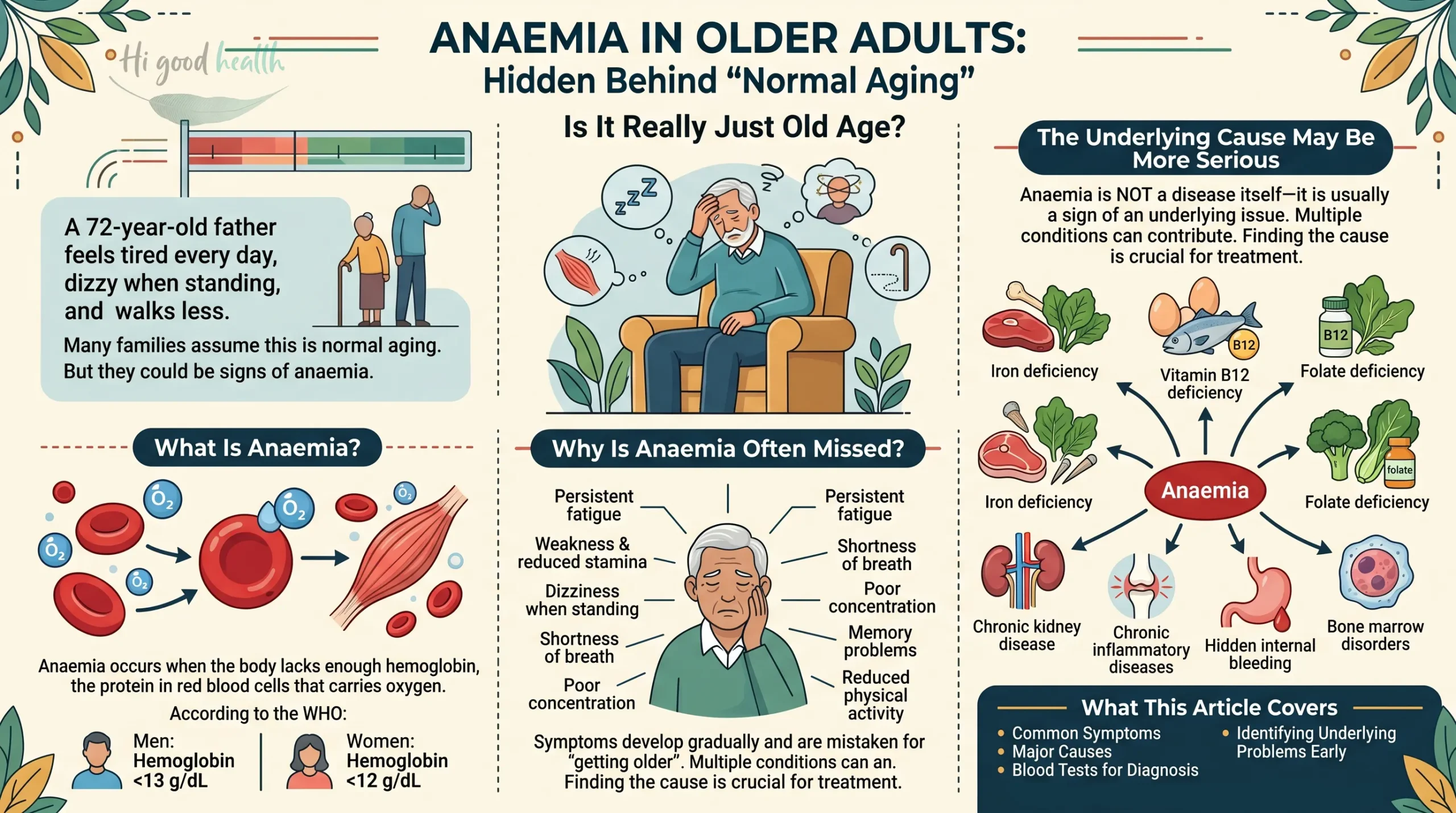
Your 72-year-old father says he is just getting older. He is tired most of the time, gets dizzy when he stands up, and has stopped walking as far as he used to.
Maybe he is slowing down with age. Or maybe he has anemia.
Anemia occurs when hemoglobin levels are too low to carry enough oxygen through the body. According to WHO definitions, it is generally diagnosed at hemoglobin levels below 13 g/dL in men and below 12 g/dL in women.
That is the problem with anemia in older adults: it is often hidden in plain sight. Fatigue, weakness, memory complaints, and breathlessness are commonly blamed on aging, when the real cause may be low hemoglobin, iron deficiency, vitamin B12 deficiency, chronic disease, kidney problems, or a mix of several factors.
This is the second blog in our series on anemia in older adults. In the first part, we introduced the topic and explained why it matters. In this article, we go deeper into the symptoms, causes, and blood tests that matter most.
Why anemia is different in older adults
Younger Adults | Older Adults | What this means |
Around 5% to 10% | Around 17% or more, and even higher in some populations | Anemia is much more common in seniors. |
Often a single cause, such as poor diet or blood loss | Usually multifactorial: nutrition, inflammation, chronic disease, kidney disease, hidden bleeding, or unexplained aging | The cause is often mixed, so diagnosis takes more work. |
Often more obvious | Often vague: fatigue, dizziness, weakness, and cognitive changes that may look like normal aging | Symptoms are easy to miss. |
Why this matters:
- Anemia can reduce energy, walking speed, and daily function.
- It can increase the risk of falls and hospital visits.
- It may also be linked to poor memory, low mood, and confusion in older adults.
Low Hemoglobin Symptoms to Watch For
Anemia in older adults does not always look dramatic. It often starts quietly.
- 1. Persistent fatigue.
- 2. Dizziness or lightheadedness.
- 3. Shortness of breath during simple activities.
- 4. Pale skin or pale inner eyelids.
- 5. Cold hands and feet.
- 6. Heart palpitations.
- 7. Brain fog, memory problems, or confusion.
- 8. Weakness, low stamina, or reduced walking ability.
Low Hemoglobin Causes in Older Adults
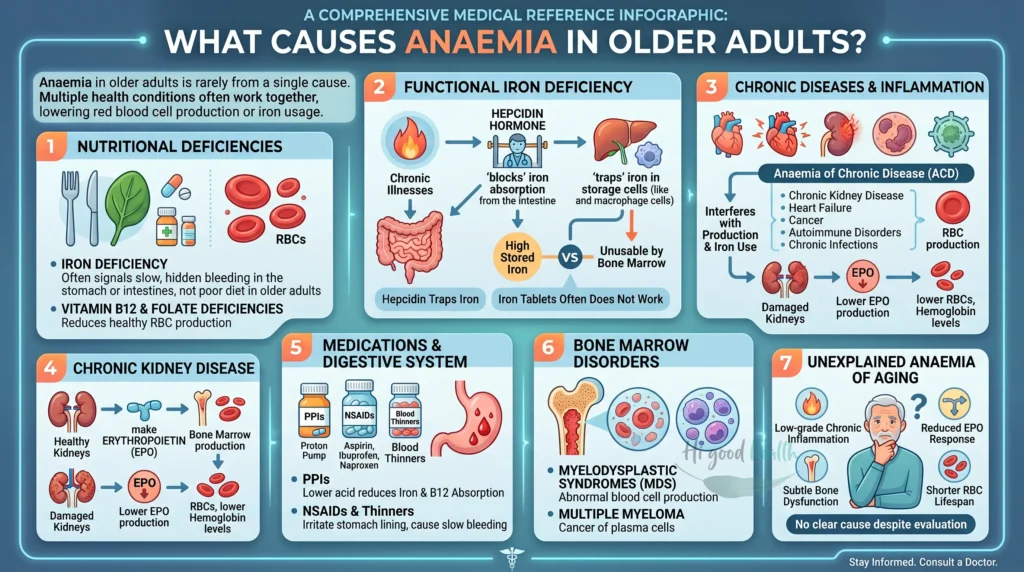
1. Nutritional deficiency – Iron deficiency is common, but in older adults it often points to blood loss rather than just poor diet. Vitamin B12 and folate deficiency can also cause anemia.
2. Functional iron deficiency and hepcidin
Most people think of iron deficiency as simply not having enough iron. But in older adults, there is a growing understanding of a different problem: having iron in the body but not being able to use it.
This is called functional iron deficiency. When the body is dealing with chronic inflammation — from conditions like kidney disease, heart failure, rheumatoid arthritis, or any long-term illness — it produces more of a hormone called hepcidin. Hepcidin acts like a gatekeeper.
It traps iron inside storage cells called macrophages and blocks the gut from absorbing new iron from food or supplements.
The result is that blood tests may show normal or even high ferritin (stored iron), but the bone marrow is still not getting enough iron to make healthy red blood cells. This is why older adults with chronic illness can develop anemia even when their iron stores appear adequate on standard tests.
What makes this clinically important is that treating this type of anemia with more oral iron often does not help — and may not be needed. The real target is the underlying inflammation.
Researchers in 2025 and 2026 are actively studying hepcidin-blocking therapies as a potential treatment for this condition, which may one day offer a new option for older adults whose anemia does not respond to conventional iron therapy.
3. Chronic disease and inflammation – Long-term conditions such as kidney disease, heart failure, cancer, and inflammatory disorders can interfere with red blood cell production and iron use.
4. Chronic kidney disease – The kidneys make erythropoietin, the hormone that signals the bone marrow to produce red blood cells. When kidney function drops, anemia may follow.
5. Medications and gut changes – Long-term use of proton pump inhibitors can reduce stomach acid and impair iron absorption, making anemia more likely in some older adults.
Other common medicines such as aspirin, ibuprofen, naproxen, blood thinners, and other anti-inflammatory drugs — can irritate the stomach lining or increase bleeding risk, which may contribute to anemia over time.
6. Bone Marrow Disorders – Primary conditions that generally develop in older age include:
Myelodysplastic Syndromes (MDS): A group of blood cancers where the bone marrow produces ineffective red blood cells.
Multiple Myeloma: Cancer of the plasma cells.
6. Unexplained anemia of aging – In some older adults, no clear cause is found even after a full workup. This is called unexplained anemia of aging. Researchers continue studying whether some cases are linked to low-grade inflammation, reduced erythropoietin response, early bone marrow changes, or shortened red blood cell survival associated with aging.
Blood Tests That Matter Most: Hemoglobin and Ferritin
If anemia is suspected, the goal is not just to confirm it. The goal is to find the reason.
- Complete Blood Count (CBC): Confirms anemia and shows whether red blood cells are small, normal, or large.
|
|
|
|
|
|
|
|
- Reticulocyte count: Shows whether the bone marrow is responding properly.
- Peripheral blood smear: Helps look at red blood cell size and shape.
- Serum ferritin: One of the most useful tests for iron deficiency.
- Serum iron, transferrin saturation (TSAT), and total iron-binding capacity (TIBC).
- Vitamin B12, Methylmalonic Acid (MMA) and folate.
- Kidney function tests, thyroid function, C-reactive protein, and stool occult blood testing, endoscopy or colonoscopy if bleeding is suspected.
Ferritin Blood Test: What the Numbers Mean
Of all the results on the page, the ferritin test is the one most worth understanding when working through low hemoglobin causes, because it measures stored iron rather than circulating iron. It is also the one most often misread.
Normal Ferritin Values
Reference ranges differ between laboratories, and the normal value of ferritin is usually quoted as roughly 30 to 300 ng/mL for men and 15 to 200 ng/mL for women. Always read your result against the range printed on your own report rather than a figure found online.
The clinically important threshold is lower than most people expect, and it is the most actionable number among the common low hemoglobin causes.
A ferritin below about 30 ng/mL is generally taken as iron deficiency, and many clinicians act on anything under 45 ng/mL in an older patient with symptoms, because the consequences of missing it are worse than the cost of investigating.
Low Ferritin and Low Iron
Low ferritin with low iron is the clearest picture there is: the stores are empty and the supply is short. In an older adult this finding is not the end of the investigation but the start of one, because the question immediately becomes where the iron is going.
Slow blood loss from the gut is the answer often enough that guidelines treat unexplained iron deficiency in this age group as a reason to look, which is among the most important low hemoglobin causes to rule out rather than assume away.
High Ferritin Levels Can Still Mean Iron Deficiency
This is the part that catches people out. Ferritin is an acute-phase reactant, meaning it rises whenever there is inflammation anywhere in the body — infection, rheumatoid arthritis, kidney disease, cancer, even a recent operation.
Among low hemoglobin causes this is the easiest to miss. Elevated ferritin does not reliably mean iron overload, and normal ferritin does not reliably rule iron deficiency out. Someone with a chronic inflammatory illness can have empty iron stores and a ferritin reading in the normal range at the same time.
This is why a ferritin blood test is interpreted alongside CRP and transferrin saturation. It is also why self-diagnosing from a single number is unreliable, and why these results belong in a conversation with a doctor.
What the latest science says
- Anemia is linked to worse physical function, hospitalization, reduced quality of life, and depression in older adults.
- Even mild anemia can matter clinically and should not be dismissed as normal aging.
- Studies continue to explore why unexplained anemia of aging happens and whether some cases are related to shortened red blood cell survival or reduced marrow response.
When to seek medical help
- Fatigue lasting more than 2 weeks.
- Dizziness or falls or fainting.
- Shortness of breath with minimal effort.
- New confusion or memory changes.
- Black or tarry stools.
- Heart palpitations and chest pain..
- Pale skin or pale inner eyelids.
Why early diagnosis matters
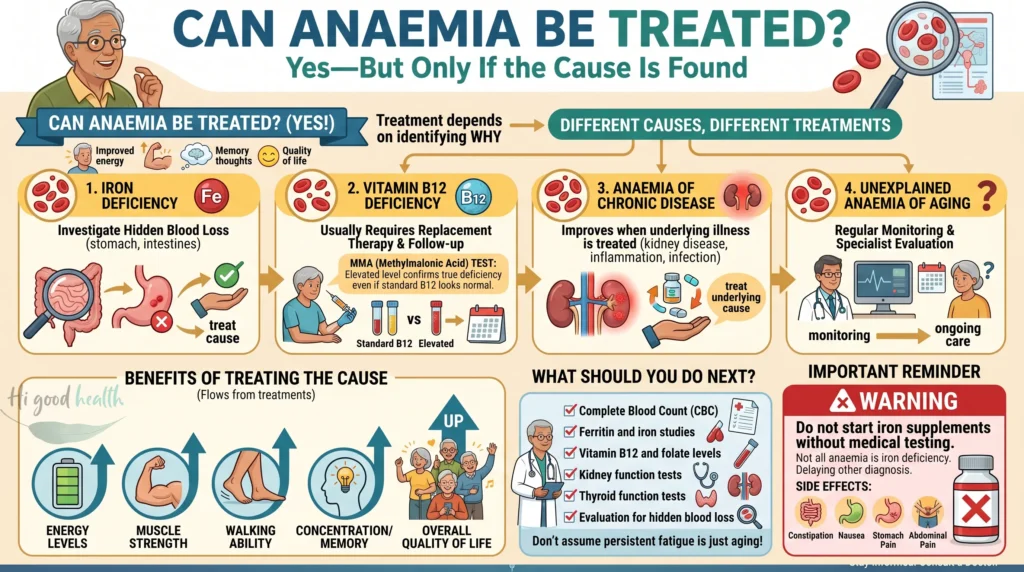
Anemia is treatable in many cases, but only if it is recognized. Iron deficiency may need a search for hidden bleeding. B12 deficiency may need treatment and follow-up. Methylmalonic Acid (MMA) to the test checklist provides a definitive answer, as elevated MMA proves a cellular-level B12 deficiency even if standard blood levels look normal.
Chronic disease anemia may improve when the underlying condition is treated. Unexplained anemia still deserves monitoring and specialist input. Treating the underlying cause of anemia may improve strength, mobility, concentration, and overall quality of life in some older adults.
What to do next
- Ask for a CBC.
- Ask for ferritin and iron studies.
- Check B12 and folate.
- Review kidney and thyroid function.
- Look for hidden blood loss if iron deficiency is found.
- Do not assume fatigue is just aging.
Note: Iron supplements should only be started after proper testing and medical evaluation. Since not all anemia is caused by iron deficiency, taking iron unnecessarily may delay the diagnosis of other conditions and can lead to side effects such as constipation, nausea, or stomach discomfort.
External references
- American Family Physician: Anemia in Older Adults
- ASH / Blood: How I treat anemia in older adults
- PMC review: How I treat anemia in older adults
- Mayo Clinic: Anemia symptoms and causes
- Cleveland Clinic: Anemia overview
- Cleveland Clinic: Reticulocyte count
What’s next in this series
In the next article, we will cover diet and iron-rich foods, how to prevent iron deficiency in older adults, which supplements are used in different situations, why some people cannot tolerate iron tablets, and the difference between tablets, liquids, IV iron, and injections.
Key Takeaways
- Anemia is never a normal part of aging. A low reading is a finding that needs explaining.
- The commonest low hemoglobin causes in this age group are iron deficiency from slow gut blood loss, chronic kidney disease, and inflammation from long-term illness.
- A ferritin blood test shows stored iron and often reveals one of the low hemoglobin causes before hemoglobin itself falls far enough to be called anemia.
- Ferritin under about 30 ng/mL generally indicates iron deficiency, though laboratory ranges differ — read your own report.
- High or normal ferritin does not rule iron deficiency out. It rises with inflammation, so it is read alongside CRP and transferrin saturation.
- Unexplained iron deficiency is one of the low hemoglobin causes that must be investigated rather than simply supplemented — in an older adult that means looking at the gut.
- Never start iron supplements on your own reading of a result. Wrongly taken iron is harmful, and the cause matters more than the number.
Frequently Asked Questions
Is anemia normal in old age?
No. It is common, but it is not normal and should be checked.
Can anemia cause memory problems?
Yes. It can cause brain fog, confusion, and reduced concentration.
What is the most useful first test?
A complete blood count is usually the first step, followed by ferritin and iron studies.
Can iron deficiency mean something serious?
Yes. In older adults, it may point to hidden blood loss and should not be ignored.
Glossary
- Anemia: A condition in which the blood does not carry enough oxygen.
- Hemoglobin: The oxygen-carrying protein in red blood cells.
- CBC: Complete Blood Count, a basic blood test that checks red cells, white cells, and platelets.
- Ferritin: A protein that stores iron.
- TSAT: Transferrin saturation, a measure of how much iron is available.
- TIBC: Total iron-binding capacity.
- EPO: Erythropoietin, a hormone made by the kidneys.
- CKD: Chronic kidney disease.
- PPI: Proton pump inhibitor, a medicine that reduces stomach acid.
- UAA: Unexplained anemia of aging.
- MMA: Methylmalonic Acid (MMA)
About HiGood Health
HiGood Health was created to share clean, credible information in simple language. Our aim is to bust myths, support healthy living, and share useful best practices from around the world. We invite readers to explore more topics on our website and share the health questions or blog ideas they want us to cover next.
Disclaimer
This article is for educational purposes only and is not a substitute for medical advice, diagnosis, or treatment. Always speak with a qualified healthcare professional about any symptoms or concerns.
