At a glance
Being thirsty straight after drinking is usually about electrolyte balance, not water volume. Water without sodium, potassium and magnesium passes through you rather than being held where it is needed, so more water can leave you thirstier.
The most common dehydration symptoms are dark yellow urine, dry mouth, tiredness, headache, dizziness on standing and reduced urine output. In children and older adults they show up sooner and matter more.
The causes of excessive thirst most people miss: too much salt, caffeine or alcohol, medications that dry the mouth, air conditioning, and habitually drinking so much that the body stops concentrating urine.
See a doctor if thirst is constant and unexplained, especially alongside frequent urination, unexplained weight loss or blurred vision. Persistent excessive thirst is one of the most common first signs of undiagnosed diabetes, and it is not something to manage with a better water bottle.
Introduction: Water Is Not Always the Answer
You drink a glass of water — maybe two — yet your mouth still feels dry and your thirst refuses to go away. Sound familiar?
Persistent thirst is one of the most commonly reported dehydration symptoms, and one of the most commonly misread. Despite what we’ve been told for decades, drinking plain water may not always be enough to truly quench your thirst. In fact, for millions of people around the world, persistent thirst can be a signal that something deeper is going on.
In this blog, we’ll unmask the real reasons you might still feel thirsty even after drinking water. We’ll break down the science, bust myths, and offer evidence-backed, practical solutions to help you stay truly hydrated.
The Physiology of Thirst: What Your Body Is Actually Telling You
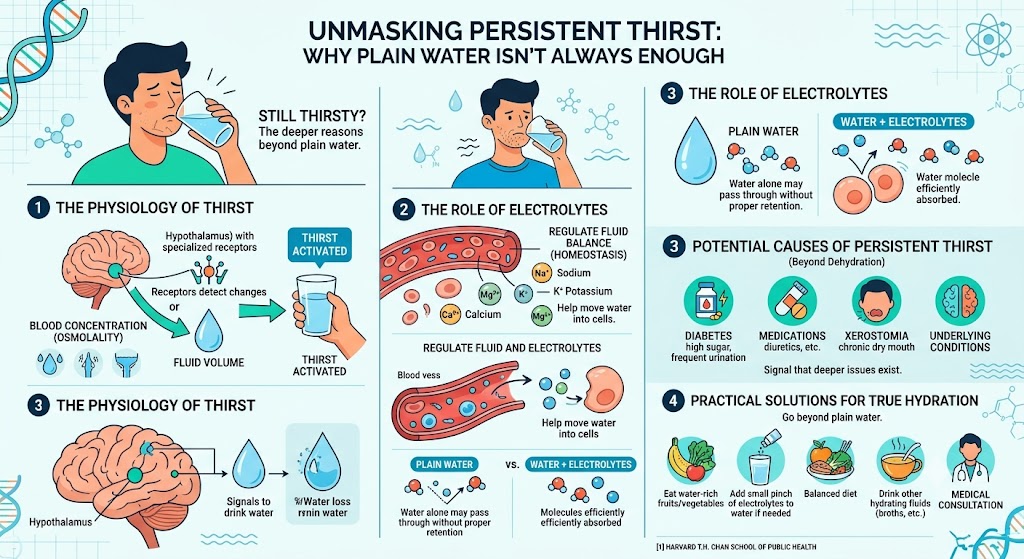
Thirst is your body’s natural mechanism for maintaining fluid balance (homeostasis). Specialized receptors in the brain detect changes in blood concentration (osmolality) and fluid volume. When your body loses water through sweat, urine, breathing, diarrhea, or vomiting, thirst signals are activated to restore balance.
Electrolytes such as sodium, potassium, magnesium, and calcium help regulate how fluids move between cells and the bloodstream. However, in most healthy individuals consuming a balanced diet, electrolyte needs are usually met through regular food intake.
Research from Harvard T.H. Chan School of Public Health emphasizes that proper hydration depends not only on fluid intake but also on how well your body retains and uses that fluid[1].
🔗 The importance of hydration – Harvard T.H. Chan School of Public Health
🔗 How Much Water Do You Need? – The Nutrition Source, Harvard T.H. Chan School of Public Health
Dehydration Symptoms: Warning Signs You Should Not Ignore
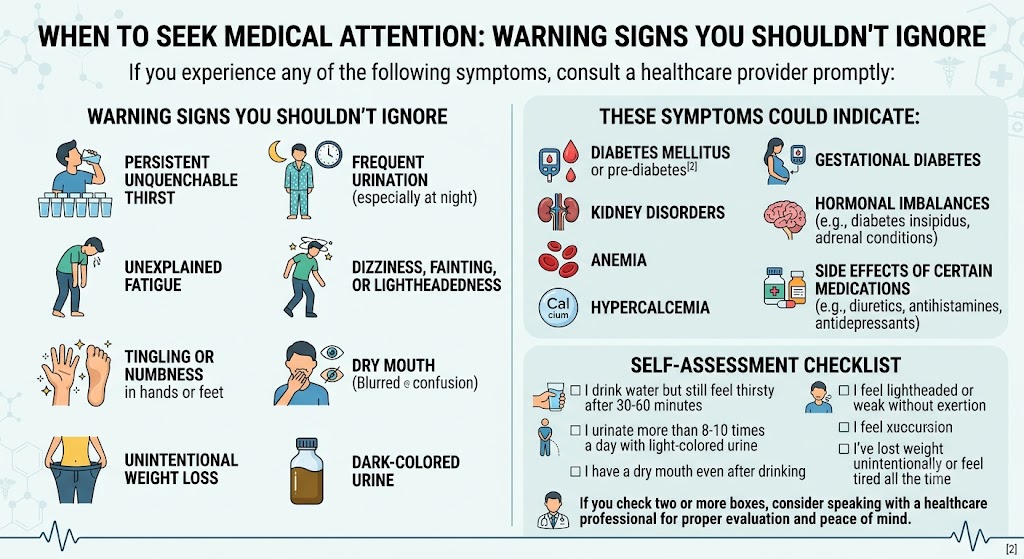
If you experience any of the following dehydration symptoms, consult a healthcare provider promptly:
- Persistent unquenchable thirst, even after adequate fluid and electrolyte intake
- Frequent urination, especially at night (more than 2-3 times)
- Unexplained fatigue or persistent muscle cramps
- Dizziness, fainting, or lightheadedness
- Tingling or numbness in hands or feet
- Dry mouth accompanied by blurred vision or confusion
- Unintentional weight loss
- Dark-colored urine despite adequate fluid intake
Dehydration symptoms this severe could indicate:
- Diabetes mellitus or pre-diabetes[2]
- Kidney disorders
- Anemia
- Hypercalcemia
- Gestational diabetes
- Hormonal imbalances (e.g., diabetes insipidus, adrenal conditions)
- Side effects of certain medications (e.g., diuretics, antihistamines, antidepressants)
Early Dehydration Symptoms
The earliest dehydration symptoms are easy to dismiss because none of them feels like an emergency: dark yellow urine, passing less of it than usual, a dry or sticky mouth, tiredness that arrives without exertion, and a dull headache.
Thirst itself is a comparatively late signal. By the time you feel properly thirsty, fluid balance has already shifted — which is why relying on thirst alone is unreliable, and why urine color is the more useful daily check.
What urine color tells you: pale straw is the target. Dark yellow means catch up. Consistently colorless may mean you are drinking more than you need. Bear in mind that B vitamins turn urine bright yellow and some medications change it too, so read the trend rather than a single visit.
Cloudy urine is usually just concentrated urine and clears as you rehydrate. If it persists, or arrives with burning, urgency, fever or back pain, it is pointing at a urinary tract infection or stones rather than dehydration, and that needs a doctor rather than a water bottle.
Extreme Dehydration Symptoms — When It Becomes Urgent
Severe dehydration is a different category and needs medical help rather than management at home. The signs are:
- Not passing urine for eight hours or more, or urine that is deep amber
- Confusion, unusual irritability, slurred speech or difficulty staying awake
- A racing heartbeat with rapid, shallow breathing
- Fainting, or dizziness severe enough that standing is unsafe
- Skin that stays tented when pinched, and sunken eyes
- In infants: a sunken soft spot, no tears when crying, and fewer than six wet diapers a day
Any of these warrants emergency care. Severe dehydration is corrected with intravenous fluids, and drinking will not catch up quickly enough.
Dehydration Symptoms in Women, Older Adults and Children
The same dehydration symptoms do not present identically in everyone, and two groups are routinely caught out.
Older adults lose the thirst signal with age and often take diuretics or blood pressure medication that increase fluid loss. Confusion or a fall can be the first visible sign, well before anyone reports feeling thirsty. Waiting for thirst is not a workable strategy after 65.
In women, hormonal shifts across the menstrual cycle, pregnancy and menopause change fluid balance and can make thirst and fatigue harder to interpret. Pregnancy raises fluid requirements substantially, and dehydration symptoms during pregnancy — particularly reduced urine output or dizziness — should be raised with a doctor rather than self-managed.
Children dehydrate faster than adults because they are smaller and lose fluid more quickly during illness. Watch for fewer wet diapers, no tears, unusual drowsiness and refusing to drink.
Dehydration Symptoms Self-Assessment Checklist
- ☐ I drink water but still feel thirsty after 30-60 minutes
- ☐ I urinate more than 8-10 times a day with light-colored urine
- ☐ I have a dry mouth even after drinking
- ☐ I feel lightheaded or weak without exertion
- ☐ I’ve lost weight unintentionally or feel tired all the time
If you check two or more of these dehydration symptoms, consider speaking with a healthcare professional for proper evaluation.
Causes of Excessive Thirst: Surprising Reasons You Still Feel Thirsty
Electrolyte Imbalance
Sweat, exercise, heat, or illness can deplete your body of essential minerals[3]. Without adequate replenishment, drinking water alone may dilute your electrolytes further and potentially worsen symptoms. Oral rehydration solutions are especially useful during significant gastrointestinal fluid losses. This is why athletes and people who sweat heavily often need more than plain water.
High-Sodium Intake
Diets high in sodium — especially from processed foods, restaurant meals, and packaged snacks — increase blood osmolality Your body attempts to correct this by signaling increased thirst to dilute the excess sodium in your bloodstream.
Dry Mouth and Dehydration: Not Always the Same Thing
Xerostomia (dry mouth) can be caused by medications (particularly antihistamines, antidepressants, and blood pressure medications), stress, or certain autoimmune conditions[5].
Because saliva production is reduced, the sensation can mimic thirst even when hydration is adequate. If dry mouth persists despite adequate hydration, consult your healthcare provider.
Diabetes or Pre-diabetes
Excess sugar in the blood pulls water from your cells through osmotic pressure, causing dehydration at the cellular level[6]. Persistent thirst combined with frequent urination can be an early warning sign of diabetes and should be evaluated by a medical professional immediately.
Poor Water Retention
Elevated blood glucose causes the kidneys to excrete excess glucose into urine. Water follows this glucose osmotically, leading to increased urination and dehydration.
Common associated symptoms include:
- Frequent urination
- Increased hunger
- Fatigue
- Blurred vision
- Weight loss
Persistent thirst with frequent urination warrants medical evaluation.
Conditions Affecting Hydration
During pregnancy, Increased fluid needs and blood volume often cause increased thirst. Infections, fever, or chronic diseases like anemia and kidney issues can cause consistent thirst.
Habitual Overhydration
Drinking excessive amounts of plain water can lead to a condition called hyponatremia (low blood sodium), where cells swell with excess water[8]. This is especially concerning for endurance athletes and individuals with certain kidney or hormonal conditions. Symptoms may include nausea, confusion, headaches, and in severe cases, seizures or coma. This condition requires immediate medical attention.
Environmental Factors
Dry air, high altitudes, or heated indoor environments can increase fluid loss through respiration and skin evaporation[9], triggering increased thirst. Air conditioning and heating systems can significantly reduce indoor humidity, leading to greater insensible water loss.
Caffeine or Alcohol Intake
Both caffeine and alcohol can contribute to increased urine production in some individuals, particularly in large amounts or in people who are not habitual consumers.
Alcohol also suppresses antidiuretic hormone (ADH), increasing water loss.
How Electrolytes Fuel Hydration at the Cellular Level
Electrolytes are minerals that help regulate fluid balance, nerve signaling, muscle contraction, and acid-base balance. They help the body maintain normal cellular function and distribute fluids appropriately between cells and the bloodstream.
However, most healthy individuals obtain adequate electrolytes through a balanced diet and do not routinely require electrolyte supplements or sports drinks.
Sodium
Sodium is the primary extracellular electrolyte and helps regulate blood volume, fluid balance, and nerve function.
It draws water into the bloodstream and assists cells in absorbing fluids properly.
Vegetarian sources: Pickled vegetables, whole grain bread, celery, beets, and iodized salt (in moderation)
Potassium
Potassium is the major intracellular electrolyte and helps support muscle contraction, nerve signaling, and cellular fluid regulation.
It works in opposition to sodium to maintain proper fluid balance.
Vegetarian sources: Bananas, oranges, potatoes, sweet potatoes, avocados, spinach, coconut water
Magnesium
Magnesium participates in hundreds of enzymatic reactions, including those involved in muscle function, nerve activity, and energy metabolism.
Magnesium deficiency may contribute to muscle cramps or fatigue, though it is not usually a primary cause of dehydration in healthy individuals.
Vegetarian sources: Pumpkin seeds, almonds, cashews, spinach, black beans, dark chocolate
Calcium
Calcium is essential for muscle contraction, nerve transmission, vascular function, and bone health.
Vegetarian sources: Fortified plant milks, tofu set with calcium sulfate, sesame seeds, leafy greens, fortified orange juice
Without a proper balance of these electrolytes, drinking water alone may leave you feeling inadequately hydrated.
Science-Backed Hydration Solutions
Drink Water with Electrolytes
During prolonged exercise, excessive sweating, vomiting, diarrhea, or heat exposure, beverages containing electrolytes and carbohydrates may improve fluid replacement compared with plain water alone.
Use naturally rich sources of electrolytes like coconut water, fruit-infused water with a pinch of iodized salt, or homemade drinks using citrus fruits and a small amount of honey or maple syrup for natural carbohydrates. Plain yogurt and skim milk are effective for rehydration.
Eat Water-Rich Foods
Many fruits and vegetables contribute significantly to hydration because they contain both water and electrolytes.
Fruits and vegetables like cucumber (96% water), watermelon (92% water), celery (95% water), and spinach (91% water), iceberg lettuce (96% water), zucchini (95% water), tomatoes (94% water) ,strawberries (91% water), and oranges (87% water) are water-rich and contain minerals that enhance hydration retention[14].
Time Your Water Intake
Avoid drinking large volumes in one sitting. Instead, sip consistently throughout the day[15]. This approach improves absorption and reduces the burden on your kidneys. Aim to spread your fluid intake across waking hours rather than concentrating it in short periods.
Discover which foods and drinks support healthy kidney function in our blog: Your Kidney Guardians: What to Eat, What to Avoid, and Why It Matters
Try Natural Flavors
Adding lemon, cucumber, or mint can increase the palatability of water, encouraging more consistent intake[16]. Herbal teas (caffeine-free options like chamomile, hibiscus, or rooibos) are also excellent hydration sources.
Adjust for Your Environment
Hot, dry climates, high elevations, and winter indoor heating systems increase your fluid loss[17]. Carry a reusable water bottle with electrolyte-enhanced water if you’re hiking, skiing, or living in such environments.
Rethinking Sports Drinks
Commercial sports drinks are often loaded with added sugars, artificial dyes, and unnecessary calories. While they can be useful during high-intensity or long-duration sports (typically exceeding 60-90 minutes), for most people, natural alternatives may be preferable choices. Consider coconut water, lemon water with a pinch of iodized salt, or fruit smoothies with chia seeds as healthier options for moderate activity.
Explore the pros, cons, and common myths surrounding sparkling water in our blog: Sparkling Water Obsession: Is Your Daily Bubble Habit Healthy?
Recent Scientific Research, Simplified
The Brain’s Role in Thirst Regulation
Your brain plays a more complex role in thirst than simply reacting to dehydration symptoms.
Research from the University of California, San Francisco shows that the brain anticipates hydration even before water is absorbed into the bloodstream, triggering rapid thirst satiation[18].
The brain regulates thirst by using specialized sensors in the hypothalamus to monitor blood concentration and volume. When dehydration is detected, these sensors trigger the conscious urge to drink while signaling the kidneys to conserve water through the release of vasopressin.
🔗 New Understanding of Thirst Emerges from Brain Study
This “pre-absorptive” signal, sent from the mouth and throat, tells your brain that water is on its way, helping you stop drinking at the right time. However, if your body is depleted of electrolytes, this anticipatory signal may not be sufficient to fully satisfy your physiological thirst.
Importance of Dietary Minerals
Research emphasizes the role of potassium and magnesium in water retention and hydration, with multiple studies supporting dietary variety over plain water alone for maintaining optimal hydration status.
🔗 learn more about electrolytes
Hydration from Food Sources
The European Hydration Institute recommends that approximately 20-30% of daily hydration should come from food sources—especially important for older adults with reduced thirst perception[20].
🔗 Hydration in Europe – European Federation of the Associations of Dietitians (EFAD)
Why Warm Beverages Can Be More Effective Than Cold Water
Both warm and cold fluids can effectively hydrate the body.
Fluid temperature is largely a matter of personal preference unless specific medical conditions are present.
Warm drinks are worth a mention because they ease one of the most noticeable dehydration symptoms — a dry mouth — faster than cold water does.
Drinking warm or hot fluids like herbal tea can stimulate saliva production and may promote better absorption in the digestive tract[21].
Unlike very cold water, which can sometimes cause temporary vasoconstriction (narrowing of blood vessels) and slow digestion in some individuals.
Warm beverages can feel more soothing by enhancing digestion, relieving constipation and congestion, and relaxing muscles, as the heat helps dilate blood vessels and soothe the body and may hydrate more effectively for certain people. Herbal teas with naturally occurring electrolytes (like hibiscus or rooibos) are excellent caffeine-free choices.
Smart Hydration for Athletes and Sports Enthusiasts
Excessive spitting during intense exercise can worsen dehydration and contribute to dry mouth. Athletes should minimize unnecessary fluid loss and instead follow a structured hydration plan[22]:
Before activity: Drink 400-600 ml (approximately 14-20 oz) of water 1-2 hours before exercising or playing sports.
During activity: Sip 100-200 ml (approximately 3-7 oz) every 15-20 minutes, ideally with a natural electrolyte solution (e.g., coconut water or water with lemon, a pinch of iodized salt, and small amount of fruit juice for carbohydrates).
After activity: Rehydrate with both fluids and foods containing potassium and magnesium (e.g., bananas, oranges, leafy greens, nuts, seeds) to replenish losses from sweat.
Important: Sipping is generally preferred over gulping for better absorption. Never completely avoid drinking fluids during exercise, especially in hot or high-intensity environments, as this can lead to dangerous dehydration. . Athletes can use advanced hydration technology like wearable sweet biosensors and sweat patches to know their real time hydration level.
To know more about drinking from plastic bottles, Read our blog: Are Plastic Bottles Safe? The Hidden Risks of Drinking Water from Plastic & What to Do
Sodium and Blood Pressure
Sodium is essential for proper hydration and cellular function. However, individuals with high blood pressure (hypertension) or those at risk should monitor their salt intake closely and consult with their healthcare provider[23]. When dehydrated, our body produces vasopressin, a hormone responsible for blood vessels to constrict and kidneys to reabsorb water, resulting in increasing blood pressure.
Recommendations for those with hypertension:
- Use only small amounts of iodized salt
- Prioritize natural sources like celery, beets, or seaweed (in moderation)
- Focus on potassium-rich foods to help balance sodium levels
- Always consult your healthcare provider or registered dietitian for personalized dietary advice
- Maintain adequate hydration
The American Heart Association recommends no more than 2,300 mg of sodium per day, with an ideal limit of 1,500 mg for most adults, especially those with high blood pressure[24].
How Much Water Do You Really Need?
Daily fluid recommendations vary based on multiple factors including age, sex, activity level, climate, and overall health[25].
General guidelines from Harvard T.H. Chan School of Public Health:
- Women: Approximately 9 cups (72 oz or 2.1 liters) of total fluids daily
- Men: Approximately 13 cups (104 oz or 3 liters) of total fluids daily
Important considerations:
- These amounts include fluids from all sources: water, other beverages, and food
- Individual needs vary significantly based on activity level, climate, health conditions, and pregnancy/breastfeeding status
- Thirst is generally a reliable indicator for most healthy adults
- Urine color can be a helpful guide: pale yellow indicates adequate hydration, while dark yellow or amber suggests you need more fluids
A Practical Daily Hydration Plan
Morning: 1 glass (250 ml) of water with fresh lemon juice and a small pinch of iodized salt or probiotic drink.
Mid-morning: Herbal tea (hibiscus, chamomile, or mint) or coconut water
Lunch: Drink one glass full of water 20-30 mins before lunch and take water-rich salad with soup, cucumbers, leafy greens, tomatoes, and citrus-based dressing
Afternoon: Water infused with fresh berries, mint and orange slices, or plain water
Evening: Fortified plant milk smoothie or fresh fruit bowl with water-rich fruits
Throughout day: Sip water consistently rather than drinking large amounts at once
Key Takeaways
- Thirst that survives a glass of water is usually an electrolyte problem, not a volume problem. Sodium, potassium and magnesium are what let the body hold the water you drink.
- Dehydration symptoms to know: dark yellow urine, dry mouth, tiredness, headache, dizziness on standing, and passing less urine than usual.
- Urine color is the most practical daily check. Pale straw is the target; dark yellow means catch up; consistently clear may mean you are overdoing it.
- Common causes of excessive thirst that get missed: high salt intake, caffeine, alcohol, medications that dry the mouth, air conditioning, and habitual overhydration.
- Dry mouth is not always dehydration. It can be a medication side effect or a salivary problem, and drinking more will not fix those.
- Water-rich food counts. Roughly a fifth of most people’s fluid intake comes from what they eat.
- Constant unexplained thirst needs a doctor, not a bigger bottle — especially with frequent urination, unexplained weight loss or blurred vision. It is one of the most common first signs of undiagnosed diabetes.
Frequently Asked Questions
1. Why am I still thirsty after drinking water?
Thirst signals a need for fluid and electrolyte balance, not just water volume. If your electrolytes (particularly sodium and potassium) are depleted, plain water may not fully restore balance. In some cases, drinking water without adequate minerals might dilute your electrolytes further, prolonging the sensation of thirst.
2. Is constant thirst a sign of diabetes?
It can be. Excess blood sugar pulls water from your cells through osmotic pressure, causing cellular dehydration and persistent dry mouth. If you experience extreme thirst alongside frequent urination, unexplained fatigue, or blurred vision, consult a healthcare provider immediately for proper testing and evaluation.
3. Can drinking too much water be harmful?
Yes. Excessive water intake can lead to hyponatremia, a potentially dangerous condition where excess water dilutes blood sodium levels and causes cells to swell. Symptoms include nausea, headaches, confusion, and in severe cases, seizures. This is particularly concerning for endurance athletes who drink large amounts of water without replacing electrolytes. If you suspect hyponatremia, seek immediate medical attention.
4. What are the best natural drinks for electrolytes?
Instead of sugary commercial sports drinks, consider these natural alternatives:
Coconut water (naturally high in potassium)
Herbal teas (hibiscus, rooibos)
Water with fresh lemon juice and a pinch of iodized salt
Homemade fruit smoothies with added chia or flax seeds
Water-rich foods like cucumber, watermelon, and celery
5. Does dry mouth always mean I’m dehydrated?
Not necessarily. Dry mouth (xerostomia) can mimic thirst but is often caused by medications (antihistamines, antidepressants, blood pressure medications), stress, mouth breathing, autoimmune conditions, or aging rather than simple dehydration. If drinking adequate water doesn’t relieve the sensation, consult your healthcare provider to identify the underlying cause.
6. Does eating salt make you thirsty or help with hydration?
It depends on the amount and context. Large amounts of salt from processed foods create fluid imbalance and trigger thirst as your body tries to dilute excess sodium. However, small amounts of sodium are essential for hydration—sodium helps draw water into your bloodstream and cells, playing a critical role in maintaining proper fluid balance. The key is moderation and balance with other electrolytes.
7. How can I tell if I’m dehydrated?
Look for multiple signs beyond thirst:
Unexplained fatigue or weakness
Dizziness or lightheadedness
Muscle cramps
Persistent dry mouth
Dark-colored urine (should be pale yellow)
Infrequent urination (less than 4-6 times daily for adults)
Headache
Rapid heartbeat
A key warning sign is urinating frequently with very light-colored or clear urine while still feeling persistently thirsty or weak—this may indicate an electrolyte imbalance rather than simple dehydration.
What are the first symptoms of dehydration?
Dark yellow urine and passing less of it, dry mouth, tiredness, headache and dizziness when you stand up. Thirst is a relatively late signal, which is why older adults in particular can be dehydrated before they feel thirsty.
What does cloudy urine mean?
Cloudy urine is often simply concentrated urine from mild dehydration, and usually clears once fluid and electrolytes are restored. If it persists, or comes with burning, urgency, fever or back pain, it points to a urinary tract infection or kidney stones rather than dehydration, and needs a doctor.
Why am I always thirsty at night?
Usually mouth breathing, a dry or heated bedroom, alcohol or a salty evening meal. Medications taken at night can also reduce saliva. If night thirst is constant and comes with getting up repeatedly to urinate, that combination is worth raising with a doctor, because it is a classic early diabetes pattern.
Is dry mouth always a sign of dehydration?
No. Dry mouth is a common side effect of antihistamines, antidepressants, blood pressure medication and many others, and it can also come from salivary gland problems or breathing through the mouth. If drinking more water does not resolve it, the cause is probably not fluid balance.
Glossary of Terms
Electrolytes: Minerals including sodium, potassium, calcium, and magnesium that carry electrical charges and help regulate fluid balance, nerve function, and muscle contractions.
Hyponatremia: A potentially serious condition caused by drinking excessive water relative to sodium levels, leading to dangerously low blood sodium concentration and cellular swelling.
Xerostomia (Dry mouth): A sensation of dryness in the mouth often caused by reduced saliva production due to medications, stress, dehydration, or medical conditions.
Osmotic imbalance: A disruption in the body’s fluid balance caused by excess salt or sugar, which draws water across cell membranes to restore equilibrium.
Overhydration: Drinking too much water relative to electrolyte levels, potentially diluting essential minerals in the blood and causing hyponatremia.
Homeostasis: The body’s continuous process of maintaining stable internal conditions, including proper hydration levels, temperature, and pH balance.
Diabetes Insipidus: A rare condition affecting the kidneys’ ability to conserve water, unrelated to blood sugar levels. Different from diabetes mellitus (the more common form associated with blood sugar).
Diabetes Mellitus: A metabolic disorder characterized by elevated blood sugar levels, which can cause excessive thirst and urination as the body attempts to eliminate excess glucose.
Pre-absorptive thirst: The brain’s anticipatory response to drinking, which reduces thirst sensation before water is fully absorbed into the bloodstream.
References
[1] Harvard T.H. Chan School of Public Health. (n.d.). The importance of hydration. Retrieved from
[2] American Diabetes Association. (2024). classification and diagnosis of diabetes: Standards of care in diabetes—2024. Diabetes Care, 47(Supplement_1), S20–S42.
[3] Shirreffs, S. M., & Sawka, M. N. (2011). Fluid and electrolyte needs for training, competition, and recovery. Journal of Sports Sciences, 29(sup1), S39-S46.
[4] Rakova, N., et al. (2017). Increased salt consumption induces body water conservation and decreases fluid intake. Journal of Clinical Investigation, 127(5), 1932-1943.
[5] Villa, A., et al. (2015). Diagnosis and management of xerostomia and hyposalivation. Therapeutics and Clinical Risk Management, 11, 45-51.
[6] American Diabetes Association. (2024). Diagnosis and classification of diabetes mellitus. Diabetes Care, 47(Supplement 1), S20-S42.
[7]. Lawrence E. Armstrong. (2012). Challenges of linking chronic dehydration and fluid consumption to health outcomes. Nutrition Reviews, 70(suppl_2), S121–S127.
[8] Hew-Butler, T., et al. (2017). Exercise-associated hyponatremia: 2017 update. Frontiers in Medicine, 4, 21.
[9] Kenefick, R. W., & Cheuvront, S. N. (2012). Hydration for recreational sport and physical activity. Nutrition Reviews, 70(suppl 2), S137-S142.
[10] Institute of Medicine. (2005). Dietary Reference Intakes for Water, Potassium, Sodium, Chloride, and Sulfate. National Academies Press.
[11] Stone, M. S., et al. (2016). Potassium intake, bioavailability, hypertension, and glucose control. Nutrients, 8(7), 444.
[12Forrest H. Nielsen. (2010). Magnesium, inflammation, and obesity in chronic disease. Nutrition Reviews, 68(6), 333–340.
[13] Peacock, M. (2010). Calcium metabolism in health and disease. Clinical Journal of the American Society of Nephrology, 5(Supplement 1), S23-S30.
[14] Popkin, B. M., et al. (2010). Water, hydration, and health. Nutrition Reviews, 68(8), 439-458.
[15] Kavouras, S. A. (2019). Hydration, dehydration, underhydration, optimal hydration: are we barking up the wrong tree? European Journal of Nutrition, 58(2), 471-473.
[16] Kant, A. K., et al. (2009). Consumption of plain water and health-promoting behaviors. American Journal of Clinical Nutrition, 90(3), 587-593.
[17] Sawka, M. N., et al. (2007). Exercise and fluid replacement. Medicine & Science in Sports & Exercise, 39(2), 377-390.
[18] Zimmerman, C. A., et al. (2016). Thirst neurons anticipate the homeostatic consequences of eating and drinking. Nature, 537(7622), 680-684.
[19] Multiple peer-reviewed studies have demonstrated the role of dietary minerals, particularly potassium and magnesium, in cellular water retention and hydration status.
[20] Maughan, R. J., et al. (2015). Introduction to the European Hydration Institute’s Expert Conference on Human Hydration, Health, and Performance. Nutrition Reviews, 73(suppl 2), 55-57.
[21] Maughan, R. J., & Leiper, J. B. (1995). Sodium intake and post-exercise rehydration in man. European Journal of Applied Physiology, 71(4), 311-319.
[22] Sawka, M. N., et al. (2007). American College of Sports Medicine position stand: Exercise and fluid replacement. Medicine & Science in Sports & Exercise, 39(2), 377-390.
[23] Whelton, P. K., et al. (2018). 2017 ACC/AHA/AAPA/ABC/ACPM/AGS/APhA/ASH/ASPC/NMA/PCNA guideline for the prevention, detection, evaluation, and management of high blood pressure in adults. Journal of the American College of Cardiology, 71(19), e127-e248.
[24] American Heart Association. (2024). How much sodium should I eat per day? Retrieved from
[25] Institute of Medicine. (2005). Dietary Reference Intakes for Water, Potassium, Sodium, Chloride, and Sulfate. National Academies Press.
FINAL MEDICAL DISCLAIMER
Nothing here — including the dehydration symptoms listed above — replaces an assessment by a clinician who can examine you.
The information in this article is for educational purposes only and is not intended to replace professional medical advice, diagnosis, or treatment. Individual hydration needs vary greatly based on age, health status, medications, activity level, and environmental factors. If you have concerns about persistent thirst, changes in urination patterns, or other symptoms mentioned in this article, please consult with a qualified healthcare provider for personalized evaluation and treatment recommendations.
