
Introduction: Why Sleep Is the Next Health Frontier
In 2026, Americans are obsessed with tracking steps, calories, and heart rates. But increasingly, the frontier of health optimization isn’t daytime activity — it’s nighttime rest. According to the CDC, 1 in 3 Americans still don’t get enough sleep, and poor sleep is linked to obesity, depression, dementia, and heart disease.
Enter wearable sleep technology. Once dominated by fitness-focused smartwatches, the market has exploded with rings, headbands, ear sensors, and even smart mattresses promising better insights into sleep cycles, snoring, and recovery.
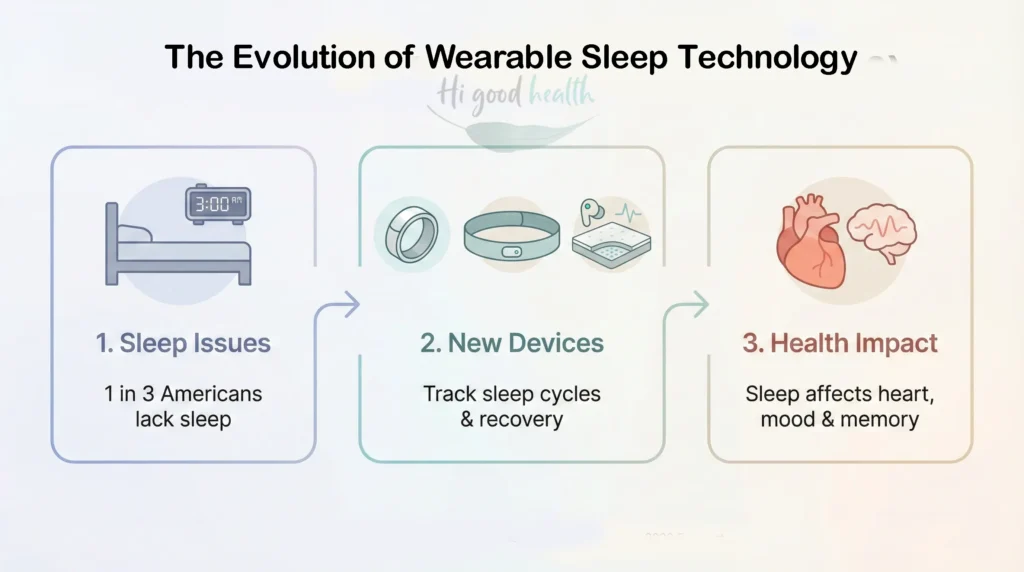
The question is: Are these devices hype or real health tools? And what comes next beyond the smartwatch era?
The Limitations of Smartwatches
Smartwatches like the Apple Watch, Samsung Galaxy Watch, and Fitbit introduced mainstream Americans to sleep tracking. But they have limitations:
- Comfort: Bulky on the wrist at night.
- Battery life: Recharging often conflicts with nighttime use.
- Accuracy: Rely on movement and heart rate, which can misclassify sleep stages.
- Apnea detection: Most cannot reliably diagnose sleep apnea.
💡 A 2024 Stanford study found that wrist-based trackers correctly identified sleep/wake times but misclassified REM vs deep sleep nearly 40% of the time.
The Rise of Rings: Small but Mighty
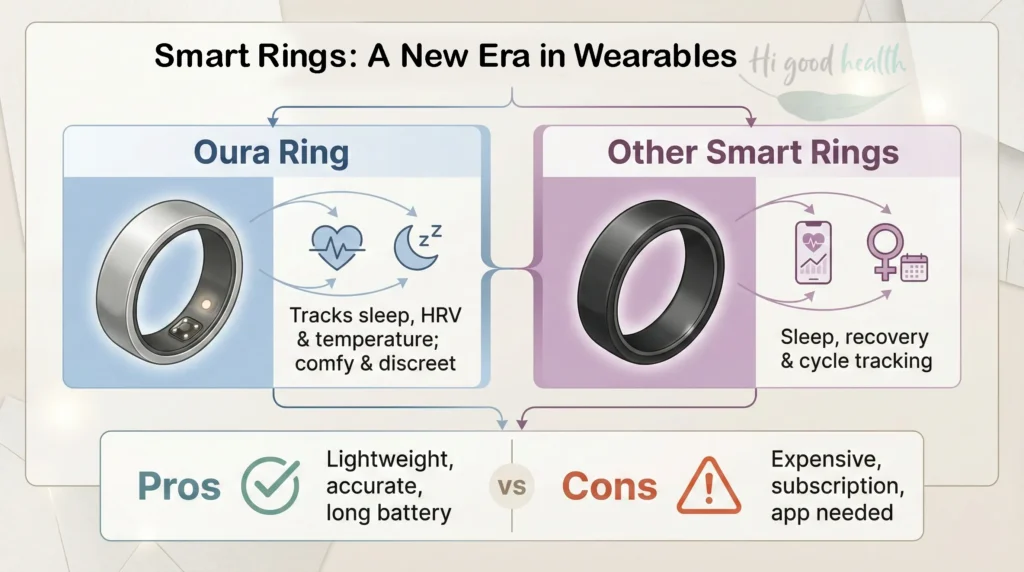
Oura Ring
- Tracks sleep stages using body temperature, heart rate variability (HRV), and movement.
- Comfortable and discreet; worn by athletes and celebrities.
- Subscription model for insights (~$6/month).
Other Smart Rings (Ultrahuman, Evie, Circular)
- Offer sleep tracking, menstrual cycle integration, and recovery scoring.
- Some designed specifically for women’s health.
Pros:
- Lightweight, comfortable.
- Long battery life (4–7 days).
- Accurate HRV and temperature tracking.
Cons:
- Expensive ($300–$400).
- Data locked behind subscriptions.
- Limited display (requires app).
Headbands & EEG-Based Wearables
The next wave goes beyond movement and heart rate to measure brain activity.
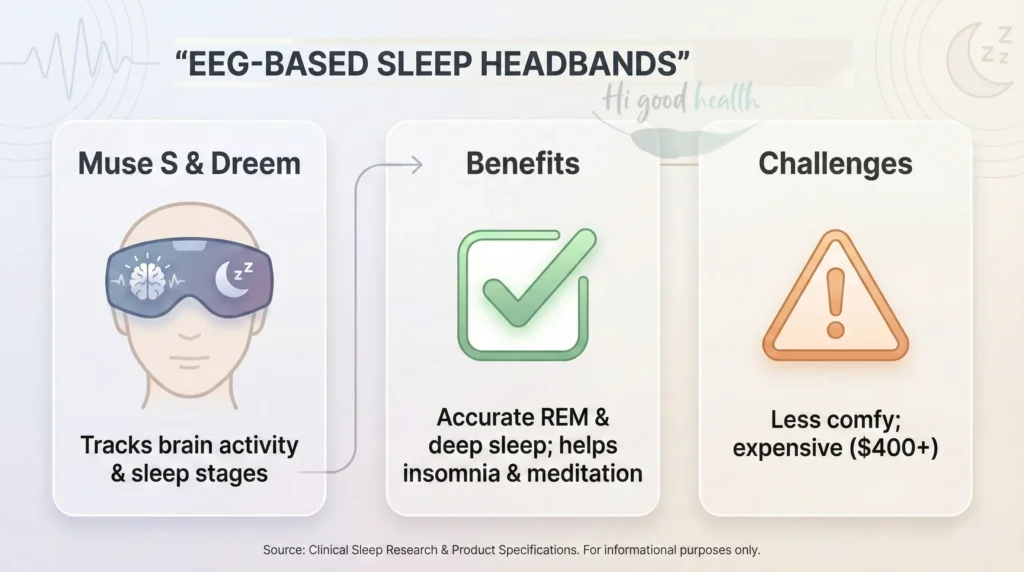
Muse S & Dreem Headbands
- Use EEG sensors to capture real-time brain waves.
- Track sleep stages more accurately than watches/rings.
- Some offer audio feedback to promote deeper sleep.
Benefits
- Better accuracy for REM and deep sleep.
- Useful for insomnia and meditation training.
Challenges
- Less comfortable for nightly wear.
- Pricier ($400+).
To know more about how sleep affects brain health, read our detailed blog
Earbuds & In-Ear Devices
Kokoon Nightbuds
- Lightweight earbuds tracking sleep and playing relaxing audio.
- Can detect disturbances and adjust sounds.
Philips SmartSleep
- Clinical-grade device to improve deep sleep using sound stimulation.
Pros:
- Double as relaxation/meditation aids.
- Great for travelers.
Cons:
- Battery limits.
- Not ideal for side sleepers.
Non-Wearable Sleep Tech
Withings Sleep Analyzer
- A mat placed under the mattress.
- Tracks breathing, snoring, and heart rate.
- Screens for sleep apnea with FDA clearance.
Smart Beds (Sleep Number 360, Eight Sleep Pod)
- Adjust temperature and firmness.
- Collect detailed sleep data.
Pros:
- No need to wear anything.
- Continuous, passive tracking.
Cons:
- Very expensive ($1,000–$5,000).
- Limited portability.
The Science of Sleep Tracking
Sleep consists of light sleep, deep sleep, and REM cycles. Tracking aims to:
- Detect apnea and breathing issues.
- Optimize recovery for athletes.
- Improve mental health via better sleep hygiene.
But experts caution:
- Consumer devices are not medical-grade diagnostics.
- They are best for spotting trends, not diagnosing disorders.
💡 American Academy of Sleep Medicine (2024) warns patients not to self-diagnose apnea or insomnia using consumer trackers alone.
To know more about wearable health tech and its reality, check out our detailed blog
Case Studies: Americans Using Sleep Tech
Case 1: Sarah, 35, New York
Struggled with fatigue despite 8 hours in bed. Oura Ring showed fragmented sleep with low deep sleep. Lifestyle changes (no screens before bed, earlier meals) improved her recovery scores.
Case 2: Mark, 52, Texas
Truck driver with snoring. Withings Sleep Analyzer flagged apnea events. He sought medical testing and was diagnosed with moderate sleep apnea, now treated with CPAP.
Case 3: Evelyn, 70, Florida
Senior with arthritis. Sleep Number smart bed adjusted firmness nightly, reducing pain and improving sleep duration by 90 minutes.
The Costs of Sleep Tech
- Smartwatches: $150–$400.
- Rings: $300–$400 + subscription.
- Headbands/Earbuds: $200–$500.
- Non-wearables (mats, beds): $100–$5,000.
💡 In 2025, Americans spend over $4 billion annually on consumer sleep tech, making it one of the fastest-growing segments of digital health.
Promise vs Pitfalls
The Promise
- Increased awareness of sleep importance.
- Early detection of apnea and irregular heart rhythms.
- Motivation for lifestyle changes.
- Integration with health apps for holistic tracking.
The Pitfalls
- Accuracy still lags behind clinical polysomnography.
- Subscription fatigue — most require monthly fees.
- Data privacy concerns — who owns your sleep data?
- Anxiety from “orthosomnia” (stress caused by tracking sleep too closely).
The Future: Where Sleep Tech Is Headed
- Medical-Grade Home Testing
- FDA-cleared devices integrated into consumer wearables.
- Personalized Sleep Coaching
- AI-driven feedback combining diet, exercise, and stress data.
- Contactless Sensors
- Radar-based tech that monitors breathing without touching the body.
- Integration with Smart Homes
- Beds and devices adjusting temperature, lighting, and sound automatically.
- Insurance Partnerships
- Some US insurers may cover apnea detection devices as preventive care.
Short- vs Long-Term Effects of Sleep Tech
Short-Term Benefits:
- Better sleep hygiene awareness.
- Motivation to reduce caffeine, screens, late meals.
- Early flagging of apnea.
Long-Term Benefits:
- Lower cardiovascular and dementia risk with better sleep quality.
- Improved productivity and mood.
- Reduced healthcare costs for sleep-related illnesses.
Step-by-Step: How Americans Can Use Sleep Tech Wisely
- Pick the Right Device
- Watches/rings for general tracking.
- Headbands/mats for higher accuracy.
- Medical evaluation if apnea suspected.
- Don’t Obsess
- Look at trends, not nightly scores.
- Integrate Lifestyle Changes
- Limit caffeine, create bedtime rituals.
- Adjust bedroom temperature (60–67°F is ideal).
- Check Privacy Policies
- Ensure companies don’t sell your health data.
- Work With Doctors
- Share device data with healthcare providers for context.
What Experts Say
- CDC: Sleep deprivation is a public health epidemic.
- American Academy of Sleep Medicine: Supports consumer devices as wellness tools, not diagnostic replacements.
- Harvard Medical School: Warns against overreliance but notes motivational benefits.
Expanded FAQs
While good for spotting trends, consumer devices are not medical-grade. A 2024 Stanford study found wrist trackers identify sleep times well but can misclassify sleep stages (like REM versus deep sleep) nearly 40% of the time.
Most standard smartwatches cannot reliably diagnose apnea. However, specific non-wearables like the Withings Sleep Analyzer mat are FDA-cleared to screen for it. Always consult a doctor for a formal diagnosis.
Rings like the Oura are often better for sleep because they are less bulky and hold a charge for 4–7 days. Watches often require nightly charging and can be uncomfortable to wear in bed.
Often, yes. Premium devices like the Oura Ring require a subscription (around $6/month) to access full data insights. Always check for ongoing costs to avoid “subscription fatigue”.
Yes, this is known as “orthosomnia”—anxiety caused by obsessing over sleep data. If checking your score stresses you out, experts suggest focusing on weekly trends rather than nightly numbers.
Yes. “Non-wearable” tech includes smart mats or beds (like Sleep Number) that track heart rate and breathing through the mattress. These are excellent options if you find wearables uncomfortable.
Tracking alone is not a cure; it is a tool for awareness. Real improvement comes from using the data to motivate lifestyle changes, such as reducing caffeine or setting a consistent bedtime.
Final Thoughts
In 2026, wearable sleep tech has moved beyond the smartwatch. Rings, headbands, non-wearable mats, and smart beds are redefining how Americans track rest. The science is promising, though imperfect, and the industry is booming.
The key takeaway: sleep tech is a tool, not a cure. Used wisely, it can raise awareness, flag health issues, and encourage lifestyle changes. But true rest still comes from balance — not just gadgets.
Glossary
- REM Sleep: Dream stage essential for memory and mood.
- Polysomnography: Gold-standard overnight lab test for sleep disorders.
- PM2.5: Fine pollution particles that worsen sleep and breathing.
- Orthosomnia: Anxiety caused by tracking sleep too closely.
- HRV (Heart Rate Variability): Indicator of recovery and stress levels.
References
- CDC — Sleep and Health
- Stanford Study — Sleep Tracker Accuracy
- American Academy of Sleep Medicine
- Harvard Medical School — Sleep Technology Review
- NIH — Sleep & Aging

