
Introduction: Seniors & the Digital Health Boom
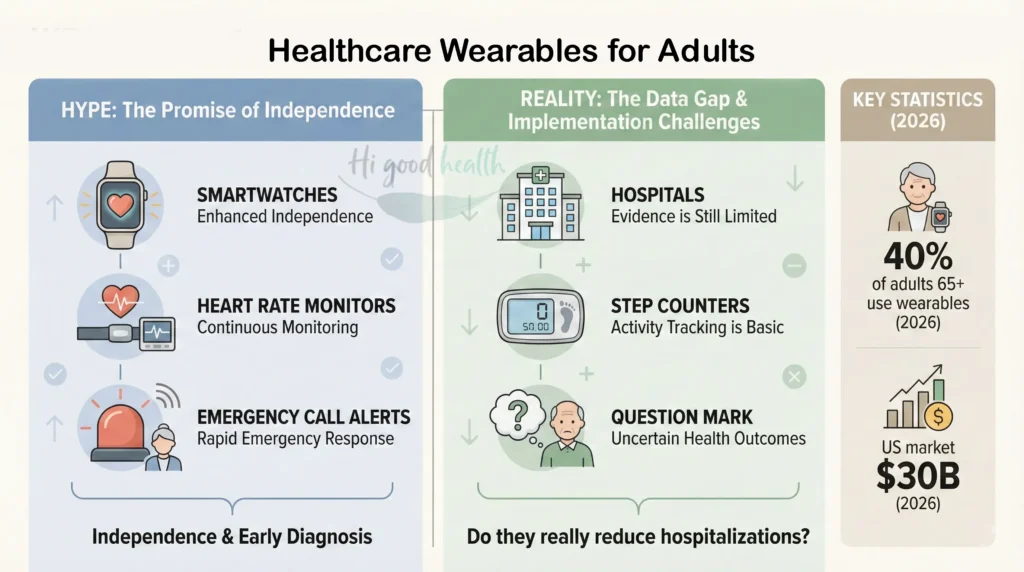
In 2026, more than 40% of American adults over 65 use some form of wearable health technology【Pew Research]. From Apple Watches that call 911 if you fall to Fitbits tracking sleep and heart rate, the promise is huge: independence, early diagnosis, and peace of mind for families.
The US market for health wearables is expected to surpass $30 billion in 2026, driven largely by seniors and caregivers seeking proactive health tools【Statista】.
But with hype comes confusion. Do these devices really reduce hospitalizations, or are they just expensive step counters? Let’s separate fact from fiction.
The Promise of Wearables for Seniors
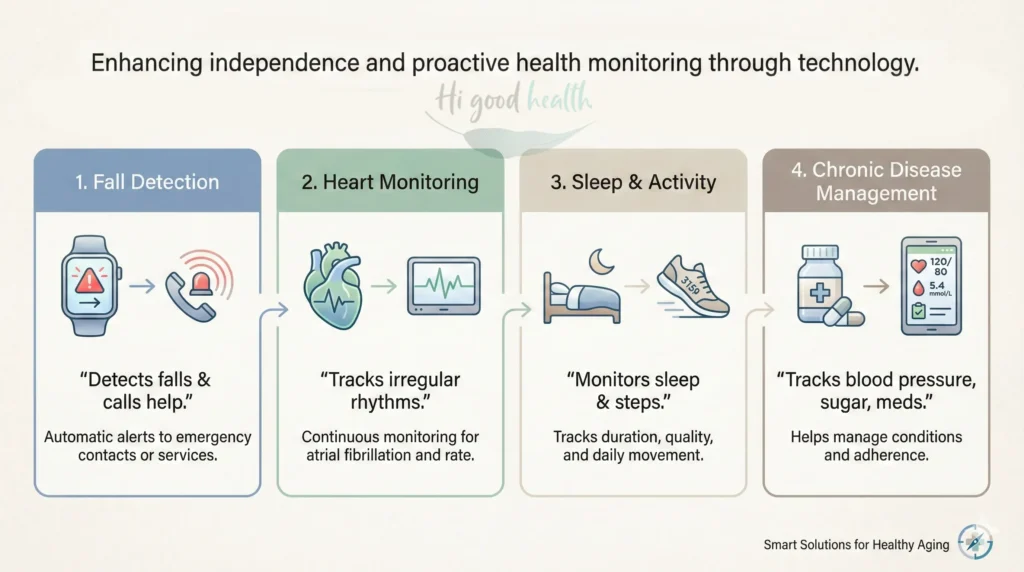
1. Fall Detection & Emergency Alerts
- Apple Watch, Samsung Galaxy Watch, and Medical Guardian devices automatically detect falls and call emergency contacts.
- Critical for seniors living alone: falls are the #1 cause of ER visits among older Americans【CDC】.
2. Heart Monitoring
- Detect irregular heart rhythms (atrial fibrillation).
- Early warnings may prevent strokes, saving lives and medical costs.
3. Sleep & Activity Tracking
- Encourage daily walking goals.
- Monitor sleep apnea risk through SpO2 sensors.
4. Chronic Disease Management
- Devices integrate with apps for blood sugar, blood pressure, and medication reminders.
- Some Medicare Advantage plans now subsidize wearables.
To learn more about evidence-based fall prevention strategies beyond technology, read our in-depth blog
The Reality Check
1. Accuracy Issues
- Consumer devices are not medical-grade.
- False positives in arrhythmia detection may cause anxiety.
2. Cost Barriers
- Apple Watch Ultra: $799.
- Fitbit: $129–$299.
- Subscription add-ons (Fitbit Premium, Whoop, etc.).
3. Data Overload
- Seniors may struggle to interpret metrics.
- Doctors often overwhelmed with patient-generated data.
4. Privacy Concerns
- Health data shared with tech companies.
- Some insurers may use wearable data for premium adjustments in future.
Case Studies: American Seniors
Case 1: George, 78, Texas
Lives alone. His Apple Watch detected a nighttime fall and automatically called 911. Paramedics arrived in 10 minutes — potentially life-saving.
To learn more about the hidden cost of senior isolation, read our detailed blog
Case 2: Maria, 70, California
Diagnosed with atrial fibrillation after her watch alerted her during gardening. Cardiologist confirmed arrhythmia; she began treatment early.
Case 3: Harold, 82, Florida
Bought a high-end watch but grew frustrated by notifications. Found it overwhelming and returned to a simpler Medical Guardian pendant.
Short- vs Long-Term Impact
Short-Term:
- Peace of mind for seniors and families.
- Increased daily activity (walking challenges, reminders).
Long-Term:
- Potential reduction in ER visits for falls and arrhythmias.
- May delay nursing home placement.
- But benefits depend on consistent use and correct interpretation.
Costs: Prevention vs Emergencies
- Wearable devices: $150–$800 (one-time).
- Subscription plans: $10–$30/month.
- Average ER visit after fall: $12,000–$30,000.
- Stroke hospitalization: $20,000–$40,000.
💡 Even with costs, one prevented hospitalization makes wearables financially worthwhile.
Evidence-Based Benefits
- Stanford Apple Heart Study (2019): Wearables detected atrial fibrillation with 84% accuracy【NEJM】.
- Lancet Digital Health (2022): Fall detection systems reduce emergency response times by 30–40%.
- NIH-funded trials: Wearables increase daily physical activity among sedentary seniors.
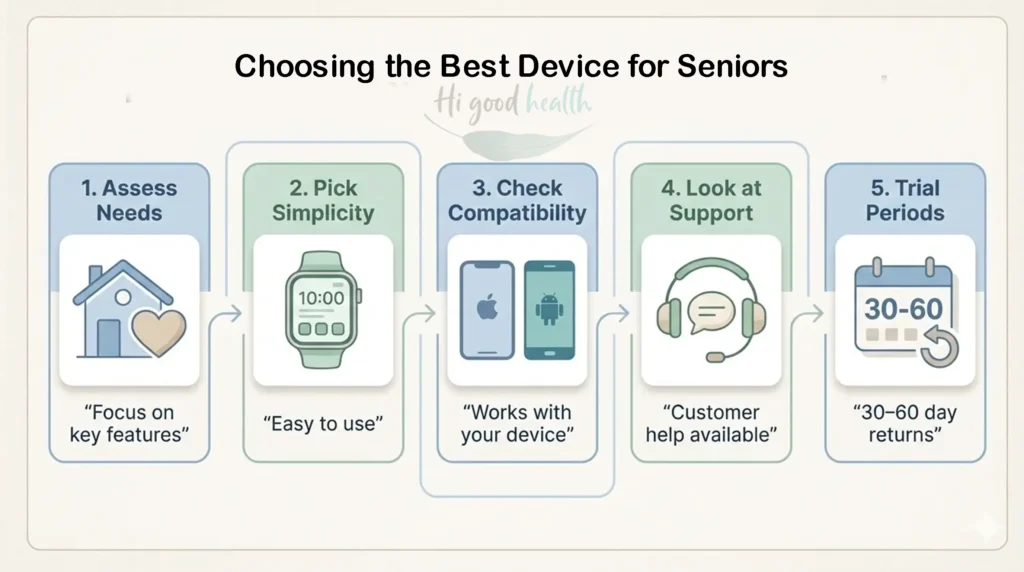
Step-by-Step: How Seniors Can Choose the Right Device
- Assess Your Needs
- Live alone? Fall detection is key.
- Heart condition? Prioritize ECG features.
- Pick Simplicity Over Features
- Overloaded apps discourage use.
- Choose devices with clear displays.
- Check Compatibility
- Works with your phone (iPhone vs Android).
- Look at Support
- Does the company offer customer service for seniors?
- Trial Periods
- Choose devices with 30–60 day returns.
To know more about the future of sleep monitoring technology, read our detailed blog
What the Experts Say
- American Geriatrics Society: Wearables can extend independence but require family or caregiver support.
- Mayo Clinic: Notes benefits for arrhythmia detection but stresses they don’t replace medical evaluation.
- Consumer Reports (2024): Found seniors more satisfied with simple devices focused on fall detection vs fitness.
Expanded FAQs
Original Medicare generally does not cover devices like the Apple Watch. However, some private Medicare Advantage plans now subsidize wearables as part of their wellness benefits. Check your specific plan for coverage details.
No, consumer wearables cannot detect heart attacks. They are designed to identify irregular heart rhythms (atrial fibrillation), which is a major risk factor for strokes. This offers early warning but does not replace emergency care.
Yes, most smartwatches (like the Apple Watch) require a compatible smartphone for setup and data viewing. If you do not own a smartphone, simpler medical alert pendants often operate independently.
Battery life varies by device. Apple Watches typically require charging every 1–2 days, while Fitbits often last 5–7 days. Dedicated medical alert pendants generally have the longest battery life, lasting weeks between charges.
Generally yes, but magnets in some smartwatches can interfere with medical implants. It is critical to consult your cardiologist and keep the device at least 6 inches away from your pacemaker to ensure safety.
Yes. While devices under $200 may lack advanced ECG monitoring, they effectively track steps and sleep. Seniors often rate simpler devices higher for satisfaction because they are easier to use.
Privacy is a valid concern. Health data is often shared with tech companies to improve services. Be aware that some insurers may use wearable data for premium adjustments in the future, so always check privacy policies.
Yes. Studies, including NIH-funded trials, show that wearables increase physical activity among sedentary seniors. Features like step goals and daily reminders can boost activity levels by 20–30%.
Final Thoughts
In 2025, wearable health tech is neither pure hype nor a magic bullet. For American seniors, the value depends on matching the right device to the right need.
- For tech-savvy seniors: smartwatches with ECG and fall detection are powerful tools.
- For those wanting simplicity: dedicated pendants provide peace of mind.
- For families: wearables can delay costly emergencies and provide reassurance.
The bottom line: wearables are most effective when integrated into a broader health strategy — including exercise, diet, and regular check-ups.
Glossary
- ECG (Electrocardiogram): Heart rhythm recording.
- Fall Detection: Sensors that trigger alerts when a fall is detected.
- Atrial Fibrillation: Irregular heart rhythm linked to stroke risk.
- Medicare Advantage: Private Medicare plans with added benefits.
- SpO2 Sensor: Measures blood oxygen saturation.
References
- Pew Research — Senior Technology Use
- Statista — US Wearable Market 2025
- CDC — Falls in Older Adults
- NEJM — Apple Heart Study
- Lancet & JMIR Research
