
What Are Algae and Spirulina?
Spirulina is a type of blue-green algae that grows in both fresh and saltwater. It’s one of Earth’s oldest life forms—used by the Aztecs and African tribes like the Kanembu for energy and survival.
Modern science has uncovered a powerhouse of nutrients and healing compounds in this microscopic green hero.
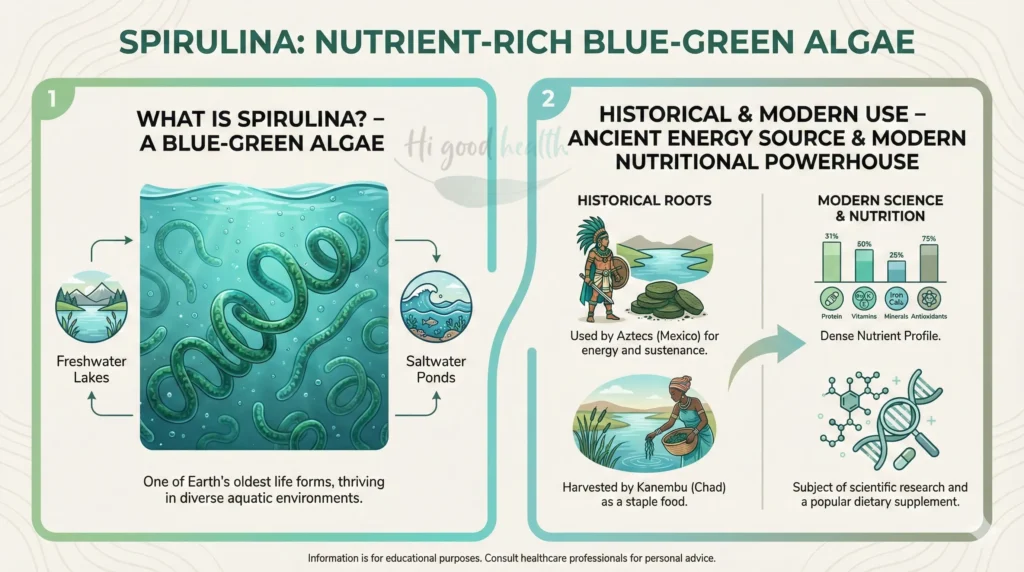
Nutritional Snapshot: Why Spirulina Is Called “Green Gold
- 60% complete protein—more than eggs or soy
- Packed with iron, B vitamins, calcium, magnesium, and potassium
- High in phycocyanin, a rare antioxidant
- Rich in chlorophyll, aiding detox and red blood cell production
- Contains all 9 essential amino acids
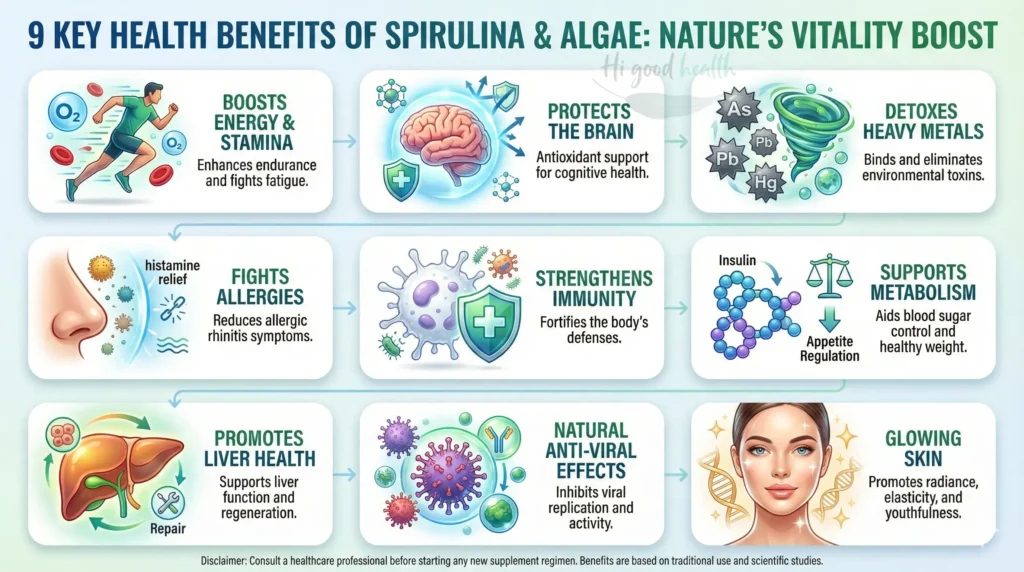
9 Surprising Health Benefits of Spirulina & Algae
1. Boosts Energy & Stamina
Improves oxygen uptake and red blood cell count.
2. Protects the Brain
Antioxidants protect brain cells and support memory.
3. Detoxes Heavy Metals
Binds to arsenic, lead, and mercury to remove them.
4. Fights Allergies
Helps reduce histamine and nasal inflammation.
5. Strengthens Immunity
Stimulates white blood cell production.
6. Supports Metabolism
Improves insulin sensitivity and appetite regulation.
7. Promotes Liver Health
Lowers liver enzymes and supports liver repair.
8. Natural Anti-Viral Effects
Inhibits flu, HIV-1, and herpes viruses in lab studies.
9. Glowing Skin
Improves collagen synthesis and reduces oxidative stress.
Ancient Roots, Global Legacy
Aztecs & Kanembu
Used spirulina for survival and healing.
Ayurveda & TCM
Algae used for cooling, detox, and blood purification.
NASA’s Space Food
Spirulina is studied for astronaut nutrition.
Spirulina vs Other Superfoods
| Nutrient | Spirulina | Spinach | Eggs | Chia Seeds |
| Protein (g/100g) | 60g | 2.9g | 13g | 17g |
| Iron (mg) | 28.5 | 2.7 | 1.2 | 7.7 |
| B12 | Present* | None | High | None |
| Chlorophyll | High | Moderate | None | None |
| Antioxidants | Very High | High | Low | High |
*Pseudo-B12; may be less bioavailable
To know more about safety guidelines regarding vitamins dosage, read our in-depth blog
How Many Types of Algae Are There—and Which Ones Can You Eat?
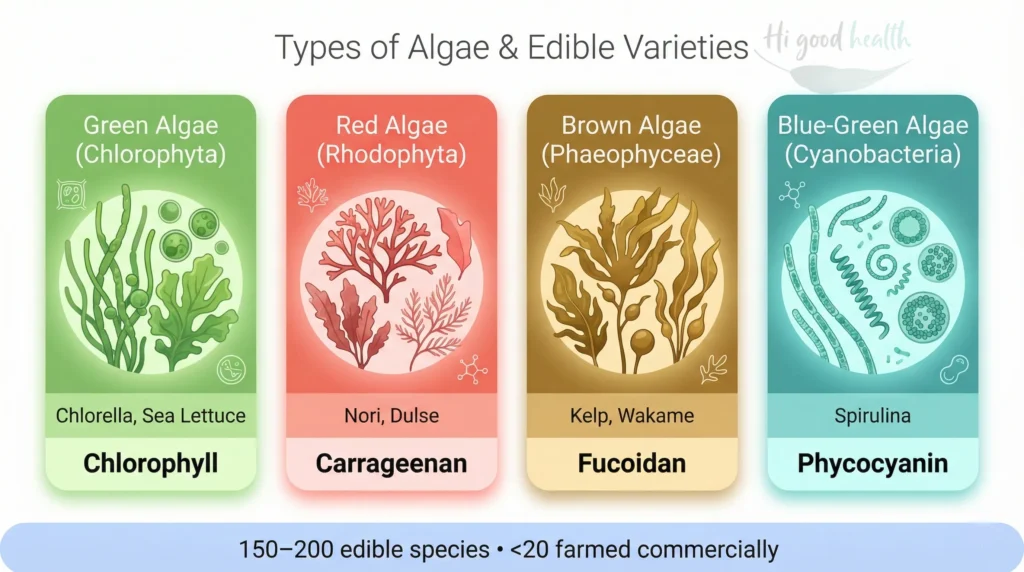
There are over 30,000 scientifically described species of algae, with some estimates suggesting up to 1 million globally. Algae are classified based on their pigments and cell structure into:
| Algae Group | Color | Examples | Key Compounds |
| Chlorophyta | Green | Chlorella, Sea Lettuce | Chlorophyll, lutein |
| Rhodophyta | Red | Nori, Dulse, Irish Moss | Phycobiliproteins, carrageenan |
| Phaeophyceae (Brown) | Brown | Kelp, Wakame | Fucoidan, iodine |
| Cyanobacteria (Blue-Green) | Blue-Green | Spirulina, AFA | Phycocyanin, B12 analogs |
Edibility & Commercial Production
- Around 150–200 species are edible
- Fewer than 20 species are produced commercially for human consumption
- Most popular edible algae: Spirulina, Chlorella, Kelp, Nori, Dulse, Sea Moss, Wakame
To improve your understanding of antioxidants and disease prevention, read our detailed blog
Why Spirulina Is Highlighted—And Other Options You Can Try
Spirulina is highlighted for its:
- Extremely high protein content
- Easy digestibility (no cellulose wall)
- High iron and antioxidant content
- Wide scientific backing
However, other algae are equally beneficial depending on your health goals:
| Algae Type | Best For |
| Chlorella | Heavy metal detox, gut repair, chlorophyll |
| Kelp | Thyroid health (iodine), weight management |
| Irish Moss (Sea Moss) | Skin, joints, gut lining |
| Red algae (Nori, Dulse) | Minerals, especially iron and magnesium |
| AFA (Wild Blue-Green) | Mental clarity, mood support |
Cost vs. Benefit Comparison
| Food/Supplement | Avg. Cost/100g | Key Nutrients | Benefit | Notes |
| Spirulina | $3–6 | Protein, iron, B12, antioxidants | High-value, low-dose | 1–3g/day effective |
| Multivitamin | $2–4 | Broad vitamins | Moderate | Lacks phytonutrients |
| Spinach | $1.50 | Iron, folate | Low cost, high quantity needed | Perishable |
| Chia Seeds | $2.50–3 | Omega-3, fiber | Great for gut, moderate protein | Lower iron |
| Kelp (dried) | $1–2 | Iodine, minerals | Cheap thyroid support | Risk of excess iodine |
| Chlorella | $4–7 | Detox, chlorophyll, iron | Excellent for detox | Must be cracked-cell |
How to Use Spirulina Safely
- Powder: 1 tsp in smoothies
- Capsules: 1–3g/day
- Topical: In masks or creams
- Bars: Spirulina protein snacks
Buyer Safety & Quality Standards
- Certified Organic (USDA, EU) = no pesticides
- GMP & third-party tested for toxins and metals
- Best sources: India, Hawaii, Japan, EU
- Avoid: Unverified bulk powders from polluted areas
How Is Algae Grown?
- Cultivated in raceway ponds or bioreactors
- Requires sunlight, clean alkaline water, and sterile conditions
- Filtered and low-heat dried to preserve nutrients
Where It’s Grown
- India (Tamil Nadu, Andhra Pradesh)
- China (largest exporter)
- Hawaii (deep ocean nutrients)
- Thailand, Japan, Chad
Organic vs Non-Organic
Spirulina is naturally pest-resistant, but certified organic ensures no chemical fertilizers. Conventional types may be safe if third-party tested.
Frequently Asked Questions (FAQ)
Yes. It supports metabolism by improving insulin sensitivity and helping with appetite regulation. Additionally, other algae like Kelp are specifically noted for supporting weight management and thyroid health.
Spirulina is highlighted for its high protein content and easy digestibility. Chlorella is often preferred for heavy metal detox and gut repair, but it must be “cracked-cell” to be edible.
Yes, continuous use is common. The standard effective dose is 1–3 grams daily. To ensure safety, always choose GMP-certified, third-party tested brands to guarantee the product is free from toxins and metals.
The powder has a strong flavor, so it is best mixed (1 teaspoon) into smoothies to mask the taste. You can also choose capsules (1–3g/day) or spirulina protein bars for a more palatable option.
Yes, it is completely plant-based. Spirulina contains all 9 essential amino acids and is 60% protein by weight—more than eggs or soy—making it a superior protein source for vegans.
Actually, high-quality spirulina helps remove heavy metals like arsenic and lead from the body. However, you must avoid unverified bulk powders from polluted areas and select tested sources to ensure purity.
Consult a doctor first. If approved, safety depends on quality: strictly choose “Certified Organic” brands to ensure no pesticides or chemical fertilizers are present. Avoid sources that are not third-party tested.
Final Thoughts
Spirulina and other edible algae offer an impressive array of benefits—ranging from nutrition to detoxification to disease prevention. By choosing clean, tested, and high-quality algae supplements, you’re tapping into one of the most nutrient-dense natural sources available today.
To know more about early signs of brain decline to watch for, check our detailed blog
Verified & Reachable References (2026 Edition)
1. The Heart Health Meta-Analysis (Updated for 2026)
- Source: Frontiers in Nutrition (via PubMed Central)
- Link: https://pmc.ncbi.nlm.nih.gov/articles/PMC12245695/
2. The NASA Technical Report (Stable Link)
- Source: NASA Technical Reports Server (NTRS)
- Link: https://ntrs.nasa.gov/citations/19890016190
3. The Molecular “Secret Sauce” (New 2022/23 Review)
- Source: Phycocyanin: Anti-inflammatory effect and mechanism (via PubMed)
- Link: https://pubmed.ncbi.nlm.nih.gov/36076518/

