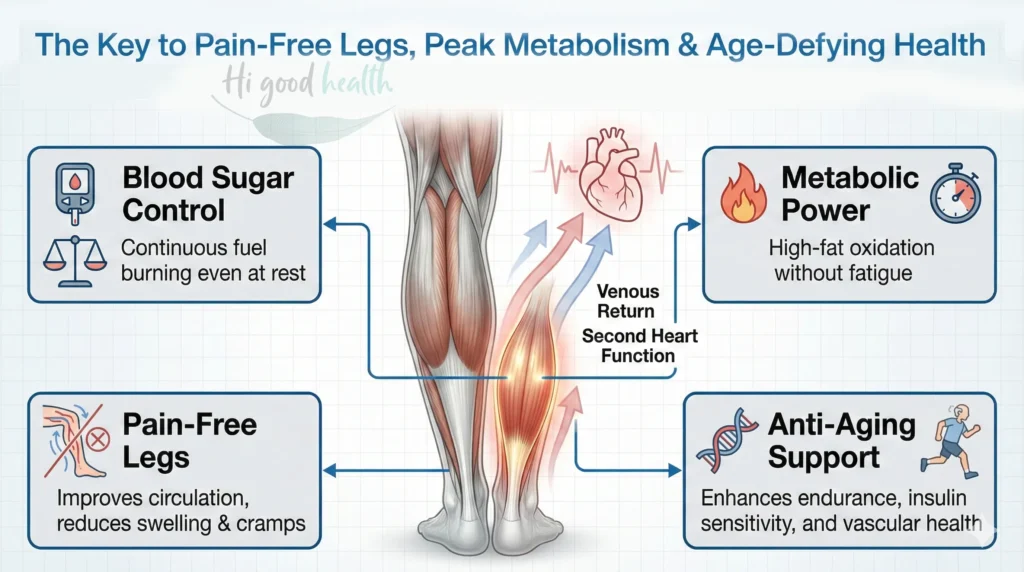
What if I told you that there’s a muscle in your body that plays a uniquely powerful role in circulation and metabolic regulation, with research showing it can significantly influence blood sugar control when activated correctly? And it’s also a powerful, often overlooked muscle that plays an important role in circulation, metabolism, and long-term leg health.
The Hero You Never Knew You Had
Picture this: You’re sitting at your desk, scrolling through your phone, completely still. But deep in your leg, there’s a muscle that’s been working tirelessly for you – pumping without a chamber, supporting healthy blood sugar regulation, and silently supporting your entire body without you even knowing it. Meet the soleus muscle – your body’s most underestimated hero.
Your heart doesn’t work alone. In your legs, there’s another one, and it’s called the soleus. This deep, silent, and often forgotten muscle also beats for you. Not with electrical impulses, but with movement. Every time you walk, climb stairs, or stand on your tiptoes, the soleus activates, performing heroic tasks that could save your life and transform your daily well-being.
The Discovery That Changed Everything
In 2022, Dr. Marc T. Hamilton, a professor at the University of Houston, published groundbreaking research in iScience showing that the soleus muscle plays a uniquely powerful role in metabolic regulation. His team demonstrated that when the soleus is activated correctly—through a specific seated movement known as the soleus push-up (SPU)—it can raise local oxidative metabolism to very high levels for hours without fatigue, even in untrained individuals.
What makes this discovery remarkable is that the activity occurs while sitting and does not rely on traditional exercise intensity. In experimental and pilot studies conducted by the Hamilton research group, activating the soleus during periods of sitting was shown to significantly reduce post-meal blood glucose spikes, with reported reductions of around 30% compared to sedentary conditions during glucose tolerance testing.
The Circulation Champion & Pain Defender
The soleus muscle lives in the back of your leg, hidden beneath the gastrocnemius (your visible calf muscle). Unlike its flashy neighbor, the soleus isn’t explosive or fast. It’s resistant. Firm. Loyal. It’s made to sustain you – without applause.
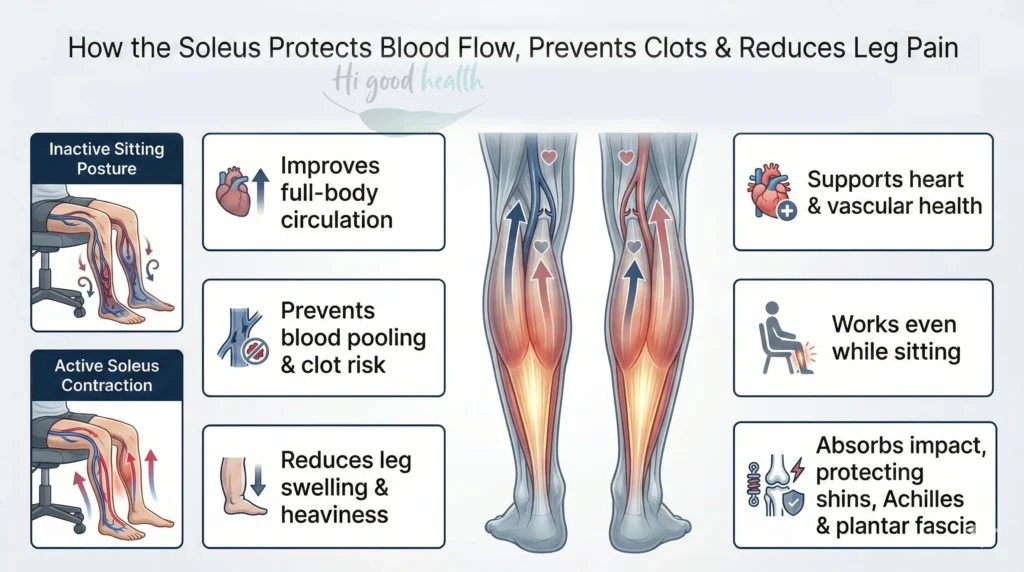
Why It’s often Called Your “Second Heart”: Every time the soleus contracts, it creates a pumping action that pushes venous blood from your legs back to your heart, defying gravity. When you sit for hours, blood pools in your legs, creating a perfect storm for blood clots, varicose veins, and cardiovascular stress.
When you activate your soleus muscle, it:
- Improves circulation throughout your body
- helps reduce risk factors associated with venous stasis
- Reduces leg swelling and heaviness
- Protects your cardiovascular health
- Works even when you’re sitting still
- Acts as a shock absorber, reducing strain on your shins, Achilles tendon, and plantar fascia, preventing common pains like shin splints, Achilles tendinitis, and plantar fasciitis.
To learn more about fall prevention through leg strength, read our detailed blog
The Secret Diabetes Fighter & Metabolic Powerhouse
Here’s where our hero reveals its superpower that even doctors are just discovering.
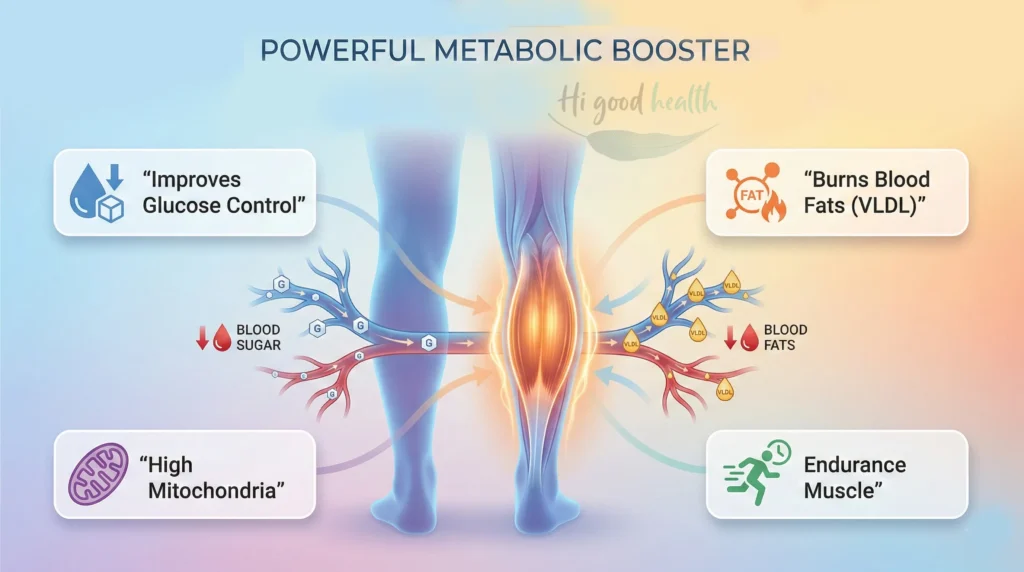
The Research Results: According to research from the University of Houston published in iScience, sustaining elevated muscle metabolism through targeted soleus contractions was sufficient to significantly improve glucose tolerance and reduce postprandial insulin demand. In controlled experimental settings, the soleus activation strategy led to substantial reductions in post-meal blood glucose excursions and insulin responses compared to sedentary conditions, highlighting its potential role in metabolic regulation.
To know more about nutrition strategies for muscle preservation, read our insightful blog
What Makes the Soleus Special: Slow oxidative muscle, most notably the soleus, is inherently well equipped with the molecular machinery for regulating blood-borne substrates. Unlike other muscles that tire quickly, the soleus is designed for endurance and packed with:
- Mitochondria (cellular powerhouses)
- Oxidative enzymes (sugar and fat processors)
- Slow-twitch fibers (endurance specialists)
This unique composition also makes the soleus a remarkable fat burner. It actively clears fats from your blood, including very-low-density lipoprotein (VLDL) – a type of “bad” cholesterol. Activating it regularly means a more efficient metabolism, supporting more efficient energy use and contributing to long-term weight management when combined with healthy habits, and sustain higher energy levels throughout the day.
The Anti-Aging Muscle: Your Key to Lifelong Mobility & Strength
As we age, maintaining muscle mass and mobility becomes critical. The soleus plays an often-underestimated role in this. Prolonged inactivity can lead to disproportionate atrophy in the soleus compared to other leg muscles. Keeping it active is vital for:
- Preventing Muscle Loss: Regular soleus activation helps combat age-related muscle deterioration, keeping your legs strong.
- Enhancing Balance and Stability: A strong soleus is foundational for good balance, reducing the risk of falls as you get older.
- Supporting Effortless Movement: It ensures smooth, efficient walking and standing, contributing to your independence and quality of life for years to come.
Dr. Hamilton’s Revolutionary Method: The Soleus Push-Up
Marc Hamilton, professor of Health and Human Performance at the University of Houston, has discovered such an approach for optimal activation – he’s pioneering the “soleus pushup” (SPU) which effectively elevates muscle metabolism for hours, even while sitting.
The Step-by-Step Guide:
- Position: Sit in a chair with your feet flat on the floor
- Movement: Lift your heels while keeping your toes on the ground
- Focus: Use your soleus muscle (deep calf, not surface muscle)
- Duration: Hold for 2-3 seconds, then lower slowly
- Repetition: Continue for several minutes
Important Notes:
- This isn’t just calf raises – it’s specific soleus activation
- The movement should feel sustainable, not exhausting
- You can do this while working, watching TV, or reading
- An average person spends 8-10 hours sitting, making this perfect for our sedentary lifestyle
Plant-Based Optimization
To enhance your soleus muscle function naturally:
- Magnesium-rich foods: Spinach, almonds, and pumpkin seeds support muscle function
- Potassium sources: Bananas, sweet potatoes, and avocados aid muscle contractions
- Antioxidant-rich berries: Blueberries and cherries support muscle recovery
- Cinnamon: Natural blood sugar supporter
- Turmeric: Anti-inflammatory properties for muscle health
Your Daily Action Plan
- Morning (5 minutes): 50 gentle soleus push-ups with your plant-based breakfast
- Workday (Every hour): 2-3 minutes of soleus activation during calls or meetings
- Evening (10 minutes): Extended session while watching TV
Advanced Training:
- Single-leg soleus push-ups
- Resistance band variations
- Combine with circulation-boosting exercises
Global Health Insights
Traditional Japanese work culture normalizes frequent movement breaks, unknowingly activating soleus muscles. Mediterranean cultures, with their walking emphasis, naturally keep soleus muscles engaged. Our website explores these global health practices adaptable to modern life.
Expert Perspective
As Dr. Hamilton explains, “The soleus pushup looks simple from the outside, but sometimes what we see with our naked eye isn’t the whole story”. This research represents a paradigm shift in how we approach diabetes prevention and sedentary lifestyle solutions.
Warning Signs Your Hero Needs Help
Your soleus muscle might be underperforming if you experience:
- Frequent leg swelling or cold feet
- Afternoon energy crashes
- Difficulty with blood sugar control
- Restless legs at night
- Persistent shin splints, Achilles pain, or plantar fasciitis
- Unexplained fatigue or difficulty maintaining a healthy weight
- Subtle issues with balance or stability, especially as you age
Frequently Asked Questions
Sit with your feet flat on the floor. Lift your heels while keeping your toes pressed down, hold for 2–3 seconds, then lower slowly. Focus on the deep calf muscle, not the surface muscle.
Yes. Research from the University of Houston shows that activating the soleus muscle during sitting can significantly reduce post-meal blood glucose excursions and lower insulin demand compared to sedentary conditions. These effects were observed in controlled experimental settings, but individual results vary, and larger clinical trials are still needed.
Every time the soleus contracts, it pumps venous blood from your legs back to your heart, defying gravity. This prevents blood pooling, reduces swelling, and lowers the risk of clots.
Aim for 2–3 minutes of activation every hour during the workday, along with a few longer sessions daily. Frequent breaks are key to combating the effects of sitting.
Likely not. The soleus is a unique endurance muscle designed to work for hours without fatigue. The movement should feel sustainable and not exhausting.
Yes. The soleus is a metabolic powerhouse that effectively burns blood sugar and fats, including “bad” cholesterol. Regular activation boosts your metabolism and helps sustain energy levels.
It can. The soleus acts as a shock absorber, reducing strain on your shins, Achilles tendon, and plantar fascia. Strengthening it helps prevent common pains like shin splints and Achilles tendinitis.
It is generally safe, low-impact, and effective even for sedentary people. However, always consult your healthcare provider before starting, especially if you have specific
References & Further Reading section:
Key Scientific Reference — Soleus & Metabolism
Hamilton MT, Hamilton DG, Zderic TW. A potent physiological method to magnify and sustain soleus oxidative metabolism improves glucose and lipid regulation. iScience. 2022;25(9):104869.
https://pubmed.ncbi.nlm.nih.gov/36034224/
Glossary
- Soleus Muscle: Deep calf muscle responsible for circulation and metabolism
- Postprandial: After eating (blood sugar levels after meals)
- Glucose Excursion: Rise in blood sugar levels after eating
- Venous Stasis: Blood pooling in veins due to poor circulation
Our Mission
At our health blogging platform, we’re committed to bringing you clean, credible information in simple language. We bust health myths with scientific evidence, share global health practices, and make complex research accessible to everyone.
We’d love to hear about your soleus muscle journey! Share your experiences and suggest future topics. Explore our other articles on circulation health, diabetes prevention, and workplace wellness.
Take Action: Your Hero Awaits
Your soleus muscle has been waiting patiently for you to discover its incredible power. The research is clear, the method is simple, and the benefits are profound – touching not just your heart and blood sugar, but also your comfort, vitality, and mobility for years to come.
Your Next Steps:
- Try your first soleus push-up session right now
- Set hourly reminders for the next week
- Share this article with someone who sits too much
- Track your energy levels and changes
- Join our community by subscribing to our newsletter
Start your soleus journey today. Your future self will thank you.

