
Introduction: Why Senior Nutrition Matters More Than Ever
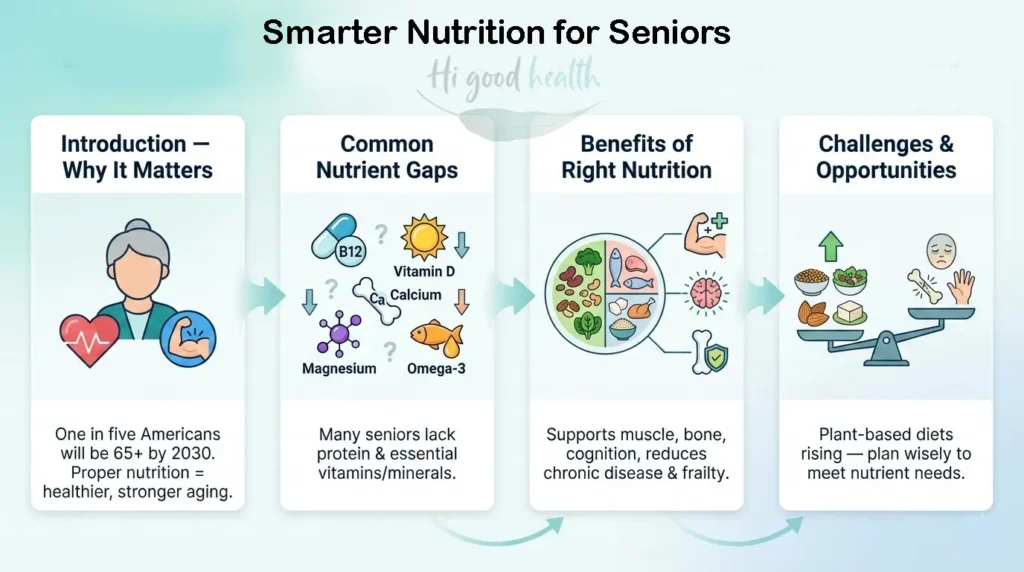
In 2026, America’s senior population is at an all-time high. The US Census Bureau reports that by 2030, one in five Americans will be 65 or older. Yet despite living longer, many seniors are not living healthier — largely due to nutrition gaps.
Malnutrition in older adults is an under-recognized crisis. It isn’t just about underweight elders; it’s also about overweight seniors who are deficient in key nutrients. Protein, vitamin B12, vitamin D, calcium, magnesium, and omega-3 fatty acids are consistently lacking in senior diets. Meanwhile, interest in plant-based eating has surged, raising both opportunities and challenges.
If you want to read about commonly misdosed vitamins, refer to our blog
The right nutrition can help seniors maintain muscle, prevent fractures, boost cognition, and reduce chronic disease risk. The wrong diet accelerates frailty, illness, and dependence.
You can also read more about on how to Prevent muscle loss with the latest science our blog
The Unique Nutrition Challenges of Seniors
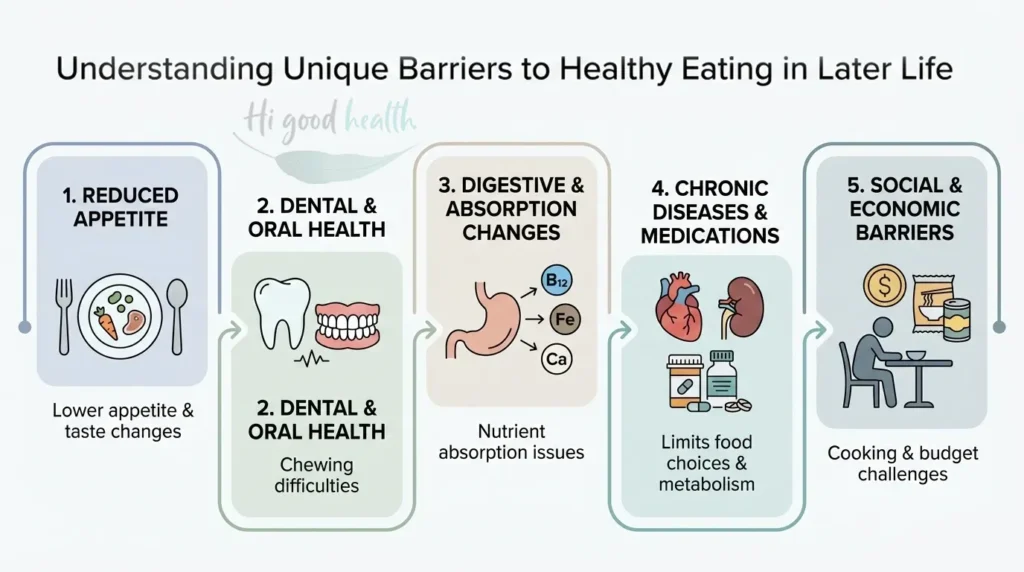
1. Reduced Appetite
- Aging reduces appetite due to hormonal shifts and slower digestion.
- Medications often blunt taste or cause nausea.
2. Dental & Oral Health Issues
- Missing teeth, dentures, and gum disease make chewing difficult.
- Leads to reliance on soft, processed foods low in nutrients.
3. Digestive & Absorption Changes
- Stomach acid decreases with age, impairing absorption of B12, iron, and calcium.
- Lactose intolerance becomes more common, lowering dairy intake.
You can read about addressing digestive decline with enzymes and probiotics on our blog
4. Chronic Diseases & Medications
- Diabetes, kidney disease, and heart conditions limit food choices.
- Polypharmacy (multiple medications) often interferes with nutrient metabolism.
5. Social & Economic Barriers
- Seniors living alone may lack motivation to cook.
- Fixed incomes push many toward cheap, ultra-processed foods.
To learn more about latest science on senior muscle preservation, check our detailed blog
Why Protein Is a Senior Lifeline
Protein is essential to maintain muscle mass, strength, and independence. Without enough, seniors risk sarcopenia — age-related muscle loss that increases falls and frailty.
- Recommended intake: 1.0–1.2 g of protein per kg body weight daily for adults over 65.
- Reality: Many seniors eat 30% less protein than recommended.
Best Protein Sources for Seniors in the US
- Lean meats, poultry, and fish.
- Eggs (affordable and easy to chew).
- Dairy or fortified alternatives (Greek yogurt, cottage cheese, soy milk).
- Plant-based proteins: beans, lentils, tofu, tempeh, quinoa.
- Protein powders (whey, soy, or pea-based) for those with appetite loss.
A 2024 Tufts University study found seniors who met protein targets had a 40% lower risk of mobility disability compared to low-protein peers.
The Role of Supplements
Supplements can bridge gaps, but not all are created equal.
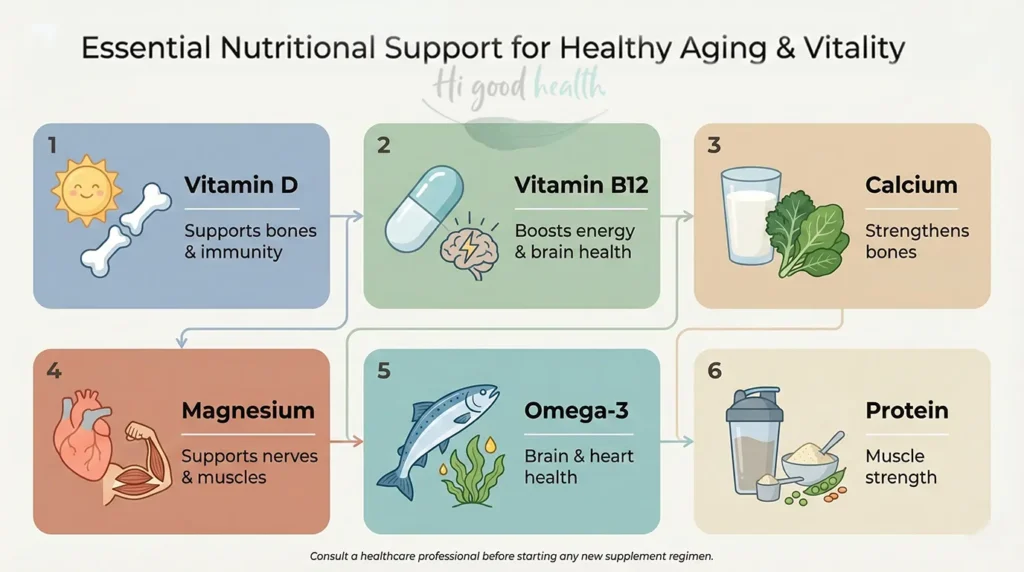
1. Vitamin D
- Deficiency common in US seniors due to less sun exposure.
- Needed for bone health, immunity, and muscle function.
- Recommended: 800–1000 IU daily (consult physician).
2. Vitamin B12
- Absorption declines with age.
- Deficiency linked to anemia, nerve damage, and cognitive decline.
- Supplements or B12-fortified foods often necessary.
3. Calcium
- Key for bone health.
- Better absorbed from food (dairy, fortified plant milk, leafy greens) than high-dose pills.
4. Magnesium
- Supports nerve, muscle, and heart health.
- Deficiency associated with sleep issues and arrhythmias.
5. Omega-3 Fatty Acids
- Essential for brain and heart health.
- Found in fatty fish or algae-based supplements (ideal for plant-based seniors).
6. Protein Supplements
- Whey protein shakes for those struggling to meet needs via food.
- Plant-based protein powders available for vegans.

To know more about vitamin safety for aging adults, check our in-depth blog
Plant-Based Diets: Opportunities & Risks for Seniors
Plant-based eating has surged in the US, driven by health, ethical, and environmental concerns. For seniors, it offers benefits but requires careful planning.
Benefits
- High in fiber, reducing constipation and cholesterol.
- Rich in antioxidants, lowering inflammation.
- May reduce risk of chronic diseases (heart disease, diabetes, some cancers).
Risks
- B12 deficiency (found only in animal foods or fortified products).
- Possible low intake of calcium, vitamin D, iron, and zinc.
- Protein quality: Plant proteins often lack one or more essential amino acids.
Smart Plant-Based Strategies for Seniors
- Use fortified plant milks for calcium and B12.
- Combine protein sources (beans + rice, lentils + nuts).
- Include omega-3 from algae oil or ground flax/chia seeds.
- Consider multivitamins tailored to vegans/seniors.
Case Studies: Senior Nutrition in Action
Case 1: George, 72, Illinois
Struggled with muscle loss after a hip fracture. His dietitian added whey protein shakes and more fish. He regained strength and resumed walking independently.
Case 2: Linda, 68, Oregon
A lifelong vegetarian, Linda developed B12 deficiency causing numbness in her feet. Supplements reversed symptoms, and she now uses fortified soy milk daily.
Case 3: Evelyn, 80, Florida
Living alone, Evelyn relied on frozen dinners. After joining Meals on Wheels, she now receives balanced meals with more protein and fiber, improving her energy and digestion.
Costs & Access: The US Nutrition Gap
- Healthy food costs: Fresh produce and lean proteins cost more than UPFs.
- Supplement industry: The senior-targeted supplement market is worth $20 billion annually.
- Government programs: SNAP, Meals on Wheels, and community centers help — but coverage is uneven.
AARP is currently advocating for Medicare to expand nutrition coverage, noting that preventable malnutrition is a primary driver of rising healthcare costs and hospital readmissions for seniors.
The Science: How Nutrition Shapes Aging
- Muscle & Bone Health
- Protein + vitamin D slows sarcopenia and osteoporosis.
- Brain Health
- Omega-3, B12, and antioxidants reduce dementia risk.
- Cardiovascular Health
- High-fiber diets lower cholesterol and blood pressure.
- Immune Health
- Zinc, vitamin C, and adequate protein strengthen defenses.
Short- vs Long-Term Impact of Good Nutrition
Short-Term:
- More energy.
- Improved wound healing.
- Better mood and digestion.
Long-Term:
- Reduced risk of falls and fractures.
- Lower rates of chronic diseases.
- Longer independence and healthier aging.
Step-by-Step: Senior Nutrition Made Simple
- Prioritize Protein
- Include protein at every meal, not just dinner.
- Fill Nutrient Gaps with Supplements
- Focus on D, B12, calcium, and omega-3.
- Adopt a Modified Plant-Based Approach
- Flexitarian diets often work best for seniors.
- Use Support Programs
- Meals on Wheels, senior centers, SNAP.
- Stay Hydrated
- Dehydration worsens nutrient absorption and frailty.
- Monitor With Doctors
- Blood tests to check vitamin levels annually.
What Experts Say
- Academy of Nutrition and Dietetics: Recommends higher protein intake for older adults than the general population.
- NIH (2024): Warns of widespread B12 and vitamin D deficiencies in seniors.
- Harvard Health: Notes plant-based diets are safe for seniors if carefully supplemented.
Expanded FAQs
Current guidelines recommend 1.0–1.2 grams of protein per kilogram of body weight daily to maintain muscle mass and independence. Unfortunately, many seniors currently consume about 30% less than this necessary target.
Yes. While aging naturally leads to muscle loss (sarcopenia), adequate protein intake combined with resistance exercise can slow or reverse this process. Meeting protein targets significantly reduces the risk of mobility disability.
Supplements help bridge gaps when absorption declines, specifically for Vitamin D, B12, and Calcium. However, targeted supplementation is often more effective and safer than generic multivitamins, so consult a physician first.
Yes, but it requires careful planning to avoid B12, iron, and calcium deficiencies. Seniors should use fortified foods, like plant milks, and ensure they consume complete proteins to maintain health.
Dental issues and medications often reduce intake. Focus on soft, nutrient-dense options like Greek yogurt, eggs, and soups, or use whey and plant-based protein powders to meet nutritional needs easily.
Yes. Deficiencies in Vitamin B12 and Omega-3 fatty acids are linked to cognitive decline and dementia risks. Proper nutrition and antioxidants are essential to support brain health and prevent frailty.
Utilize support programs like SNAP or Meals on Wheels if eligible. To save money, prioritize affordable, high-quality proteins such as eggs, beans, and lentils rather than expensive cuts of meat.
Final Thoughts
Senior nutrition in 2026 is both a challenge and an opportunity. America’s aging population faces rising risks of malnutrition, yet the solutions are clear: prioritize protein, supplement wisely, and embrace balanced plant-based eating.
Nutrition isn’t just about adding years to life — it’s about adding life to years. By investing in better diets now, seniors can maintain independence, prevent disease, and enjoy richer, healthier aging.
Glossary
- Sarcopenia: Age-related muscle loss.
- B12 Deficiency: Shortage of vitamin B12 causing anemia and nerve issues.
- Flexitarian Diet: Mostly plant-based, with some animal foods.
- Polypharmacy: Use of multiple medications by a single patient.
- Omega-3 Fatty Acids: Essential fats important for heart and brain health.

