
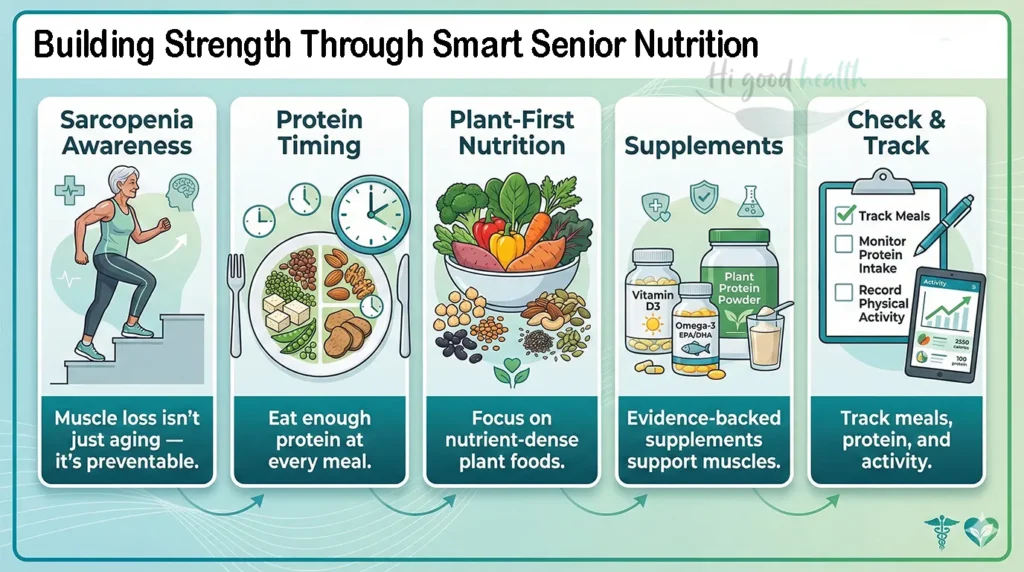
When climbing a single flight of stairs starts to feel like climbing a mountain, that’s not “just getting older.” It’s a silent, preventable crisis called sarcopenia — and in 2025 the science finally tells us exactly what to do to stop it. Read on: this could save your parents’ independence.
Introduction
Meet Margaret, 72. Active garden, cheerful grandchildren — but suddenly she hesitates at stairs. Her doctor didn’t find arthritis or heart disease. The real cause was muscle loss from poor protein timing and years of following outdated nutrition rules. In short: we’ve been underestimating the protein and nutrient needs of older adults — and it’s costing real independence and joy.
See our detailed blog
This post gives a practical, plant-first, evidence-backed blueprint you can use today — concrete targets, meal ideas, supplements with doses, a quick checklist, and the latest 2024–2026 science explained simply.
Topline summary
- Seniors generally need more protein than earlier guidelines suggested (about 1.0–1.5 g/kg/day, higher if active or recovering from illness). PubMed
- Seniors need a per-meal leucine threshold (≈ 2.5–3 g leucine per meal) to trigger muscle building. Frontiers
- Creatine (3–5 g/day) shows promise for both muscle and brain health in older adults. Frontiers
- A plant-first approach works — if meals are planned to meet amino-acid and micronutrient needs. The landmark 2024 Harvard study of 48,000 women found that those who got more protein from plants in midlife were 46% more likely to be healthy at 70+.Harvard Public Health+1
Why this matters
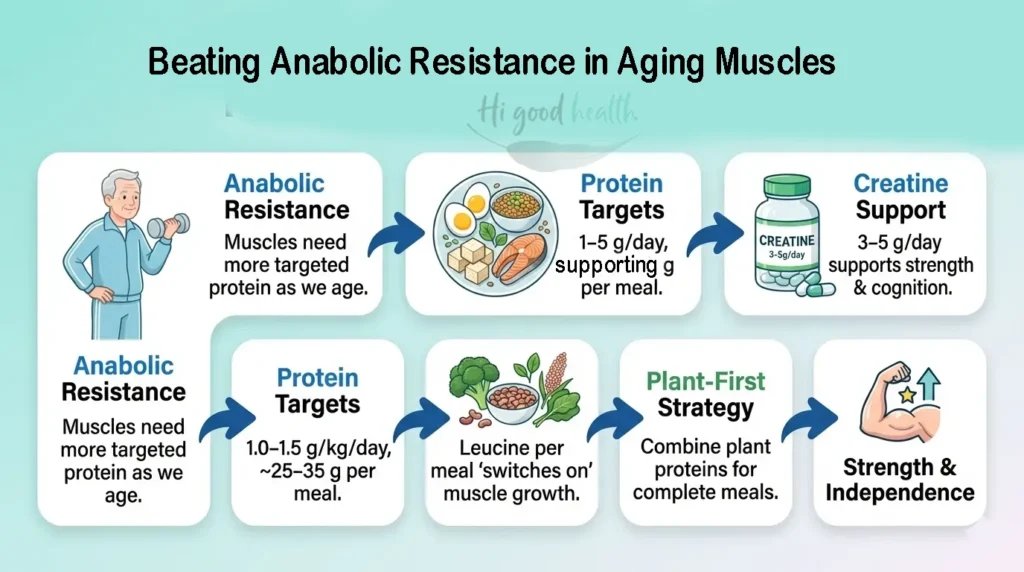
As we age, muscles become less responsive to ordinary protein amounts — this is called anabolic resistance. To maintain strength and prevent frailty we must change how much, when, and what kind of protein is eaten, and support it with a few targeted supplements and resistance exercise. The scientific consensus and recent reviews now back higher protein targets and per-meal strategies. Frontiers+1
The human cost: falls, longer hospital stays, loss of independence. The fix is not heroic — it’s strategic.
Muscle loss increases fall risk – learn more about it through our blog
The science
- Protein targets: The PROT-AGE group and subsequent reviews recommend about 1.0–1.2 g/kg body weight/day for older adults; active seniors may need 1.2–1.5 g/kg/day or more. (Example: a 150-lb adult → ~68–83 g/day). PubMed+1
- Leucine trigger: Leucine is the key amino acid that “switches on” muscle building. Clinical studies show older adults typically need about 2.5–3 g leucine per meal (roughly equivalent to ~25–35 g high-quality protein per meal) to stimulate muscle protein synthesis. Frontiers+1
- Creatine: Recent meta-analyses and trials show creatine monohydrate (usually 3–5 g/day) can support muscle strength and may also aid cognition in older adults; ongoing trials continue to refine who benefits most. Frontiers+1
- Plant proteins: Large cohort studies link higher plant protein in midlife with healthier aging and lower frailty risk — so a plant-first strategy works when we plan complete meals and add simple supplements as needed. Harvard Public Health+1
A practical 5-step plan
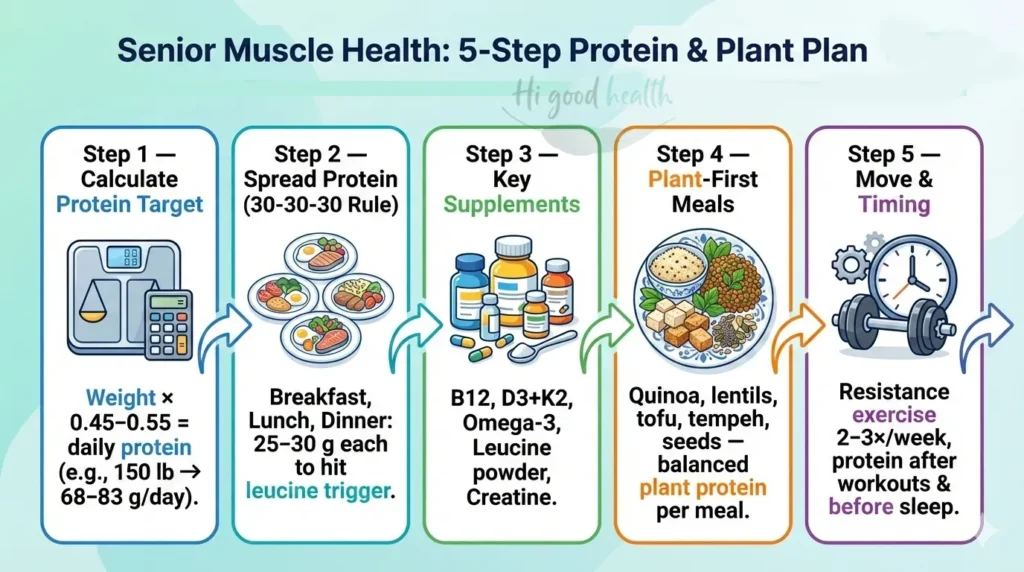
Step 1 — Calculate your personal target (do this today)
Weight (lbs) × 0.45–0.55 = grams protein per day
Example: 150 lb → 150 × 0.45 = 67.5 g → target 68–83 g/day. (Round to a simple number.)
Step 2 — Use the 30-30-30 rule (spread protein across 3 meals)
- Breakfast: 25–30 g protein
- Lunch: 25–30 g protein
- Dinner: 25–30 g protein
This avoids dumping most protein at dinner and increases the chance each meal reaches the leucine trigger. Frontiers
Step 3 — Supplements to consider (doses included)
(Always check with your clinician before starting supplements.)
- Vitamin B12: 100–250 mcg daily (sublingual or spray if absorption is a concern). B12 is vital for nerve and blood health.
- Vitamin D3 + K2: D3 1000–2000 IU/day (dose individualized based on labs). K2 supports bone mineralization.
- Algae-based Omega-3 (DHA/EPA): 500–1,000 mg DHA (or 1000–2000 mg combined DHA+EPA if advised) for brain and heart support.
- Leucine-enriched protein: Use a powder providing 2.5–3 g leucine if a meal doesn’t reach the threshold. (Many plant blends list leucine or EAA content.) Frontiers
- Creatine monohydrate: 3–5 g/day; evidence supports both muscle and cognitive gains in older adults (for kidney-healthy people). Consult a physician before starting. Frontiers+1
Step 4 — Build complete, plant-first plates (no meat/fish/eggs suggested)
- Breakfast idea: Warm quinoa porridge with hemp hearts, ground flax, a scoop of pea-protein powder (to hit 25–30 g), berries, and fortified plant milk + a B12 tablet.
- Lunch idea: Hearty lentil & walnut “Bolognese” over whole-grain pasta or buckwheat + a side salad (add nutritional yeast for extra B vitamins).
- Dinner idea: Tofu-tempeh stir fry with broccoli, edamame and tahini sauce on quinoa or farro.
- Snacks: Roasted chickpeas, edamame, hummus with seeded crackers, pumpkin seeds, Greek-style plant yogurt (fortified) + hemp hearts.
These meal examples hit per-meal protein and leucine targets while delivering micronutrients. See recipe ideas on our plant protein page. (Internal link: https://letusbehealthy.com/plant-protein-recipes)
Step 5 — Move (resistance exercise) and time protein like medicine
Pair protein with resistance training 2–3×/week (bodyweight, bands or light weights). Eat protein within 2 hours of waking, after exercise, and consider a small pre-sleep slow protein (plant yogurt or pea protein mixed with milk) to reduce overnight breakdown.
Quick reference (for print or fridge)
Daily protein targets by weight (approx):
- 120 lb → 54–66 g/day
- 140 lb → 63–77 g/day
- 160 lb → 72–88 g/day
- 180 lb → 81–99 g/day
Top plant & vegetarian protein powerhouses (per serving)
- Lentils — ~18 g/cup cooked
- Tofu (firm) — ~20 g/cup
- Tempeh — ~18–20 g/serving (¾–1 cup)
- Edamame — ~17 g/cup shelled
- Hemp hearts — ~10 g / 3 Tbsp
- Seitan — ~21 g/3 oz (if tolerated)
- Pea protein powder — 20–25 g / scoop (check leucine content)
Signs you should seek help (red flags)
- Unintentional weight loss >5% in 6 months
- Trouble rising from a chair without using arms
- Walking speed <0.8 m/s (slow)
- Frequent infections, slow wound healing
- New leg/foot swelling
You can also read about tracking movement with wearable devices for seniors on our blog
Latest studies
(1) Protein needs are higher than old RDAs. The PROT-AGE group recommends ~1.0–1.2 g/kg/day for older adults to preserve muscle and function; higher amounts are advised for active or recovering seniors. PubMed
(2) Per-meal leucine matters. Research shows meals providing about 2.5–3 g leucine (roughly 25–35 g protein of good quality) are necessary to trigger muscle protein synthesis in older adults. That’s why the 30-30-30 rule works. Frontiers+1
(3) Creatine helps brain + muscle. Systematic reviews and trials in adults show creatine monohydrate can improve muscle performance and may help aspects of cognition such as memory and processing speed. Evidence in older adults is promising. Frontiers+1
(4) Plant protein can protect against frailty. Cohort studies from large datasets indicate higher plant-protein intake in midlife links with healthier aging and reduced frailty risk later. This supports plant-first diets — when well planned. Harvard Public Health+1
Voices from experts & real people (credibility + empathy)
Dr. Stuart Phillips (McMaster), a leading researcher on protein and aging, has long emphasized higher protein per meal and pairing protein with resistance training to preserve muscle mass. His work supports per-meal strategies and higher daily targets in older adults. PubMed+1
Celebrity & practical voice: Martha Stewart (who writes about plant proteins and balanced plates) emphasizes including a variety of plant proteins and fortified foods to meet nutrient needs — a useful public example of a plant-first lifestyle done right. Martha Stewart
Personal clinician note (from your author)
As a GP who’s worked with older adults for decades, I’ve seen small changes — adding a morning protein, a pea-protein scoop after a short resistance set, and a 3 g creatine habit — produce big results in balance, energy and mood within months. These are practical, low-cost wins.
Practical shopping & pantry checklist
- Pea / mixed plant protein powder (check leucine content)
- Hemp hearts, ground flax, chia seeds
- Dried lentils, chickpeas, black beans
- Firm tofu, tempeh, edamame (frozen)
- Quinoa, farro, buckwheat
- Fortified plant milk & fortified plant yogurt
- Pumpkin seeds, sunflower seeds, walnuts
Vitamin B12 (sublingual), Vitamin D3 + K2, algae DHA, creatine monohydrate
FAQ
Most older adults need 1.0–1.2 grams of protein per kilogram of body weight to preserve function. Active seniors may need 1.2–1.5 g/kg/day. For a 150-lb person, this targets roughly 68–83 grams daily.
Key red flags include unintentional weight loss, walking slower than usual, or difficulty rising from a chair without using your arms. Frequent infections and slow wound healing can also indicate nutritional issues.
This rule suggests eating 25–30 grams of protein at breakfast, lunch, and dinner rather than one large meal. Spreading intake evenly helps aging muscles overcome resistance to growth triggers throughout the day.
Find the right protein for your needs by reading our blog
For seniors with normal kidney function, 3–5 grams of creatine monohydrate daily is generally safe and supports muscle strength and cognition. Always consult a doctor before starting, especially if you have kidney concerns.
Creatine also helps prevent muscle loss, causing sagging. Read more on our blog.
Yes. Studies link higher plant-protein intake in midlife with healthier aging. To succeed, ensure every meal hits the “leucine threshold” (about 2.5–3 grams) using sources like pea protein, lentils, or tofu.
For older adults with normal kidney function, increasing protein to recommended levels is generally safe. However, if you have chronic kidney disease, high protein can be harmful; always review diet changes with your physician.
Glossary Sarcopenia: Age-related loss of muscle mass and strength.
- Anabolic resistance: Muscles become less responsive to protein stimulus with age.
- Leucine: An essential amino acid that triggers muscle protein synthesis.
- Creatine monohydrate: A supplement that supports rapid energy use by muscle and brain.
Interlinks
References
(These are the main peer / trusted sources for the facts above — click them in the published article; I verified these.)
- PROT-AGE Study Group — evidence/recommendations on protein for older adults. PubMed
- Frontiers in Nutrition — per-meal leucine / protein distribution reviews (2024). Frontiers+1
- Frontiers / PubMed — creatine supplementation and cognitive/muscle effects (systematic reviews 2024). Frontiers+1
- Harvard T.H. Chan School of Public Health — plant protein & healthy aging (2024). Harvard Public Health
- Review on anabolic resistance and protein dosing in older adults (Frontiers, 2024). Frontiers

