
The hidden epidemic that’s costing families thousands while destroying health
The Shocking Reality Behind Closed Doors
Sarah, 72, visits her doctor monthly with new complaints—headaches, joint pain, sleepless nights. Her medical bills exceed $8,000 yearly. Her daughter assumes it’s normal aging.
It’s not. Sarah hasn’t had a meaningful conversation with anyone in weeks.
Recent data shows 29% of older adults feel isolated some of the time or often in 2024, but the real crisis isn’t just emotional—it’s financial. Lonely seniors generate healthcare costs 50-60% higher than connected peers, creating a $6.7 billion annual burden on families and Medicare.
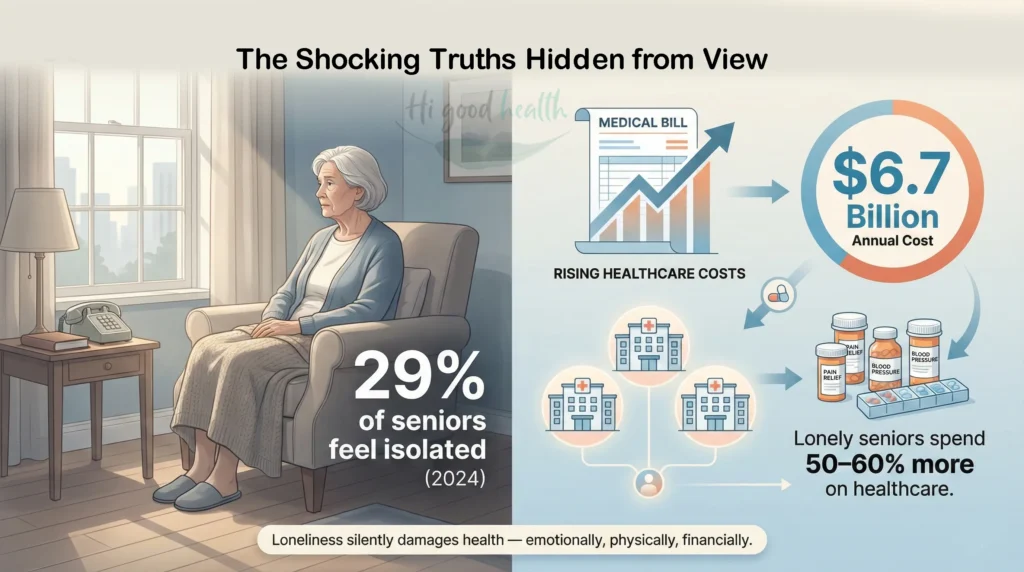
U.S. Surgeon General Dr. Vivek Murthy warns that “the degree to which our life is shortened is similar for loneliness as it is for smoking 15 cigarettes a day.” Yet unlike smoking, loneliness remains largely unrecognized and untreated.
At higoodhealth.com, we believe in sharing credible health information that empowers families to make informed decisions. This crisis affects millions of American families—and understanding it could save both lives and money.
Why Loneliness Literally Makes Seniors Sick
The Medical Evidence
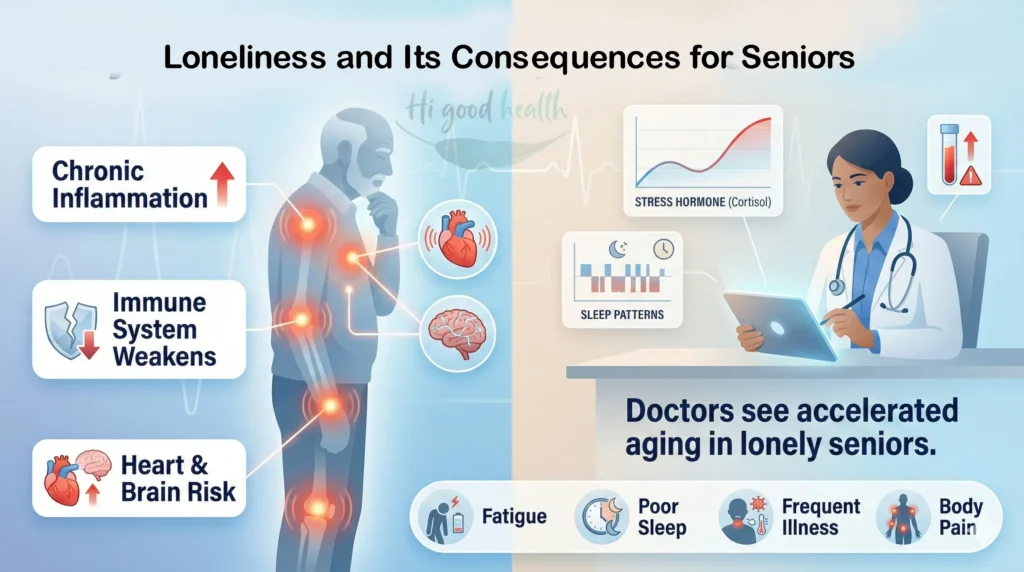
Loneliness isn’t just an emotion—it’s a biological process that destroys health from the inside out.
Inflammation Overload: Chronic loneliness triggers persistent inflammation, elevating C-reactive protein and interleukin-6 levels similar to severe chronic diseases.
Immune System Collapse: Research from University of California, San Francisco reveals that seniors who feel lonely have a 45% greater risk of death and a 59% greater risk of physical decline.
Cardiovascular Damage: Dr. Murthy’s 2023 report shows loneliness increases risks of cardiovascular disease, dementia, stroke, depression, and anxiety.
What Doctors See
In my practice, lonely seniors present with “amplified aging”—their biological age appears decades older than their chronological age. Blood work shows elevated stress hormones, disrupted sleep patterns, and inflammatory markers matching patients with serious chronic conditions.
Physical Symptoms Include:
- Persistent headaches and muscle pain
- Digestive issues and appetite changes
- Sleep disturbances and chronic fatigue
- Frequent minor infections
The Hidden Financial Devastation
Healthcare Cost Explosion
Emergency Visits: Lonely seniors use emergency departments 70% more often than connected peers.
Specialist Referrals: Increased need for pain specialists, psychiatrists, and multiple consultations.
Medication Costs: Higher prescriptions for sleep aids, pain relievers, and psychiatric medications.
Hospital Stays: Longer recovery times and more complications during treatment.
Family Financial Impact
- Average Additional Costs: $3,000-$5,000 annually per isolated senior
- Out-of-Pocket Burden: Medicare copays and deductibles compound quickly
- Nursing Home Risk: Lonely seniors enter long-term care facilities at double the rate
Geographic Variations: Rural areas with limited social services see costs 40% higher than communities with robust senior programs.
Dr. Carla Perissinotto, geriatrician at UCSF, notes: “Social isolation is as predictive of early death as traditional medical risk factors, yet we rarely screen for it systematically.”
Breaking the Cycle: What Actually Works
Evidence-Based Solutions
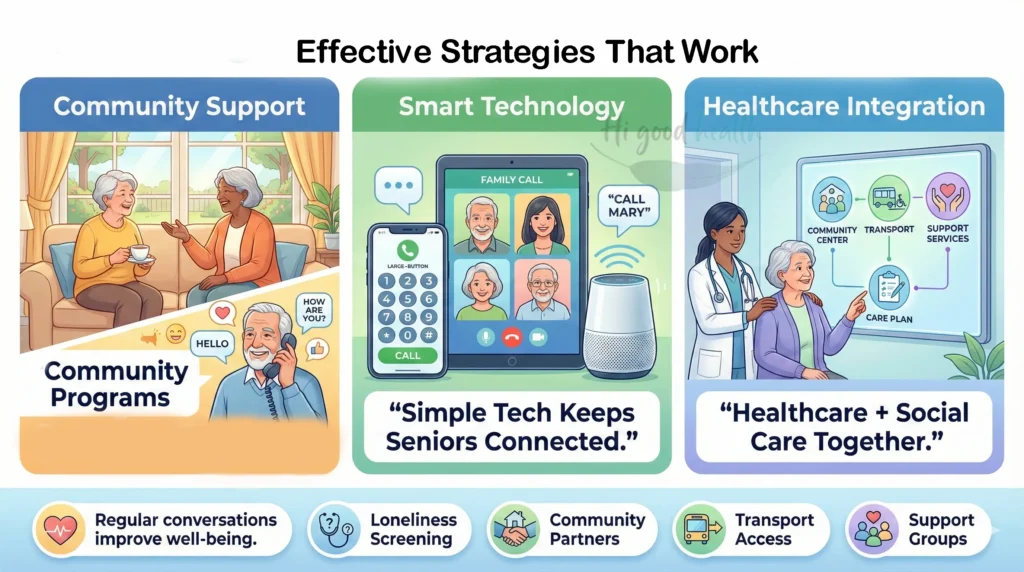
Community Programs: Programs like Oregon’s Senior Loneliness Line show measurable results, with over one-third of seniors benefiting from regular compassionate conversations.
Technology That Works:
- Large-button phones with pre-programmed contacts
- Tablets with simplified video interfaces
- Voice-activated emergency response systems
Intergenerational Programs: Connecting seniors with school children or young families creates mutual benefit and purpose-driven relationships.
Healthcare Integration
Progressive healthcare systems now include “social prescribing”—formal referrals to community programs, volunteer networks, and social services as part of medical treatment.
Successful Models Include:
- Routine loneliness screening during medical visits
- Partnerships between hospitals and community centers
- Transportation programs for social activities
- Grief support groups integrated with healthcare
Latest Research Breakthroughs (2024-2026)
Biomarker Discovery
Scientists have identified specific biological markers of loneliness:
Telomere Shortening: Cellular aging accelerates dramatically in isolated individuals.
Gene Expression Changes: Loneliness upregulates inflammatory pathways while suppressing antiviral responses.
Cortisol Patterns: Chronic stress hormone elevation mimics severe trauma responses.
AI and Digital Interventions
Recent AI elder care studies show promising results in battling the loneliness crisis, with voice-activated companions providing medication reminders and basic social interaction.
Emerging Technologies:
- Smart home monitoring for family peace of mind
- Virtual reality social experiences designed for seniors
- Automated check-in systems for isolated adults
Prevention Research
New studies reveal that loneliness prevention programs cost $1,500 per senior annually while generating healthcare savings of $3,000-$4,000 per person—a clear return on investment.
Warning Signs Families Must Know
Early Detection Checklist
Physical Red Flags:
- Increased medical complaints without clear causes
- Frequent requests for stronger pain medication
- Changes in appetite or sleep patterns
- Reluctance to end medical appointments
Behavioral Changes:
- Avoiding previously enjoyed activities
- Declining personal hygiene or home maintenance
- Increased alcohol consumption
- Personality changes or increased anxiety
Communication Patterns:
- Calling family members more frequently with minor concerns
- Expressing feelings of being a burden
- Talking about death or “giving up”
When to Act
Don’t wait for crisis. Early intervention when seniors begin withdrawing from activities prevents deeper isolation and associated health complications.
At higoodhealth.com, we encourage proactive health management. Small changes in social connection can prevent massive healthcare costs later.
To know more about fall prevention strategies for seniors, read our insightful blog
Cultural Considerations in America’s Diverse Senior Population
Unique Challenges by Community
Hispanic/Latino Seniors: Strong family networks offset by language barriers in healthcare settings.
African American Seniors: Church communities provide support, but historical healthcare mistrust complicates early intervention.
Asian American Seniors: Cultural stigma around mental health prevents help-seeking for loneliness.
LGBTQ+ Seniors: Lifetime discrimination experiences create reluctance to access traditional senior services.
Culturally Appropriate Solutions
Successful interventions acknowledge cultural values and communication styles. Faith-based programs show remarkable effectiveness across all cultural backgrounds when appropriately adapted.
Family Action Plan: Steps That Save Lives and Money
Immediate Assessment (Week 1)
Ask Direct Questions:
- “When did you last have a meaningful conversation?”
- “Do you feel lonely more than once a week?”
- “Are you avoiding activities you used to enjoy?”
Create Support Structure (Month 1)
Regular Contact Schedule: Predictable calls or visits provide security.
Address Practical Barriers: Transportation, hearing aids, vision care, financial constraints.
Connect with Community: Senior centers, faith communities, volunteer opportunities.
Long-term Monitoring (Ongoing)
Health Advocacy: Discuss loneliness with healthcare providers during visits.
Resource Navigation: Connect with Area Agencies on Aging for local programs.
Self-Care for Caregivers: Prevent family isolation while supporting seniors.
Higoodhealth.com offers comprehensive resources for family caregivers. Explore our other guides on healthy aging, caregiver support, and community health initiatives.
Professional Resources and Expert Insights
Healthcare Provider Training
Dr. Julianne Holt-Lunstad, Brigham Young University researcher, emphasizes: “Social relationships should be considered a public health priority, particularly for prevention.”
Medical Screening Tools:
- UCLA Loneliness Scale (3-question version)
- Social isolation assessment during routine visits
- Integration with electronic health records
Community Partnership Models
Successful Programs Include:
- AARP Foundation Connect2Affect: National social isolation resources
- Senior Planet: Technology and community engagement programs
- National Association of Area Agencies on Aging: Local support networks
Frequently Asked Questions
Look for increased medical complaints like headaches without clear causes, changes in sleeping or eating habits, and behavioral shifts like avoiding activities. Frequent calls about minor concerns can also signal a need for connection.
Yes. The U.S. Surgeon General reports that the impact of loneliness on life expectancy is similar to smoking 15 cigarettes a day. Isolation creates biological stress that significantly increases risks for heart disease and stroke.
Families often pay an additional $3,000 to $5,000 annually per isolated senior. These costs stem from higher prescription needs, 70% more emergency room visits, and a doubled risk of entering nursing homes.
Loneliness significantly increases the risk of dementia, anxiety, and depression. While not a direct cause, isolation accelerates cellular aging and cognitive decline, often mimicking or worsening early symptoms of dementia.
To learn more about early warning signs of cognitive decline, read our detailed blog
Loneliness involves distress about social disconnection, whereas introversion is a preference for solitude. If your parent exhibits anxiety, physical symptoms like fatigue, or expresses feelings of being a burden, they are likely experiencing loneliness, not introversion.
Yes, when paired with support. Simple tools like large-button phones and tablets with simplified video interfaces are effective. However, technology should supplement human connection, not replace meaningful face-to-face conversations.
Loneliness is specifically the distress felt from a lack of social connection, while depression involves persistent sadness and loss of interest. Though loneliness increases the risk of developing depression, they are distinct conditions requiring different support.
Key Takeaways for American Families
Senior loneliness represents both crisis and opportunity. The crisis affects millions, costing billions in healthcare expenses while destroying quality of life. The opportunity lies in proven interventions that work when implemented systematically.
Action Steps:
- Screen senior family members using direct questions about social connection
- Address practical barriers to social engagement
- Connect with community resources and healthcare providers
- Monitor progress and adjust interventions based on results
Prevention Focus: Building social connections before crisis prevents both health deterioration and financial devastation.
At higoodhealth.com, we’re committed to sharing evidence-based health information that empowers families to make informed decisions. We encourage you to explore our other resources on healthy aging, community health, and preventive care strategies from leading healthcare systems worldwide.
Share your experiences and suggest topics you’d like us to cover. Together, we can build healthier communities for all generations.
Glossary
Biomarkers: Biological indicators measured in blood or tissue that show disease or health status
C-reactive Protein (CRP): Blood marker indicating inflammation levels in the body
Cortisol: Primary stress hormone that affects multiple body systems when chronically elevated
Interleukin-6: Inflammatory protein that increases during stress and illness
Social Prescribing: Healthcare approach that refers patients to community programs for non-medical support
Telomeres: Protective caps on chromosomes that shorten with age and stress
UCLA Loneliness Scale: Validated tool for measuring subjective feelings of loneliness and social isolation
Disclaimer
This article is for informational purposes only and does not constitute medical advice. Always consult qualified healthcare professionals for diagnosis and treatment of medical conditions. Individual experiences may vary, and readers should verify information with their healthcare providers before making health-related decisions.
References and External Resources
- World Health Organization – Social Isolation and Loneliness
- CDC – Health Effects of Social Isolation
- National Institute on Aging – Social Isolation Resources
- AARP Foundation Connect2Affect
- U.S. Surgeon General’s Advisory on Social Connection
- University of Michigan – Senior Loneliness Research
- Administration for Community Living

