
Introduction: The Silent Decline No One Warns You About
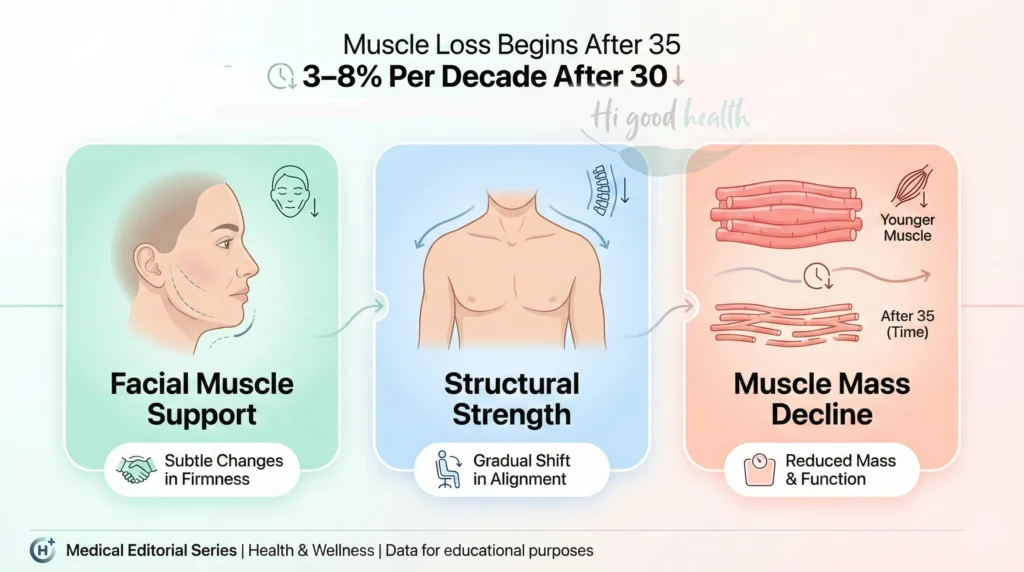
Sagging face? Softer jawline? Breast droop sneaking in too early? These aren’t just signs of aging—they’re often signals of something deeper: muscle loss.
After 35, something subtle—but serious—begins to happen inside your body. You start losing muscle mass, even if your weight on the scale stays the same. This phenomenon, known as sarcopenia, is not just a cosmetic concern—it can hijack your health, mobility, metabolism, and independence as you age.
In fact, according to the National Institutes of Health, adults lose 3% to 8% of their muscle mass per decade after 30, and the rate accelerates after 60. But here’s the good news: muscle loss is not inevitable. With the right steps—many of which are plant-forward—you can stop and even reverse this trend.
Let’s dive into how.
1. What Causes Muscle Loss After 35?
The primary culprits behind age-related muscle loss are:
- Hormonal Decline: Testosterone, growth hormone, and estrogen levels begin to dip in both men and women.
- Reduced Physical Activity: Office jobs and screen-based leisure often reduce muscle-stimulating movement.
- Protein Deficiency: Inadequate dietary protein intake slows muscle repair and growth.
- Inflammation & Oxidative Stress: Low-grade chronic inflammation interferes with muscle regeneration.
Even stress and poor sleep impact muscle retention by disrupting cortisol and melatonin levels, which regulate recovery.
“Sarcopenia is not just about aging—it’s about lifestyle,” says Dr. Roger Fielding, director of nutrition, exercise physiology, and sarcopenia research at Tufts University.
To know about latest science on preventing muscle loss, refer to our in-depth blog
2. The Critical Window: Why Ages 35 to 45 Matter Most
Research shows this is the ideal decade to build and preserve muscle to prevent complications later in life. Studies published in The Journal of Clinical Endocrinology & Metabolism suggest that muscle mass built in your 30s helps sustain metabolic rate, glucose control, and bone health in your 60s.
Inaction in this window can lead to faster decline later, increasing the risk of:
- Falls and fractures
- Insulin resistance
- Fatigue and poor mobility
This is your wake-up call. But it’s not too late to take charge.
3. Science-Backed Ways to Prevent Muscle Loss
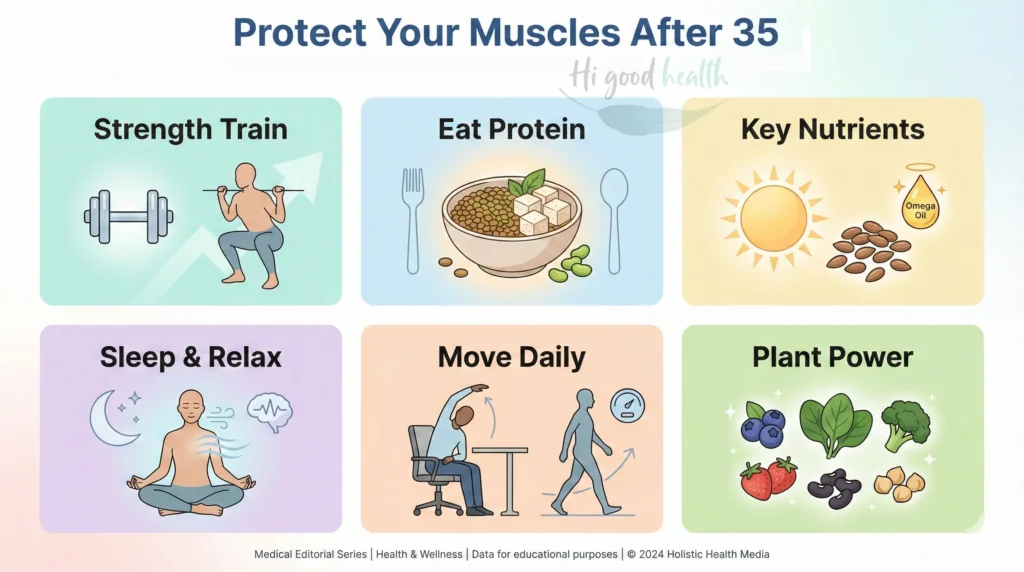
A. Resistance Training is Non-Negotiable
Strength training at least 2–3 times per week helps retain and grow muscle. Focus on:
- Bodyweight exercises (squats, push-ups, planks)
- Resistance bands
- Dumbbell workouts
Studies in The American Journal of Preventive Medicine found that adults over 35 who strength train have a 30% lower risk of functional decline.
B. Eat More High-Quality Protein
Great sources include:
- Lentils and chickpeas
- Quinoa and amaranth
- Tofu and tempeh
- Pea and soy protein powders
Aim for 25–30g of protein per meal to stimulate muscle protein synthesis. According to Harvard Health, this is crucial for aging muscles.
C. Include Muscle-Friendly Nutrients
- Vitamin D: Boosts calcium absorption and muscle strength. Found in fortified almond milk, mushrooms, and sunshine.
- Creatine Monohydrate: A plant-compatible supplement shown to support strength, especially when paired with resistance training.
- Omega-3 (from flaxseed or algae): Reduces inflammation and improves muscle quality.
D. Prioritize Sleep & Stress Relief
Lack of sleep increases cortisol and decreases testosterone—both bad for muscle. Aim for 7–8 hours/night and incorporate stress-reducing habits like meditation or yoga.
E. Daily Movement Matters
Take stretch breaks, use a standing desk, or try desk workouts. Even 5–10 minutes of daily functional movement preserves neuromuscular coordination.
F. Beyond Protein: Why a Plant-Forward Approach Boosts Muscle Health
While we’ve emphasized the importance of high-quality protein from sources like lentils, tofu, and pea protein, the benefits of a plant-forward diet for muscle health extend far beyond just protein content. Here’s why this approach is specifically beneficial:
- Rich in Muscle-Friendly Nutrients: Plant-based foods are natural powerhouses of essential vitamins and minerals crucial for muscle function and repair. For instance, many plant sources provide Vitamin D (fortified almond milk, mushrooms) which boosts calcium absorption and muscle strength, and Omega-3s (flaxseed, algae) which reduce inflammation and improve muscle quality.
- Abundant in Antioxidants: Chronic low-grade inflammation and oxidative stress can interfere with muscle regeneration and retention. Plant foods are packed with antioxidants like Vitamin C (bell peppers, oranges) and E (sunflower seeds, almonds), as well as polyphenols (green tea, berries, turmeric), all of which help combat these damaging processes and support overall muscle health.
- Optimized for Recovery and Growth: Beyond protein, specific plant compounds can enhance muscle protein synthesis and recovery. Leucine, a key amino acid that signals muscle growth, is readily found in plant sources like soybeans, tofu, tempeh, peanuts, and lentils. New research also highlights the importance of myokines, hormones released by muscles during contractions, which positively impact the brain and immune system; regular strength training, often complemented by a nutrient-rich plant-forward diet, increases these beneficial myokine levels.
- Supports Overall Health for Muscle Longevity: A plant-forward diet typically provides ample fiber, supports a healthy gut microbiome, and helps manage weight, all of which contribute to better overall health. This holistic wellness creates an optimal internal environment for muscle retention and growth as you age, reducing factors like inflammation that can hinder muscle repair.
4. Appearance Matters Too: The Beauty Cost of Muscle Loss
Muscle loss doesn’t just affect strength—it also shows up on your face and body:
- Facial sagging: Muscle atrophy in cheeks and jawline leads to loss of youthful contours.
- Breast and gluteal sagging: Loss of supporting musculature causes droopiness and decreased firmness.
- Posture changes: Weak back and core muscles lead to slouched appearance and protruding abdomen.
While many seek out anti-aging creams or cosmetic fixes, the real, long-lasting solution lies in resistance training, proper nutrition, and maintaining muscle tone. Beauty starts from within—and that includes your muscles.
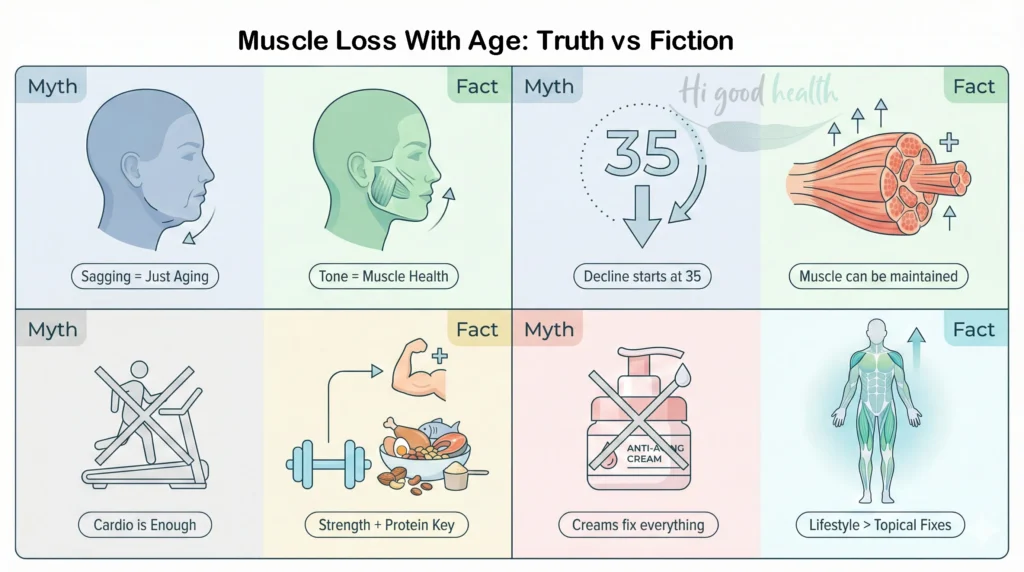
Myth vs. Fact: Decoding Aging and Muscle Loss
It’s easy to mistake common signs for inevitable aging, but often, the real culprit is muscle loss. Let’s separate fact from fiction:
- Myth: Sagging skin and a softer jawline are just part of getting older.
- Fact: While some changes are natural, a sagging face and softer jawline are often signals of muscle loss (atrophy) in the cheeks and jawline, leading to a loss of youthful contours. Similarly, breast and gluteal droopiness can be attributed to the loss of supporting musculature.
- Myth: Once you hit 35, muscle loss is unavoidable.
- Fact: While adults do begin to lose 3% to 8% of their muscle mass per decade after 30, and the rate accelerates after 60, muscle loss is not inevitable. With the right steps, including many plant-forward approaches, you can stop and even reverse this trend.
- Myth: You just need to “eat less and move more” to stay in shape as you age.
- Fact: While general activity is important, preventing age-related muscle loss specifically requires resistance training at least 2-3 times per week, along with adequate high-quality protein intake (25-30g per meal) and muscle-friendly nutrients. Cardio alone is not enough to prevent muscle loss.
- Myth: Cosmetic creams and procedures are the only way to address facial and body sagging.
- Fact: While cosmetic fixes exist, the “real, long-lasting solution” for issues like facial sagging, breast droop, and posture changes lies in resistance training, proper nutrition, and maintaining muscle tone. Beauty truly starts from within, including your muscles.
5. Specific Groups: Unique Risks & Solutions
Men Over 35
- Risk: Gradual testosterone decline (~1% per year) affects strength and recovery.
- Impact: Up to 5% muscle loss per decade.
- Tip: Prioritize resistance training and vitamin D to support hormone balance.
Women Over 35
- Risk: Estrogen reduction affects muscle tone and fat distribution.
- Impact: Muscle mass drops faster after menopause.
- Tip: Strength training + protein + weight-bearing yoga builds muscle safely.
Concussion Recovery Patients
- Risk: Bed rest or limited mobility can cause 3–4% muscle loss per week.
- Tip: Incorporate gentle resistance bands, nutrition, and guided physiotherapy during recovery.
Office Workers
- Risk: Sedentary habits reduce lower-body muscle strength.
- Tip: Micro workouts, stair use, and standing meetings boost circulation and muscle activation.
To learn about the overlooked muscle key to metabolism, read our detailed blog
Perimenopausal & Postpartum Women
- Risk: Hormonal shifts reduce muscle protein synthesis.
- Tip: Increase leucine-rich foods (tofu, soy milk) and do light strength training and core recovery workouts.
Aged People (60+)
- Risk: Muscle loss accelerates to 8% per decade or more.
- Tip: Focus on balance exercises, resistance bands, and higher protein intake split across meals.
To learn more on choosing the right protein for muscle building, check our detailed Blog
6. Easy Muscle-Boosting Exercises at the Office
Office workers can sneak in strength-preserving moves without disrupting their day:
- Take the stairs: Going down builds control and eccentric muscle strength. If up isn’t possible, focus on descending.
- Stand while working: Use a standing desk or stack books under your monitor.
- Walking meetings: Suggest standing or walking one-on-one discussions.
- Mini yoga or stretch breaks: 5–10 mins in the lunch hour with a video or self-led routine.
- Desk stretches: Shoulder rolls, seated calf raises, and spinal twists improve blood flow.
- Movement alarms: Every 45 minutes, stand up and move—walk to a colleague, stretch, or do a quick wall sit.
7. Add Leucine and Antioxidants to Your Diet
Leucine is a key amino acid that signals muscle growth. Add it through:
- Soybeans, tofu, tempeh
- Peanuts, lentils, navy beans
- Fortified protein powders
A typical adult may benefit from 2.5–3g of leucine per meal. Do not exceed 8–10g daily unless under medical supervision.
Antioxidants reduce inflammation and oxidative stress:
- Vitamin C: Bell peppers, oranges, kiwi
- Vitamin E: Sunflower seeds, almonds
- Polyphenols: Green tea, berries, turmeric
Supplements should not exceed tolerable upper limits (Vitamin C: 2,000 mg/day, Vitamin E: 1,000 mg/day).
8. What’s New in Science: 2024–2026 Research Insights
🔬 Leucine Threshold & Muscle Aging (Nutrients, 2024):
Recent research reinforced the concept that leucine plays a key role in triggering muscle protein synthesis, especially in older adults. Studies suggest that ensuring sufficient leucine intake per meal may help overcome age-related resistance to muscle building, when combined with adequate protein and resistance exercise.
🔬 Muscle–Brain–Immune Connection via Myokines (Cell Metabolism, 2026):
New findings have expanded understanding of myokines—signaling molecules released by active muscles—and their role in communication between muscle, brain, and immune systems. Regular resistance and endurance exercise has been shown to increase beneficial myokines, helping explain why muscle health is closely linked to cognitive and immune function.
🔬 Minimalist Resistance Training Still Works (British Journal of Sports Medicine, 2024):
Emerging evidence suggests that short, time-efficient resistance training routines (as little as 10 minutes, 2–3 times per week) can help maintain muscle strength and function in adults, particularly when consistency is maintained. This supports the idea that even small amounts of regular strength training offer meaningful long-term health benefits
9. Real-World Inspiration
Actor Chris Hemsworth (known for Thor), who follows a largely plant-forward lifestyle, includes daily strength routines and meditation to maintain muscle mass into his 40s. In an interview with Men’s Health, he emphasized consistency over intensity.
Similarly, Venus Williams credits strength training and a clean, nutrient-rich diet for her enduring fitness well into her 40s.
FAQs
It is often muscle loss, not just aging. Atrophy in cheek and jaw muscles leads to lost contours, resembling sagging skin. Resistance training and nutrition can restore muscle tone and structural support.
Yes, muscle loss is not inevitable. With consistent resistance training, adequate sleep, and proper nutrition, you can stop and even reverse this trend to regain strength and vitality in your 40s and beyond.
No. While general activity matters, cardio alone is not enough to prevent muscle loss. To specifically target sagging and build muscle, you must perform resistance training at least 2–3 times per week.
You should aim for 25–30g of high-quality protein per meal to effectively stimulate muscle repair. Consistent intake, from sources like lentils or supplements, is crucial for maintaining aging muscles.
Beyond fatigue or weakness , look for cosmetic changes like facial sagging, a softer jawline, or breast droop. These are often visible signals of underlying muscle atrophy rather than just skin aging.
Absolutely. Plant-forward diets are rich in muscle-friendly nutrients and antioxidants that reduce inflammation. Sources like tofu, tempeh, and pea protein provide the essential amino acids needed for recovery and growth.
Yes. Research shows even 10-minute resistance routines three times a week can preserve muscle. You can also use “micro workouts,” like taking the stairs or doing desk stretches, to combat sedentary habits.
Glossary
- Sarcopenia: Age-related loss of skeletal muscle mass and function.
- Resistance Training: Exercise that improves muscle strength and endurance, including weight lifting and bodyweight exercises.
- Leucine: An essential amino acid that plays a key role in muscle protein synthesis.
- Myokines: Hormones released by muscle cells in response to contractions, which influence metabolism and immune function.
- Polyphenols: Natural compounds with antioxidant properties, found in plants.
References & Further Reading
• NIH – Slowing Sarcopenia: Age-related Muscle Loss
https://newsinhealth.nih.gov/2025/04/slowing-sarcopenia NIH News in Health
• Harvard Health – Protein at Every Meal May Help Preserve Muscle Strength as You Age
https://www.health.harvard.edu/staying-healthy/protein-at-every-meal-may-help-preserve-muscle-strength-as-you-age Harvard Health
• NCBI Bookshelf – Sarcopenia Overview (NIH)
https://www.ncbi.nlm.nih.gov/books/NBK560813/ NCBI
Final Word
Muscle loss after 35 is real—but it’s also reversible. Whether you’re a busy professional, a parent juggling multiple roles, or simply someone aiming for healthy aging, now is the time to act.
With the right strategies, you can retain your strength, confidence, and vitality well into your later decades and maintain the youthful structure of your face and body.
Start today—your 70-year-old self will thank you.

