
Introduction: Why This Topic Matters More Than Ever
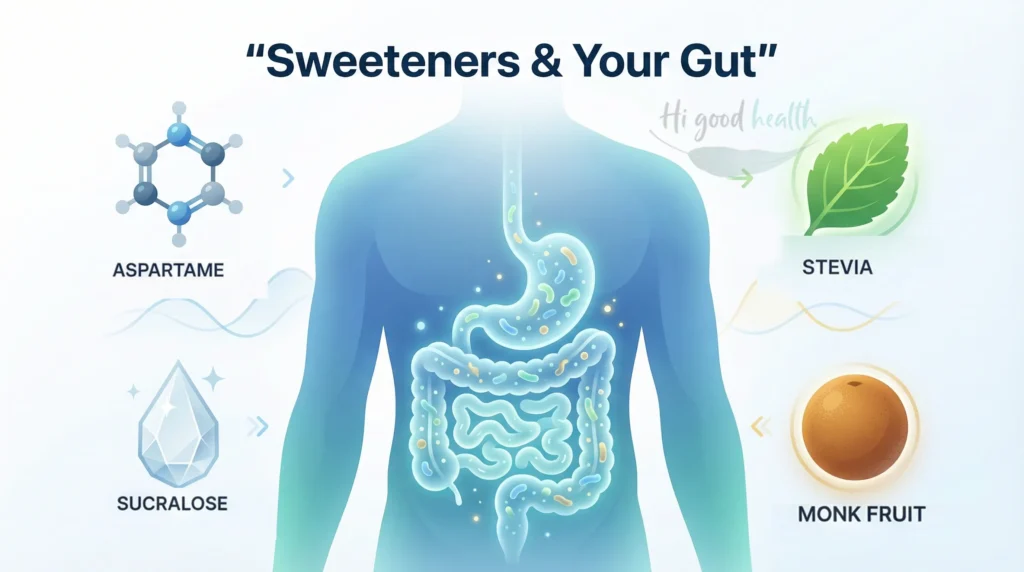
If you’ve ever scanned a food label and stumbled across names like aspartame, stevia, sucralose, or monk fruit extract, you’re not alone. The sweetener debate has reached every grocery aisle, fitness forum, and kitchen pantry. But beyond calories and taste, there’s a growing concern about how sweeteners — both natural and artificial — affect our gut health, appetite, and blood sugar levels.
Recent studies suggest that sweeteners can influence the gut microbiome, possibly altering hunger cues and metabolic responses. For instance, research published in journals like ‘Nature’ and ‘Cell’ has explored the complex interactions between artificial sweeteners and gut bacteria, highlighting potential shifts in metabolic pathways.
While more long-term human studies are ongoing, the emerging evidence points to a more nuanced picture than just ‘calorie-free equals consequence-free.’ With diabetes, obesity, and digestive disorders on the rise, it’s more important than ever to understand what’s behind the sweet taste.
So which sweeteners are actually good for you, and which ones just taste like they are?
To know more about the gut-brain connection and your mood, check our detailed blog
1. A Brief History of Sweetness: From Cane to Lab
Humans have always craved sweetness. Natural sugars from honey, fruit, and sugarcane fueled early diets. But as sugar became cheap and abundant in the 19th century, its overuse sparked health problems. This led scientists to explore calorie-free alternatives.
- Artificial sweeteners like saccharin (discovered in 1879), aspartame (1981), and sucralose (1999) were developed to satisfy cravings without calories.
- Natural alternatives such as stevia, monk fruit, and allulose entered mainstream use in the 2000s as more people sought “cleaner” labels.
But does the word “natural” always mean better for your body? Let’s break it down.
2. Meet the Sweeteners: Natural vs Artificial
| Type | Examples | Source | Calories | Sweetness vs Sugar |
| Natural | Stevia, Monk Fruit, Allulose, Honey, Maple Syrup, Coconut Sugar | Plants (leaves, fruits, sap) | Low to moderate | 100–300× or less |
| Artificial | Aspartame, Sucralose, Acesulfame-K (Ace-K) | Lab-synthesized compounds | 0 | 200–600× |
3. Emerging & Under-Discussed Sweeteners (Expanded)
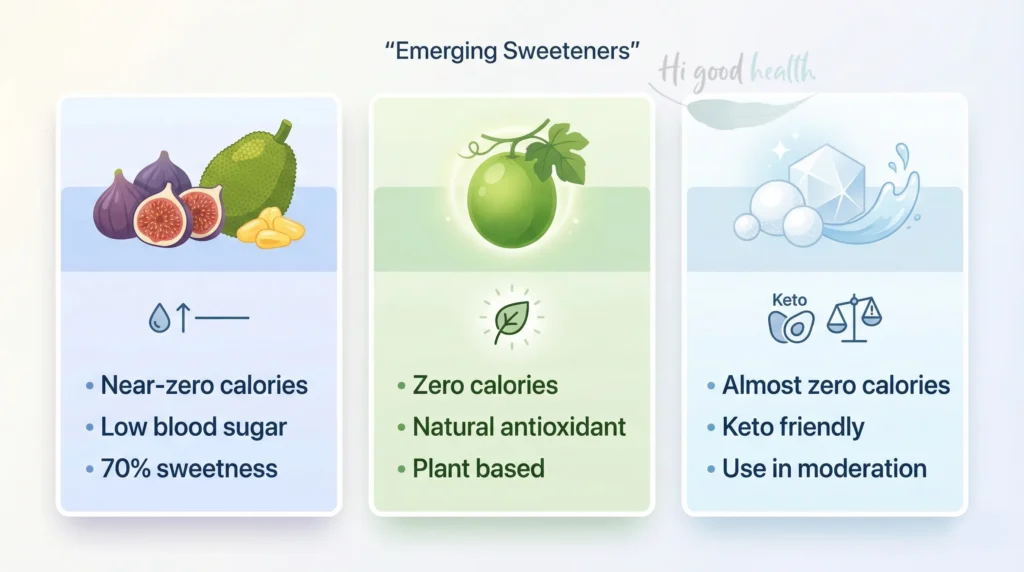
- Allulose: A rare sugar found in small amounts in figs, jackfruit, and raisins. It’s about 70% as sweet as sucrose but has negligible calories and doesn’t raise blood glucose. Commercially extracted using enzymatic conversion from corn or other plants. Studies like Nutrients (September 2023) / Journal of Functional Foods (2023) confirm that Allulose does more than just “not count” as sugar. It actively ameliorates insulin resistance by improving mitochondrial function and reducing inflammation in fatty tissues. Unlike regular sugar, which can trigger inflammation, Allulose was shown to suppress inflammatory markers like IFN-γ.
- Monk Fruit (Luo Han Guo): A melon native to China, monk fruit extract contains mogrosides — sweet compounds with antioxidant properties. It is FDA-approved and commercially available as a zero-calorie sweetener. Though relatively new in Western markets, it has been used for centuries in Chinese medicine.
- Erythritol: A sugar alcohol derived from corn or fermented fruit. Popular in keto and diabetic products. It’s 60–70% as sweet as sugar but has almost no calories. However, a 2023 study in Nature Medicine link suggested a possible link to cardiovascular events at very high levels — prompting calls for moderation.
This finding has sparked significant debate within the scientific community, with some experts calling for further research to understand the dosage and long-term implications, while others emphasize that typical consumption levels are far below those implicated in the study. It’s an important example of how scientific understanding of sweeteners continues to evolve.
Can You Use These Now?
- Allulose and Monk Fruit are generally considered safe and effective, especially for diabetic or weight-conscious individuals.
- Use Erythritol in moderation, especially if you have heart disease risk factors.
4. Natural Sweeteners: Origins, Processing & Health Profile
| Sweetener | Calories (per tsp) | Glycemic Index | Gut Friendly | Natural Process | Rich in Nutrients |
| Stevia | 0 | 0 | Yes | High | No |
| Monk Fruit | 0 | 0 | Yes | High | No |
| Allulose | ~0.4 | 0–5 | Yes (likely) | Medium | No |
| Honey (raw) | ~21 | 50–60 | Yes | High | Yes |
| Maple Syrup | ~17 | 54 | Neutral | High | Yes |
| Coconut Sugar | ~15 | 35 | Neutral | High | Yes |
| Jaggery (Gur) | ~17 | 50–55 | Yes | High | Yes |
| Khaand (muscovado sugar) | ~15 | 60 | Neutral | Medium | Yes |
| Date Sugar | ~15 | 45–50 | Yes | High | Yes |
| Brown Sugar | ~16 | 64 | No | Low | No |
| White Sugar | ~16 | 65 | No | Low | No |
Note: Brown and white sugar are both refined forms of cane sugar. Brown sugar is simply white sugar with some molasses added back, giving it color and a trace of minerals. White sugar is the most processed and stripped of any nutrients. For healthier options, consider less-refined alternatives like jaggery or raw cane sugar.
5. Sweetening Naturally with Whole Foods
| Food | Sweetness | Glycemic Index | Key Benefits |
| Raisins | High | 64 | Iron, fiber, digestive aid |
| Dates | High | 42–55 | Energy, potassium, antioxidants |
| Mango | Medium | 50–60 | Vitamin A, gut-friendly enzymes |
| Custard Apple | High | ~60 | B6-rich, may improve mood |
| Lychee | Medium | 50 | Vitamin C, supports hydration |
| Strawberries | Medium | 41 | Low GI, vitamin C, fiber |
| Watermelon | Mild | 72 | Hydrating, lycopene, low calorie |
6. Sweetener Advice for Diabetics: A General Advisory
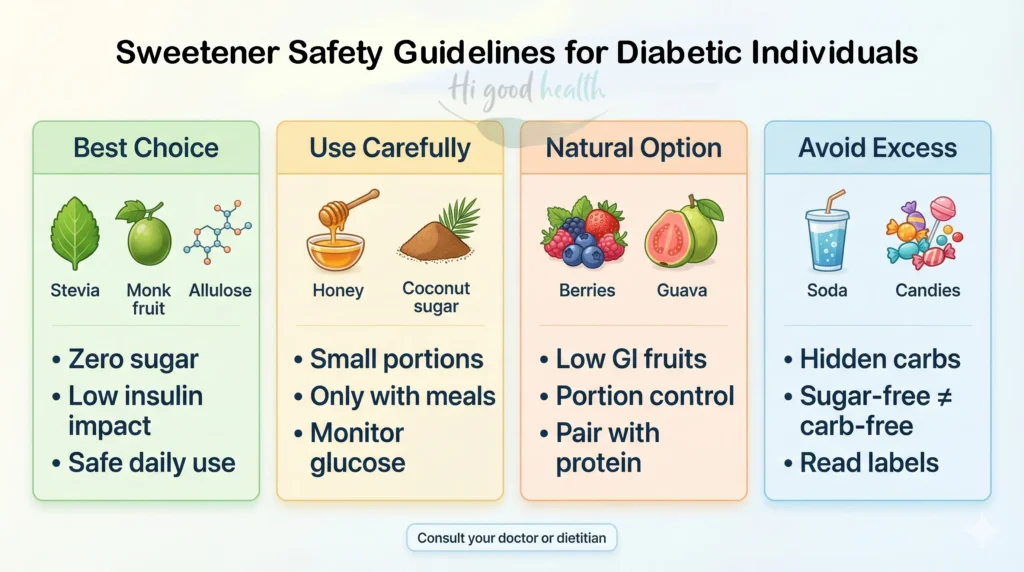
For people managing diabetes, navigating sweeteners can be tricky. Natural sugars and refined sweeteners alike can raise blood glucose levels, sometimes sharply. Fortunately, certain low- or zero-calorie alternatives — particularly those that don’t affect insulin response — can offer safer options.
Artificial sweeteners such as aspartame or sucralose are often used in diabetic diets but may affect gut microbiota and long-term metabolic health. Natural zero-calorie sweeteners like stevia, monk fruit, and allulose are emerging as preferred choices for many because of their minimal blood sugar impact.
It’s crucial to:
- Avoid large quantities of any sweetener.
- Monitor post-meal glucose levels.
- Favor whole fruits over juices or dried fruits.
- Read labels — even “sugar-free” foods may contain carbs.
Always consult with a registered dietitian or physician for personalized advice.
Diabetic Sweetener Guide: Use-Case Matrix
| Scenario | Recommended Options | Notes |
| Diabetic (strict control) | Stevia, Monk Fruit, Allulose | Zero GI, low impact on insulin |
| Diabetic (moderate control) | Honey (very limited), Coconut Sugar | Only with meals, monitor glucose |
| Diabetic (borderline) | Fruits with low GI (berries, guava) | Limit portions, combine with protein |
| Pre-diabetic | Stevia, fruits, jaggery (minimal) | Avoid processed sugar, manage portions |
7. Sugar Cravings? Here’s How to Curb Them Naturally
- Eat more protein & healthy fats to stabilize appetite.
- Stay hydrated — dehydration can mimic sugar cravings.
- Sleep 7–8 hours daily — sleep loss disrupts hunger hormones.
- Choose naturally sweet foods post meals (fruit, raisins).
- Use cinnamon or nutmeg to add sweetness without sugar.
To learn more about enzymes and probiotics for gut repair, read our in-depth blog
8. Regulatory Updates
The Aspartame Debate: Safety vs. Long-Term Health
While aspartame remains one of the most studied food additives in the world, recent years have seen a significant shift in how health authorities categorize its risks.
1. The WHO Cancer Classification (July 2023)
In a landmark move, the International Agency for Research on Cancer (IARC), the specialized cancer agency of the WHO, officially classified aspartame as “possibly carcinogenic to humans” (Group 2B). This classification was based on “limited evidence” regarding liver cancer in humans and experimental animals, signaling a need for more rigorous, long-term research.
- Verified Source: WHO/IARC Hazard and Risk Assessment Results
2. Regulatory Divergence (FDA & EFSA)
Despite the IARC classification, major regulatory bodies like the FDA (USA), EFSA (Europe), and FSSAI (India) have not changed their safety approvals. They maintain that the current Acceptable Daily Intake (ADI)—roughly 40–50 mg per kilogram of body weight—remains safe for the general population, citing inconsistencies in the data used by the IARC.
- Official Position: FDA Statement on Aspartame Safety
3. Clinical Perspectives: Harvard & Mayo Clinic
Beyond the cancer debate, leading medical institutions like Harvard Health and Mayo Clinic have moved toward a more cautionary stance, specifically regarding metabolic health and pregnancy:
- Metabolic Confusion: Harvard Health acknowledges that artificial sweeteners don’t always trigger the same metabolic and reward responses as sugar, and some research suggests they may influence appetite, the gut microbiome, and how the body interprets sweetness without calories.
- Vulnerable Populations: Mayo Clinic experts suggest that children and pregnant women limit their intake. Recent 2024 longitudinal data suggests that high maternal consumption of non-nutritive sweeteners may be linked to a higher risk of metabolic issues in offspring.
Summary of Guidance (2026)
| Authority | Focus | Current Stance |
| WHO / IARC | Cancer Risk | Cautionary: Classified as a Group 2B carcinogen. |
| FDA / EFSA | General Toxicity | Permissive: Safe within the defined daily intake limits. |
| Harvard / Mayo | Metabolism & Gut | Restrictive: Recommends limiting use to protect the gut microbiome. |
This divergence in recommendations highlights the ongoing scientific dialogue and the different approaches regulatory bodies take based on evolving research. It’s important for consumers to stay informed and consider multiple perspectives when making dietary choices.
9. How to Transition to Natural Sweeteners in Recipes
- Baking: Use 1/3rd amount of stevia or monk fruit compared to sugar
- Drinks: Mix lemon, mint, and a pinch of stevia or soaked raisins
- Chutneys/Desserts: Use date paste or jaggery
- Snacks: Blend dry fruits for energy bites
10. Celebrity Notes & Public Opinions
- Elon Musk has publicly stated that he avoids sugar and sometimes uses zero-calorie sweeteners to manage energy.
- Halle Berry, who lives with Type 1 diabetes, has praised stevia for helping her maintain blood sugar while still enjoying sweet flavors.
- Chef Jamie Oliver advocates for using honey and fruit in place of sugar in recipes, especially for kids.
To know more about dietary choices to protect your kidneys, read our insightful blog
Frequently Asked Questions
Allulose, Monk Fruit, and Stevia are generally considered the best options. Unlike artificial sweeteners, they are plant-based or naturally occurring, have zero calories, and have minimal impact on blood sugar levels.
While FDA-approved, the WHO recently classified Aspartame as “possibly carcinogenic”. Artificial sweeteners may also alter gut bacteria and metabolic pathways, so limiting long-term intake is recommended for better health.
Yes. Sugar alcohols like Erythritol can cause digestive issues in high doses. Additionally, artificial sweeteners may disrupt the gut microbiome, potentially influencing metabolic responses and digestion.
Stevia, Monk Fruit, and Allulose are top choices because they have a glycemic index of zero and don’t spike insulin. Diabetics should generally avoid refined sugars and use honey or coconut sugar very sparingly.
A 2023 study suggested a link between high levels of Erythritol and cardiovascular events, leading to calls for further research. If you have heart disease risk factors, it is currently advised to use it in moderation.
Honey is slightly better because raw versions contain trace nutrients and antioxidants. However, it still has a high glycemic index (50–60), meaning it raises blood sugar similarly to table sugar.
Sweeteners might alter hunger cues and the gut microbiome. To curb cravings naturally, ensure you are staying hydrated, getting 7–8 hours of sleep, and eating enough protein and healthy fats.
Glossary
- Glycemic Index (GI): A measure of how quickly a food raises blood sugar.
- Gut Microbiome: The community of good and bad bacteria living in your digestive system.
- Stevia: A zero-calorie sweetener derived from a South American plant.
- Jaggery: Unrefined cane sugar with molasses; nutrient-rich alternative to sugar.
- Allulose: A rare sugar with low calories and no spike in blood glucose.
- Aspartame/Sucralose: Common artificial sweeteners, often used in diet sodas.
- Muscovado Sugar (Khaand): Less refined cane sugar, retains molasses and minerals.
- Erythritol: A sugar alcohol with low calories, may cause digestive issues in high doses.
- Monk Fruit: A natural, zero-calorie sweetener extracted from a Southeast Asian fruit.

