
Early Signs of Brain Decline & How to Slow It After 60—Naturally
More and more people are reporting memory fog, lack of focus, or mental fatigue not just after 60, but even in their 40s and 50s. While occasional forgetfulness can be a normal part of aging, persistent cognitive changes may signal early brain decline.
Over time, these subtle symptoms can progress into neurodegenerative conditions such as Alzheimer’s disease and Parkinson’s disease—both characterized by the gradual damage and loss of brain cells (neurons).
According to the Alzheimer’s Association, early lifestyle changes, especially those based on natural methods, can slow down much of this decline and improve quality of life.
What This Guide Will Help You Do
This guide is designed to empower you with practical, science-backed insights to:
- Recognize early symptoms of brain decline
- Understand diagnostic tools like MoCA, SAGE, and more
- Learn about the growing threat of Alzheimer’s and Parkinson’s
- Discover longevity lifestyles like Blue Zones that protect brain health
- Explore cutting-edge scientific discoveries and holistic approaches
- Take actionable, natural steps for prevention and cognitive protection
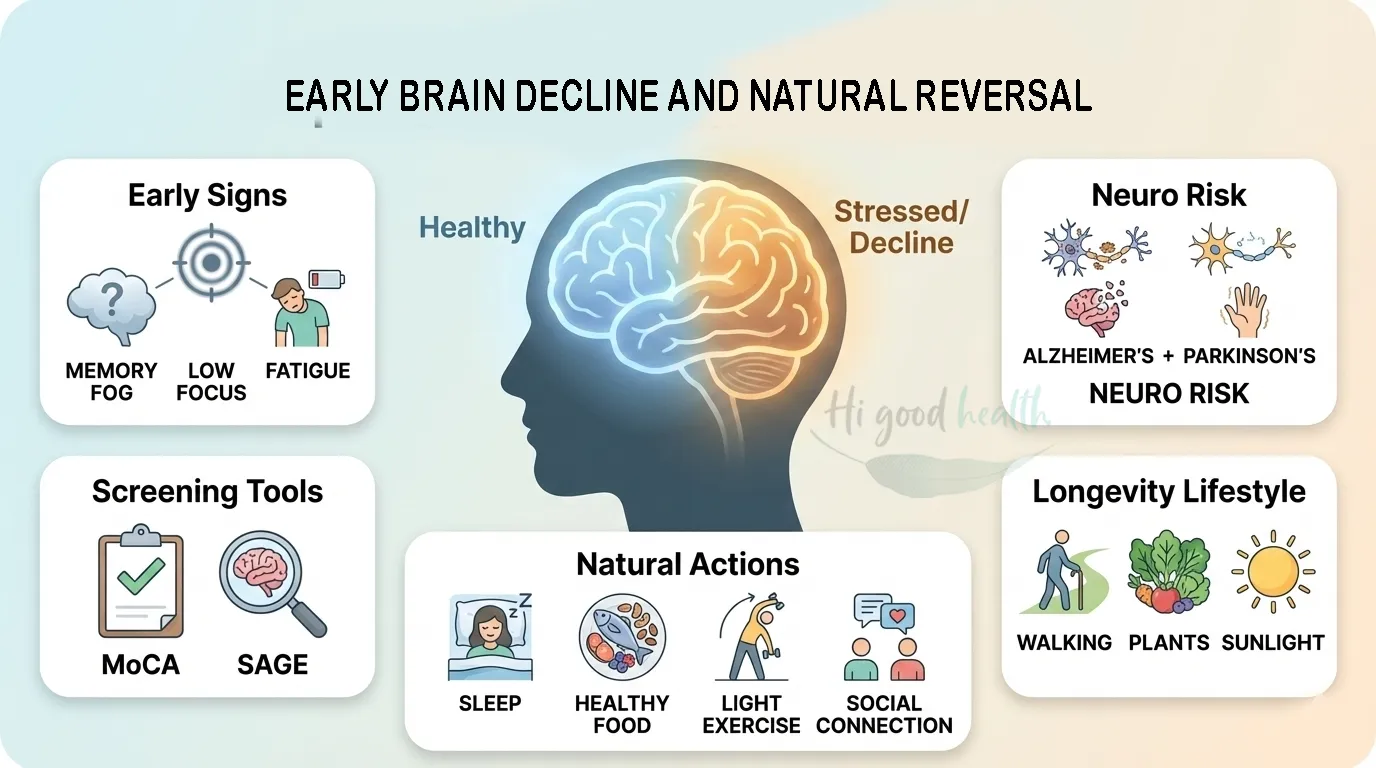
1. Self-Identifying Cognitive Decline: Tools and Tests
Self-Screening Approaches – Free Home Tests
Early awareness is key. While these tools are not diagnostic, they can help identify early cognitive changes:
- Subjective Cognitive Decline (SCD) Checklist: According to the CDC, feeling more forgetful than peers, trouble recalling names, appointments, or recent events, can be early warning signs
- Mini-Cog Test: A simple screening tool involving remembering a few words and drawing a clock can be done at home with paper and pen
- SAGE Test: The Self-Administered Gerocognitive Exam, available free from Ohio State University Wexner Medical Center, is a validated self-screening tool you can complete at home
Professional Diagnostic Tests
| Test Name | Cost Estimate (USD) | Effectiveness | Should You Consider It? |
| MoCA (Montreal Cognitive Assessment) | $0–$50 | High for early detection | Yes, especially after age 60 |
| Neuropsychological Testing | $500–$3,000 | Comprehensive assessment | Yes, if symptoms are frequent |
| MRI/PET Brain Imaging | $1,000–$5,000 | High diagnostic specificity | Only if advised by a neurologist |
| Blood Biomarkers (Amyloid, Tau) | $300–$1,000 | Emerging but promising | Yes, if high family risk or symptoms |
Note: MoCA is not a blood test; it’s a paper-based or digital cognitive screening exam that can be administered by a healthcare professional or trained caregiver.
Important Tip: According to research published in medical journals, Vitamin B12 and D deficiencies are among the most common and reversible causes of brain fog. Ask your doctor about testing these levels.
2. The Silent Rise of Alzheimer’s & Parkinson’s
Worrying Trends
Neurodegenerative diseases are increasing globally, with significant implications for aging populations , According to the latest data:
- Alzheimer’s currently affects over 7.2 million Americans, according to the 2025 Alzheimer’s Disease Facts and Figures published by the Alzheimer’s Association. Numbers are expected to more than double by 2050
- Parkinson’s affects nearly 1 million people in the US, with increasing diagnoses in those under 60, per the Parkinson’s Foundation
- Women and people with diabetes, hypertension, or a sedentary lifestyle are at higher risk, according to CDC guidelines
Why Early Action Matters
By the time Alzheimer’s or Parkinson’s is formally diagnosed, research suggests that 60–70% of neuron damage may already be done. According to studies in neurology journals, early testing and lifestyle interventions can delay progression by several years and significantly improve quality of life.
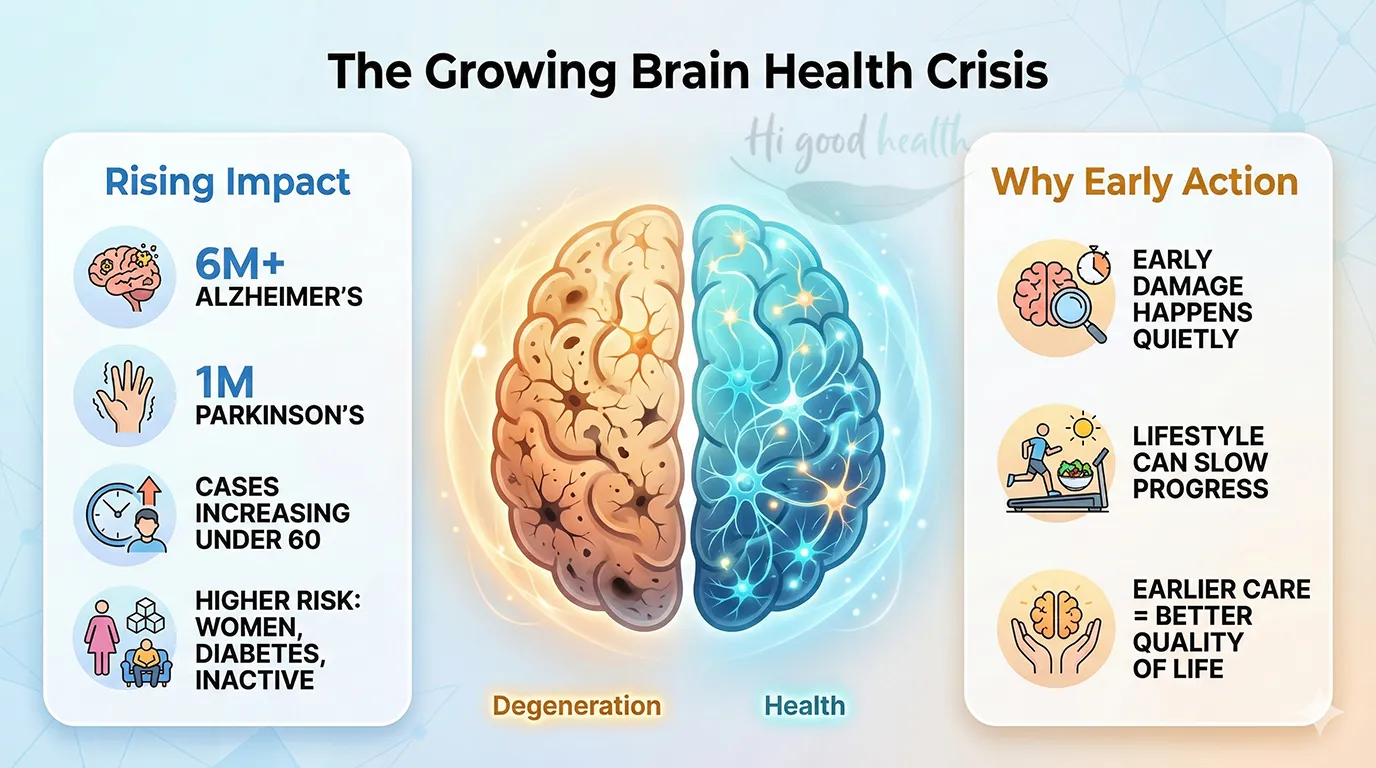
Brain decline statistics
3. Blue Zones: Regions with Less Cognitive Decline
What Are Blue Zones?
Blue Zones are regions in the world with the highest longevity and lowest age-related disease, as identified by Dan Buettner’s Blue Zones Project:
- Okinawa, Japan
- Sardinia, Italy
- Nicoya, Costa Rica
- Ikaria, Greece
- Loma Linda, California
Remarkable Brain Health Statistics
Research shows that in Ikaria, Greece, dementia rates among people over 85 are 75% lower than in the United States. The Sacramento County Public Health Blue Zones initiative is using these principles to address Alzheimer’s risk factors in American communities.
What They Do Differently
Common lifestyle patterns across Blue Zones include:
- Plant-based diets with minimal processed foods
- Strong social support and life purpose (“ikigai” in Japan, “plan de vida” in Costa Rica)
- Daily movement integrated into life (not just gym exercise)
- Limited alcohol, though some regions use red wine in moderation (rich in resveratrol)
- Early dinners and natural fasting periods
How to Follow Their Lifestyle Anywhere
- Follow a Mediterranean-style or plant-forward diet
- Prioritize community connections and sense of purpose
- Include daily functional movement (gardening, walking, household activities)
- Reduce screen time before bed and avoid late-night eating
- Maintain strong social bonds through regular interaction
4. Why Do Neurons Decline? Top Factors to Know
According to the CDC and Alzheimer’s Association, the most common contributors to neural decline in adults over 50 include:
- Oxidative stress and chronic inflammation
- Poor cardiovascular health (linked to reduced blood flow to the brain)
- Chronic stress and poor sleep hygiene
- Nutritional deficiencies (B12, Omega-3, Vitamin D, Magnesium)
- Sedentary lifestyle
- Environmental toxins and heavy metal exposure
How to Counter Them
Based on evidence from medical research:
- Walk 30 minutes daily (supports cardiovascular and brain health)
- Add antioxidant-rich foods (berries, turmeric, green tea)
- Avoid processed snacks, fried foods, and excess sugar
- Get 7–8 hours of quality sleep consistently
- Stay socially active and mentally challenged with new learning
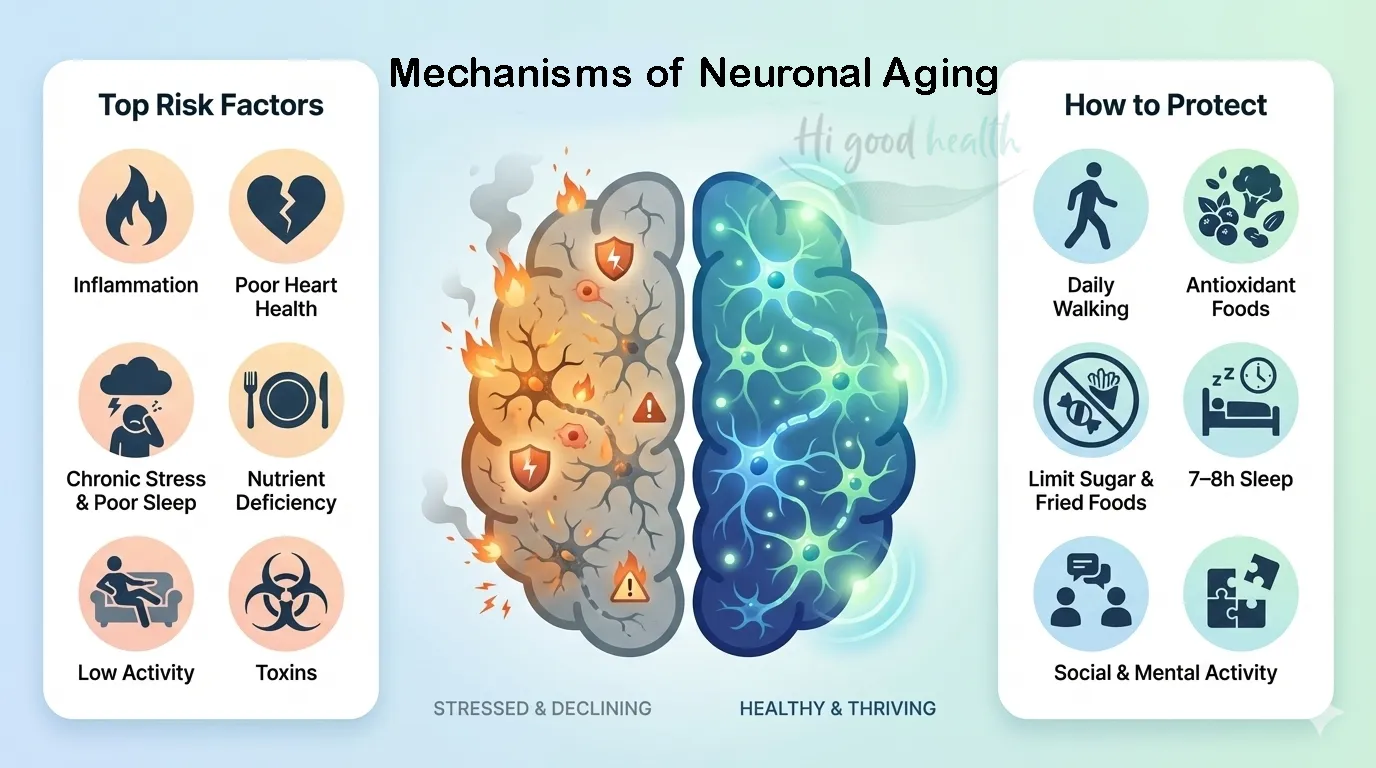
Factors affecting brain health
5. Yoga, Pranayama & Community for the Aging Brain
Research from leading institute such as Harvard Medical School, UCLA, and NYU Langone confirms that regular yoga practice may improve attention, working memory, and stress regulation in older adults.
Best Yoga Styles for 60+
- Chair Yoga – gentle and supportive for limited mobility
- Restorative Yoga – for stress reduction and relaxation
- Gentle Vinyasa – for mild cardiovascular support (for physically fit seniors)
Breathwork to Support Brain Oxygenation
These breathing techniques are traditional practices used for relaxation and focus:
- Box Breathing – 4-4-4-4 rhythm (inhale-hold-exhale-hold)
- 4-7-8 Breathing – calming technique for anxiety reduction
- Nadi Shodhana (alternate nostril breathing) – traditional practice for balance
Why Community Is a Cognitive Protective Factor
According to research cited by the Alzheimer’s Association, regular social engagement, group activities, volunteering, and shared meals may reduce dementia risk by 30–40% compared to socially isolated individuals.
Suggested Resources: Try YouTube channels like Yoga With Adriene, Sadhguru, or The Yoga Institute for beginner-friendly practices suitable for seniors.
6. Plant-Based Diet & Antioxidants for Neuron Health
Brain-Boosting Plant Foods
Research supports the cognitive benefits of these foods:
- Blueberries: rich in flavonoids and polyphenols that may support memory
- Leafy greens: spinach, kale (rich in folate and lutein)
- Turmeric: contains curcumin with potential neuroprotective effects
- Pumpkin seeds: magnesium and zinc for brain health
- Fermented foods: may support the gut-brain axis
Powerful Antioxidants
These compounds have been studied for brain health:
- Resveratrol (from grapes or supplements)
- Quercetin (apples, onions)
- EGCG (green tea)
- Curcumin (turmeric extract)
Brain-Supporting Supplements
Consult your healthcare provider before starting any supplements. Some commonly studied options include:
Always consult a healthcare provider before starting supplements, especially if you have existing conditions or are on medication. Some commonly studied options include:
- Omega-3 (plant-based or fish oil) – May support neuron membrane flexibility
- Bacopa (Brahmi) – Traditional herb studied for memory support
- Ashwagandha – An adaptogenic herb that may help reduce cortisol
- Magnesium L-Threonate – A form that may cross the blood-brain barrier
- Lion’s Mane mushroom – Studied for potential cognitive support
- Ginkgo Biloba – Traditional herb for circulation
- Bacopa Monnieri – Ayurvedic herb for cognitive function
Important: Always check supplement quality. Choose NSF/GMP-certified brands and consult your physician, especially if taking medications.
7. Light & Sound Therapy
Red Light Therapy (Photobiomodulation)
Recent clinical research shows promising results:
- A 2020 study published in Photobiomodulation, Photomedicine, and Laser Surgery showed that 630-nm red light treatment improved cognitive function in elderly patients with mild to moderate Alzheimer’s disease
- A 2017 case series reported significant cognitive improvements in dementia patients with no negative side effects
- A 2025 study demonstrated red light therapy improved cognition by activating formaldehyde-degrading enzymes in the brain
- Multiple animal studies show red light may improve memory by reducing oxidative stress and increasing beneficial brain proteins
Note: This is an emerging therapy. Current clinical trials on photobiomodulation for Alzheimer’s are ongoing. Consult a neurologist before pursuing this treatment.
Sound Therapy & Sunlight
- Binaural Beats & Mantra Chanting – May enhance relaxation and alpha brainwave activity, though more research is needed
- Sunlight Exposure – Just 15 minutes a day supports vitamin D production and circadian rhythm regulation
8. Complementary & Alternative Approaches
Homeopathy
Important Medical Disclaimer: Homeopathy is not supported by mainstream scientific evidence for treating cognitive decline. The following remedies are mentioned for informational purposes only, as they are used in some complementary medicine practices:
- Anacardium Orientale: traditionally used for memory concerns
- Baryta Carb: used in aging-related cognitive complaints
- Aurum Metallicum: for mood-related forgetfulness
Other Emerging Therapies Requiring Medical Supervision
- Infrared light therapy (photobiomodulation helmets)
- Transcranial magnetic stimulation (TMS): FDA-approved for depression, being studied for cognition
- Sound frequency therapy (binaural beats) – limited scientific evidence
These therapies should only be pursued under proper medical guidance.
9. Cutting-Edge Discoveries in Brain Science
What’s New in Research (2020s–Present)
Adult Neurogenesis Is Possible
Contrary to older beliefs, the brain can generate new neurons even in later life. Research in Cell Stem Cell shows that the hippocampus continues producing neurons into advanced age.
Research published in [Cell Stem Cell (2019)] shows the hippocampus continues to produce new neurons throughout aging, with evidence of neurogenesis persisting into the tenth decade of life. A [University of Illinois Chicago study] led by Dr. Orly Lazarov found active neurogenesis in people well into their 90s, with an average of 2,000 neural progenitor cells and 150,000 developing neurons per brain in individuals aged 79-99.
A 2025 review in PMC explains that protecting the “neurogenic niche” through anti-inflammatory living is key to maintaining this process.
BDNF (Brain-Derived Neurotrophic Factor)
Research published in 2024 shows that BDNF, a protein that acts like “fertilizer” for your brain, increases with: – Aerobic exercise – Intermittent fasting
Studies from 2021-2022 suggest that intermittent fasting (IF) may increase BDNF signaling in animal models and some human studies, though a 2024 systematic review found mixed results in humans, indicating more research is needed to establish optimal protocols.
Gut-Brain Axis Breakthroughs
Clinical research from 2020 demonstrates that probiotic strains like Lactobacillus and Bifidobacterium are linked to improved executive function and memory in healthy older adults. A 2022 meta-analysis suggests probiotics supplemented for 12 weeks or longer may improve cognitive function in individuals with mild cognitive impairment.
Polyphenols as Neuroprotective Agents
Research shows high-dose polyphenols from dark berries, green tea, and dark chocolate may act as protective agents, helping prevent oxidative stress that damages neurons. These plant compounds support cognitive resilience through multiple mechanisms.
Glymphatic System Discovery
Scientists have discovered the brain has a waste-clearance system (the glymphatic system) that functions primarily during sleep. Red and near-infrared light (photobiomodulation) are being studied to potentially support this “flushing” process, helping the brain clear out toxic proteins.
How to Benefit from These Discoveries
Based on current evidence:
- Exercise 3–5 times per week to potentially boost BDNF
- Consider time-restricted eating (16:8 or 14:10 patterns) after consulting your doctor
- Eat fiber-rich foods and consider probiotic-rich foods to support your microbiome
- Prioritize 7-8 hours of quality sleep for glymphatic clearance
- Join clinical trials to access cutting-edge treatments (check ClinicalTrials.gov)
Printable Daily Checklist for Brain Health
| Habit | Description |
| Morning Movement | 15–30 mins yoga, stretching, or walking |
| Brain-Healthy Breakfast | Oats, berries, flaxseed, green tea |
| Midday Walk | 20–30 mins outdoors in natural light |
| Cognitive Engagement | Reading, puzzles, learning new skills |
| Brief Rest | 20-minute power nap if needed |
| Social Connection | Family time, friends, volunteering |
| Digital Detox | 2 hours before bedtime |
| Sleep Routine | Consistent bedtime, dark, quiet room |
🧠 The Brain Health Framework Summary
1. Diet
✔️ Plant-based foods | ✔️ Antioxidant-rich choices | ✔️ Brain-supporting nutrients
2. Lifestyle
✔️ Movement & Breathwork | ✔️ Quality Sleep | ✔️ Daily Walking
3. Emerging Therapies
✔️ Light therapy (under medical guidance) | ✔️ Sound practices | ✔️ Complementary approaches (with physician approval)
4. Scientific Understanding
✔️ BDNF support | ✔️ Neurogenesis protection | ✔️ Gut-Brain connection
5. Global Longevity Wisdom
✔️ Blue Zones principles | ✔️ Community engagement | ✔️ Life purpose
Conclusion
Your brain is not destined to decline with age. By identifying early signs, making evidence-based changes in your daily habits, and tapping into both traditional wisdom and modern science, you can support your cognitive health and slow decline. Research consistently shows it’s never too late to implement protective strategies.
Remember: This article provides educational information only. Always work with qualified healthcare professionals to create a personalized brain health plan appropriate for your individual medical situation.
If you prefer a more visual version, check out our YouTube video here:
Frequently Asked Questions
Symptoms often start as mental fatigue, lack of focus, or “brain fog,” even in your 40s and 50s. According to the CDC, specific red flags include difficulty recalling names, appointments, or recent events compared to your peers, or feeling more forgetful than others your age.
Yes. Research shows neurogenesis (growing new neurons) is possible in adults, particularly in the hippocampus. A [2025 study published in Science] from Karolinska Institutet confirms that neurons continue to form in the adult human hippocampus well into late adulthood, identifying the neural progenitor cells that give rise to new neurons.
Lifestyle changes and exercise can increase BDNF, a protein that supports this growth. The emphasis is on slowing decline and protecting existing function rather than reversing established damage.
You can do preliminary screening at home. The SAGE Test from Ohio State University is a validated free tool, and the Mini-Cog (drawing a clock and word recall) can provide basic screening. However, any concerning results should prompt professional evaluation. The MoCA test requires a trained healthcare professional.
According to neurological research, cognitive changes can begin in your 40s. Early lifestyle interventions are valuable because they may delay disease progression by years and help protect brain function before significant damage occurs. Prevention is more effective than trying to recover lost function.
Focus on a plant-based or Mediterranean-style diet rich in antioxidants. Key foods supported by research include blueberries for flavonoids, leafy greens like kale for folate and lutein, and turmeric, which contains potentially neuroprotective curcumin. The Blue Zones diet patterns provide excellent examples.
Some supplements show promise in research. Lion’s Mane and Bacopa have been studied for memory support, while Omega-3 supports neuron membrane health. However, supplement quality varies significantly. Always choose NSF/GMP-certified brands and consult your doctor before starting any supplement, especially if you take medications.
Research indicates red light therapy (photobiomodulation) shows promise. Clinical studies published in 2020 and 2017 showed improvements in cognitive function in elderly patients and those with dementia. Current clinical trials are ongoing. This is an emerging therapy that should only be pursued under medical supervision.
Adopting “Blue Zone” habits shows the strongest evidence. This includes eating a plant-forward diet, maintaining strong social connections, getting quality sleep, and integrating daily movement like walking or gardening into your routine. Research shows these communities have dramatically lower rates of dementia—up to 75% lower in some Blue Zones.
All reference links valid and accessible on 20 March 2026
This article references research and information from the following authoritative sources:
- National Institutes of Health (NIH) – nih.gov
- Centers for Disease Control and Prevention (CDC) – cdc.gov/aging
- PubMed Central – pmc.ncbi.nlm.nih.gov
- Cell Metabolism Journal
- Nutrients Journal
- Nature Neuroscience – nature.com
- Blue Zones Project – bluezones.com
- Alzheimer’s Association – alz.org
- Parkinson’s Foundation – parkinson.org
- Ohio State University Wexner Medical Center – wexnermedical.osu.edu
- Harvard Medical School – hms.harvard.edu
- UCLA Health – uclahealth.org
- NYU Langone – med.nyu.edu
- ClinicalTrials.gov – clinicaltrials.gov
Medical Disclaimer: This article is for educational and informational purposes only and is not intended as medical advice. Always consult with a qualified healthcare professional before making any changes to your health regimen, starting new supplements, or if you have concerns about cognitive decline. The information provided does not replace professional medical consultation, diagnosis, or treatment.
