
We chase vitality, gobble superfoods, and log our steps, all in pursuit of better health. But what about the very air we breathe? We’re taught that oxygen is life itself, and while true, it’s only part of the story. What if the real unsung hero, the silent majority of our atmosphere, is actually… nitrogen? Prepare to have your perceptions of every breath you take completely transformed as we explore the vital composition of normal air and its profound impact on human health and wellbeing.
The Invisible Majority: What’s Really In the Air We Breathe?
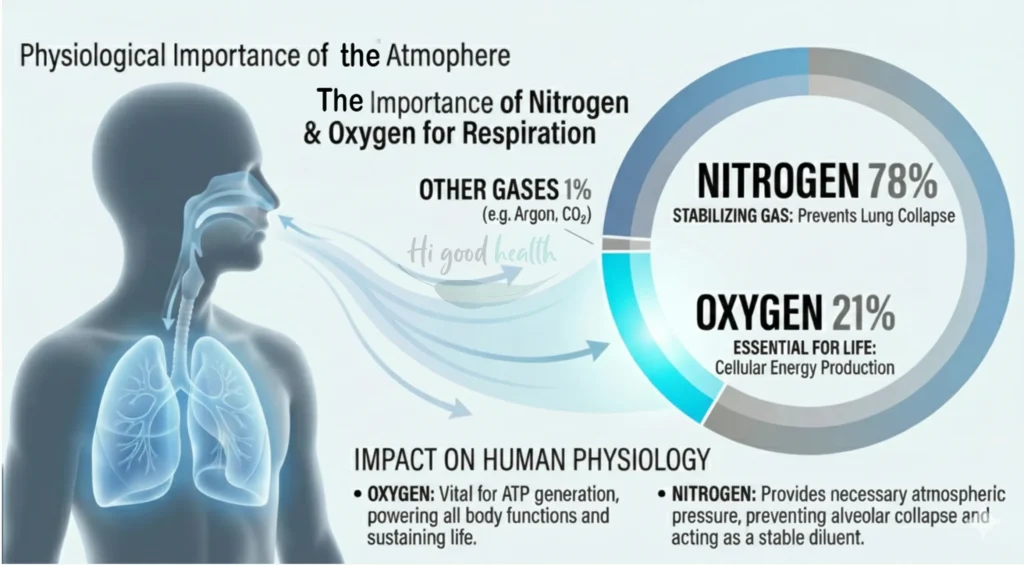
Ever wondered what you’re truly inhaling with each breath? It’s a surprisingly consistent concoction, a delicate dance of elements. On average, our atmosphere is a whopping 78% nitrogen and a brisk 21% oxygen. That final 1%? It’s a fascinating blend of “other gases,” predominantly argon (about 0.93%), with tiny but mighty traces of carbon dioxide (around 0.04%), neon, helium, methane, krypton, hydrogen, and xenon. This isn’t some random mix; it’s a meticulously balanced recipe perfected over millennia to sustain the incredible diversity of life on Earth. You can find detailed atmospheric composition data from sources like NASA or NOAA.
Nitrogen: The Essential Unsung Hero for All Life
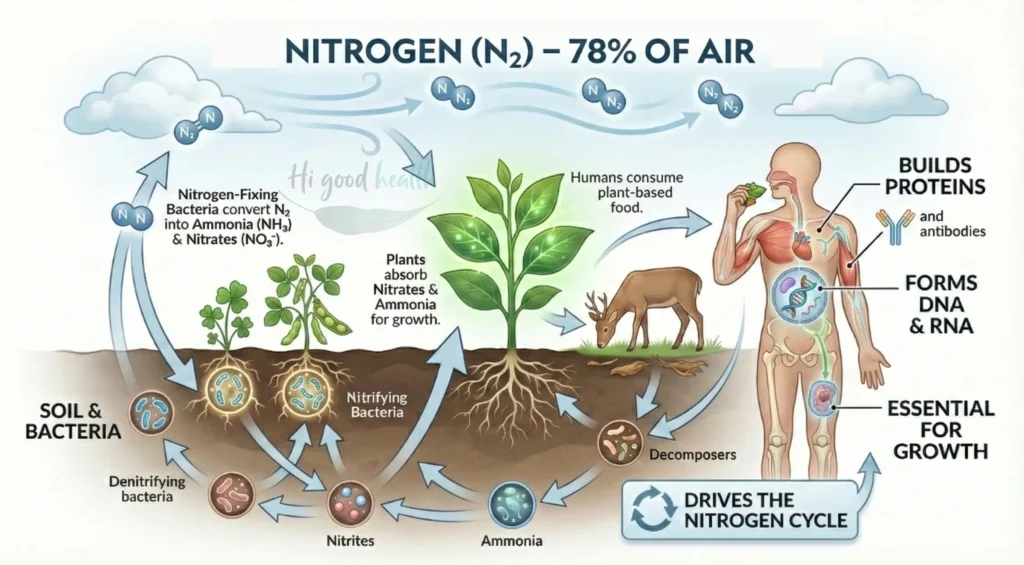
While oxygen gets all the glory for keeping us breathing, nitrogen is arguably just as fundamental to life, playing a crucial role in countless biological processes. Here’s the kicker: while we can’t directly use the nitrogen gas we breathe, it’s absolutely essential for plants. Nitrogen is a core component of chlorophyll, the green pigment that allows plants to perform photosynthesis – turning sunlight into the energy that fuels them and, ultimately, us.
More critically, nitrogen is a vital building block for amino acids, the fundamental units of proteins, which are the workhorses of our cells, forming everything from muscles to enzymes. It’s also key for nucleic acids like DNA and RNA – the very blueprint of life! So, how does this atmospheric nitrogen get into us? It’s thanks to tiny, unsung heroes: nitrogen-fixing bacteria in the soil. They convert atmospheric nitrogen into usable forms like nitrates and ammonia, which plants absorb. When we eat those plants, or animals that have eaten those plants, we consume that vital, fixed nitrogen. This nitrogen cycle is fundamental to all ecosystems, as explained by National Geographic. This is why nitrogen-based fertilizers are so essential for agriculture, replenishing this crucial nutrient in the soil to ensure healthy crops and feed our growing global population.
Beyond Humans: Air Composition for Animals, Fish, and Insects
The atmospheric composition isn’t just perfectly tuned for humans! Most terrestrial animals, from elephants to ants, thrive in the same nitrogen-rich, oxygen-adequate atmosphere we do. They rely on similar respiratory mechanisms to extract oxygen.
For fish and other aquatic life, the story is a bit different. They depend on dissolved oxygen in water, not atmospheric oxygen directly. The amount of dissolved oxygen varies with water temperature, salinity, and other factors, but a healthy aquatic environment typically requires a certain level to sustain fish life. While nitrogen gas can dissolve in water, its direct biological role for aquatic life is less about respiration and more about its cycle in the ecosystem.
Insects also have unique respiratory systems (tracheal systems), but they too are adapted to the roughly 21% oxygen in the air. For all these diverse life forms, the balance is crucial – too much or too little of any gas can be detrimental.
The Optimal Atmospheric Balance: Why Every Gas Matters
The percentages of gases in our atmosphere aren’t random. They represent an optimal balance, a biological sweet spot designed by nature over eons. That 21% oxygen? It’s perfect for efficient respiration for most living things without being so concentrated that it becomes dangerously reactive. And the massive 78% nitrogen isn’t just taking up space; it acts as a crucial diluent, tempering oxygen’s reactivity and playing vital roles in various biogeochemical cycles. Even the trace amounts of “other gases” are precisely what’s needed for their specific functions. Take carbon dioxide – that tiny 0.04% is the lifeblood of plants for photosynthesis. This invisible minority is, in fact, absolutely critical for the planet’s entire biological infrastructure. Any significant deviation from this delicate balance, even a seemingly small one over time, can have profound and devastating impacts on ecosystems and our collective health.
To learn more on how antioxidants protect against oxidative damage, check our detailed blog
Oxygen Chambers: When More Oxygen Isn’t Better for Health
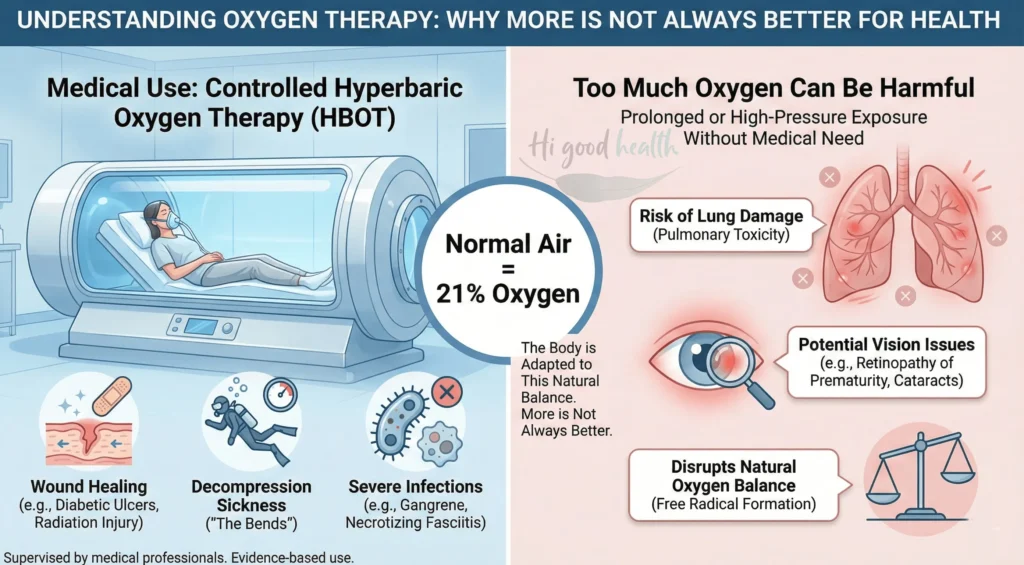
This brings us to a crucial point about the burgeoning trend of oxygen chambers and therapies touted for general health benefits. Yes, in medical settings, oxygen chambers, often called hyperbaric oxygen therapy (HBOT), provide a significantly enhanced percentage of oxygen, sometimes even 100%, at increased pressure. These are used for specific, acute conditions like decompression sickness, severe infections, or non-healing wounds, where the high oxygen dose aids healing, as detailed by the Mayo Clinic.
However, for general “wellness,” more oxygen isn’t necessarily better, and can even be detrimental. As hinted earlier, breathing 100% oxygen for extended periods can indeed be toxic, leading to lung damage, vision changes, and other negative effects. Our bodies are exquisitely adapted to the 21% oxygen in normal air. While short, controlled exposures might be used by athletes or in specific wellness clinics, it’s vital to remember that continuous or unsupervised high-oxygen exposure can disrupt the body’s natural balance. Always consult a healthcare professional before considering such therapies.
To learn more about protecting your brain from cognitive decline, read our in-depth blog
Does Air Composition Vary by Region, Country, or Altitude?
While the global average is remarkably stable, you might wonder if stepping onto a mountain peak or visiting a bustling city changes the air’s recipe. The good news is, for the major players like nitrogen and oxygen, their proportional percentages remain largely consistent. At higher altitudes, the air pressure drops, meaning fewer gas molecules per breath, but the ratio of nitrogen to oxygen holds firm. So, while it feels “thin,” the percentage of life-giving oxygen doesn’t drastically shift. Localized variations, like a temporary spike in pollutants near industrial zones, can occur in the “other gases” category, but these are generally minor and don’t disrupt the fundamental atmospheric balance. Our planet’s air, from the deepest valleys to the highest summits, is remarkably stable.
The Latest Science: Air Quality and Your Long-Term Health
The whispers of science are getting louder: air quality is inextricably linked to our long-term health and wellbeing. Researchers are now meticulously mapping the long-term impacts of even subtle atmospheric shifts and pollutants. We’re learning, for instance, how tiny fine particulate matter (PM2.5) and ground-level ozone – often the unfortunate byproducts of our urban lives – don’t just cause respiratory issues, but can contribute to heart disease, neurological disorders, and even affect cognitive function. The emerging concept of the “exposome” emphasizes that our health isn’t just genetics; it’s the sum total of every environmental exposure, including the air we breathe, throughout our lives. You can explore more about air pollution and its health effects from the Environmental Protection Agency (EPA). So, what’s your takeaway? Be aware of local air quality reports, especially during high pollution days, and consider protecting yourself by limiting outdoor activity or using good quality air purifiers.
Monitoring Your Air: Is It Necessary for Daily Life?
For the average person, obsessively monitoring the precise percentages of nitrogen and oxygen in the air isn’t necessary. These global atmospheric compositions are remarkably stable. However, a growing area of concern is monitoring indoor air quality and staying informed about local outdoor air quality. Indoor air can often be more polluted than outdoor air due to off-gassing from furniture, cleaning products, and poor ventilation. Simple indoor air quality monitors can track harmful pollutants like volatile organic compounds (VOCs), carbon monoxide, and particulate matter, which do directly impact your health. Many cities also offer public Air Quality Index (AQI) reports, providing real-time data on common pollutants. By staying informed and taking steps like ensuring good ventilation, using indoor plants, and choosing eco-friendly products, you can significantly improve the air in your personal environment.
Nitrogen’s Impact on Your Body: Can We Measure Optimal Levels?
Since we consume nitrogen via plants (after it’s converted into nitrates), how does this impact our bodies, and can we measure optimal levels? Once absorbed, nitrates are crucial for synthesizing proteins, DNA, and other vital biomolecules within our bodies. Without sufficient dietary nitrogen (in the form of amino acids from protein), our bodies cannot repair tissues, build enzymes, or produce hormones.
While we don’t typically measure “optimal nitrogen levels” directly in humans in the same way we might measure glucose or cholesterol, we primarily focus on adequate protein intake. Eating a balanced diet rich in protein (from both plant and animal sources) ensures your body gets the necessary amino acids, and thus, sufficient nitrogen. Signs of protein deficiency (and therefore, inadequate nitrogen for body processes) can include muscle wasting, fatigue, and impaired immune function. A healthy diet naturally provides the nitrogen your body needs, making direct measurement of atmospheric nitrogen’s impact on your internal levels unnecessary. For more on protein’s role in the human body, you can refer to resources from the NIH Bookshelf — Physiology, Proteins
https://www.ncbi.nlm.nih.gov/books/NBK555990/
Summary: Appreciating Every Breath for Optimal Health
So, is oxygen overrated? Not entirely, but it certainly shares the spotlight with its unsung hero, nitrogen, and a cast of other vital gases. The air we breathe is a masterpiece of natural engineering, a precisely balanced blend where every component, from the abundant nitrogen that builds our very DNA to the trace carbon dioxide that feeds our plants, plays a non-negotiable role. Understanding this intricate dance deepens our appreciation for the atmosphere and underscores the critical importance of clean air for our health and wellbeing. Let’s breathe deeply, consciously, and work towards protecting this invisible, life-sustaining resource for generations to come.
If you prefer a more visual version, check out our YouTube video here:
Frequently Asked Questions (FAQs) About Air Composition and Health
A1: While normal air contains about 21% oxygen, humans can survive with slightly lower oxygen levels. However, significantly reduced levels (below 19.5%) or overly high levels (above 23.5%) can be dangerous. For optimal health and function, the standard 21% is ideal.
A2: No, breathing 100% oxygen for extended periods can be toxic. While used medically in specific situations like hyperbaric oxygen therapy, prolonged exposure can damage lung tissue, affect vision, and disrupt the body’s natural antioxidant defenses. Our bodies are designed to function with the natural balance of gases in normal air.
A3: If the proportion of nitrogen significantly increased (at the expense of oxygen), it would lead to oxygen deprivation (hypoxia), which is dangerous for all oxygen-breathing organisms. However, in its normal atmospheric concentration, nitrogen is inert and harmless to breathe directly.
A4: Air pollution generally doesn’t significantly alter the overall percentages of major gases like nitrogen and oxygen. Instead, it introduces harmful trace gases (like sulfur dioxide, nitrogen oxides) and particulate matter that, even in small quantities, can have detrimental health and environmental effects.
A5: While you can find oxygen sensors, devices that accurately measure the precise percentages of nitrogen and oxygen in your home air are generally not necessary or commonly available for consumer use. Focus instead on indoor air quality monitors that detect common pollutants like VOCs, carbon monoxide, and particulate matter, as these are more relevant to home health.
A6: Plants can’t directly absorb nitrogen gas from the air either. Instead, specific microorganisms in the soil (nitrogen-fixing bacteria) convert atmospheric nitrogen into forms like nitrates and ammonia, which plants can then absorb through their roots. These “fixed” forms of nitrogen are then used by plants to build essential molecules like proteins and DNA.
A7: While we don’t typically measure “nitrogen levels” directly in humans in terms of atmospheric intake, we focus on ensuring adequate protein intake. Protein provides the amino acids, which are the building blocks containing nitrogen, that our bodies need. Blood tests for protein levels or assessments of dietary protein intake are ways to gauge if you’re getting enough of this crucial element.

