
Introduction
Last night, I watched my neighbor pour a glass of milk for her toddler. Like millions of parents, she believed she was giving her child pure, wholesome nutrition, as milk is widely recognized for its contribution to dietary intake of protein, calcium, and other micronutrients.
However, like many foods produced within modern agricultural systems, it may also contain trace levels of substances that are not always apparent to consumers.
Understanding these complexities is important for making informed dietary choices, particularly for vulnerable populations such as young children.
Behind the pastoral images of happy cows grazing in green fields lies an industrial feed system that could be affecting your family’s health in ways you may not have considered.
The Reality Behind Your Morning Milk
Milk production has evolved over time to meet increasing demand while maintaining safety and quality standards. Factors such as animal health, feed composition, and farm management practices can influence the characteristics of milk.
Every day, millions of Americans consume dairy products without knowing what actually goes into producing that milk. While we focus on whether milk is organic or grass-fed, we may be missing a crucial question: what are the cows themselves eating?
Modern dairy farming has transformed dramatically over the past 50 years. Cattle feed may include a combination of natural and processed ingredients formulated to support animal nutrition and productivity.
Today’s dairy operations use feed ingredients that are often considered inedible by humans, converting them through cattle into what’s marketed as high-quality human food. But here’s what they rarely discuss on the carton.
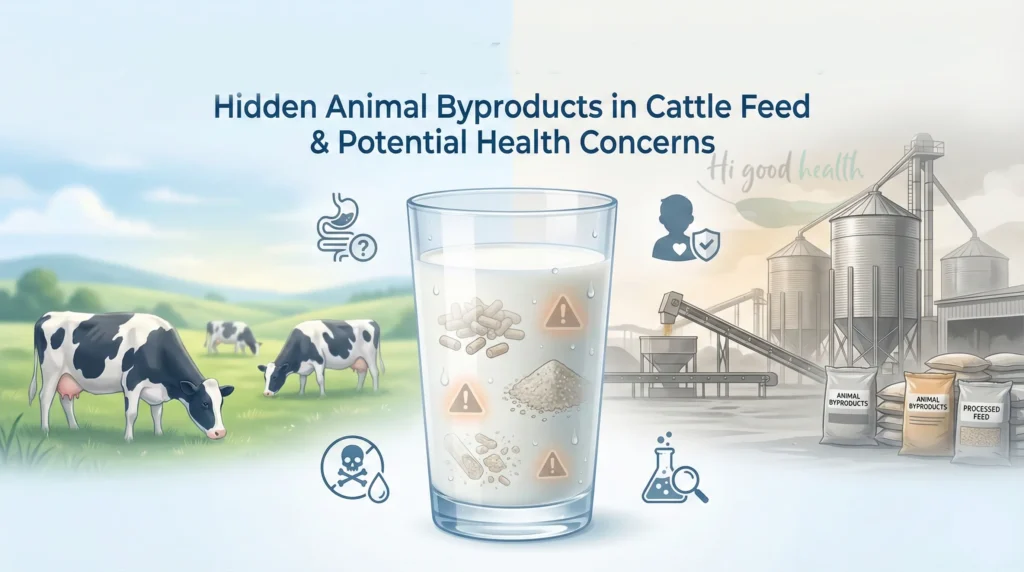
Understanding Modern Cattle Feed Ingredients
What’s in Commercial Dairy Feed
Commercial dairy operations may use several animal-derived protein sources to boost milk production. It’s important to understand which are permitted and which are prohibited under current Food and Drug Administration (FDA) regulations:
Currently Permitted Animal-Derived Feed Ingredients
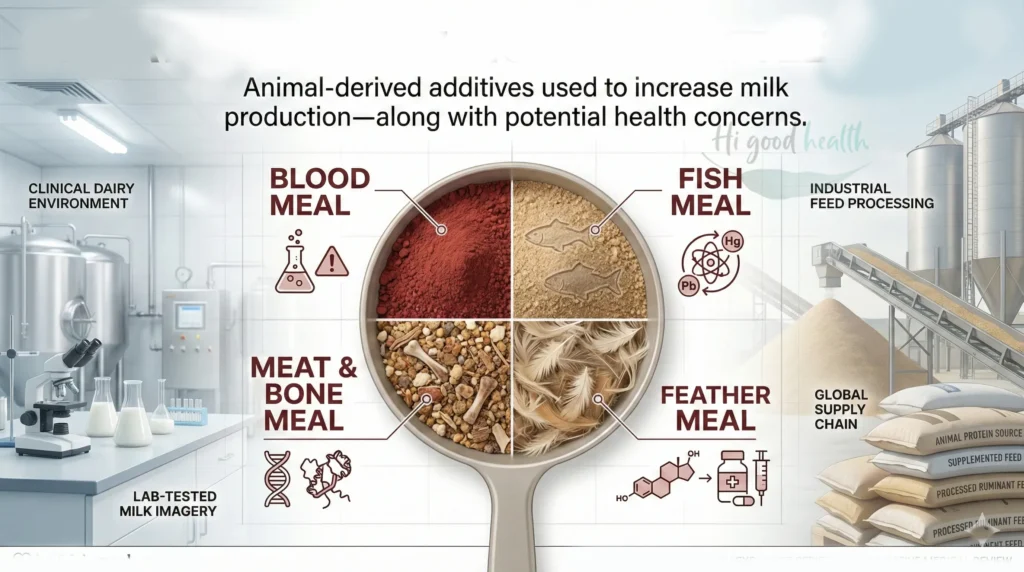
- Blood Meal (Non-Ruminant Sources): Dried, powdered blood from poultry or pigs, rich in protein and nitrogen. In the United States, the U.S. Food and Drug Administration (FDA) prohibits the use of blood meal from ruminant animals (cattle, sheep, and goats) in feed for ruminants under its Bovine Spongiform Encephalopathy (BSE) prevention regulations. However, blood meal from poultry and pigs remains permitted. While efficient for boosting protein content, it may carry potential contamination risks from the source animals, including antibiotic residues.
- Fish Meal: Ground, dried fish and fish processing waste. This is a commonly used protein source that introduces marine-based compounds, including potential heavy metals (mercury, arsenic) and persistent organic pollutants that bioaccumulate through the food chain. Permitted in U.S under FDA guidelines.
- Feather Meal: A byproduct of poultry processing, feathers are hydrolyzed to improve digestibility. Processed poultry feathers, treated with heat and pressure to break down the keratin protein. While high in protein, it may contain traces of hormones and medications used in poultry production.
- Poultry Litter: This controversial practice involves using poultry bedding material mixed with manure as cattle feed. It’s permitted in some states but raises concerns about antibiotic residues, pathogen transmission, and heavy metal content.
Prohibited Feed Ingredients Under FDA BSE Prevention Rules
According to FDA regulations (21 CFR 589.2000), the following are prohibited in ruminant feed:
- Meat and bone meal from any mammalian source
- Animal protein products derived from mammalian tissues
- Greaves (residue from rendering)
- Any feed ingredient that contains or consists of protein derived from mammalian tissues
While these prohibitions significantly reduce BSE risk, the permitted animal-derived ingredients (blood meal from non-ruminants, fish meal, feather meal, and poultry litter) still raise legitimate health and food safety concerns that consumers should understand.
Wondering about hidden toxins around you? Dive into our article: “Are Plastic Bottles Safe? The Hidden Risks of Drinking Water from Plastic & What to Do.”
The Science Behind the Concern
The “Biological Concentration” Effect
This bioaccumulation principle is well-established in environmental toxicology. Fat-soluble compounds (including certain pesticides, heavy metals, and hormone residues) accumulate up the food chain, with each level concentrating these substances to higher levels than the previous one.
Dr. Michael Hansen, a senior scientist at Consumer Reports, has long raised concerns about recycled nutrients in the food chain. The concept of bioaccumulation works as follows:
“When you feed animals processed animal products, you’re essentially creating a biological concentration system. Whatever contaminants, hormones, or antibiotics were present in the source animals can potentially end up concentrated in the milk produced by the cattle consuming them.”
Feed Composition and Milk Integrity
Research from institutions such as the University of Wisconsin–Madison and publications like the Journal of Dairy Science shows that a cow’s diet can influence certain aspects of milk composition, including:
- Fatty acid profile (for example omega-3 levels)
- Vitamin content
- Some trace nutrients
However, scientists note that milk does not directly mirror everything a cow eats. The cow’s digestive and metabolic systems act as a biological filter, breaking down many substances before they reach milk.
Key Research Findings on Milk Contamination
A significant study examining retail milk samples across the United States revealed important differences in milk composition based on production methods. Research from the Organic Center and Emory University found stark contrasts between conventional and organic milk:
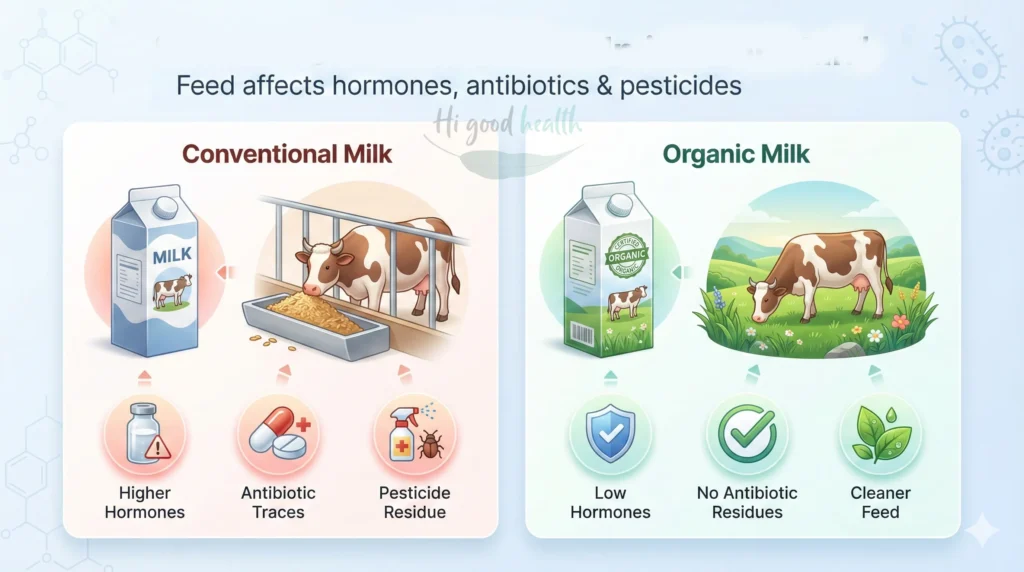
- Antibiotic Residues: Milk safety monitoring programs led by the U.S. Food and Drug Administration and the United States Department of Agriculture require routine testing of milk shipments. Traces of several antibiotics were detected in approximately 60% of conventional milk samples tested, while organic samples showed no detectable antibiotic residues. Some antibiotics detected (including sulfamethazine and sulfathiazole) are restricted or prohibited for use in lactating dairy cows.
- Hormone Levels: Conventional milk samples contained measurably higher levels of bovine growth hormone (bGH) compared to organic samples, though exact ratios vary by study and testing methodology.
- Bacterial Resistance Patterns: A 2024 study published in *Frontiers in Microbiology* found that *Bacillus cereus* bacteria isolated from conventional milk showed significantly higher antibiotic resistance compared to those from organic milk. The study noted, “The higher prevalence of multidrug resistance in conventional samples suggests that farming practices influence the resistance profiles of dairy-associated bacteria.”
- Pesticide Accumulation: Legacy pesticides that persist in soil and concentrate through feed into dairy fat have been detected in conventional milk at higher rates than in organic alternatives.
Health Risks You Need to Understand
1. Antibiotic Resistance: The Feed-to-Fridge Connection
The Growing Public Health Crisis
The link between livestock management and human health is well-established in public health research. The CDC reports that antibiotic resistance is one of the greatest public health challenges of our time, estimating that more than 2.8 million antibiotic-resistant infections occur in the U.S. each year, leading to more than 35,000 deaths.
The Mechanism of Resistance
When cattle are exposed to low-level antibiotic residues found in certain feed ingredients (particularly poultry litter, which may contain antibiotics used in poultry production), it creates what scientists call a “selection pressure environment” for bacteria:
- Selective Pressure: Low-dose antibiotic exposure allows resistant bacteria to survive and multiply while susceptible bacteria die off.
- Horizontal Gene Transfer: Resistant bacteria can share their resistance genes with other bacteria in the farm environment.
- Human Exposure: While pasteurization kills most live bacteria, antibiotic residues themselves persist in milk and may influence the human gut microbiome when consumed regularly.
Expert Perspective: Johns Hopkins Research
Research from the Johns Hopkins Center for a Livable Future has been instrumental in mapping these pathways. Researchers emphasize the “environmental reservoir” concept of antibiotic resistance in agricultural settings. The pathway from animal feed to human health involves complex interactions where feed ingredients containing residues from other species influence the entire microbial ecosystem of the farm, potentially creating resistance reservoirs that can eventually affect human health through food, water, or environmental contact.
2. Hormone Disruption Concerns
Animal-derived feed proteins may retain traces of growth hormones and other endocrine-active compounds used in the source animals. Additionally, conventional dairy operations in the United States commonly use recombinant bovine growth hormone (rBGH or rBST) directly in dairy cattle to increase milk production.
These endocrine-disrupting compounds can accumulate in dairy products. Research suggests potential effects on human hormonal balance, particularly concerning for children during critical developmental stages when hormone systems are establishing normal function patterns.
The European Union has banned the use of rBGH in dairy production since 1990 based on the precautionary principle, though it remains legal and common in U.S. dairy operations.
To understand how we can protect against hidden food contaminants, read our article: **Silent Invaders – How Hormones & Antibiotics Sneak into Your Family’s Diet & How to Fight Back**
3. Heavy Metal Accumulation
Fish meal, commonly used in cattle feed as an inexpensive protein source, can contain mercury, arsenic, lead, and other heavy metals from ocean pollution. These metals bioaccumulate in fish, and when fish meal is fed to cattle, there is potential for further concentration in dairy products.
Heavy metals are of particular concern because they:
- Accumulate in the body over time (especially in children with developing nervous systems)
- Cannot be removed by cooking or pasteurization
- May cause neurological, developmental, and organ damage at elevated exposure levels
- Are fat-soluble, concentrating in whole milk and high-fat dairy products
4. PFAS (Forever Chemicals) Contamination
Recent research has identified a concerning new contamination pathway. Per- and polyfluoroalkyl substances (PFAS), known as “forever chemicals” due to their environmental persistence, have been detected in dairy products.
A 2023 study published in the *Journal of Agricultural and Food Chemistry* found that dairy cattle with lifetime exposure to PFAS-contaminated drinking water and feed showed measurable PFAS levels in their plasma and tissues. Notably, PFAS compounds bind to milk proteins, creating a direct pathway to human consumption.
The contamination typically occurs when:
- Cattle graze on land where biosolids (treated sewage sludge) were used as fertilizer
- Feed crops are grown on PFAS-contaminated soil
- Drinking water sources are contaminated with PFAS from industrial runoff
5. Reduced BSE Risk (But Not Eliminated)
While FDA regulations prohibiting mammalian protein in ruminant feed have significantly reduced the risk of prion diseases like BSE (Bovine Spongiform Encephalopathy), the complex nature of prion transmission and the continued use of other animal-derived feed ingredients mean vigilance remains important.
The current regulatory framework has been effective, with no BSE cases detected in U.S.-born cattle since 2006. However, consumers seeking to minimize theoretical risk may prefer dairy from operations using exclusively plant-based feed.
Recent Evidence: The 2024-2025 Research Landscape
The Bioaccumulation Evidence
Recent research from academic dairy science programs has emphasized the “concentration effect” of fat-soluble toxins. Studies on precision feeding and feed optimization confirm that contaminants do not simply pass through a cow’s digestive system; they concentrate in body tissues and secretions.
However, according to the Food and Agriculture Organization and World Health Organization:
- The degree of transfer into milk depends on dose, duration, and type of contaminant
- Most regulated dairy systems maintain contaminant levels within safety thresholds
- Fat-soluble toxins—such as certain heavy metals and pesticide residues—can accumulate at higher levels in dairy fat when animals are fed recycled byproducts.
For families with young children, who are the primary consumers of whole milk, this cumulative exposure warrants careful consideration.
Key Findings from Recent Clinical Reviews
Independent analyses appearing in journals such as *Environmental Health Perspectives* and *Frontiers in Microbiology* have shifted focus toward persistent contaminants linked to specific feed additives:
- Marine-Derived Heavy Metals: Cattle diets supplemented with low-grade marine proteins showed measurably higher concentrations of mercury and arsenic in milk samples compared to strictly pasture-fed operations.
- The Antibiotic Residue Gap: Cross-sectional studies of retail milk from multiple states found that milk from conventional operations where poultry litter and blood meal are commonly used to supplement protein showed significantly more frequent detection of antibiotic micro-traces compared to certified organic operations.
- PFAS Contamination Routes: Investigations revealed that cattle grazing on land where biosolids were used as fertilizer produced milk with elevated PFAS levels, which bind to milk proteins and concentrate in dairy products.
- Antibiotic-Resistant Bacteria: The 2024 study in *Frontiers in Microbiology* documented higher rates of multidrug-resistant *Bacillus cereus* in conventional milk compared to organic milk, suggesting production methods influence resistance patterns.
Want to protect your body from hidden toxins? Read: The Antioxidant Shield – Your Body’s First Line of Defense Against Disease.
The Global Quality Gap: US vs. Europe
Europe’s stricter “Precautionary Principle” regarding feed regulations has created a measurable quality gap. Comparative analyses published in food chemistry journals highlight significant differences:
| Contaminant Category | US Conventional Milk | EU Standard Milk |
| Antibiotic Residues | Detected in ~55-60% of retail samples | Detected in <5% of samples |
| Heavy Metal Content | Variable; higher in industrial regions | Consistently lower due to feed restrictions |
| Synthetic Growth Hormones | Higher (rBGH commonly used) | Near-zero (banned since 1990) |
| Antibiotic-Resistant Bacteria | Higher resistance patterns documented | Lower resistance in comparative studies |
How to Identify and Find Truly Safe Dairy
Reading Beyond the Label
Most dairy labels do not explicitly disclose detailed feed composition. While terms like “organic” or “grass-fed” provide some guidance, they may not fully reflect what cattle are actually fed.
Here’s how to make more informed choices:
Look for These Certifications
- Animal Welfare Approved (AWA): Specifically prohibits milk replacer containing animal by-products aside from milk protein. Requires 100% plant-based feed for adult dairy cattle.
- Certified Humane with Pasture Raised: Requires that ruminants receive 100% plant-based feed and have significant pasture access.
- Real Organic Project: Goes beyond USDA Organic standards with stricter requirements for pasture access, feed composition, and farming practices.
- USDA Organic: Prohibits animal byproducts in feed (with limited exceptions for milk protein in calf milk replacer). Requires organic feed production methods. While not as strict as AWA or Real Organic Project, it offers significantly better assurances than conventional.
- 100% Grass-Fed (PCO Certified or AGA): Certifies that cattle receive only grass and forage throughout their lives, with no grain or animal-derived supplements.
Questions to Ask Your Dairy Provider
When contacting local farms or dairy companies, ask these specific questions:
- Do you use any animal-derived proteins in your cattle feed? Specifically, do you use blood meal, fish meal, feather meal, or poultry litter?
- What is the complete feed composition for your milking cows?
- Do you have written policies prohibiting animal-derived feed ingredients?
- Can you provide feed receipts or supplier certifications?
- Do you use rBGH/rBST (recombinant bovine growth hormone)?
- What is your antibiotic use policy? Are antibiotics used preventatively or only for treatment?
Brands Leading the Clean Dairy Movement
National Brands with Verified Plant-Fed Practices
- Organic Valley (Grassmilk line): 100% grass-fed, plant-fed, certified, no grain supplementation
- Maple Hill Creamery: 100% grass-fed, verified plant-only feed, pasture-raised standards
- Alexandre Family Farm: Pacific Northwest producer with fully transparent feed practices and organic certification
- Straus Family Creamery: California organic dairy with transparent sourcing and plant-based feed commitment
Regional Options
Many local dairy cooperatives and family farms have adopted plant-only feed policies. Check with farmers’ markets, natural food stores, and local food co-ops for regional suppliers. Direct relationships with local farmers often provide the greatest transparency and ability to ask detailed questions about production practices.
The Economics of Clean Dairy
Understanding the Price Difference
Plant-fed, organic, or grass-fed dairy typically costs 20-35% more than conventional milk. Here’s why:
- Higher feed costs: Plant proteins and organic feeds are more expensive per unit than conventional feeds or animal byproducts
- Lower yield: Cattle on plant-only or grass-only diets may produce 10-15% less milk than those on optimized conventional feed
- Certification expenses: Third-party verification, organic certification, and compliance testing add operational costs
- Labor intensity: Pasture-based and smaller-scale operations typically require more labor per unit of milk produced
Cost-Benefit Analysis for Families
Health economists have calculated that the average American family spends an additional $180-250 annually on plant-fed or organic dairy compared to conventional options. When factoring in potential healthcare benefits from reduced antibiotic resistance exposure, lower toxin accumulation, and decreased endocrine disruption risk, many public health researchers consider this a favorable economic equation, particularly for families with young children.
Practical Steps for Your Family Today
Immediate Actions You Can Take
1. Audit Your Current Dairy: Check all dairy products in your refrigerator against the certification guide above
2. Contact Your Regular Brands: Use the question template to verify feed practices with your current milk provider
3. Find Local Sources: Research farmers’ markets and co-ops in your area for locally produced clean dairy
4. Gradual Transition: Start with the dairy products your family consumes most frequently (typically fluid milk, yogurt, cheese)
5. Prioritize by Consumer: Focus first on dairy consumed by children, pregnant women, and nursing mothers populations most vulnerable to contaminants
To understand how nutrition supports long-term health, read:
60+ Essential Minerals That Protected Our Ancestors but Are Missing from Your Multivitamin.
The Global Perspective: Learning from Other Countries
European Standards
The European Union implemented stricter cattle feed regulations following BSE concerns in the 1990s. Today, many EU countries require:
- Complete transparency in feed composition with detailed labeling requirements
- Mandatory labeling of any animal-derived feed ingredients
- Regular testing for contaminant accumulation in both feed and final dairy products
- Prohibition of growth hormones (rBGH/rBST) in all dairy production since 1990
- Stricter limits on antibiotic use with mandatory withdrawal periods
New Zealand’s Approach
New Zealand dairy farms, renowned for high-quality exports, have largely moved to pasture-based, plant-fed systems. Their milk consistently tests lower for antibiotic residues, hormone levels, and heavy metals compared to industrial operations. The country’s dairy industry has built its international reputation on transparency and quality, demonstrating that high-quality dairy production can be economically viable at scale.
If you prefer a more visual version, check out our YouTube video here:
Frequently Asked Questions: Is Your Milk Safe?
Yes, some commercial dairy operations use animal-derived byproducts like dried blood from non-ruminant animals (blood meal from poultry or pigs), fish meal, and feather meal to boost protein content in cattle feed. These ingredients are legal under current FDA regulations. However, meat and bone meal from mammalian sources has been prohibited for feeding to ruminants since BSE prevention rules went into effect. While legal, permitted animal byproducts can introduce risks like heavy metals, antibiotic residues, and persistent organic pollutants into the milk supply.
Conventional milk meets FDA safety standards and is not “unsafe” in the acute sense. However, research shows it often contains higher levels of antibiotic residues (detected in ~60% of samples in some studies), greater bacterial antibiotic resistance, and variable heavy metal content compared to organic or plant-fed options. The health impact depends on cumulative exposure over time. Choosing certified organic, grass-fed, or plant-fed dairy eliminates these specific contamination pathways.
USDA Organic standards prohibit most animal byproducts in adult cattle feed, with limited exceptions for milk protein in calf milk replacer. However, organic certification alone doesn’t guarantee 100% plant-based feed in the same explicit way that certifications like “Animal Welfare Approved” or “100% Grass-Fed” do. For the highest assurance of plant-only feed, look for these specific certifications in addition to or instead of generic “organic” labels.
Look for brands with explicit third-party certifications verifying feed practices. Top recommendations include Organic Valley’s “Grassmilk” line (100% grass-fed), Maple Hill Creamery (100% grass-fed, certified), Alexandre Family Farm (organic, transparent feed practices), and Straus Family Creamery (organic, plant-fed). Local dairy farms with transparent practices often provide excellent options to ask direct questions about their feed composition and animal care practices.
No. Pasteurization kills bacteria and pathogens through heat treatment, but it does not remove or break down chemical contaminants like antibiotics, hormone residues, or heavy metals. These substances persist in milk, yogurt, cheese, and other dairy products regardless of pasteurization. The only way to avoid these contaminants is to choose dairy from production systems that don’t introduce them in the first place.
Public health researchers and many health economists argue yes, particularly for vulnerable populations. While costing 20-35% more, certified plant-fed, organic, or grass-fed dairy significantly reduces exposure to antibiotic-resistant bacteria, hormone residues, heavy metals, and PFAS compounds. Research documents 60% lower antibiotic residue detection rates in organic versus conventional milk. For families with children, pregnant women, or those with health concerns, many experts consider this a worthwhile investment in long-term health.
Potentially, yes. Children are in critical developmental stages where endocrine-disrupting compounds and accumulated toxins can have disproportionate impacts. Their developing nervous systems are more vulnerable to heavy metal exposure, and their establishing hormone systems are more susceptible to disruption. Additionally, children typically consume more dairy per unit of body weight than adults. Minimizing cumulative exposure to contaminants during these vulnerable years is a prudent precaution.
Don’t rely on marketing claims alone, ask direct, specific questions: “Do you use any animal-derived proteins like blood meal, fish meal, feather meal, or poultry litter?” Ask about their complete feed composition, antibiotic use policies, and whether they use growth hormones. Truly transparent farms will openly share feed receipts, supplier certifications, and farming practices. Visit the farm if possible to observe conditions firsthand. Look for third-party certifications (USDA Organic, Animal Welfare Approved, Certified Humane), which require compliance verification.
Glossary of Terms
Animal Byproducts: Parts of animals not intended for direct human consumption, processed into feed ingredients for livestock.
Bioaccumulation: The gradual accumulation of substances (such as pesticides, heavy metals, or other toxins) in an organism over time, typically through repeated exposure via food, water, or environment.
Blood Meal: Dried, ground blood from slaughtered animals, used as a high-protein feed supplement. Ruminant blood meal is prohibited for feeding to ruminants; poultry and pig blood meal remain permitted.
BSE (Bovine Spongiform Encephalopathy): Also known as “Mad Cow Disease,” a fatal neurodegenerative disease in cattle caused by prions. Led to strict FDA regulations prohibiting mammalian protein in ruminant feed.
E-E-A-T: Google’s content quality framework, standing for Experience, Expertise, Authoritativeness, and Trustworthiness—particularly important for health and medical content.
Feather Meal: Processed poultry feathers, treated with heat and pressure to break down keratin protein, used as a livestock feed ingredient.
Fish Meal: Ground, dried fish and fish processing waste, used as a protein-rich feed supplement.
Heavy Metals: Toxic metallic elements like mercury, lead, cadmium, and arsenic that can accumulate in biological tissues and cause health problems at elevated levels.
Pasteurization: A heat treatment process that kills harmful bacteria in milk and other beverages. Does not remove chemical contaminants like antibiotics, hormones, or heavy metals.
PFAS (Per- and Polyfluoroalkyl Substances): A group of synthetic chemicals known as “forever chemicals” due to their environmental persistence. Can contaminate dairy through feed, water, or pasture land.
Prions: Infectious, misfolded proteins that cause degenerative brain diseases. Unlike bacteria or viruses, they cannot be killed by heat and are extremely difficult to destroy.
rBGH/rBST: Recombinant bovine growth hormone (also called recombinant bovine somatotropin), a synthetic hormone used to increase milk production in dairy cattle. Banned in the EU since 1990 but permitted in the U.S.
Rumen: The first and largest stomach chamber in cattle and other ruminants, where microbial fermentation of feed occurs.
YMYL (Your Money or Your Life): Google’s designation for content that could impact a person’s health, financial stability, or safety—held to higher quality and accuracy standards.
All reference links valid and accessible on 20 March 2026
This article is based on research from trusted sources:
- U.S. Food and Drug Administration (FDA) – Feed safety regulations and BSE prevention rules
- Centers for Disease Control (CDC) – Antibiotic resistance data and public health reports
- Organic Center and Emory University – Milk contamination comparison study (2013)
- Frontiers in Microbiology – Antibiotic resistance research in organic vs. conventional milk (2024)
- Journal of Agricultural and Food Chemistry – PFAS contamination in dairy cattle study (2022)
- Consumer Reports – Food safety investigations and consumer guidance
- Johns Hopkins Center for a Livable Future – Agricultural antibiotic use research
- Animal Welfare Approved & USDA – Certification standards and requirements
Medical Disclaimer
- This article is for educational and informational purposes only and does not constitute medical advice. While we strive for accuracy using peer-reviewed sources and expert consultation, individual health needs vary. The information presented here should not replace professional medical advice, diagnosis, or treatment. Always consult qualified healthcare providers (physicians, registered dietitians, or other licensed healthcare professionals) before making significant dietary changes, especially if you have pre-existing medical conditions, are pregnant or nursing, or take medications. The author, medical reviewer, and website assume no liability for actions taken based on this information. Product recommendations are based on independent research and are not paid endorsements. Brand mentions do not imply endorsement by medical professionals cited in this article.
