
BREAKING UPDATE: Scientists Have Detected Microplastics in Human Brain Tissue — Raising New Concerns About Long-Term Neurological Effects
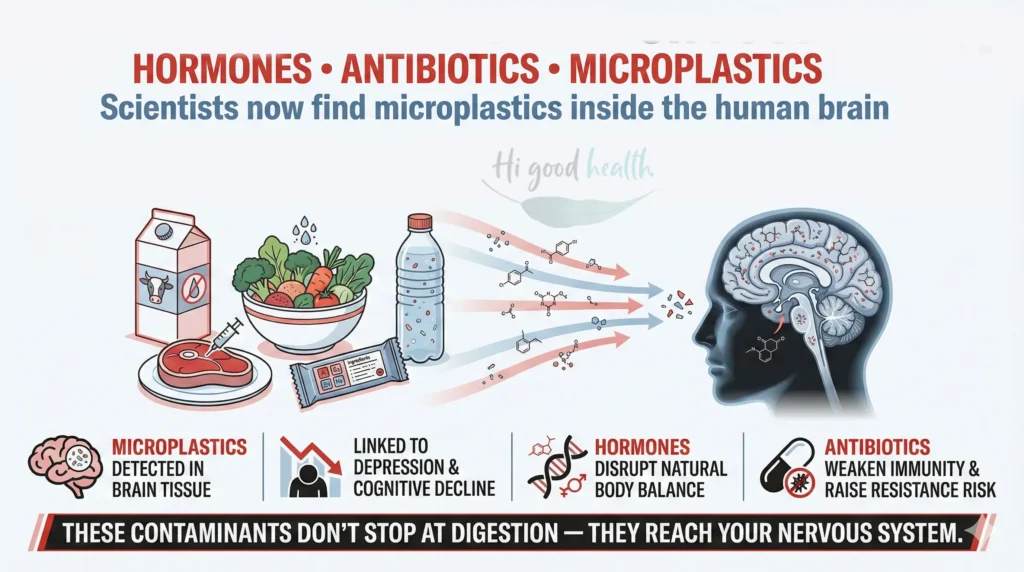
You might have thought food contamination only affects your gut or organs, but the latest research has shocked the world! Studies published in June 2026 reveal alarming quantities of microplastics accumulating in the human brain – in measurable quantities, with researchers warning that the health implications are still being actively investigated.
These tiny plastic particles, especially from ultra-processed foods, are increasingly being investigated for their potential neurological effects. While experimental studies suggest possible links to inflammation and cognitive changes, researchers caution that direct connections to conditions like depression or dementia in humans are still under study.
The threat has moved beyond your plate and reached directly into your brain!
Introduction
You prepare healthy meals, filter your water, and try to live well—yet unseen contaminants may still be entering your home. From dairy and meat to produce and tap water, trace amounts of hormones and antibiotics are finding their way into our food chain. These “silent invaders” may sound harmless, but mounting evidence suggests they can disrupt your body’s natural hormone balance, weaken your immune system, and even contribute to antibiotic-resistant infections and early puberty in children. In this blog, we explore how these chemicals get into the food supply, how they can affect our health, what governments around the world are doing about it, and most importantly—what you can do to protect your loved ones. As a society, the only long-term solution is to remain vigilant and stand up against those who are putting profits over the planet and our collective health
1. Where These Contaminants Come From
The following table details where these substances are commonly found:
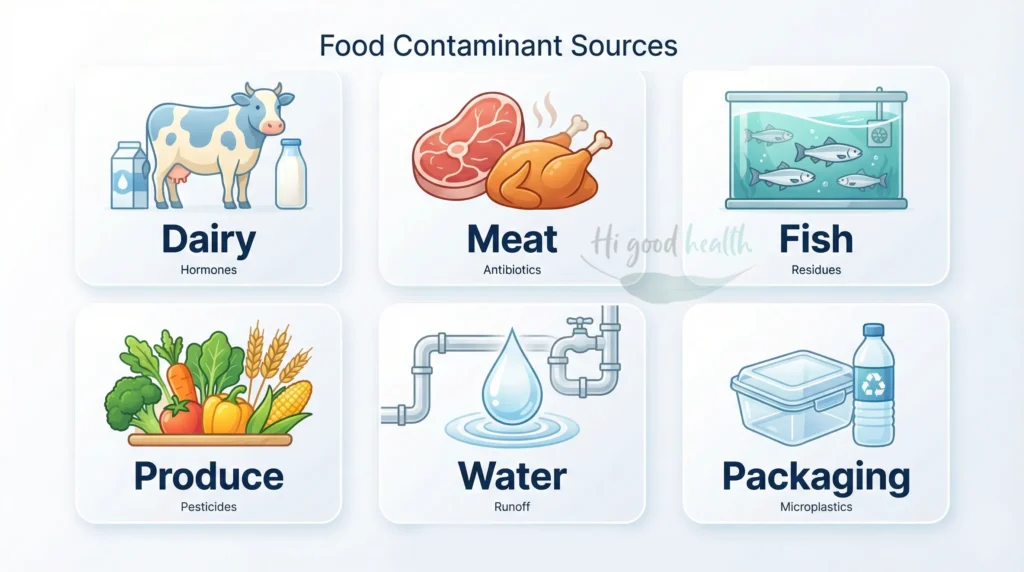
| Food/Source | Drugs & Chemicals Found | Why They Are Used | Explanation |
| Milk/Dairy | rBST (growth hormone), IGF1, estrogen, antibiotics like amoxicillin and oxytetracycline | To boost milk production and treat infections like mastitis | Cows are injected with hormones to produce more milk and are often treated with antibiotics. |
| Meat (Beef/Poultry) | Growth hormones, tetracyclines, sulfonamides, penicillin | To accelerate animal growth and prevent disease in crowded spaces | In “intensive systems” (high-density farming), animals get sick easily, so routine medication is common. |
| Fish (Farmed) | Antibiotics, estrogen-like chemicals | To prevent disease outbreaks in overcrowded tanks | Aquaculture farms often use medicated feed or water additives to reduce infections. |
| Vegetables & Grains | Pesticides, herbicides, soil-borne antibiotic residues | To kill pests, fungi, and weeds | These chemicals seep into the soil and water, making their way into the crops and produce. |
| Water Supply | Hormonal residues, antibiotics from farm runoff and sewage | Byproducts of farming and waste disposal | These substances enter groundwater and rivers, and can remain even after treatment. |
| Processed Foods/Packaging | Microplastics, Nanoplastics | From packaging degradation, processing equipment, and environmental contamination | Tiny plastic particles from food containers, processing lines, and the environment can leach into food, especially ultra-processed foods. |
To learn more about plastic bottle safety for your family, read your detailed blog
What Are Intensive Systems? Intensive systems are farming methods where animals are raised in high-density, confined spaces to maximize output. These environments often compromise hygiene and animal welfare, making drugs essential to control disease outbreaks.
2. Evidence of Contamination: Organic vs. Conventional
A U.S. study analyzing retail milk samples collected from multiple regions found that antibiotic residues were detected in a substantial proportion of conventional milk samples but were not detected in organic milk. The same study reported that bovine growth hormone (bGH) levels were approximately 20 times higher, and insulin-like growth factor-1 (IGF-1) levels about three times higher, in conventional milk compared to organic milk. In a small number of cases, residue levels in conventional samples exceeded established regulatory limits.
Researchers concluded that choosing organic milk may help minimize potential exposure to certain contaminants, although they emphasized that the long-term health implications of these differences require further investigation.
Sources:
- Emory University summary (2019):
https://news.emory.edu/stories/2019/06/welsh_milk_study/index.html - Public Health Nutrition (peer-reviewed study):
https://pubmed.ncbi.nlm.nih.gov/31238996/
3. Human Health Impacts: What We Know
The following table summarizes how these contaminants can affect us:
| Source | Potential Health Impact | Scientific Backing |
| Antibiotics (milk/meat) | Overuse in livestock contributes to antibiotic-resistant bacteria; allergic reactions possible in sensitive individuals | WHO; The Lancet |
| Residual Drugs | Long-term medication exposure can alter gut microbiota; effects of trace food residues remain under study | NIH |
| Hormones (dairy/meat) | IGF-1 has been studied for associations with hormone-sensitive conditions, but direct causation from dietary dairy hormones is not established | EU & U.S. reviews |
| Contaminated Water | Continuous low-level exposure to pharmaceuticals may accumulate over time | EPA; USGS |
| Microplastics | Microplastics have been detected in human brain tissue; experimental studies suggest potential neurotoxic effects | Recent peer-reviewed studies |
Key Scientific Context & References
Antibiotic Resistance
The World Health Organization identifies antimicrobial resistance as one of the top global health threats. A major driver is widespread antibiotic use in food-animal production, which contributes to the rise of drug-resistant infections.
- WHO fact sheet:
https://www.who.int/news-room/fact-sheets/detail/antimicrobial-resistance - The Lancet AMR Series:
https://www.thelancet.com/series-do/antibiotic-resistance?utm_source=chatgpt.com
Pharmaceuticals in Water
U.S. monitoring programs have detected trace pharmaceuticals and personal-care chemicals in many rivers and streams, reflecting widespread environmental contamination rather than isolated incidents.
- EPA overview:
https://www.epa.gov/wqc/contaminants-emerging-concern-including-pharmaceuticals-and-personal-care-products - USGS findings:
https://www.usgs.gov/special-topics/water-science-school/science/pharmaceuticals-water
Microplastics and the Brain
Recent research has confirmed the presence of microplastics and nanoplastics in human brain tissue, with concentrations appearing to increase over time. While laboratory and animal studies suggest possible links to inflammation and oxidative stress, human health impacts are still being actively investigated.
- University of New Mexico (2024):
https://hscnews.unm.edu/news/hsc-newsroom-post-microplastics-human-brains - PubMed review:
https://pubmed.ncbi.nlm.nih.gov/41357964/
Expert Perspective
Many endocrinologists, including researchers such as Dr. Ana Soto (Tufts University), have emphasized that chronic, low-level exposure to hormone-mimicking chemicals has the potential to interfere with natural hormonal signaling, particularly during sensitive stages of development. However, scientists continue to study how these exposures translate into real-world health risks at typical dietary levels.
To read about hidden contaminants in your milk, refer to our in-depth blog
4. What About Vegetarians and Vegans?
Many vegetarians and vegans believe they’re safe from these substances because they avoid meat and dairy. However, this assumption isn’t entirely accurate.
- Soil & water contamination: Pesticides, antibiotics, and hormone residues seep into the earth and irrigation water, which feed our vegetables and grains.
- Processed foods: Plant-based items may be grown using inputs from contaminated environments.
“There is no ‘pure’ escape unless the entire ecosystem is protected. Soil, water, air—everything’s connected.”— Dr. Vandana Shiva, Environmentalist (Navdanya)
5. Government Response: What’s Being Done
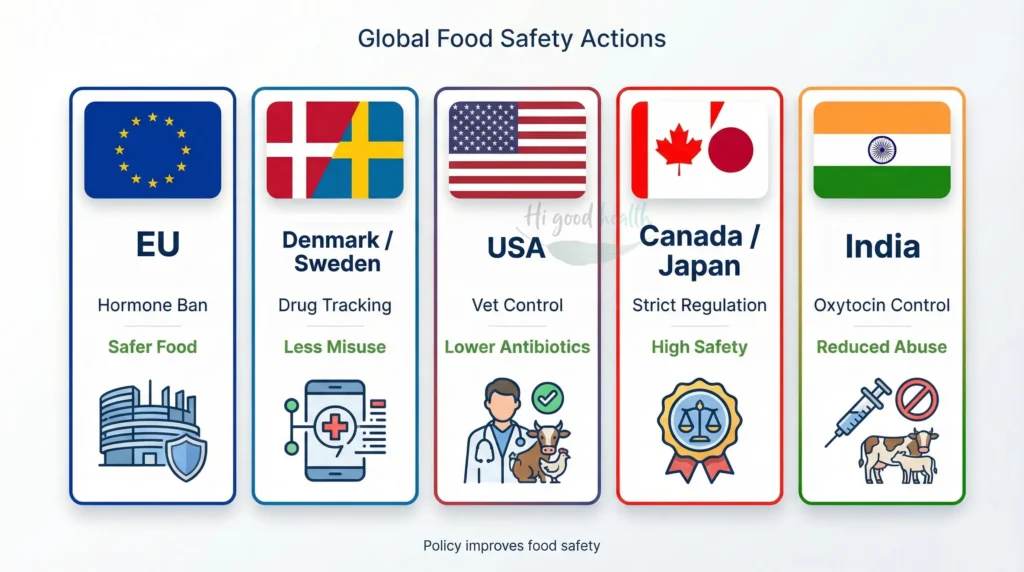
The following table outlines key actions taken by various countries:
| Country | Key Action | Impact |
| EU | Banned rBST & non-therapeutic antibiotic use | Reduced food contamination and antibiotic resistance |
| Denmark/Sweden | Real-time digital drug tracking; strict farm penalties | Misuse fell sharply; production remained stable |
| USA | Limited growth hormones; vet-only antibiotic use (VFD) | 30–50% drop in animal antibiotics; resistant infections still a threat |
| Canada/Japan | Ban rBST; control animal drugs via vet prescription | Higher food safety; improved animal health |
| India | Oxytocin sale restricted to government-approved channels | Reduced abuse in dairies; enforcement challenges remain |
6. Measures to Curb Misuse
- Mandatory vet prescriptions for livestock drugs
- Annual food residue checks by USDA and EFSA
- Digital surveillance of drug use (e.g., Denmark’s Yellow Card system)
- Ban on imports of hormone-treated beef (e.g., EU)
- Public awareness campaigns to educate farmers and consumers
7. Animal Welfare: The Untold Angle
Misuse of oxytocin injections to stimulate milk release has been associated with animal stress and health concerns, leading to restrictions in several countries, including India.
Overuse of antibiotics is often a response to the cruel, unhygienic conditions animals live in. Better treatment of animals leads to better quality food and reduced contamination. “When you treat animals badly, it reflects in what they produce. Stressed animals don’t give healthy food.”— Dr. Temple Grandin, Animal Welfare Specialist
8. Fight Back: What You Can Do
- Preventing Microplastics in Your Body & Brain:
- Reduce Single-Use Plastics: Cut down on plastic bottles, bags, and food containers. Carry reusable options.
- Avoid Heating Food in Plastic: Never microwave food in plastic containers, as heat can release plastic particles into your meal.
- Opt for Whole, Unpackaged Foods: Choose fresh fruits, vegetables, and grains that are not heavily processed or pre-packaged in plastic.
- Filter Your Water: Invest in a good quality water filter (like RO or activated carbon) for drinking water, as they can significantly reduce microplastics.
- Choose Natural Fiber Clothing: Opt for natural fabrics like cotton, wool, or linen over synthetics (polyester, nylon), as synthetic clothes release microplastic fibers when washed.
- Buy certified organic or “no antibiotics/hormones” labeled products.
- Filter your water with activated carbon or reverse osmosis systems.
- Choose local, ethical farms when possible.
- Eat more whole foods, not processed plant products.
- Support laws banning routine drug use in farming.
- Join CSA groups to get transparent food directly from farmers.
- Raise awareness in your community—what you know can help others.
FAQ: Common Questions About Food Contaminants
Yes. Studies published in June 2025 found that microplastics can accumulate in the human brain. These particles, often from ultra-processed foods, are linked to depression, dementia, and other serious cognitive issues.
No. Most hormone and antibiotic residues are heat-stable, meaning they survive standard cooking temperatures. While cooking meat kills bacteria, it does not remove these chemical contaminants trapped in the tissue.
No. You should never microwave food in plastic. Heat causes microplastics and chemical additives to degrade and leach directly into your meal. Always transfer food to glass or ceramic before heating.
Yes. Vegetarians are not immune because drug residues and bacteria from farms seep into soil and irrigation water. This contamination can be absorbed by crops, grains, and vegetables.
Look for “USDA Organic” or “No Added Hormones” labels. Terms like “Natural” are unregulated. Organic certification specifically bans synthetic hormones, GMOs, and antibiotics, offering the clearest guarantee of safety.
insufficient. To significantly reduce dissolved hormones and microplastics from your tap water, you need a high-quality Reverse Osmosis (RO) system or an activated carbon block filter.
Organic standards strictly prohibit synthetic hormones and non-therapeutic antibiotics, which drastically reduces your exposure compared to conventional farming methods.
Children’s immune and hormonal systems are still developing, making them highly sensitive to disruptors. Early exposure to these chemicals is linked to early puberty and potential long-term health issues
Final Take
Hormones and antibiotics in food aren’t just an animal farming issue—they’re a public health crisis that reaches your kitchen, your water, and your family’s well-being. They quietly compromise immunity, hormones, and even antibiotic effectiveness. And now, with microplastics invading our bodies, the threat is even more pervasive. But they are not beyond your control. Every choice you make—what you eat, where you buy, and who you support—can push the system toward safety and sustainability. Let’s work together to fight back against this silent invasion and protect the health of future generations.
Glossary
- rBST: Recombinant Bovine Growth Hormone
- IGF1: Insulin-like Growth Factor, a hormone linked to growth and some cancers
- AMR: Antimicrobial Resistance (superbugs)
- Oxytocin: Hormone used to stimulate milk in cows
- CSA: Community Supported Agriculture
- Intensive Systems: High-density farming environments that rely heavily on drugs
Further Reading and Sources
- EPA on Water Contaminants
- European Food Safety Authority
- WHO on Antibiotic Resistance
- PubMed Research Portal
- Temple Grandin on Humane Farming

