
Introduction: A National Crisis Hiding in Plain Sight
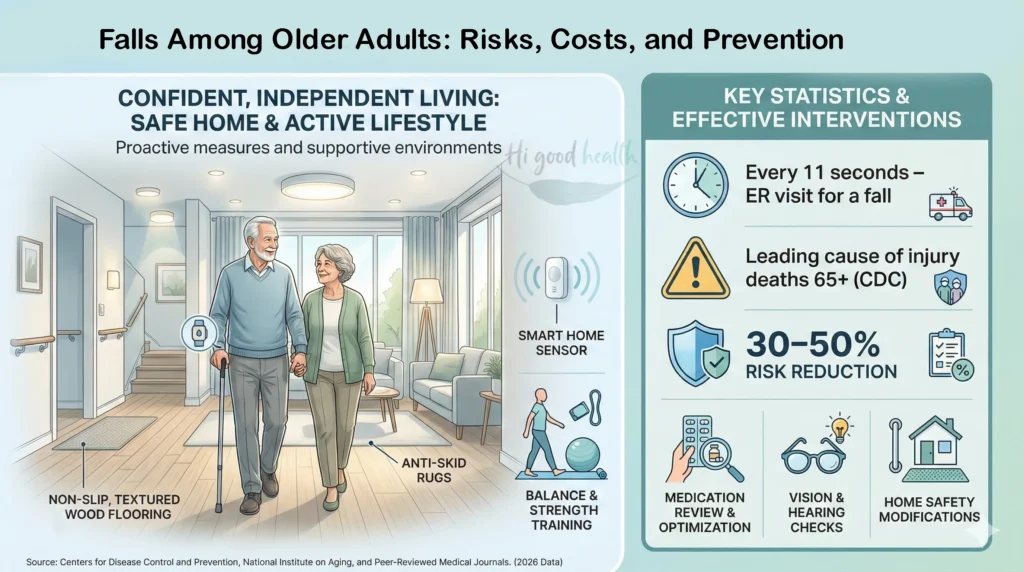
Every second of every day, an older American falls in the US. Every 12 to 13 minutes, a senior dies from one. The Centers for Disease Control and Prevention (CDC) calls falls the leading cause of injury-related deaths among adults over 65.
The human toll is devastating, but so is the financial one: falls among seniors cost the US healthcare system over $80 billion annually【CDC】. Medicare and Medicaid shoulder three-quarters of that burden, straining resources that could otherwise fund preventive programs.
Yet here’s the paradox: while falls are common, they are also largely preventable. Evidence-based interventions — from targeted exercise programs to simple home modifications — can cut fall risk by 30–50%. In 2026, with smart technology and proven strategies, older Americans have more tools than ever to stay safe, mobile, and independent.
Why Do Seniors Fall?
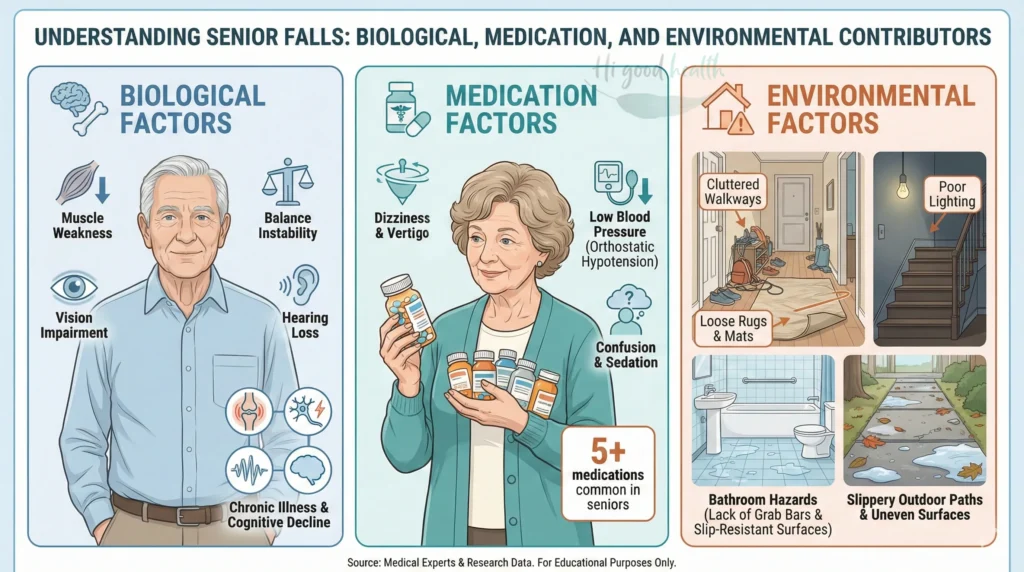
Falls rarely have a single cause. Instead, they emerge from an intersection of age-related changes, medical conditions, and environmental hazards.
Biological Factors
- Muscle weakness & balance decline: Age-related sarcopenia reduces stability.
- Vision loss: Cataracts, glaucoma, and macular degeneration impair depth perception.
- Hearing impairment: Linked to balance dysfunction.
- Chronic illnesses: Diabetes, Parkinson’s, arthritis, and neuropathy all increase risk.
To read more about on how to prevent muscle loss for seniors, read our in-depth blog
Medication Factors
- Polypharmacy is common: 39% of US seniors take five or more prescriptions daily.
- Drugs for blood pressure, anxiety, or sleep can cause dizziness, confusion, or low blood pressure spikes.
Environmental Factors
- Poor lighting, loose rugs, cluttered hallways.
- Lack of grab bars in bathrooms.
- Slippery outdoor sidewalks or icy driveways.
Types of Falls & Their Consequences
Acute Falls
Triggered by sudden hazards — wet floors, uneven sidewalks, or missed steps.
Chronic Risk-Driven Falls
Linked to underlying medical conditions or frailty. Seniors with balance impairment may experience multiple falls yearly.
Consequences
- Physical: Hip fractures (300,000 hospitalizations annually), head trauma, chronic pain.
- Psychological: Up to 73% of fallers develop a “fear of falling” so severe that they stop leaving their homes, which leads to reduced mobility and isolation.
- Social: Loss of independence, increased caregiver burden, and higher rates of nursing home placement.
- Mortality: While surgical care is improving, 1 in 5 older adults will not survive the first year following a hip fracture..
Read more on how the $6.7 billion loneliness crisis is affecting senior health across the world in our blog
Real-Life Cases
Case 1: Mary from Florida
At 78, Mary tripped on a throw rug and fractured her hip. Surgery and rehab cost over $40,000. She lost mobility confidence until joining a YMCA fall-prevention class, which restored her balance and independence.
Case 2: Robert from Ohio
A retired teacher, Robert fell twice in one winter due to poor lighting in his garage. After installing motion-sensor lights and using a cane outdoors, he hasn’t fallen in two years.
Case 3: Linda from California
Linda, 83, takes 7 medications daily. She fainted due to a blood pressure drug interaction and broke her wrist. After a pharmacist-led review, her prescriptions were adjusted, lowering her fall risk.
What the Science Says
Exercise Programs
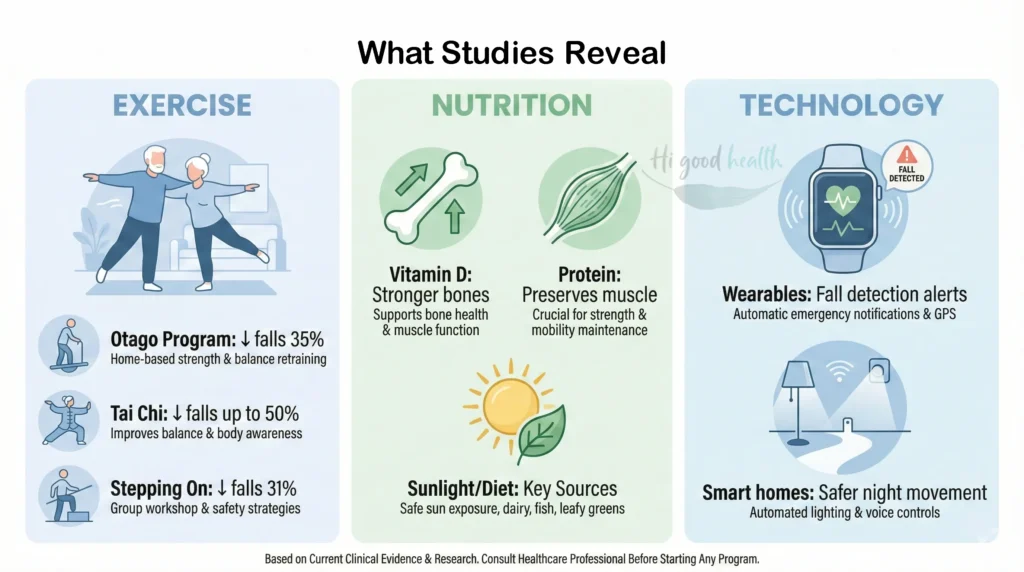
- Otago Exercise Program: Developed in New Zealand, now used in US senior centers. Reduces falls by 35% when practiced consistently.
- Tai Chi: A Harvard-led trial found older adults practicing Tai Chi cut fall risk by up to 50%【Harvard Health】.
- Stepping On: A US program combining balance training and home safety checks showed a 31% reduction in falls.
Nutrition & Supplements
- Vitamin D: Supports bone health; supplementation reduces fractures in deficient seniors.
- Protein intake: Helps preserve muscle mass.
Technology
- Wearables: Apple Watch and Fitbit detect falls and alert caregivers.
- Smart homes: Voice-activated lighting and motion sensors reduce night-time hazards.
Costs: Falls vs Prevention
- Average hospital cost of a fall injury: $30,000–$40,000.
- Fall-prevention program cost: $200–$600/year.
- Home modifications: Grab bars ($150 each), stair railings ($400), improved lighting ($100–$500).
- Wearables: Apple Watch ($250–400), Medical Guardian subscription ($30/month).
💡 Investing a few hundred dollars in prevention can save tens of thousands in emergency care — and protect quality of life.
Step-by-Step: How Seniors Can Reduce Fall Risk in 2026
1. Build Strength & Balance
- Join community programs (YMCA, SilverSneakers, senior centers).
- At-home exercises: heel raises, wall pushups, seated leg lifts.
2. Schedule Annual Screenings
- Eye and hearing exams.
- Medication reviews with pharmacists or doctors.
3. Fall-Proof the Home
- Remove throw rugs, declutter walkways.
- Install grab bars in bathrooms.
- Use non-slip mats in showers and tubs.
- Add night lights in hallways and bedrooms.
4. Embrace Technology
- Use fall-detection wearables.
- Install smart lighting and home sensors.
- Connect emergency alert systems to caregivers’ phones.
To know more about wearable fall detection devices for seniors, read our detailed blog
5. Caregiver Support
- Family members should encourage activity and monitor medication side effects.
- Telehealth visits can help reduce unnecessary travel and risks.
Expanded FAQs
Falls typically result from a combination of risk factors rather than a single event. These include muscle weakness, vision or hearing loss, medication side effects, and environmental hazards like loose rugs or poor lighting.
Research supports the Otago Exercise Program, which reduces falls by 35% through strength and balance training. Tai Chi is also highly effective, cutting fall risk by up to 50%.
Start by removing throw rugs and installing grab bars in bathrooms. Using non-slip mats in showers and improving lighting in hallways are also critical, affordable steps to reduce home hazards.
Yes. “Polypharmacy” (taking five or more prescriptions) is a major risk factor. Drugs for blood pressure or sleep can cause dizziness, so ask a pharmacist to review your medications for potential side effects.
Many Medicare Advantage plans cover fitness programs like SilverSneakers. While standard Medicare covers injury treatment, investing in prevention is significantly cheaper than the $30,000+ average cost of a hospital stay for a fall injury.
Yes. Wearables like the Apple Watch and Fitbit can detect hard falls and automatically alert caregivers. These devices, along with systems like Medical Guardian, provide a safety net for seniors living independently.
Only if prescribed by a physical therapist. Using walking aids incorrectly or without proper training can actually increase your risk of falling rather than preventing it.
Vitamin D supports bone health and reduces fractures in deficient seniors. However, dosage should be guided by a doctor and paired with adequate protein intake to preserve muscle mass.
Final Thoughts
Falls are not a normal part of aging — they are a preventable epidemic. With simple lifestyle changes, proven exercise programs, home modifications, and technology, American seniors can cut their fall risk dramatically in 2026.
Families and caregivers play a crucial role: encouraging participation in programs, ensuring homes are safe, and supporting independence. For a fraction of the cost of one hospital stay, prevention empowers seniors to live longer, healthier, and safer lives.
Glossary
- Otago Program: A structured exercise program for fall prevention.
- Tai Chi: Low-impact exercise improving balance and coordination.
- SilverSneakers: Fitness program for older adults, covered by many US insurance plans.
- Fall Detection: Wearable tech that alerts caregivers when a fall occurs.
- Polypharmacy: Use of multiple medications, often a fall risk factor.
Scientific References & Further Reading
- CDC STEADI Initiative – Clinical tools for screening and home safety checklists.
- NIH National Institute on Aging – Comprehensive guide to aging, health, and fall prevention.
- Harvard Health: Tai Chi for Balance – In-depth research on why “moving meditation” reduces fall risk by 50%.
- Fall Prevention for Older Adults – According to the 2024 JAMA Systematic Review, structured exercise programs focusing on balance and functional movements are scientifically proven to reduce injurious falls by 16%.

