
Introduction: The Role of Diagnostic Tests in Modern Healthcare
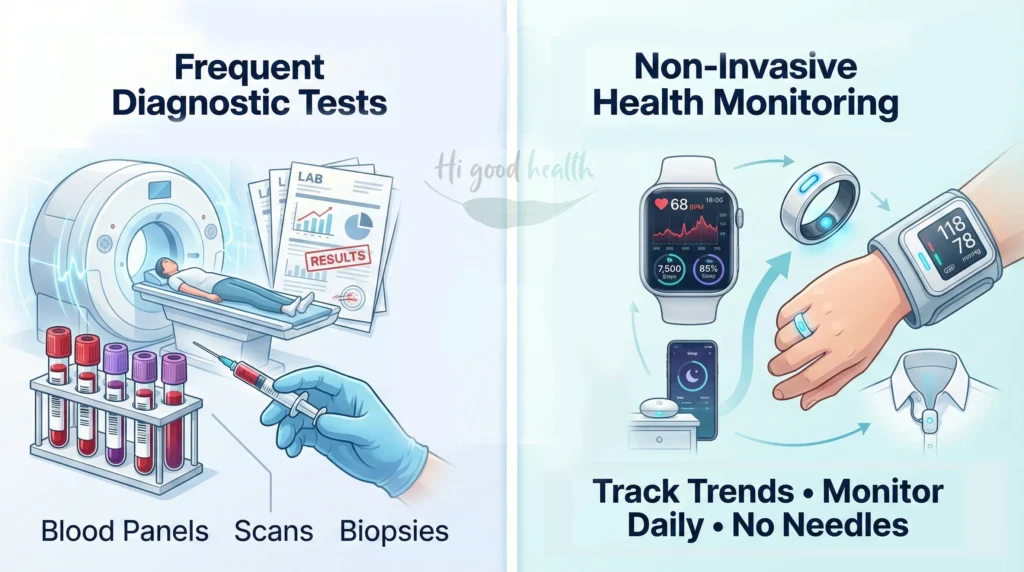
In today’s healthcare landscape, blood tests and various other diagnostic examinations have become commonplace. From routine physicals to identifying the root cause of complex ailments, these tests — including blood panels, urine analyses, imaging scans like X-rays, MRIs, and CT scans, and specialized tests like EKGs or biopsies — serve a crucial purpose. They provide a snapshot of our internal health, helping doctors detect diseases early, monitor chronic conditions, assess organ function, and tailor treatment plans. While undeniably valuable, the increasing frequency and types of tests advised can sometimes leave individuals wondering about their true necessity and impact on their lives.
A Brief History and Evolution of Diagnostic Practices
The history of medical diagnostics is a fascinating journey from rudimentary observations to highly sophisticated technological marvels. Ancient physicians relied heavily on observing symptoms, examining urine, and even tasting it for signs of disease. The 19th and 20th centuries saw significant advancements with the advent of microscopy, X-rays, and the isolation of blood components, paving the way for modern pathology. Today, we stand at the precipice of personalized medicine, where diagnostic tools are becoming increasingly precise, capable of identifying genetic predispositions and even individual cellular anomalies. This evolution has undeniably improved our ability to diagnose and treat, yet it also prompts us to consider the balance between thoroughness and potential over-testing.
The Value of Diagnostic Tests: Are Your Past Results Still Relevant?
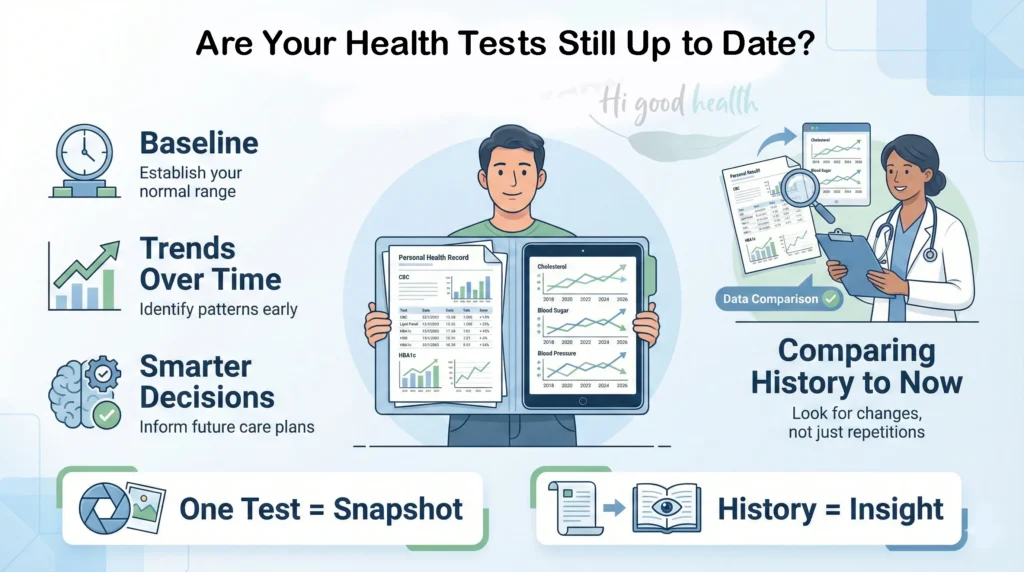
Diagnostic tests, when judiciously used, are indeed invaluable tools. They offer objective data that complements a physician’s clinical assessment. However, a common question arises: should you keep records of your previous test results, and are they still relevant? Absolutely! Maintaining a personal health record, including past test results, is highly recommended. These records provide a crucial baseline and allow healthcare providers to track trends over time, which can be far more informative than a single snapshot. While some doctors may not always explicitly ask for past results, sharing them proactively can lead to more informed decisions and prevent unnecessary repeat tests. Don’t hesitate to bring your historical data to your appointments and discuss its relevance with your physician.
To learn more about vitamin safety and proper dosing, check our detailed blog
Navigating Repeat Tests: Advocating for Yourself
It can be frustrating when a hospital or doctor insists on redoing tests, especially if you’ve recently had them done elsewhere. This often stems from various factors, including institutional policies, a desire for their own lab’s validated results, or simply a lack of access to your previous records. To avoid duplicate costs and unnecessary procedures, proactive communication is key. Before any test, ask your doctor directly if previous results can be used. If they insist on a repeat, politely inquire about the specific reasons. You can also request that your previous results be transferred to the new facility. Being an informed and assertive patient, while maintaining respect, is crucial in navigating such situations. Remember, your health and financial well-being are paramount.
What Every Individual Should Know and Discuss with Their Doctor
As an empowered individual, understanding your health journey is paramount. You should always feel comfortable discussing your health history, including past diagnostic tests and medications, with your doctor. If you have concerns about the necessity of a particular test or wish to explore alternatives, voice them clearly and respectfully. A good physician will appreciate your engagement and be open to discussing your concerns. They should explain the rationale behind their recommendations and address your questions. Remember, healthcare is a partnership, and your active participation leads to better outcomes. Don’t be afraid to ask “why” or seek a second opinion if you feel it’s necessary for your peace of mind.
The Rise of Non-Invasive Alternatives: Wearable Diagnostic Devices
The landscape of health monitoring is rapidly expanding beyond traditional clinical settings. The advent of wearable diagnostic devices offers exciting non-invasive alternatives for continuously tracking various physiological parameters. These devices, ranging from smartwatches to specialized patches, can provide real-time data on heart rate, sleep patterns, activity levels, oxygen saturation, and even aspects of stress and recovery. They empower individuals to take a more active role in their health management, detect anomalies early, and understand the impact of their lifestyle choices on their wellbeing.
Reliability and Features of Wearable Health Devices
The reliability of wearable devices has significantly improved, with many now offering clinical-grade accuracy for specific metrics. While they are not a substitute for professional medical diagnosis, they serve as excellent tools for continuous monitoring and early detection. Here’s a comparative overview of some popular wearable health devices and their features available in the USA:
| Device Type | Popular Makes/Models (USA) | Key Features | Approximate Cost (USD) |
| Smartwatches | Apple Watch (Series 9, Ultra 2), Samsung Galaxy Watch (6, Classic), Fitbit Sense 2 | Heart rate tracking, ECG, SpO2, sleep tracking, activity monitoring, fall detection, temperature sensing | $250 – $800+ |
| Fitness Trackers | Fitbit Charge 6, Garmin Vivosmart 5, Whoop 4.0 | Activity tracking, sleep stages, heart rate, stress monitoring, recovery insights | $100 – $300 (Whoop is subscription-based) |
| Smart Rings | Oura Ring Gen3, Ultrahuman Ring Air | Sleep analysis, heart rate variability (HRV), body temperature, activity tracking, recovery insights | $300 – $400 |
| Continuous Glucose Monitors (CGM) | Dexcom G7, Abbott FreeStyle Libre 3 (prescription required) | Real-time glucose readings, trend analysis, alerts for highs/lows | Varies significantly with insurance; typically $60-$100 per sensor (2-week supply) |
| Smart Scales | Withings Body Cardio, Renpho Smart Scale | Weight, BMI, body composition (body fat, muscle mass, bone mass, water percentage) | $30 – $180 |
Note: Costs are approximate and can vary based on retailer, sales, and specific model. CGM devices typically require a prescription.
Safety and Risks of Wearable Devices
A common concern about wearable devices is whether constant wireless signals like Bluetooth produce harmful radiation. Wearable devices use low-power radiofrequency (RF) transmitters similar to those in phones and Wi-Fi, and in the United States they must meet Federal Communications Commission (FCC) exposure limits designed to protect human health. According to the CDC, most wearable tech emits much lower RF levels than these safety thresholds. https://www.cdc.gov/radiation-health/data-research/facts-stats/wearable-technology.html?utm_source=chatgpt.com
The FDA states that the weight of scientific evidence does not link radiofrequency energy from everyday wireless devices to health risks when used as intended. https://www.fda.gov/radiation-emitting-products/cell-phones/scientific-evidence-cell-phone-safety?utm_source=chatgpt.com
RF energy from Bluetooth and other wireless signals falls into the category of non-ionizing radiation, which, unlike X-rays or gamma rays, does not carry enough energy to directly damage DNA. https://www.epa.gov/radtown/non-ionizing-radiation-wireless-technology?utm_source=chatgpt.com
The Wisdom of “Good Old Physicians” and Modern Practice
It’s a valid point to reflect on the era of “good old physicians” who seemingly relied more on keen observation and a thorough physical examination rather than an extensive battery of tests. While the value of clinical acumen remains paramount, modern medicine has advanced significantly. Diagnostic tests, when used appropriately, are not a waste of time or money. They provide objective data that can confirm a diagnosis, identify underlying issues not apparent through observation alone, and guide targeted treatments. The ideal approach combines the best of both worlds: a physician’s observational skills and comprehensive patient history, augmented by strategic and necessary diagnostic testing. The challenge lies in avoiding over-testing and ensuring every test ordered serves a clear purpose.
How Far to Rely on Self-Monitoring Devices: An Advisement to Patients
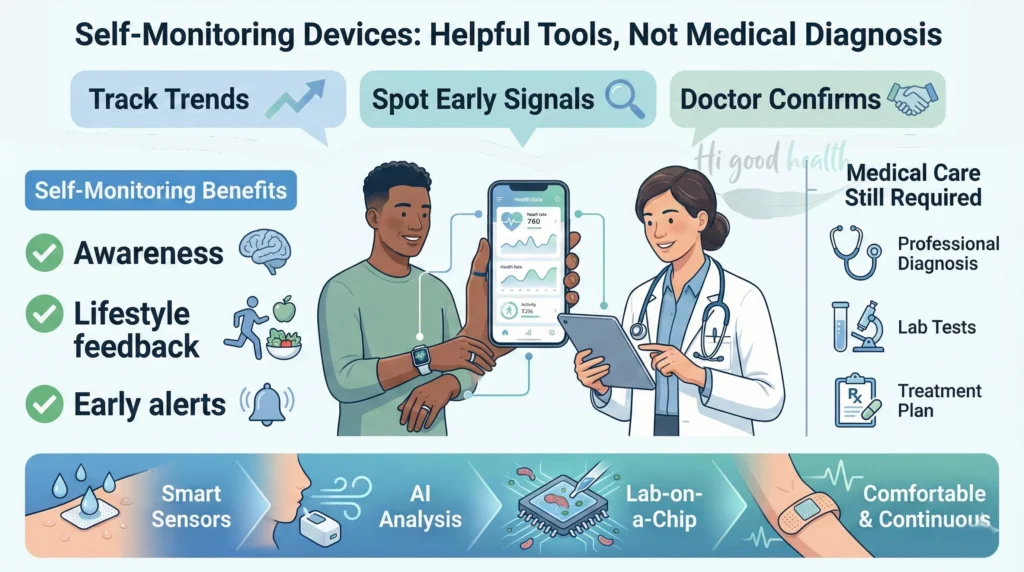
Wearable devices are powerful tools for self-health monitoring, promoting awareness and empowering individuals to take a more proactive role in their wellbeing. They can provide valuable insights into trends, identify potential issues early, and help you understand the impact of lifestyle changes. However, it’s crucial to remember that these devices are monitoring tools, not diagnostic tools. They should complement, not replace, professional medical advice. If a wearable device indicates a concerning anomaly, it’s a signal to consult your doctor for a proper diagnosis and treatment plan. Always discuss the data from your wearables with your healthcare provider to gain the most benefit and ensure accurate interpretation.
Latest Scientific Developments in Non-Invasive Diagnostics
The field of non-invasive diagnostics is a rapidly evolving area of scientific research. Innovations are continuously emerging to make health monitoring more accessible, accurate, and less intrusive. Some exciting developments include:
- Advanced Biometric Sensors: Next-generation sensors capable of detecting a wider range of biomarkers from sweat, tears, or even breath, potentially allowing for non-invasive glucose monitoring, electrolyte balance, and stress hormone tracking.
- AI and Machine Learning Integration: Artificial intelligence is being leveraged to analyze vast amounts of data from wearables, identify subtle patterns, and predict health risks more accurately.
- Miniaturization and Integration: Devices are becoming smaller, more comfortable, and seamlessly integrated into everyday items, making continuous monitoring less obtrusive.
- “Lab-on-a-Chip” Technologies: These microfluidic devices aim to perform complex laboratory tests on a tiny chip, potentially allowing for rapid, point-of-care diagnostics with minimal sample requirements.
These advancements hold immense promise for the future of personalized and preventive healthcare, potentially reducing the reliance on frequent invasive tests while enhancing our ability to understand and manage our health proactively.
To learn more about AI’s role in healthcare diagnostics, check our in-depth blog
Conclusion
In conclusion, while traditional blood and diagnostic tests remain indispensable components of modern medicine, a balanced perspective is essential. Frequent testing should always be purposeful, driven by clinical need, and discussed openly between patient and physician. The emergence of reliable and safe non-invasive wearable technologies offers a powerful complement, empowering individuals with continuous self-monitoring capabilities. By understanding the purpose of tests, advocating for informed decisions, and wisely utilizing innovative health tech, we can navigate our health journeys more effectively, making choices that truly serve our wellbeing without succumbing to unnecessary procedures. The future of health monitoring lies in smart integration, personal empowerment, and a collaborative approach between individuals and their healthcare providers.
FAQS
Frequent testing isn’t always necessary; it should be purposeful and driven by clinical need. While annual check-ups are common, extensive routine testing depends on your specific health history. Discuss the necessity of specific tests with your physician.
No. While many devices now offer clinical-grade accuracy for specific metrics, they are strictly monitoring tools, not diagnostic ones. They should complement professional advice, not replace it. Always consult a doctor for a proper diagnosis.
Yes. These devices generally operate using low-power wireless technologies like Bluetooth. They emit non-ionizing radiation far below harmful levels, and organizations like the FDA and WHO have not found conclusive evidence of health risks.
Most consumer smartwatches are not covered. However, medical-grade devices like Continuous Glucose Monitors (CGMs) typically require a prescription and may be covered depending on your specific insurance plan. Check with your provider for details.
Wearables are excellent for tracking trends and detecting anomalies early , but they are not a substitute for a medical-grade EKG. If your device indicates an irregularity, use that data as a signal to see a doctor.
Yes, you should feel comfortable discussing your concerns or asking about alternatives. A good physician will explain the rationale behind the recommendation. Ask “why” to ensure the test is necessary for your peace of mind.
Proactive communication is key. Before a test, ask if previous results can be used and request that your records be transferred to the new facility. This can avoid duplicate costs and procedures.
Absolutely. Maintaining a personal health record provides a crucial baseline for tracking trends over time. Sharing historical data with your doctor often leads to more informed decisions than looking at a single snapshot of your health
External Sources & Further Reading:
- World Health Organization (WHO): https://www.who.int/ (For general health guidelines and information on medical technologies)
- U.S. Food and Drug Administration (FDA): https://www.fda.gov/ (For information on approved medical devices and regulatory guidance)
- American Academy of Family Physicians (AAFP): https://www.aafp.org/ (Offers patient-focused information and guidelines on preventive care)
- Harvard Health Publishing: https://www.health.harvard.edu/ (Reliable source for evidence-based health information and articles on diagnostic tests and health technology)
- Mayo Clinic: https://www.mayoclinic.org/ (Comprehensive information on various medical conditions, diagnostic tests, and health topics)
- Journal of the American Medical Association (JAMA): https://jamanetwork.com/journals/jama (For scientific articles on medical practices and research)
- “Deep Medicine: How Artificial Intelligence Can Make Healthcare Human Again” by Eric Topol, MD (Explores the role of technology and AI in transforming healthcare and empowering patients.)
- “The Patient Will See You Now: The Future of Medicine Is in Your Hands” by Eric Topol, MD (Discusses how digital technologies are shifting power to patients.)

