
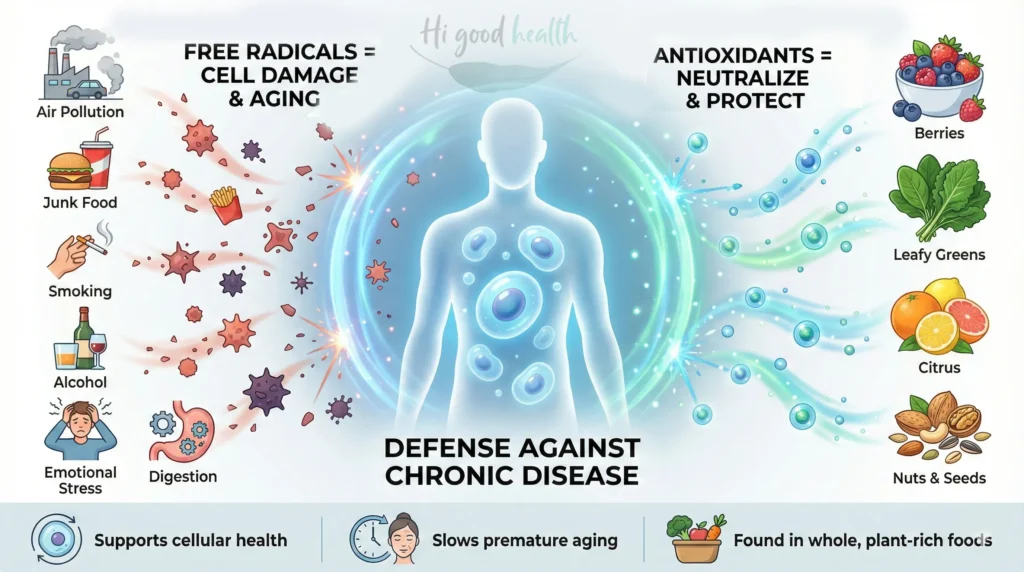
Every day, your body is exposed to various stressors like air pollution, unhealthy food choices, smoking and drinking, emotional stress, and even natural internal processes like digestion. These triggers produce unstable molecules called free radicals, which can damage your cells and speed up aging or lead to chronic diseases over time. Thankfully, your body has a built-in defense system known as antioxidants.
These powerful compounds help neutralize free radicals and keep your cells safe. You can get them through a healthy diet rich in fruits, vegetables, and whole foods.
In this blog, we’ll explore what antioxidants are, how they work, signs your body might be lacking them, and simple ways to restore this natural protection.
What Each Antioxidant Does: Roles and Responsibilities
Your body uses a variety of antioxidants, each with a unique function. Nevertheless their roles vary based on where they act and how they support different systems in the body. Here are some of the key antioxidants:
- Vitamin C
- Vitamin E
- Beta-Carotene (Provitamin A)
- Selenium
- Zinc
- Glutathione
- Coenzyme Q10 (CoQ10)
- Polyphenols
- Flavonoids
Vitamin C
Acts in water-based areas of the body like blood and tissues. It neutralizes free radicals, supports the immune system, helps regenerate other antioxidants, and aids in collagen formation for skin and tissue repair.
Vitamin E
Functions in fat-rich areas like cell membranes. It protects cells from lipid peroxidation and works alongside Vitamin C to reduce oxidative stress and inflammation.
Beta-Carotene (Provitamin A)
Converted into Vitamin A in the body. It supports vision, enhances immune defense, and acts as a powerful antioxidant in skin and epithelial tissues.
Selenium
Supports antioxidant enzymes like glutathione peroxidase. It defends against oxidative stress, regulates thyroid function, and supports immune health.
Zinc
Plays a role in stabilizing cell membranes and activating antioxidant enzymes. It reduces oxidative stress, promotes wound healing, and supports healthy immune responses.
Glutathione
Often called the body’s “master antioxidant.” It’s made by the body and detoxifies harmful compounds, supports liver health, and regenerates other antioxidants like Vitamins C and E.
Coenzyme Q10 (CoQ10)
Helps produce energy in cells and also acts as an antioxidant. It protects the heart and muscles from oxidative stress and supports cellular energy metabolism.
Polyphenols & Flavonoids
These plant-based compounds have anti-inflammatory and antioxidant effects throughout the body. They support heart health, brain function, and cellular protection from oxidative stress.
How to Tell If Your Body Is Lacking
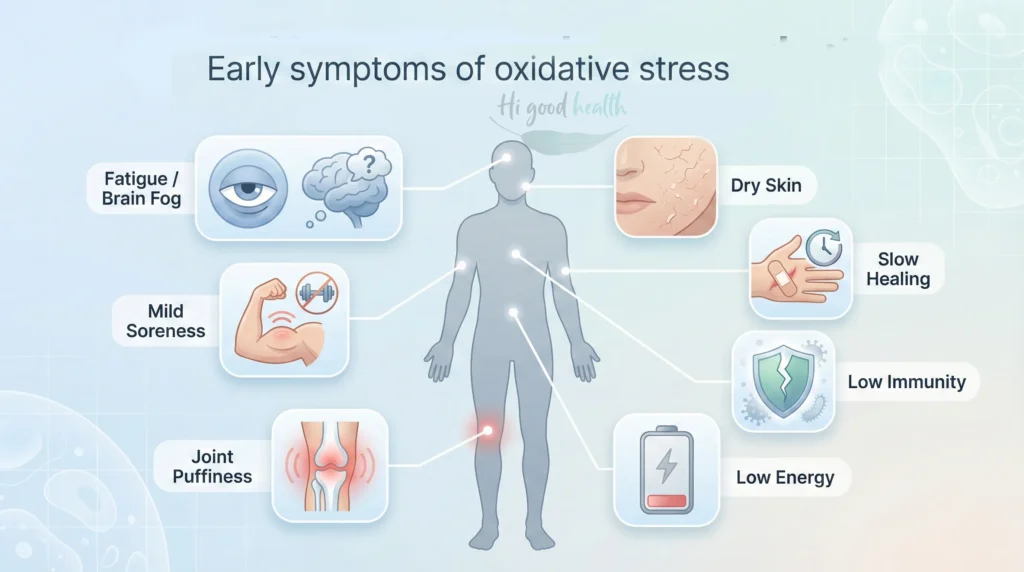
When your body doesn’t have enough antioxidants, it starts to show in small but noticeable ways. These signs are often easy to miss at first but can become more obvious over time.
Common signs and symptoms include:
- Feeling tired more often than usual
- Skin looking dull, dry, or aging faster
- Slow healing from cuts, wounds, or infections
- Frequent colds or low immunity
- Unexplained aches or muscle soreness
- Trouble focusing or feeling mentally foggy
- More inflammation, puffiness, or redness in the body
These symptoms suggest that your cells aren’t getting enough protection and may be under constant stress.
Read more: https://www.betterhealth.vic.gov.au/health/healthyliving/antioxidants
Natural Sources of Antioxidants You Should Be Eating
The best way to boost your antioxidant levels is through a healthy, balanced diet. Nature provides plenty of powerful antioxidant-rich foods that help your body fight off damage and stay strong.
Some top vegetarian sources include:
- Fruits: Berries (blueberries, strawberries, raspberries), oranges, grapes, pomegranates
- Vegetables: Spinach, kale, broccoli, carrots, red cabbage
- Nuts & Seeds: Almonds, walnuts, sunflower seeds, flaxseeds
- Whole Grains: Oats, brown rice, quinoa
- Legumes: Kidney beans, black beans, lentils
- Spices & Herbs: Turmeric, cinnamon, ginger, garlic
- Beverages: Green tea, black tea, coffee
- Dark Chocolate: Rich in flavonoids and a delicious antioxidant boost
Eating a mix of colorful, whole foods daily ensures you’re giving your body the antioxidant support it needs, naturally.
To learn more about spirulina’s powerful antioxidant compounds, read our detailed blog
Diseases and Health Issues Linked to Antioxidant Deficiency
When your body lacks enough antioxidants, it struggles to fight off the damage caused by free radicals. Over time, it increases your risk of chronic illnesses and speeds up the aging process.
Different antioxidant deficiencies affect different parts of the body, and the impact can range from low immunity to serious conditions like heart disease or cognitive decline. Here’s a breakdown :
| Antioxidant | Deficiency Can Contribute To | How It Affects the Body |
| Vitamin C | Frequent infections, scurvy, slow wound healing | Weakens immune defense, causes bleeding gums & fatigue |
| Vitamin E | Nerve and muscle damage, vision problems | Affects nerve signals, leads to weakness and coordination issues |
| Beta-Carotene | Night blindness, dry skin, low immunity | Reduces Vitamin A levels needed for eye and skin health |
| Selenium | Hypothyroidism, heart disease risk | Impairs thyroid hormone function and antioxidant enzyme activity |
| Zinc | Skin issues, hair loss, poor immunity | Slows wound healing and weakens immune responses |
| Glutathione | Fatigue, poor detoxification, increased oxidative stress | Lowers body’s ability to repair and detoxify |
| CoQ10 | Muscle weakness, heart issues, low energy | Affects energy production in cells, especially the heart |
| Polyphenols | Chronic inflammation, cognitive decline | Less protection for brain and body from oxidative damage |
Read more: https://my.clevelandclinic.org/health/articles/oxidative-stress
How to Fix an Antioxidant Deficiency Naturally
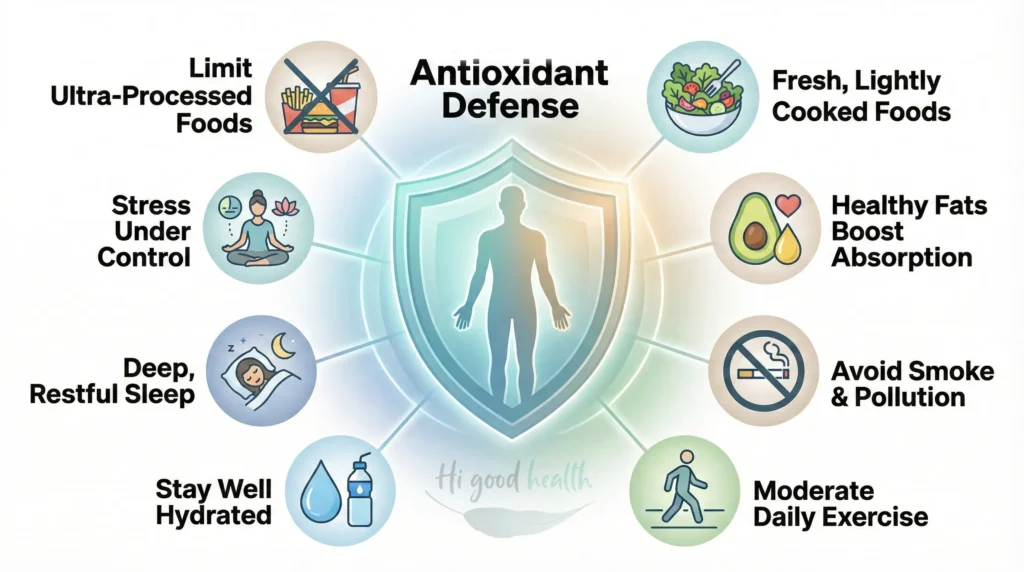
Boosting your antioxidant levels is not just about what you eat. It’s also about how you live. Small, consistent changes to your daily routine can enhance your body’s ability to absorb and use antioxidants more effectively.
Here’s how you can naturally support your antioxidant levels without relying on supplements:
- Choose fresh and minimally cooked meals
Overcooking can destroy antioxidants like Vitamin C and polyphenols. Light steaming or raw options preserve more nutrients. - Combine antioxidants with healthy fats
Fat-soluble antioxidants like Vitamin E and beta-carotene are better absorbed when eaten with good fats like olive oil or avocado. - Avoid smoking and exposure to pollutants
These increase free radical production in the body, putting more pressure on your antioxidant defenses - Practice moderate, regular exercise
Physical activity stimulates the body’s natural antioxidant enzymes, but avoid overtraining, which can have the opposite effect. - Stay hydrated
Proper hydration helps cells function well and supports antioxidant activity throughout the body. - Get restful sleep
Quality sleep is when your body repairs itself. Antioxidant enzyme activity often peaks during deep rest. - Manage daily stress levels
Chronic stress produces more free radicals. Simple habits like walking, journaling, or mindfulness can help restore balance. - Cut back on ultra-processed foods
These not only lack antioxidants but they often contain preservatives and additives that increase oxidative stress.
By aligning your lifestyle with these small but impactful habits, you allow your body to naturally rebuild its antioxidant shield, no pills required.
To know about safe vitamin and antioxidant dosing, read our insightful blog
Smart Eating Tips: Cooking, Timing & Absorption Hacks for Maximum Antioxidant Power
Beyond eating it’s about how you prepare, pair, and time your food, that affects how well your body can use antioxidants. Here are science-backed strategies to get the most out of every bite:
Cook with care
- Light steaming, sautéing, or blanching helps retain water-soluble antioxidants like Vitamin C and folate.
- Avoid deep frying or prolonged high-heat cooking because it destroys delicate compounds.
- For tomatoes and carrots, gentle cooking actually increases antioxidant availability (like lycopene and beta-carotene).
Time your meals wisely
- Spacing meals evenly allows your digestive system to better absorb nutrients.
- Eating antioxidant-rich foods during the day (especially breakfast and lunch) helps fuel your body when oxidative stresspeaks.
- Avoid heavy antioxidant meals late at night when your metabolism slows down.
Pair with healthy fats for better absorption
- Some antioxidants (like beta-carotene, Vitamin E, and lutein) are fat-soluble, meaning they need dietary fat to be absorbed.
- Add olive oil, avocado, nuts, or seeds to meals containing leafy greens spinach or orange veggies like carrots.
Add a citrus punch
- A little lemon juice or vinegar improves antioxidant activity and helps unlock iron and polyphenols from plant foods.
Avoid aluminum cookware
- Using stainless steel, cast iron, or ceramic cookware is safer, as using aluminum utensils interfere with antioxidant compounds over time.
By making small adjustments in the kitchen and at the table, you can naturally enhance your body’s ability to absorb and benefit from antioxidants, without making any radical changes to what you eat.
Read more: https://pubmed.ncbi.nlm.nih.gov/19397724/
Final Thoughts: Keep Your Body in Balance with Antioxidants
Antioxidants play a powerful, often overlooked role in your health. They are your body’s internal defense team. They work constantly to repair damage, reduce inflammation, and keep illness at bay. When your antioxidant levels are strong, your body is more resilient, your energy is steadier, and your risk of chronic disease lowers over time.
You do not need drastic changes or expensive fixes. Simple, daily choices like eating fresh, seasonal produce, minimizing stress, sleeping well, and staying active can naturally restore balance.
Think of antioxidants not as a trend, but as a long-term health strategy. Start today with one small habit. Your future self will thank you.
To learn about protecting your brain from cognitive decline, refer to our blog
If you prefer a more visual version, check out our YouTube video here:
Frequently Asked Questions
Focus on colorful whole foods. Top vegetarian sources include berries (blueberries, strawberries), dark leafy greens like kale, nuts, and spices such as turmeric. Even beverages like green tea and coffee provide a natural boost.
It is better to get them from food. Whole foods provide a mix of nutrients pills cannot replicate. Unless advised by a doctor, simply eating a balanced diet is the safest and most effective method.
Common signs include constant fatigue, dull skin, slow wound healing, and frequent colds. If you feel mentally foggy or have unexplained muscle soreness, your body might be struggling to fight oxidative stress.
Yes. While they cannot stop aging entirely, they neutralize free radicals that damage cells. This helps slow down visible signs like skin aging and reduces the risk of age-related chronic diseases.
High heat and deep frying can destroy nutrients, so opt for light steaming. However, cooking tomatoes and carrots actually helps your body absorb their specific antioxidants, like lycopene and beta-carotene.
Yes, for some. Fat-soluble antioxidants like Vitamin E and beta-carotene need healthy fats to be absorbed. Pairing leafy greens or carrots with olive oil, nuts, or avocado helps you get the most nutrients.
Yes, but usually only from megadose supplements, which can cause imbalance. It is best to get antioxidants naturally from whole foods, where the risk of “overdosing” is minimal and the benefits are higher.
Some people notice improved energy or clearer skin within a few weeks. However, antioxidants are a long-term strategy; their biggest benefit is building your body’s resilience and lowering disease risk over time.

